sukiyaki
beef simmered at the table
すき焼き(すきやき)
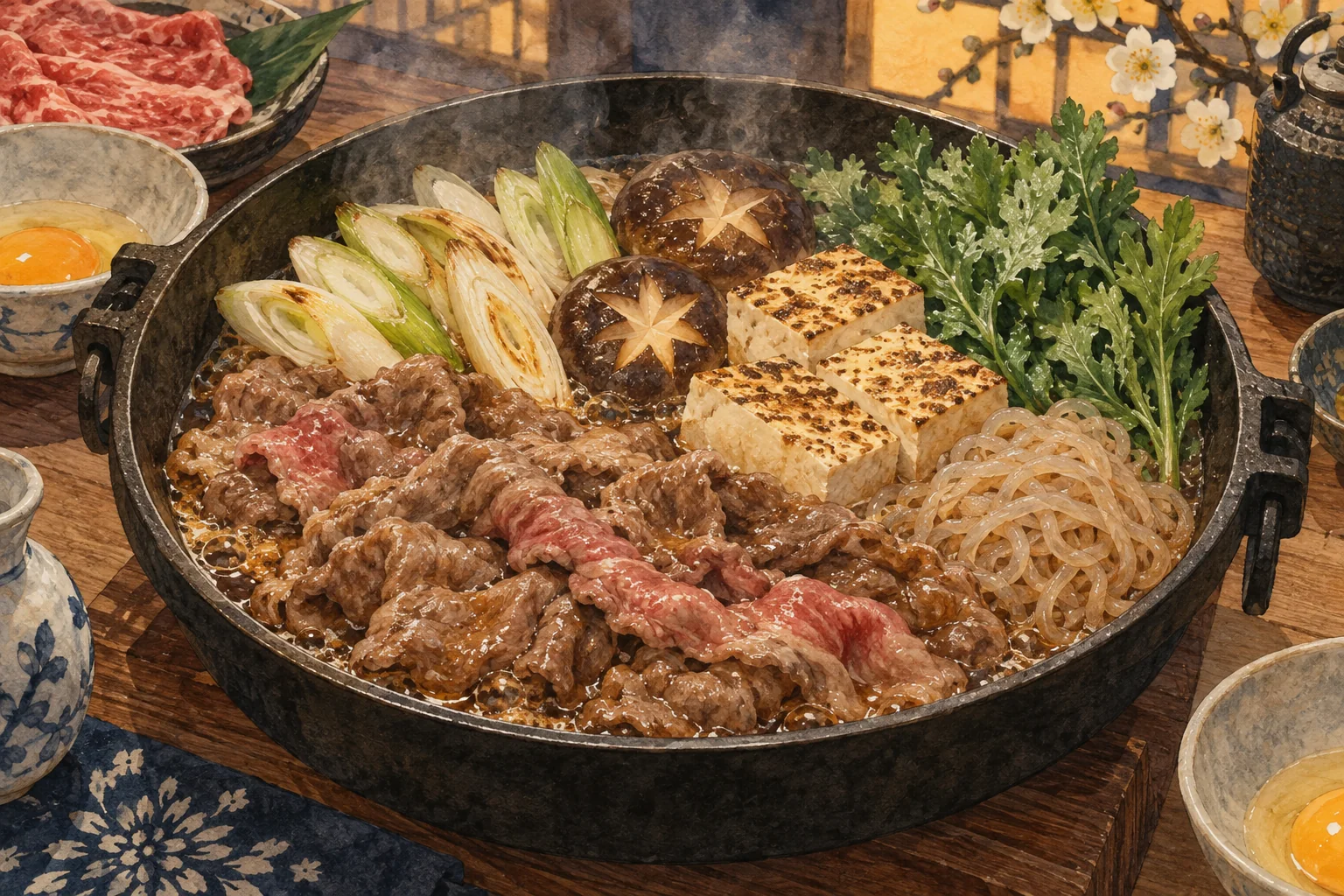
In one line
The shortest answer that works
Sukiyaki is thin beef cooked at the table in a sweet soy broth and dipped in raw egg.
すき焼きとは、薄切りの牛肉を甘い醤油味で卓上で煮て、生卵につけて食べる料理です。
In 30 seconds
The standard explanation
Sukiyaki is thinly sliced beef cooked in a shallow iron pan at the table with soy sauce, sugar and sake, along with spring onion, tofu, mushrooms and chrysanthemum greens. Each person dips the hot pieces in a bowl of beaten raw egg. The method differs between eastern and western Japan.
すき焼きは薄く切った牛肉を、醤油と砂糖と酒で卓上の浅い鉄鍋で煮る料理で、葱、豆腐、きのこ、春菊などを一緒に入れます。各自が溶いた生卵の器に熱いものをつけて食べます。作り方は東日本と西日本で異なります。
As a short speech
A full paragraph you can read aloud
Sukiyaki is thinly sliced beef cooked in a shallow iron pan at the table, seasoned with soy sauce, sugar and sake, with spring onion, tofu, mushrooms, shirataki noodles and chrysanthemum greens added around it. Each person is given a small bowl with a raw egg beaten in it, and you dip the hot food into the egg before eating.
That serves two purposes: it cools the food enough to eat immediately, and it coats the strongly seasoned beef in something mild. There is a real regional split. In the Kanto region the pan is filled with a premixed sauce and everything simmers in it.
In the Kansai region the beef is seared first, then sugar and soy sauce are added directly to the pan, and people argue about which is correct. Sukiyaki also has a historical meaning. Beef was barely eaten in Japan before the Meiji period, and dishes like this were part of a deliberate national shift toward eating meat.
すき焼きは薄く切った牛肉を卓上の浅い鉄鍋で煮る料理で、醤油と砂糖と酒で味をつけ、まわりに葱、豆腐、きのこ、糸こんにゃく、春菊などを入れます。各自に生卵を溶いた小さな器が配られ、熱いものをその卵につけて食べます。
これには二つの働きがあります。すぐ口に入れられる温度まで下げること、そして濃く味のついた肉をやわらかいもので包むことです。地域による違いがはっきりしています。関東では割り下をあらかじめ合わせて鍋に張り、その中で煮ます。
関西では先に肉を焼きつけ、砂糖と醤油を直接鍋に入れます。どちらが正しいかは今も言い合いになります。すき焼きには歴史的な意味もあります。明治より前の日本で牛肉はほとんど食べられておらず、こうした料理は肉を食べる国へ移ろうとする流れの一部でした。
Questions people actually ask
And how to answer them.
Is the raw egg safe?
Eggs sold in Japan are produced and handled for raw consumption, with washing, refrigeration and short best-before dates, and raw egg is eaten daily here. If you are pregnant, elderly or immunocompromised, the usual caution applies as anywhere.
日本で売られている卵は生食を前提に、洗浄、冷蔵、短い賞味期限で扱われていて、生卵は日常的に食べられています。妊娠中の方、高齢の方、免疫の弱い方は、ほかの国と同じ注意が当てはまります。
Do I have to use the egg?
No. It is normal and it improves the balance, but nobody will mind if you eat the beef straight from the pan. If you want the cooling effect without raw egg, ask for a little of the broth in your bowl instead.
必要ありません。ふつうの食べ方であり、味の釣り合いもよくなりますが、鍋から直接食べても誰も気にしません。生卵を避けつつ熱さを和らげたいなら、器に割り下を少しもらうとよいです。
Phrases you can use
- Dip it in the raw egg before you eat it.生卵につけてから食べます。
- The egg cools it down as well.卵は熱を冷ます役目もあります。
- Kanto and Kansai cook it differently.関東と関西で作り方が違います。
- Don't let the beef overcook.肉は煮すぎないでください。
Words you need
- thinly sliced beef薄切りの牛肉
- iron pan鉄鍋
- to simmer煮る
- beaten egg溶き卵
Watch
From YouTubeBackground (Japanese)
牛肉を食べることは長く一般的でなく、明治に入って広く食べられるようになりました。当時の「牛鍋」がすき焼きの前身のひとつとされます。名の由来には、農具の鋤の上で焼いたからという説があります。関東は割り下、関西は肉を焼いてから調味という違いがあり、家庭でも作法が分かれます。締めにうどんやご飯を入れることが多く、最後まで使い切る形になっています。松阪牛や近江牛など、すき焼きで名を知られた銘柄牛もあります。