gyudon
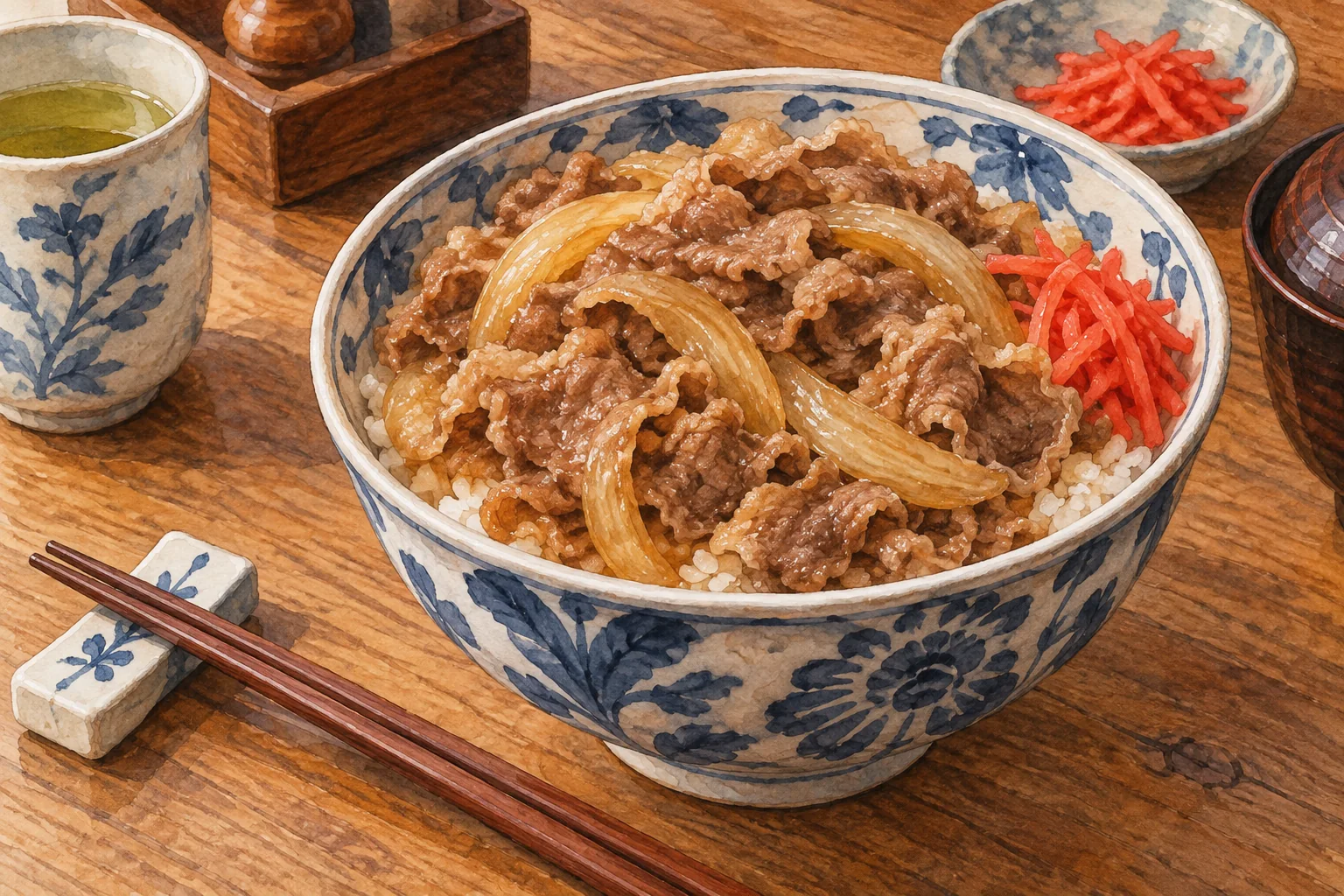
beef over rice
牛丼(ぎゅうどん)
In one line
The shortest answer that works
Gyudon is thin beef and onion simmered in a sweet soy broth and served over rice.
牛丼とは、薄切りの牛肉と玉ねぎを甘辛いつゆで煮て、ご飯にのせたものです。
In 30 seconds
The standard explanation
Gyudon is a bowl of rice topped with beef and onion simmered in soy sauce, sugar and mirin. Chains sell it for a few hundred yen, served within minutes of ordering, often bought from a ticket machine at the door. Toppings include raw egg, kimchi and grated radish, and miso soup is ordered separately.
牛丼は、醤油と砂糖とみりんで煮た牛肉と玉ねぎをご飯にのせた丼です。チェーン店では数百円で、注文から数分で出てきます。入口の券売機で買う店も多くあります。生卵、キムチ、おろしなどをのせられ、味噌汁は別に頼みます。
As a short speech
A full paragraph you can read aloud
Gyudon is one of the cheapest full meals in Japan and one of the fastest. Thin slices of beef and onion are simmered in soy sauce, sugar and mirin, then ladled over a bowl of rice. A standard bowl costs a few hundred yen, arrives within two or three minutes, and is eaten in about ten.
Many chain branches are open around the clock, and the process is designed to need almost no conversation: at many branches you buy a ticket from a machine at the door, hand it over, and eat.
The dish descends from the beef hotpot that became popular in the Meiji period when meat eating was promoted, and the oldest chain traces itself to a shop in the Tokyo fish market in the late nineteenth century. Regulars customize it with a shorthand: extra sauce, less sauce, extra onion, less rice, a raw egg to stir in.
牛丼は日本で最も安く食べられるまともな食事のひとつであり、最も速いもののひとつでもあります。薄切りの牛肉と玉ねぎを醤油と砂糖とみりんで煮て、ご飯にかけます。並盛りは数百円、注文から二、三分で出てきて、十分ほどで食べ終わります。
チェーン店には終日開いている店も多く、その仕組みは会話をほとんど必要としないように設計されています。多くの店では入口の券売機で食券を買い、それを渡して食べるだけです。
この料理は、肉食が勧められた明治期に広まった牛鍋にさかのぼり、最も古いチェーンは19世紀の終わりに東京の魚市場にあった店を起点としています。常連は短い言葉で好みを伝えます。つゆだく、つゆぬき、ねぎだく、ご飯少なめ、そして混ぜて食べる生卵。
Questions people actually ask
And how to answer them.
How do I order if there's a ticket machine?
Choose the picture of the bowl, pick a size, pay, take the ticket, sit down and put it on the counter. Most machines have an English button. Miso soup and side dishes are separate buttons.
券売機で丼の写真を選び、大きさを選んで支払い、食券を持って席に着き、カウンターに置きます。多くの機械に英語のボタンがあります。味噌汁や小鉢は別のボタンです。
What is the raw egg for?
You crack it into a small bowl, beat it, and either pour it over the beef or dip mouthfuls into it. The heat of the rice partly cooks it. Eggs sold in Japan are handled for raw consumption.
小鉢に割ってほぐし、肉にかけるか、一口ずつつけて食べます。ご飯の熱で半分ほど火が通ります。日本で売られている卵は生食を前提に扱われています。
Phrases you can use
- Buy a ticket from the machine first.先に券売機で食券を買ってください。
- Regular size, please.並盛りをお願いします。
- Miso soup is ordered separately.味噌汁は別注文です。
- You can add a raw egg.生卵を付けられます。
Words you need
- rice bowl dish丼もの
- ticket machine券売機
- regular size並盛り
- toppingトッピング
Watch
From YouTubeBackground (Japanese)
牛丼は明治期に広まった牛鍋を飯にかけた「牛めし」から発展したとされます。最も古いチェーンは1899年に東京の日本橋魚市場で創業した店を起源としています。「つゆだく」はつゆを多めにすること、「ねぎだく」は玉ねぎを多めにすることを指す常連の言い方です。2003年末にアメリカ産牛肉の輸入が止まり、翌2004年には多くの店で牛丼が販売休止となって、大きな話題になりました。深夜も営業する店が多く、働く人の食事を支えてきました。