通夜つや
tsuya
the wake held the night before a funeral
葬儀の前夜、故人のそばで過ごす。会社の人は告別式より通夜に参列することが多い。
一言で言うと
これだけ覚えれば最低限伝わる一文
A tsuya is the evening wake before a Japanese funeral, where mourners gather, burn incense and stay near the deceased.
通夜とは日本の葬儀の前夜に行う集まりで、弔問客が集まり、焼香をして、故人のそばで過ごします。
30秒で説明する
外国人に説明するときの標準サイズ
The night before the funeral, the family holds a tsuya at a funeral hall or a temple. A priest chants, each mourner steps forward to offer incense, and afterward the family serves food and drink to the guests. Coworkers and acquaintances usually attend the tsuya rather than the funeral itself, because it is held in the evening and is shorter. Traditionally the family stayed up all night with the body, keeping incense burning, but most modern wakes end by nine.
葬儀の前の晩、遺族は葬儀場か寺で通夜を行います。僧侶が読経し、弔問客は一人ずつ進み出て焼香し、そのあと遺族が客に食事と酒を出します。同僚や知人は葬儀そのものより通夜に参列するのがふつうです。夜に行われ、短いからです。伝統的には遺族が一晩中遺体のそばで香を絶やさず過ごしましたが、今の通夜のほとんどは九時ごろに終わります。
スピーチ・英作文
通訳案内士の二次口述・大学入試の自由英作文に
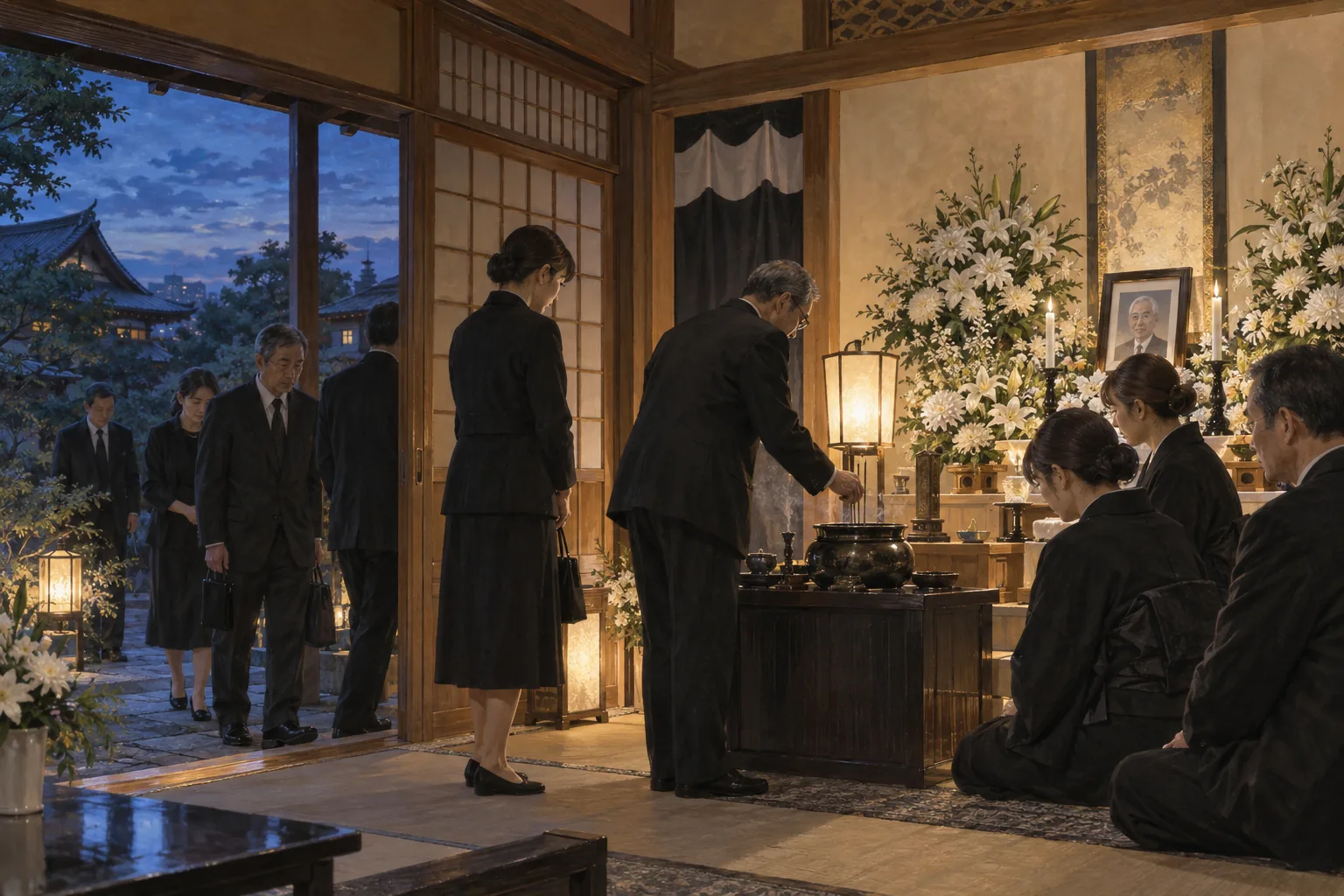
A Japanese funeral is really two events, and for most people the one they attend is the tsuya, the wake. It takes place in the evening before the funeral, usually at a funeral hall, sometimes at a temple or the family home. The body lies in a coffin before an altar of white flowers and a framed photograph. Mourners in black arrive, hand over their condolence money at the desk, and sit.
A Buddhist priest chants sutras for half an hour or so, and during the chanting each person walks to the altar, bows to the family, offers a pinch of incense, presses their hands together and bows again. When the priest finishes, the family often invites the guests to a room with sushi, sandwiches and beer, where people talk quietly about the deceased.
In the past the family kept vigil all night so that the incense never went out, which is why it is called passing the night. Now most wakes end early, and the funeral and cremation follow the next day. I have always found the incense offering, done by a whole room one by one, unexpectedly moving.
日本の葬儀は実は二つの行事で、ほとんどの人が参列するのは通夜のほうです。葬儀の前の晩に、ふつうは葬儀場で、ときには寺や自宅で行われます。遺体は白い花の祭壇と額に入った写真の前の棺に横たわります。黒い服の弔問客が到着し、受付で香典を渡して座ります。
僧侶が三十分ほど経を読み、その間に一人ずつ祭壇に進み、遺族に礼をし、抹香をひとつまみ供え、合掌してもう一度礼をします。読経が終わると、遺族が客を寿司やサンドイッチやビールのある部屋に招くことが多く、人々は故人について静かに語ります。
昔は遺族が香を絶やさないよう一晩中付き添ったので、「夜を通す」と書いて通夜と呼ばれます。今はほとんどの通夜が早く終わり、翌日に葬儀と火葬が続きます。部屋中の人が一人ずつ行う焼香は、いつも思いがけず心を打つと私は感じてきました。
こう聞かれたら
外国人から実際にされる質問と、その答え方。
How do I offer incense correctly?
焼香はどうするのが正しいのですか。
Walk to the altar, bow to the family and then to the photograph. Take a pinch of powdered incense with your thumb and two fingers, raise it briefly toward your forehead if others do, and drop it on the burning charcoal. Do this once, or up to three times depending on the sect; watch the person before you. Then put your hands together, bow, bow to the family again and return to your seat.
祭壇に進み、遺族に礼をし、次に遺影に礼をします。親指と二本の指で抹香をひとつまみ取り、周りがそうしていれば額のあたりに軽く上げてから、炭の上に落とします。これを一回、宗派によっては三回まで行い、前の人を見て合わせてください。それから合掌し、礼をし、遺族にもう一度礼をして席に戻ります。
What do I wear if I'm coming straight from work?
仕事帰りにそのまま行く場合、服装はどうすればいいですか。
Black is expected: a black suit with a white shirt and a black tie for men, a black dress or suit for women, with minimal jewelry other than pearls. At a wake, a dark business suit is forgivable because people come from the office, and convenience stores near funeral halls sell black ties. Bring a small string of prayer beads if you have them.
黒が期待されます。男性は白いシャツと黒いネクタイの黒いスーツ、女性は黒いワンピースかスーツで、真珠以外の装身具は控えます。通夜は職場から駆けつける人が多いので濃い色のビジネススーツでも許され、葬儀場の近くのコンビニでは黒いネクタイを売っています。数珠があれば持参してください。
Should I stay for the meal afterward?
そのあとの食事には残るべきですか。
If invited, stay at least briefly; it is a courtesy to the family, and leaving immediately can look cold. Take a little food, exchange a few words with the family, and leave after twenty or thirty minutes. Close friends and relatives stay longer. Do not turn it into a party.
誘われたら少なくとも短時間は残ってください。遺族への礼儀で、すぐ帰るのは冷たく見えます。少し料理を取り、遺族と二言三言交わし、二、三十分で失礼します。親しい友人や親族はもっと長くいます。宴会にしてはいけません。
そのまま使えるフレーズ
- The wake is tonight at six, and the funeral is tomorrow morning.通夜は今夜六時、葬儀は明日の午前です。
- Most of us from the office will go to the wake.職場からはほとんどの人が通夜に行きます。
- Watch the person ahead of you and do the same.前の人を見て同じようにしてください。
- Please stay and have something to eat.どうぞ、少し召し上がっていってください。
- I'm sorry, I have to leave after the incense offering.申し訳ありませんが、焼香のあとで失礼します。
説明に使う語句
- wake通夜
- offer incense焼香する
- altar祭壇
- coffin棺
- prayer beads数珠
- the deceased故人
動画で見る
YouTube より豆知識
通夜はもとは遺族や親しい人が夜通し故人に付き添い、線香と灯明を絶やさない儀礼で、そこから「夜を通す」の名がつきました。現在は夕方六時か七時ごろに始まり、一、二時間で終わる「半通夜」が一般的で、その後の「通夜振る舞い」と呼ばれる会食で弔問客をもてなします。関東では通夜振る舞いに参列者全員を招くことが多く、関西では親族だけで済ませることが多いなど地域差があります。仕事帰りに参列しやすいため、会社関係や知人は翌日の葬儀・告別式ではなく通夜に参列することが多く、通夜のほうが参列者が多いことも珍しくありません。焼香の回数は宗派によって一回から三回まで異なります。近年は通夜を省いて一日で葬儀と火葬を行う「一日葬」や、家族だけの「家族葬」が増え、通夜のあり方も変わっています。
