尺八しゃくはち
shakuhachi
the bamboo flute once played by wandering monks
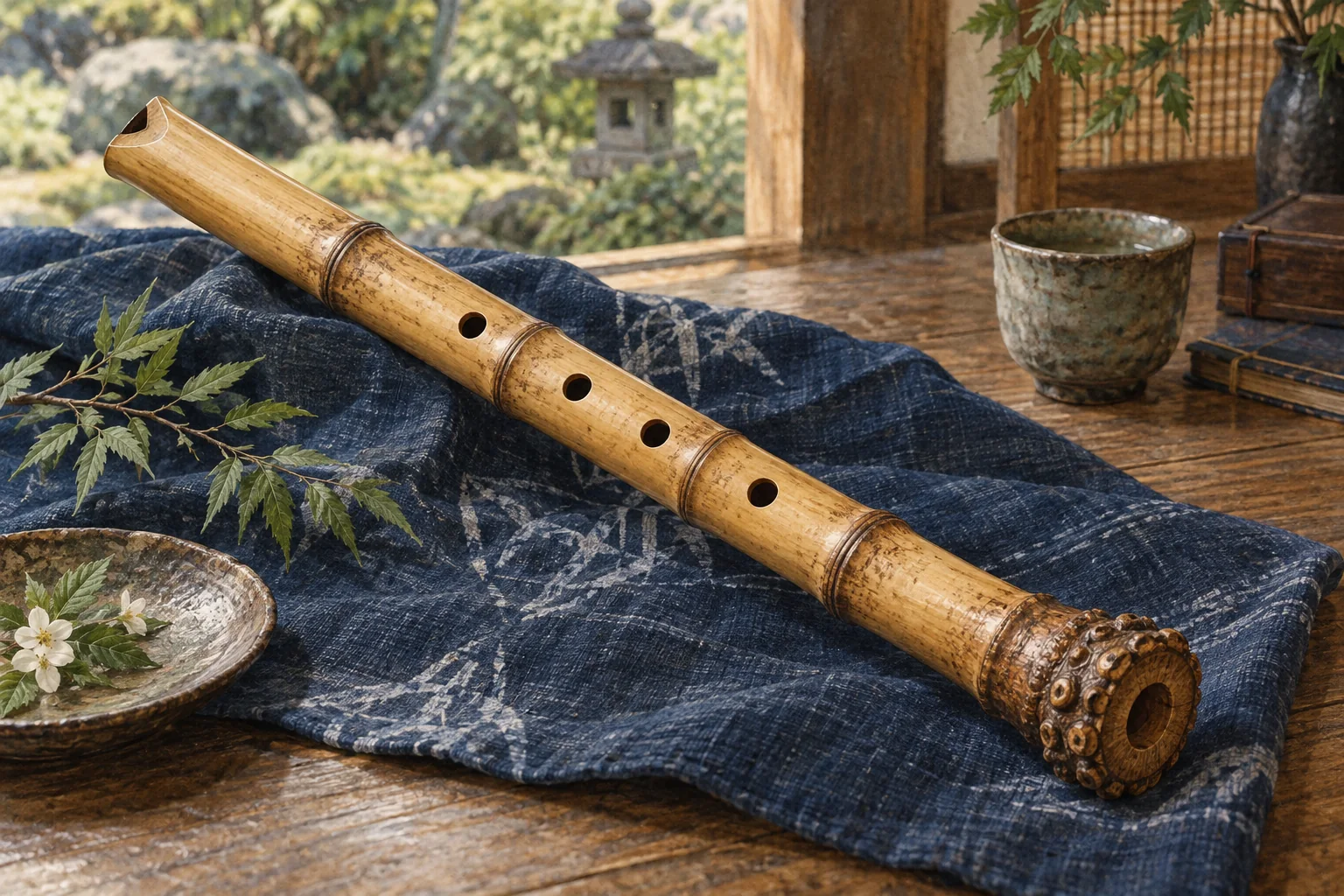
指穴は五つしかない。残りの音は、首の角度と息で作る。
一言で言うと
これだけ覚えれば最低限伝わる一文
Shakuhachi, the end-blown bamboo flute, is an instrument with only five finger holes, historically played by Zen mendicant monks.
尺八とは、指穴が五つしかない竹の縦笛で、もともとは虚無僧という禅の修行者が吹いたものです。
30秒で説明する
外国人に説明するときの標準サイズ
The shakuhachi is made from the root end of a bamboo stalk and blown across a sharpened edge at the top. It has four holes in front and one behind. Everything between those notes is produced by tilting the head and changing the breath, which is why it is hard and why it can slide and breathe like a voice. In the Edo period it was the instrument of the komuso, mendicant monks of the Fuke sect.
尺八は竹の根元の部分から作り、上端の削った縁に息を当てて鳴らします。指穴は表に四つ、裏に一つ。その間の音は、首を振り、息を変えて作ります。だから難しく、だから声のように滑り、息づきます。江戸時代には、普化宗の虚無僧が吹く楽器でした。
スピーチ・英作文
通訳案内士の二次口述・大学入試の自由英作文に
The shakuhachi is a bamboo flute, and almost everything interesting about it follows from one fact: it has five finger holes. A Western flute has keys for every semitone. The shakuhachi player produces the missing notes by tilting the head forward and back against the blowing edge, by half-covering holes, and by changing the breath, which means pitch is never quite fixed and the instrument can bend and waver in a way that sounds like a human voice.
The name is a measurement: one shaku eight sun, about fifty-five centimeters, though instruments are made in other lengths. It is cut from the root end of the bamboo, so the bottom keeps the knobs where the roots were. Its history is unusual.
In the Edo period it belonged to the komuso, mendicant monks of the Fuke sect who wore a basket over the head and played rather than chanted, treating the breath as the practice itself. The government abolished that sect in 1871, and the instrument passed to musicians. Today it is played both in classical Japanese ensembles and by players abroad.
尺八は竹の笛です。面白いところはほぼすべて、指穴が五つしかないという一点から出てきます。西洋のフルートには半音ごとに鍵があります。尺八の奏者は、足りない音を首を前後に振って歌口との角度を変え、穴を半分ふさぎ、息を変えることで作ります。
つまり音の高さは固定されておらず、人の声のようにたわみ、揺れる。名前は寸法です。一尺八寸、およそ五十五センチ。ほかの長さのものも作られます。竹の根元を切って作るので、下の端に根の跡の節が残ります。歴史が変わっています。
江戸時代、尺八は普化宗の虚無僧のものでした。頭に籠をかぶり、経を唱えるかわりに吹き、息そのものを修行としました。政府は1871年(明治4年)にこの宗派を廃し、楽器は音楽家の手に移ります。いまは日本の古典の合奏でも、海外の奏者にも演奏されています。
こう聞かれたら
外国人から実際にされる質問と、その答え方。
Why only five holes?
どうして穴が五つしかないのですか。
The instrument was built for a five-note scale, and the remaining pitches are made with the head and the breath. Keeping the holes few is also what allows the sliding, breathy sound.
五音の音階に合わせて作られたためで、残りの音は首と息で出します。穴を増やさないからこそ、あの滑る息の音が出るとも言えます。
Is it hard to learn?
習うのは難しいですか。
Producing any sound at all takes most beginners days or weeks, because there is no mouthpiece to help. After that, pitch control is the long part.
音を出すだけで、多くの初心者は何日も何週間もかかります。歌口に助けがないからです。そこから先は、音程を揃えることに長い時間がかかります。
Was it really used by spies?
隠密が使ったというのは本当ですか。
The komuso could travel freely with their faces hidden, so the idea is plausible and appears in fiction. Evidence of an organized spy role is thin, and it is best told as a story rather than a fact.
虚無僧は顔を隠したまま自由に旅ができたので、話としては筋が通り、小説にも描かれます。組織だった隠密の働きを示す証拠は乏しく、事実ではなく物語として話すのが妥当です。
誤解されやすい
MYTHThe shakuhachi is a simple folk flute.
尺八は素朴な民俗楽器だ、と思われがちです。
FACTIt has a highly developed classical repertoire, and professional instruments are individually bored and tuned by makers over months.
高度に発達した古典の曲目があり、職人が何か月もかけて内径を調え、音程を合わせて作ります。
そのまま使えるフレーズ
- It has only five finger holes.指穴は五つしかありません。
- You make the other notes by moving your head.ほかの音は首を振って作ります。
- The name means one shaku eight sun — about 55 cm.名前は一尺八寸という長さのことです。
- It's cut from the root end of the bamboo.竹の根元から切り出します。
- Wandering monks played it as a practice.虚無僧は修行として吹きました。
説明に使う語句
- bamboo竹
- blowing edge歌口
- mendicant monk虚無僧
- breath息
- solo piece本曲
動画で見る
YouTube より豆知識
一尺八寸は約54.5センチで、これが名の由来とされる。実際には一尺六寸や二尺三寸など、調子に合わせて長さの違う管が作られる。普化宗は1871年(明治4年)に廃止され、虚無僧の制度も終わったが、曲目は流派として受け継がれた。都山流と琴古流が代表的な流派として挙げられる。地歌や箏曲と合奏する「三曲」の一員としても用いられる。
