履歴書りれきしょ
rirekisho
the Japanese-format resume
決まった様式の用紙に、写真を貼って出す応募書類。
一言で言うと
これだけ覚えれば最低限伝わる一文
Rirekisho, or a Japanese resume, is a fixed printed form with a photograph attached in the corner.
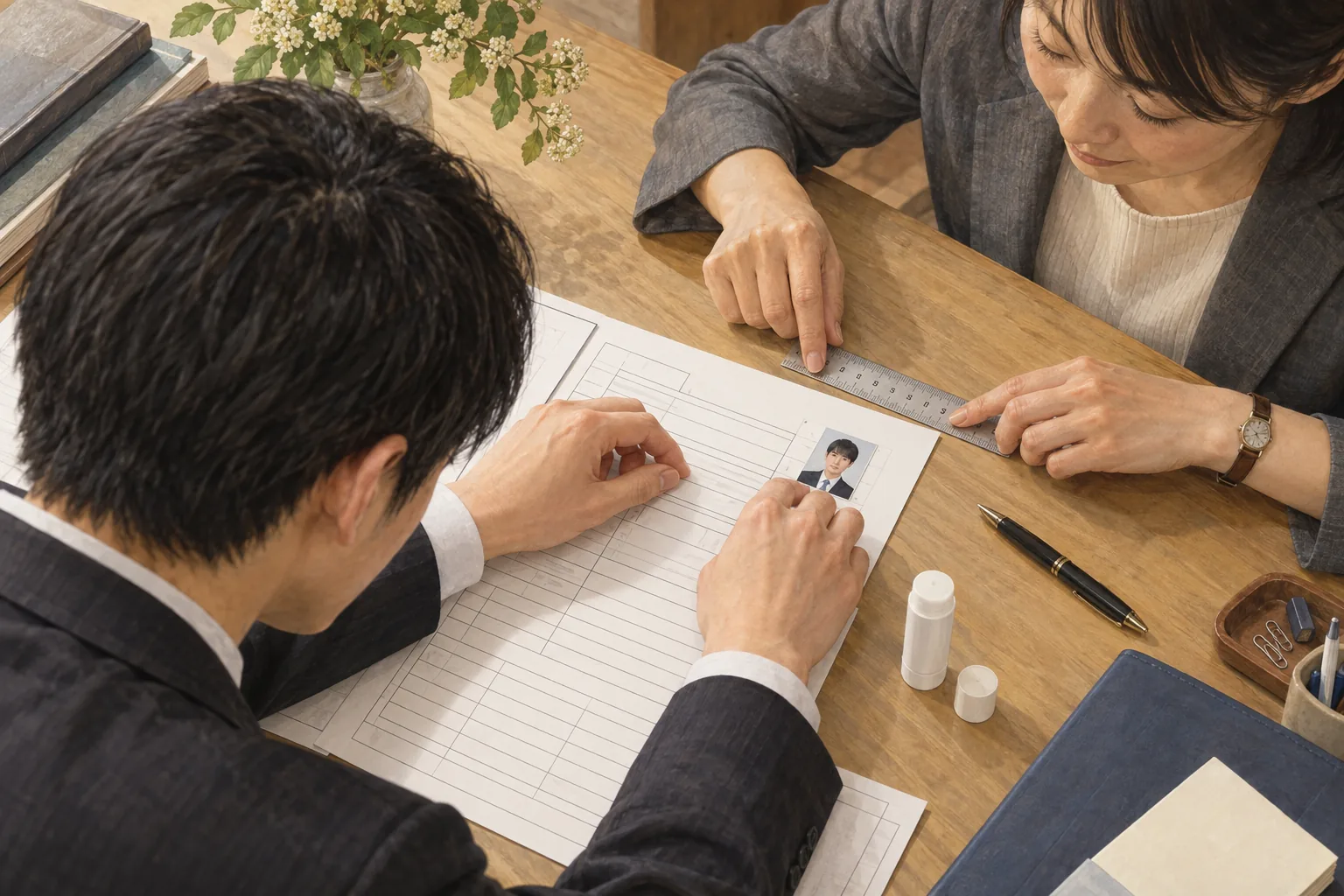
履歴書とは、決まった様式の用紙に書き、隅に写真を貼って出す日本の応募書類です。
30秒で説明する
外国人に説明するときの標準サイズ
A rirekisho is a standardized application form rather than a free-form resume. It lists education and employment in date order, with a photograph, and leaves little room for self-presentation. A separate document describes what you actually did in each job, and that is where experience is explained.
履歴書は自由に書く職務経歴ではなく、決まった様式の応募用紙です。学歴と職歴を年月の順に並べ、写真を貼り、自分を売り込む余地はほとんどありません。実際に何をしたかは職務経歴書という別の書類に書き、経験はそちらで説明します。
スピーチ・英作文
通訳案内士の二次口述・大学入試の自由英作文に
A Japanese resume is a form, not a document you design. You buy or download a standard sheet and fill in fixed boxes: name, date of birth, address, education and employment in strict date order, qualifications, and a short section for your reasons for applying.
A passport-style photograph goes in the corner. What surprises applicants from other countries is how little space there is to argue for yourself, and the answer is that a second document does that work, the shokumu keirekisho, which describes your responsibilities and results. Two changes are worth knowing.
Handwriting was long expected and is now optional at most companies, with typed forms normal. And in 2021 the labor ministry published a sample form on which the gender field is optional and fields such as commuting time and family members were dropped, part of a wider move away from questions unrelated to the job.
日本の履歴書は、自分で設計する書類ではなく、様式です。決まった用紙を買うか印刷し、決められた欄を埋めます。氏名、生年月日、住所、年月順の学歴と職歴、資格、そして志望の動機を書く短い欄です。隅には証明写真を貼ります。
他の国から応募する人が驚くのは、自分を主張する余地がどれほど少ないかということですが、その役目は職務経歴書という二つ目の書類が担い、担当した仕事と成果はそちらに書きます。知っておきたい変化が二つあります。
長く手書きが期待されてきましたが、今はほとんどの会社で任意になり、パソコンで作成するのがふつうです。そして2021年、厚生労働省は性別欄を任意記載とし、通勤時間や家族欄などをなくした様式例を示しました。仕事と関係のない事項を尋ねない流れの一部です。
こう聞かれたら
外国人から実際にされる質問と、その答え方。
Do I really need a photograph?
写真は本当に必要ですか。
Most companies still expect one, and there are photo booths at stations that produce the correct size. Some firms have dropped the requirement, and the job posting usually says which applies.
多くの会社は今も求めており、駅の証明写真機で規定の大きさのものが撮れます。廃止した会社もあり、募集要項にどちらかが書かれているのがふつうです。
Should it be handwritten?
手書きで書くべきですか。
Not any more in most cases. Typed forms are standard, and many companies accept a file by email. A few traditional employers still say handwritten, and the posting will state it if so.
今はたいてい必要ありません。パソコンで作るのが標準で、メールで送れる会社も多くあります。昔ながらの会社で手書きを求めるところはまだあり、その場合は募集要項に書かれています。
What goes in the reasons-for-applying box?
志望動機の欄には何を書けばよいですか。
Three or four sentences connecting what you have done to what this company does. Generic praise of the company reads badly; a specific link to the role reads well.
三、四文で、自分がしてきたことと、この会社がしていることを結びつけます。会社をほめるだけの一般論は印象が悪く、仕事との具体的なつながりが書かれていれば印象がよくなります。
そのまま使えるフレーズ
- Please send your resume and work history.履歴書と職務経歴書をお送りください。
- Is a photograph required?写真は必要ですか。
- A typed form is fine.パソコンで作成したもので結構です。
- List them in date order.年月の順に書いてください。
- I'll attach it as a file.ファイルで添付します。
説明に使う語句
- resume form履歴書
- detailed work history職務経歴書
- identification photograph証明写真
- qualifications資格
- reason for applying志望動機
動画で見る
YouTube より豆知識
履歴書は決まった様式の用紙に書くのが慣行で、文具店やコンビニで売られています。長く手書きが求められてきましたが、現在はパソコンで作成し、ファイルで送る形が一般的になりました。厚生労働省は2021年に、性別欄を任意記載とし、通勤時間や配偶者の扶養義務などの欄を設けない履歴書の様式例を公表しています。応募者の適性と能力に関係のない事項を採用選考で尋ねないという考え方にもとづくものです。
