こんにゃくこんにゃく
konnyaku
a jelly-like food made from a starchy tuber
ほぼ水分とほぼゼロカロリー。それでも独特の弾力で、鍋には欠かせない。
一言で言うと
これだけ覚えれば最低限伝わる一文
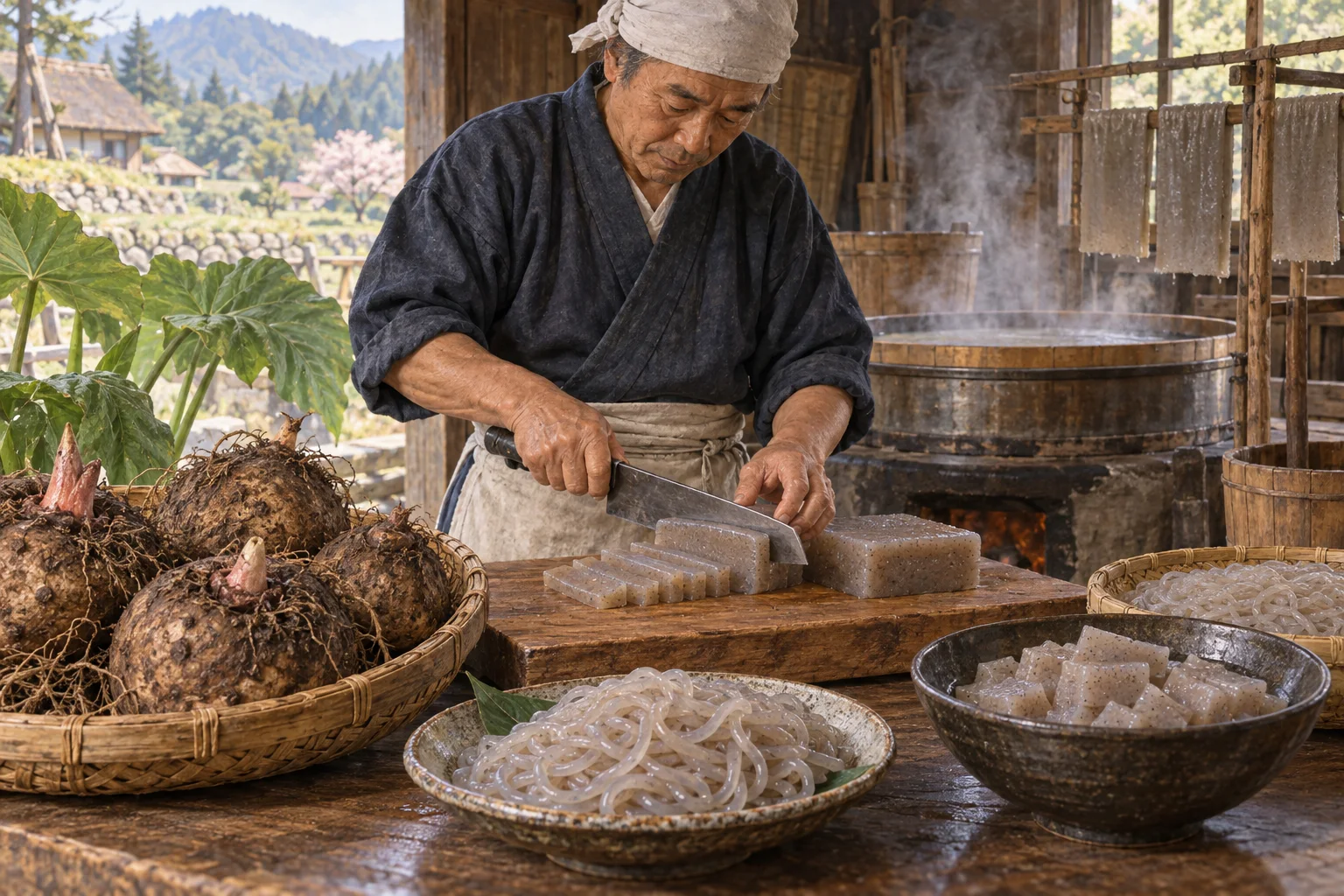
Konnyaku is a firm, jelly-like food made from a starchy tuber, almost entirely water and fiber, with barely any calories.
こんにゃくとは、サトイモ科の植物の芋から作る弾力のある食品で、ほとんどが水分と食物繊維で、カロリーはごくわずかです。
30秒で説明する
外国人に説明するときの標準サイズ
Konnyaku is made by boiling and processing the corm of the konjac plant into a firm, springy block, usually gray or white. It is over ninety percent water, with almost no calories or flavor of its own, so it takes on the taste of whatever it is cooked in, most often a soy-based broth. It shows up sliced in nimono and oden, or shredded into noodle-like strands called shirataki for sukiyaki and hot pot.
こんにゃくは、こんにゃく芋という植物の球茎を茹でて加工した、灰色や白色の弾力のある固形の食品です。九割以上が水分で、カロリーも味もほとんどなく、煮る汁、多くは醤油ベースの味をよく吸います。薄切りにして煮物やおでんに入れたり、糸状に切った白滝としてすき焼きや鍋に入れたりします。
スピーチ・英作文
通訳案内士の二次口述・大学入試の自由英作文に
Konnyaku is one of the more puzzling foods for a first-time visitor, because the texture suggests something chewy and substantial while the nutrition label says almost nothing is there. It is made from the corm of the konjac plant, ground, boiled and set with a little lime water into a firm gray or white block; the fiber inside, called glucomannan, absorbs an enormous amount of water, which is why the finished product is well over ninety percent water and close to zero calories.
On its own it barely tastes of anything, so its role in Japanese cooking is almost always to carry the flavor of a soy-based broth, showing up sliced into triangles in oden, cubed into simmered dishes, or cut into fine noodle-like strands called shirataki for sukiyaki and hot pot. Gunma prefecture, with its well-drained volcanic soil, grows the great majority of Japan's raw konjac tubers, and the plant needs about two to three years to mature before it can be harvested.
こんにゃくは、初めて訪れる人にとって少し戸惑う食べ物の一つです。歯ごたえがあってしっかりした食感なのに、栄養表示を見るとほとんど何も入っていないように見えるからです。こんにゃく芋という植物の球茎をすりつぶし、茹でて、少量の石灰水で固めた、灰色や白色の弾力のある塊です。
中に含まれるグルコマンナンという食物繊維が大量の水を抱え込むため、出来上がったものは九割以上が水分で、カロリーもほぼゼロに近くなります。それ自体にはほとんど味がなく、日本の料理の中では、醤油ベースの汁の味を運ぶ役目を果たすことがほとんどです。
おでんでは三角形に切って入り、煮物では角切りにされ、すき焼きや鍋では白滝という細い糸状に切られて使われます。水はけのよい火山灰土壌を持つ群馬県が、国産のこんにゃく芋の大半を生産しており、この植物は収穫までにおよそ二、三年かかります。
こう聞かれたら
外国人から実際にされる質問と、その答え方。
Does it actually have any nutrition?
栄養は本当にあるのですか。
Very little in terms of calories, since it's mostly water and fiber. The fiber, glucomannan, is valued for helping digestion and creating a feeling of fullness, which is why konnyaku shows up in diet-focused products.
カロリーという点ではほとんどありません。ほとんどが水分と食物繊維だからです。含まれるグルコマンナンという食物繊維は消化を助け、満腹感を得やすくすると考えられており、こんにゃくがダイエット向けの食品に使われる理由でもあります。
Why does it smell a bit strange raw?
生のものは少し変わったにおいがしますが、どうしてですか。
The lime water used to set it leaves a faint mineral smell, which is why packaged konnyaku is often boiled briefly before cooking to soften that smell before it goes into a dish.
固めるために使う石灰水のせいで、かすかに鉱物のようなにおいが残ります。そのため、料理に入れる前に一度さっと下茹でして、においを和らげることが多いです。
Is shirataki the same thing as konnyaku?
白滝とこんにゃくは同じものですか。
Yes, made from the same tuber and the same base material, just shaped into thin noodle-like strands instead of a block. It's used the same way, mostly to soak up broth in hot pots.
同じです。同じ芋、同じ原料から作られていますが、塊ではなく細い糸状に成形したものです。使い方も同じで、多くは鍋の汁を吸わせるために入れます。
誤解されやすい
MYTHKonnyaku is a type of seaweed or mushroom.
こんにゃくは海藻やきのこの一種だ、と思われがちです。
FACTIt is made from the corm of the konjac plant, a land tuber related to taro, not from the sea or a fungus.
こんにゃく芋という陸生の植物の球茎から作られており、里芋の仲間です。海のものでも、きのこの仲間でもありません。
そのまま使えるフレーズ
- It's mostly water, so almost no calories.ほとんど水分なので、カロリーもごくわずかです。
- It takes on the flavor of the broth.煮汁の味をよく吸います。
- This is shirataki, the noodle form.これは白滝、糸状の形です。
- Gunma grows most of Japan's konjac.群馬が国産こんにゃくの大半を生産しています。
- It has a springy, chewy texture.弾力のある、噛みごたえのある食感です。
説明に使う語句
- konjac tuberこんにゃく芋
- dietary fiber食物繊維
- thread-like konjac noodles白滝
- simmered oden dishおでん
- lime water石灰水
動画で見る
YouTube より豆知識
こんにゃくは、こんにゃく芋(サトイモ科の植物コンニャクの球茎)をすりつぶし、水酸化カルシウムを含む石灰水で固めて作る。農林水産省の統計では、令和4年産のこんにゃく芋の国内生産量は約5万2千トンで、うち群馬県が9割以上を占めるとされる。こんにゃく芋は植え付けから収穫まで数年を要する多年生の作物で、生の芋には強いえぐみと刺激を持つ成分(シュウ酸カルシウムなど)が含まれるため、加工せずに生で食べることはできない。江戸時代には粉状に加工した「こんにゃく粉」の技術が広まり、各地で日持ちする食品として流通するようになったとされる。
