快気祝いかいきいわい
kaikiiwai
the thank-you gift sent after recovering from illness or injury
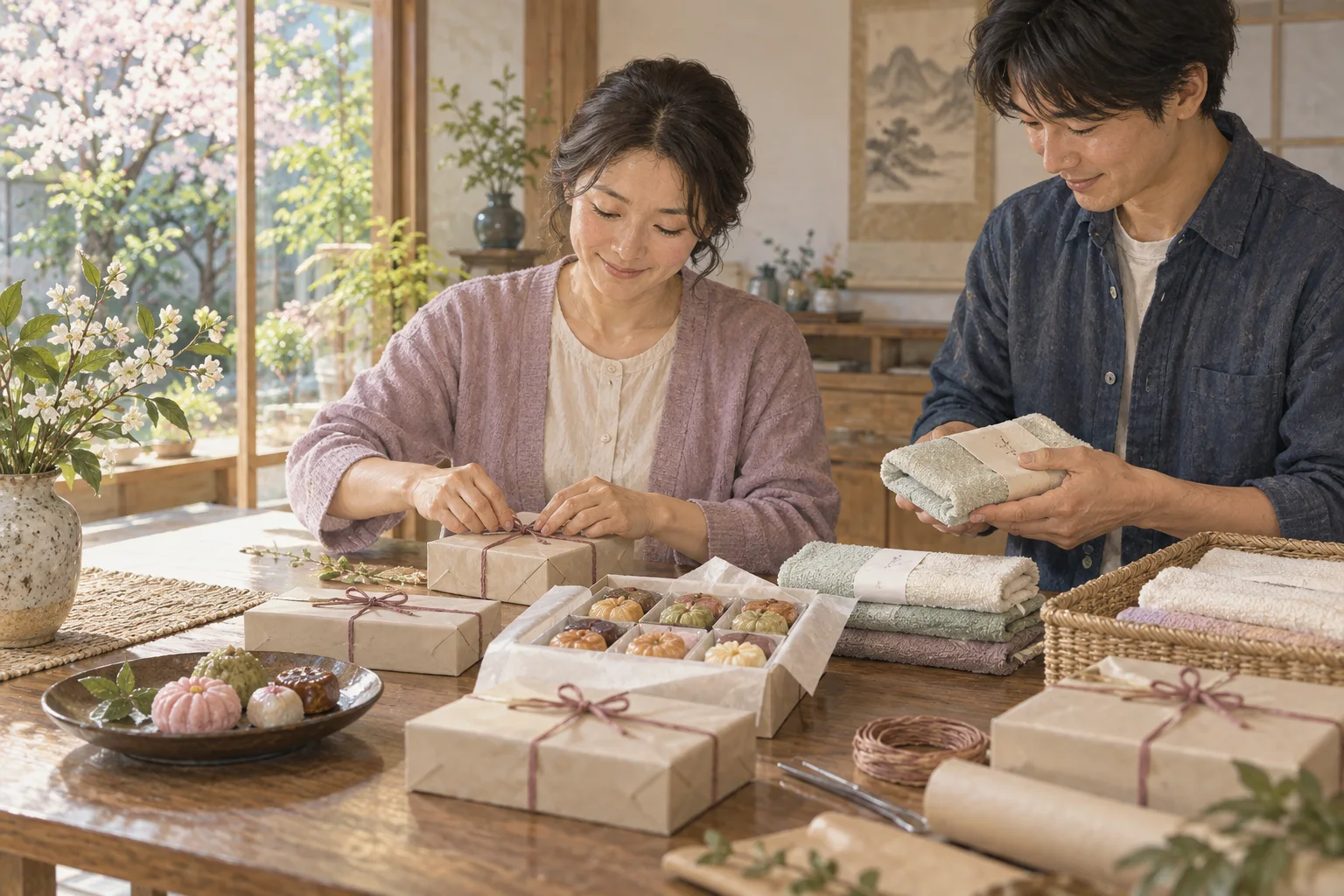
病気見舞いへのお返し。結び切りの水引で「繰り返さないように」と願う。
一言で言うと
これだけ覚えれば最低限伝わる一文
Kaikiiwai is the thank-you gift sent to people who visited or sent money during an illness, once you have recovered.
快気祝いとは、病気見舞いに来てくれたり贈り物をくれたりした人に、回復後に贈るお礼の品のことです。
30秒で説明する
外国人に説明するときの標準サイズ
When someone is hospitalized or unwell for a while, visitors and coworkers often bring omimai, a get-well gift or envelope of money. Once the person has recovered, custom calls for sending a return gift, kaikiiwai, usually worth about a third to half of what was received, often something consumable like sweets, tea or soap that "disappears" rather than something that lingers. The wrapping uses a musubikiri knot, tied so it cannot easily be untied and retied, deliberately symbolizing a wish that the illness not happen again.
誰かが入院したり体調を崩したりすると、見舞客や同僚が病気見舞いとして品物やお金を持ってくることがよくあります。回復したら、快気祝いとしてお返しをするのが習わしで、金額はいただいたものの三分の一から半分ほどが目安とされ、お菓子やお茶、石鹸といった、あとに残らない消え物が好まれます。のし紙には結び切りという、一度結ぶとほどけにくい結び方が使われ、病気が二度と起こらないようにという願いが込められています。
スピーチ・英作文
通訳案内士の二次口述・大学入試の自由英作文に
Gift-giving around illness in Japan runs in two directions, and the return half is often the less familiar one to outsiders. First comes omimai: when a coworker, relative or friend is hospitalized or laid up at home, visitors bring flowers, snacks, or an envelope of money as a get-well gesture, generally avoiding potted plants, since "putting down roots" suggests a long hospital stay, and avoiding flowers associated with death or suffering, such as chrysanthemums or cyclamen.
Once the person recovers, etiquette calls for a return gift called kaikiiwai, typically valued at roughly a third to half of what was received, sent with a note confirming the recovery. The gift itself is usually something used up and gone — sweets, tea, soap, laundry detergent — rather than something that stays in the house, on the logic that the illness, too, should not stay. The wrapping paper carries a knot called musubikiri, tied tightly so it resists being untied and retied, which is the same knot used for wedding gifts and funeral gifts, all occasions people hope will happen only once.
日本の病気にまつわる贈り物のやりとりは二方向にわたり、その「お返し」の側は外国の方にはあまり知られていないかもしれません。まず病気見舞いがあります。同僚や親戚、友人が入院したり自宅で療養していたりすると、見舞客は花やお菓子、あるいはお金を包んで持っていきます。
鉢植えの花は「根づく」、つまり入院が長引くことを連想させるため避けられ、菊やシクラメンのように、死や苦しみを連想させる花も避けられます。回復したら、快気祝いというお返しを贈るのが礼儀とされ、目安はいただいたものの三分の一から半分ほどで、回復した旨を伝える一言を添えます。
贈る品自体は、家に残るものではなく、お菓子やお茶、石鹸、洗剤のような使ってなくなるものが好まれます。病気そのものも、あとに残らないようにという考え方です。のし紙には結び切りという、きつく結んでほどけにくくする結び方が使われます。これは結婚祝いや不祝儀にも使われる同じ結び方で、いずれも一度きりであってほしい出来事だからです。
こう聞かれたら
外国人から実際にされる質問と、その答え方。
How much should the return gift be worth?
お返しはどのくらいの金額にすればよいですか。
The common guideline is about a third to half of what was received, not a full match or more. Going too far above what was given can feel like an overreaction.
一般的な目安は、いただいたものの三分の一から半分ほどです。全額に見合う、あるいはそれ以上のお返しをすると、かえって大げさに受け取られることがあります。
Why does the gift wrapping matter?
包み方には、どうしてこだわるのですか。
The musubikiri knot, tied so it can't easily be redone, symbolizes a wish that the event — illness, in this case — happens only once. Using a bow-style knot instead would suggest the opposite, that it's fine to repeat.
結び切りという、ほどきにくい結び方は、病気のようにその出来事が一度きりであってほしいという願いを表します。蝶結びのような結び方を使うと、逆に何度でも繰り返してよいという意味になってしまいます。
What kind of gift should I actually pick?
実際にはどんな品物を選べばよいですか。
Something consumable and used up — sweets, tea, coffee, soap, or a laundry or kitchen consumable — is the standard choice, since it symbolically doesn't linger the way the illness shouldn't.
お菓子やお茶、コーヒー、石鹸、洗剤といった、使ってなくなる消耗品が定番の選び方です。病気と同じように、あとに残らないという意味合いがあります。
そのまま使えるフレーズ
- I sent a kaikiiwai gift once I was back on my feet.回復してから快気祝いを贈りました。
- Return gifts are usually about half what was given.お返しはいただいた分の半分ほどが目安です。
- Avoid potted plants for a hospital visit gift.お見舞いに鉢植えは避けます。
- The wrapping uses a knot that won't come undone.包みにはほどけない結び方を使います。
- Sweets or tea are a safe choice for this.お菓子やお茶なら無難な選び方です。
説明に使う語句
- recovery gift快気祝い
- get-well gift病気見舞い
- consumable gift消え物
- decorative paper wrappingのし紙
- non-repeating knot結び切り
動画で見る
YouTube より豆知識
快気祝いは、入院や療養中に見舞いをくれた人へのお返しで、目安は受け取った額の三分の一から半分とされる。品物は菓子や茶、石鹸のような消え物が好まれ、家に形として残るものは避けられる傾向がある。のし紙には結び切りが使われ、これは同じく一度きりであってほしい結婚祝いや弔事にも使われる結び方で、繰り返しを望まないという意味を込める。病気見舞いの側でも、鉢植えは「根づく」=入院が長引く、を連想させるとして避けられることが多い。
