褌ふんどし
fundoshi
the traditional loincloth worn as underwear or festival dress
かつて男性の日用の下着。今は祭り装束として残る。
一言で言うと
これだけ覚えれば最低限伝わる一文
A fundoshi is a traditional loincloth, once everyday underwear and now worn mainly at festivals.
褌は伝統的な下着で、かつては日常着でしたが、今は主に祭りで身につけます。
30秒で説明する
外国人に説明するときの標準サイズ
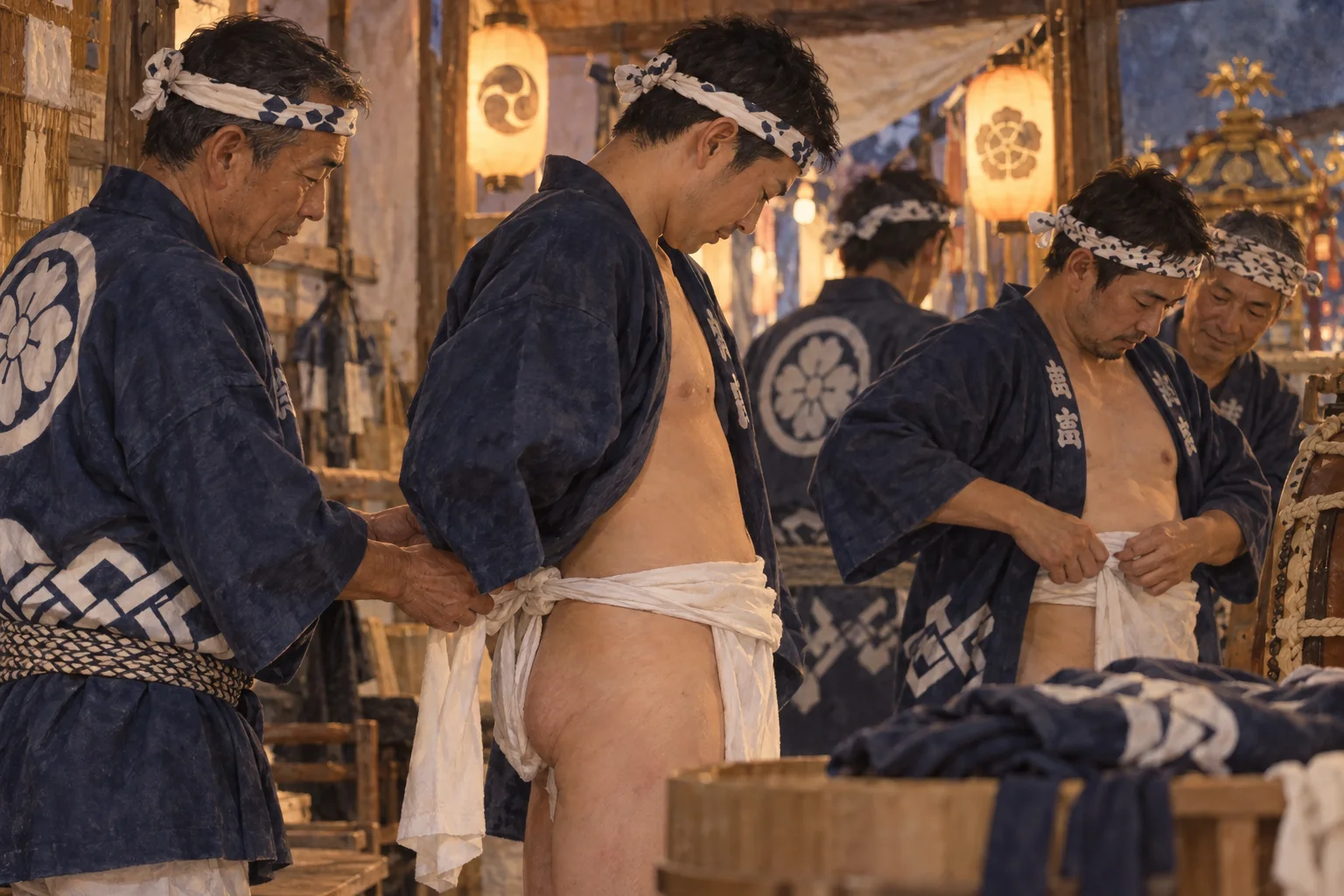
A fundoshi is a strip of cloth wrapped around the hips as underwear, worn by Japanese men through most of history. Until Western-style briefs spread after World War Two, it was ordinary daily wear, not something for special occasions. Today most people see one only at a hadaka matsuri, a 'naked festival,' where men wear little else while carrying a shrine or plunging into cold water. A small health-conscious revival has also brought it back as loose, breathable underwear.
褌とは、腰に巻きつけて着ける下着用の布で、日本の歴史の大半で男性が身につけてきました。第二次世界大戦後に洋式の下着が広まるまでは、特別な場面のためのものではなく、ふつうの普段着でした。今日ほとんどの人が褌を目にするのは、裸祭りと呼ばれる行事で、男性がほとんどそれだけを身につけて神輿を担いだり、冷たい水に飛び込んだりします。近年は、ゆったりと通気性のよい下着として見直す動きも、健康志向の人たちの間に見られます。
スピーチ・英作文
通訳案内士の二次口述・大学入試の自由英作文に
To a foreign eye, a fundoshi looks like just a strip of cloth, but it was Japan's standard men's underwear for most of its history, wrapped and tied rather than sewn to fit. There were a few basic styles, most notably the etchu fundoshi, which is said to have spread widely after the Meiji army began issuing it to conscripts.
Western-style briefs pushed it out of daily life after the Second World War, and it is often said that its ties to the military years made people want distance from it. What survives now is mostly ceremonial: at a hadaka matsuri, hundreds of men wear little more than a fundoshi, jostling for a lucky token or plunging into freezing water, treating the discomfort as part of the ritual. A smaller, newer revival markets it as breathable, sensible underwear again.
外国人の目には、褌はただの一枚の布に見えるかもしれませんが、実はその歴史の大半で日本人男性の標準的な下着でした。縫って体型に合わせるのではなく、体に巻きつけて紐で結ぶものです。
いくつかの基本の形がありましたが、なかでも越中褌が広く知られ、明治の軍隊が徴兵した兵に支給したことで一気に広まったとされます。第二次世界大戦後、洋式のブリーフが日用品としての褌を押しのけましたが、それには、軍隊の時代との結びつきから距離を置きたいという気持ちも一因としてあったとされます。
今も残っているのは主に儀礼としての姿で、裸祭りでは何百人もの男性がほぼ褌ひとつで、縁起物を奪い合ったり、冷たい水に飛び込んだりし、その苦しさそのものが儀式の一部として扱われます。近年は、通気性がよく合理的な下着として、褌を見直す小さな動きも出てきています。
こう聞かれたら
外国人から実際にされる質問と、その答え方。
Isn't a fundoshi just underwear? Why is it worn in public at festivals?
褌は下着なのに、なぜ祭りで人前に着けるのですか。
It's underwear in its origin, but centuries of use turned it into the standard costume for shrine festivals that involve carrying a heavy mikoshi or entering cold water, where loose, easily dried cloth is genuinely practical, not just tradition for its own sake.
もともとは下着ですが、何百年も使われるうちに、重い神輿を担いだり冷たい水に入ったりする神社の祭りの、いわば定番の衣装になりました。ゆったりして乾きやすい布は、単なる伝統というだけでなく、実際に理にかなっています。
Do women wear a fundoshi too?
女性も褌を着けるのですか。
Traditionally it was men's clothing; women historically wore a different wrapped undergarment called a koshimaki. A few modern brands now sell a looser fundoshi-style item marketed at women as breathable loungewear, but it isn't the historical norm.
伝統的には男性の衣服で、女性は腰巻と呼ばれる別の巻き布の下着を着けてきました。近年はゆったりした褌型の下着を、通気性のよいルームウェアとして女性向けに売るブランドも出てきていますが、歴史的な標準ではありません。
Why did it fall out of everyday use?
なぜ日常では着けられなくなったのですか。
Western-style briefs and boxers became widely available and easier to buy after World War Two, and, it is often said, the fundoshi's association with the military conscription years made many people, especially younger generations, eager to leave it behind as ordinary clothing.
第二次世界大戦後、洋式のブリーフやトランクスが広く手に入りやすくなったこと、そして褌が徴兵の時代と結びついていたために、特に若い世代がふだん着として遠ざけたがったことが理由だとよく言われます。
誤解されやすい
MYTHFundoshi is nothing but an embarrassing relic nobody chooses to wear anymore.
褌は誰も好んでは着けない、恥ずかしい過去の遺物だと思われがちです。
FACTThousands of festival participants put one on every year by choice, and a small but real market now sells fundoshi-style underwear to health-conscious adults as a comfortable, breathable option, not a joke.
実際には、毎年何千人もの祭りの参加者が自ら進んで身につけていますし、健康志向の大人向けに、快適で通気性のよい選択肢として褌型の下着を売る、小さいながらも実在する市場もあります。
そのまま使えるフレーズ
- Men wear only a fundoshi at this festival.この祭りでは男性が褌だけを身につけます。
- It's tied, not sewn to fit.縫うのではなく、結んで着けます。
- This brand sells a modern, breathable fundoshi.このブランドは通気性のよい現代版の褌を売っています。
- It used to be everyday underwear.かつては日常の下着でした。
- Can I try one on for the festival?祭りのために試着してもいいですか。
説明に使う語句
- loincloth褌
- to wrap and tie巻いて結ぶ
- naked festival裸祭り
- conscription徴兵
- breathable通気性のよい
動画で見る
YouTube より豆知識
褌には主に、体の後ろで結ぶ丈の長い六尺褌と、紐で留めるより簡便な越中褌の2種類がある。越中褌は、明治以降に軍隊で兵に支給されたことをきっかけに全国に広まったとされる。第二次世界大戦後は、洋式の下着が普及したことに加え、軍隊の時代を思わせる衣類として避けられ、日常着としては急速に廃れた。今も残るのは、神輿を担ぐ祭りなど「裸祭り」と呼ばれる行事の装束としての姿で、近年は通気性のよい下着として褌を見直す動きも出てきている。
