永代供養えいたいくよう
eitai kuyo
the temple keeping your grave when nobody is left to
墓を継ぐ人がいない。だから寺が、代わりに供養を引き受ける仕組みが広がっている。
一言で言うと
これだけ覚えれば最低限伝わる一文
Eitai kuyo means a temple taking permanent charge of remains and rites when no heir is left.
墓を守り、供養を続けることを寺が引き受ける仕組みです。跡を継ぐ人がいない場合に使われます。
30秒で説明する
外国人に説明するときの標準サイズ
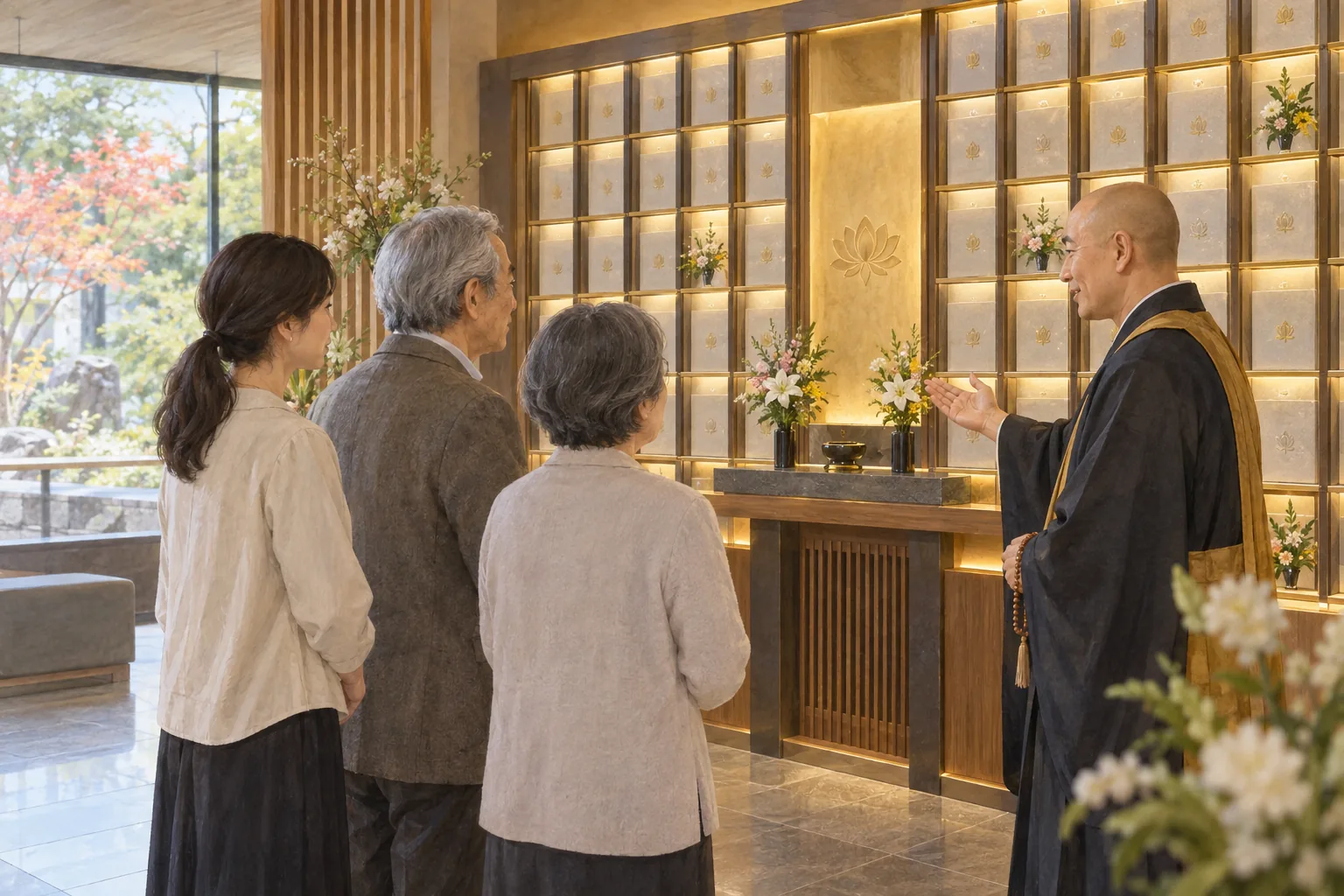
A Japanese family grave is normally maintained by descendants, who pay the temple and visit at set times. With fewer children and families spread across the country, many graves have nobody to inherit them. Eitai kuyo is the arrangement where you pay once and the temple takes over permanently — often placing remains in a shared vault or a collective grave rather than a family plot.
日本の家の墓は、ふつう子孫が守ります。寺に費用を払い、決まった時期に参ります。子どもが減り、家族が各地に散ったため、継ぐ人のいない墓が増えました。永代供養は、一度まとめて払うことで、その後の供養と管理を寺が引き受ける仕組みです。家ごとの区画ではなく、共同の納骨堂や合同の墓に納めることが多くなっています。
スピーチ・英作文
通訳案内士の二次口述・大学入試の自由英作文に
Eitai kuyo is one of the clearest places where Japan's demographics have changed a religious practice. The traditional arrangement is that a grave belongs to a household, and the household maintains it: an annual fee to the temple, cleaning it at the equinoxes and Obon, and the eldest child inheriting the duty. That assumed there would be an eldest child, living nearby, for generations.
Now families have one child or none, and that child lives four hours away. So temples offer eitai kuyo, meaning perpetual memorial: you pay a single sum, and the temple takes responsibility for the remains and the rites from then on, with no ongoing obligation on your family. In practice the remains often go into a shared vault or a collective grave, sometimes kept separately for a set period and then combined.
It is markedly cheaper than buying and maintaining a family plot, which is part of the appeal. The related word you will hear is hakajimai, closing a grave — removing an existing family grave, which requires permits and the temple's cooperation, and has become common enough to be a small industry.
永代供養は、日本の人口の変化が宗教の慣行を変えた例として、最も分かりやすいものの一つです。もとの形はこうです。墓は家のもので、家が守る。寺に毎年の費用を払い、彼岸とお盆に掃除し、その務めを長子が継ぐ。ここには、近くに住む長子が代々いるという前提がありました。いまは子が一人か、いないか。
その子は四時間離れた土地に住んでいます。そこで寺が用意したのが永代供養です。一度まとまった額を払えば、その後の遺骨と供養の責任を寺が引き受け、家に続く務めは残りません。実際には、共同の納骨堂や合同の墓に納めることが多く、一定の期間だけ個別に安置し、その後まとめる形もあります。
家ごとの墓を買って維持するより、はっきり安い。それも選ばれる理由です。関連してよく聞く言葉が墓じまいです。いまある家の墓を片づけることで、行政の手続きと寺の協力が要り、いまでは一つの商いが成り立つほど広がっています。
こう聞かれたら
外国人から実際にされる質問と、その答え方。
How long is perpetual?
永代とはどれくらいですか。
It varies by temple and is worth checking. Many keep remains individually for a set term — often 13 or 33 years — and then move them into a collective grave.
寺によって違うので、確かめる値打ちがあります。十三年や三十三年といった期間は個別に安置し、その後に合祀する形が多いです。
Is it cheaper?
費用は安いのですか。
Considerably. A family plot involves buying the site, the stone and ongoing fees; eitai kuyo is usually a single payment and no maintenance obligation.
かなり安くなります。家の墓は区画を買い、石を建て、毎年の費用がかかります。永代供養は、ふつう一度の支払いで、その後の維持の義務はありません。
Can you still visit?
お参りはできますか。
Yes. Collective graves and vaults have a place to stand and offer incense, and temples hold group memorial services on set days each year.
できます。合同の墓や納骨堂にも、お参りして線香を供える場所があり、寺は年の決まった日に合同の法要を行います。
誤解されやすい
MYTHChoosing eitai kuyo means abandoning your ancestors.
永代供養を選ぶのは、先祖を捨てることだ、と思われがちです。
FACTIt transfers the duty to the temple so the rites continue. The alternative for a grave with no successor is neglect, which is what the arrangement avoids.
務めを寺に移して、供養が続くようにする仕組みです。継ぐ人のいない墓の行き先は放置であり、それを避けるためのものです。
そのまま使えるフレーズ
- The temple takes over the grave permanently.寺が墓を引き受け続けます。
- You pay once, with no ongoing duty on the family.一度払えば、家に続く務めは残りません。
- Fewer children means fewer people to inherit a grave.子が減れば、墓を継ぐ人も減ります。
- The remains often go into a shared grave.遺骨は合同の墓に納めることが多いです。
- Closing an existing family grave is called hakajimai.いまある墓を片づけることを墓じまいと言います。
説明に使う語句
- family grave家墓
- collective grave合祀墓
- ossuary, vault納骨堂
- memorial service法要
- closing a grave墓じまい
動画で見る
YouTube より豆知識
永代供養は、遺骨の管理と供養を寺院や霊園が引き受ける契約で、個別に安置する期間を十三回忌や三十三回忌までとし、その後に合祀する形が多い。厚生労働省の統計では、墓地から遺骨を移す「改葬」の件数は近年増え続けており、2023年度は16万件を超えた。樹木葬や納骨堂など、承継を前提としない形の需要が高まっている。
