ちゃんこ鍋ちゃんこなべ
chanko nabe
the hearty hot-pot meal associated with sumo stables
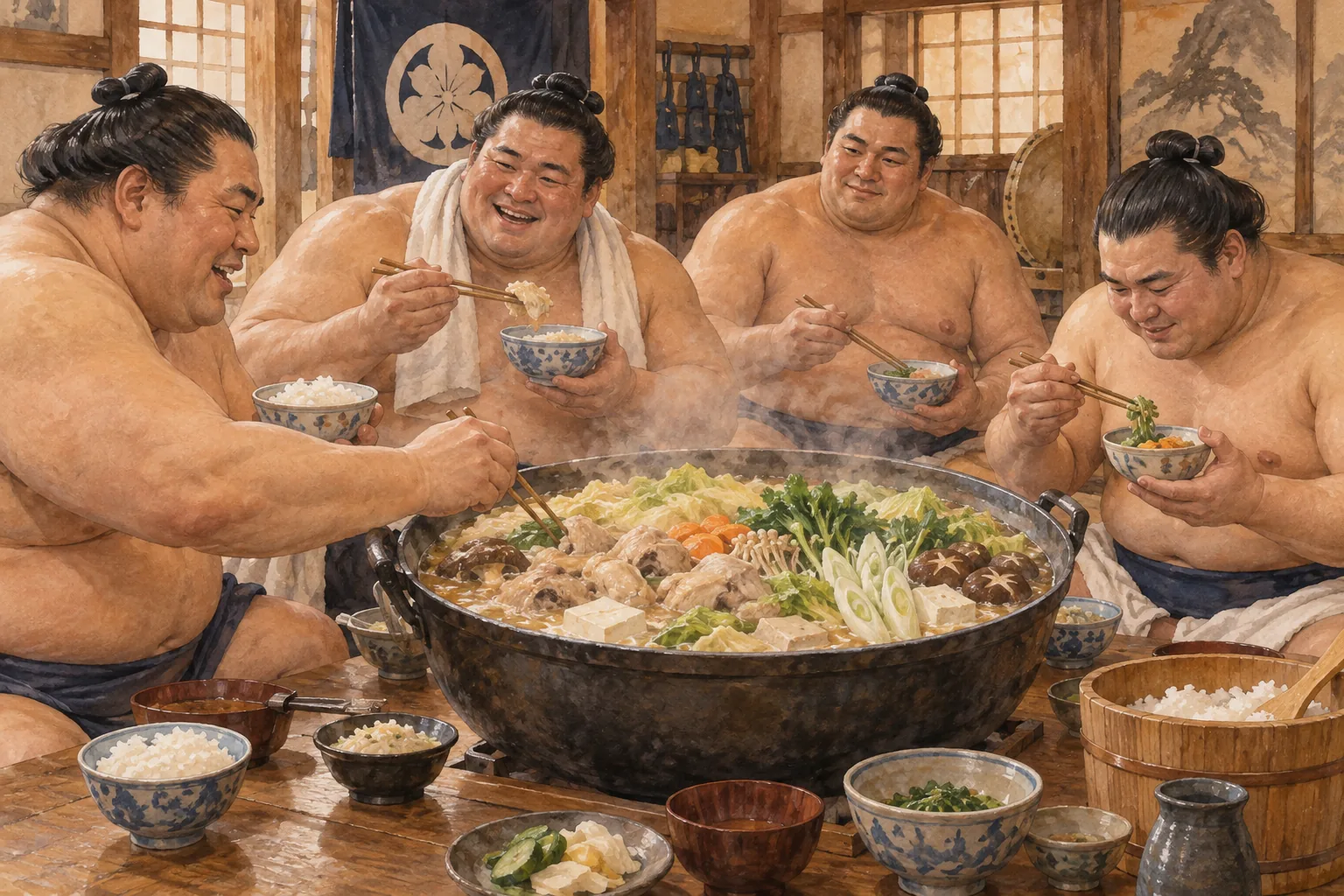
「ちゃんこ」は鍋料理の名前ではなく、相撲部屋の食事そのものを指す言葉。
一言で言うと
これだけ覚えれば最低限伝わる一文
Chanko nabe is the hot-pot meal associated with sumo, though "chanko" originally meant any meal a stable cooks together.
ちゃんこ鍋は相撲でおなじみの鍋料理ですが、「ちゃんこ」とはもともと相撲部屋の食事全般を指す言葉でした。
30秒で説明する
外国人に説明するときの標準サイズ
Chanko nabe is a large hot pot packed with meat, fish, tofu, and vegetables, closely associated with sumo wrestlers, though the word chanko refers to any meal prepared and eaten at a sumo stable. It became the standard meal there partly because a single big pot can feed dozens of wrestlers at once with little effort, and partly because it is easy to load with enough protein for training. Junior wrestlers traditionally do the cooking as part of their duties, and the recipe changes from stable to stable. Outside of sumo, it is now a popular restaurant dish that anyone can order.
ちゃんこ鍋とは、肉や魚、豆腐、野菜をたっぷり入れた大きな鍋料理で、力士と強く結びついていますが、「ちゃんこ」という言葉自体は本来、鍋そのものではなく相撲部屋で作られ食べられる食事全般を指します。相撲部屋の定番になったのは、一つの大きな鍋で大勢の力士に一度に食事を出せて、準備や片付けの手間も少なくて済むからで、体格や稽古を支えるタンパク質もたっぷり取れるためです。伝統的に若手の力士が調理を担当し、作り方は部屋ごとに違います。相撲とは関係なく、今では誰でも注文できる人気の飲食店の料理にもなっています。
スピーチ・英作文
通訳案内士の二次口述・大学入試の自由英作文に
Chanko nabe is the hot pot most people associate with sumo wrestlers, but the word chanko actually refers more broadly to any meal cooked and eaten together at a sumo stable, with the pot being just the most common form it takes. The dish became standard sometime around the early twentieth century, reportedly starting at one particular stable that needed an efficient way to feed a growing number of young wrestlers at once, since a single large pot needs far less preparation and cleanup than individual dishes.
Recipes vary widely by stable and can include chicken, seafood, or beef along with vegetables and noodles, and junior wrestlers usually do the actual cooking as part of their daily duties within the stable's hierarchy. Today you don't need to be anywhere near a dohyo to eat it, since chanko restaurants, many of them opened by retired wrestlers, serve it across Japan as an ordinary, hearty meal.
ちゃんこ鍋は、多くの人が力士と結びつけて思い浮かべる鍋料理ですが、「ちゃんこ」という言葉自体は、相撲部屋で一緒に作って食べる食事全般を指す、もっと広い言葉です。鍋はそのもっとも一般的な形にすぎません。
この料理が定番になったのは20世紀初め頃とされ、増え続ける若い力士に一度に効率よく食事を出す必要があった、ある部屋が始まりだったと伝えられています。大きな鍋一つなら、個別の料理を出すよりずっと準備や片付けの手間が省けるからです。
レシピは部屋によって大きく違い、鶏肉や魚介、牛肉に野菜や麺を加えることもあり、若手の力士が部屋の序列の中での役目として実際の調理を担当することが多いです。今では土俵の近くにいなくても、引退した力士が開いた店も含め、全国のちゃんこ専門店でごく普通の食事として楽しめます。
こう聞かれたら
外国人から実際にされる質問と、その答え方。
Is chanko nabe just for sumo wrestlers?
ちゃんこ鍋は力士だけのものですか。
Not anymore. While it started as stable food, it's now a common restaurant dish that anyone can order, especially in neighborhoods with a sumo history like Ryogoku in Tokyo.
もはやそうではありません。もともとは相撲部屋の食事でしたが、今では誰でも注文できる一般的な飲食店の料理で、東京の両国など相撲にゆかりのある地域では特に多く見られます。
Who cooks chanko at a sumo stable?
相撲部屋では誰がちゃんこを作るのですか。
Traditionally, the younger, lower-ranked wrestlers do the cooking as one of their duties, while senior wrestlers eat first.
伝統的には、地位の低い若手の力士が役目の一つとして調理を担当し、上位の力士が先に食事をします。
そのまま使えるフレーズ
- Let's have chanko nabe for dinner tonight.今夜の夕食はちゃんこ鍋にしましょう。
- This restaurant is run by a former sumo wrestler.このお店は元力士が営んでいます。
- Junior wrestlers cook the chanko at the stable.相撲部屋では若い力士がちゃんこを作ります。
- Every stable has its own chanko recipe.どの部屋にもそれぞれのちゃんこの作り方があります。
説明に使う語句
- sumo stable相撲部屋
- hot pot鍋
- junior wrestler若手力士
- protein-richタンパク質が豊富な
動画で見る
YouTube より豆知識
「ちゃんこ」はもともと鍋料理そのものではなく、相撲部屋で作られ食べられる食事全般を指す言葉だったとされる。明治末に出羽海部屋が、大勢の力士に効率よく食事を出す方法として鍋料理を主体にしたのが始まりとされ、鍋なら一度に大量に作れて配膳の手間も省ける。名前の由来には諸説あり、親方を「ちゃん」、弟子を「こ」と呼んだことに由来するという説などがある。今は両国をはじめ全国にちゃんこ専門店があり、力士でなくても気軽に食べられる。
