平等院鳳凰堂びょうどういんほうおうどう
Byodoin
the eleventh-century temple hall on the ten-yen coin
十円玉にある建物。1053年に建てられ、そのまま残っている。
一言で言うと
これだけ覚えれば最低限伝わる一文
Byodoin is the temple hall on the ten-yen coin, built in 1053 as a picture of paradise.
平等院は十円玉に描かれている建物で、1053年に極楽浄土を形にして建てられました。
30秒で説明する
外国人に説明するときの標準サイズ
Byodoin stands in Uji, south of Kyoto. Its main hall was built in 1053 by Fujiwara no Yorimichi, the most powerful man of his day, who turned his family villa into a temple. The hall sits on an island in a pond so that it seems to float, because it was meant to show what paradise looks like. It is the building on the back of the ten-yen coin, and it has stood since the eleventh century.
平等院は京都の南、宇治にあります。中心の鳳凰堂は1053年、当時もっとも力のあった藤原頼通が、一族の別荘を寺に変えて建てたものです。池の中島に建ち、浮かんでいるように見えるのは、極楽浄土の姿を形にしたからです。十円硬貨の裏に描かれている建物で、11世紀からそのまま建っています。
スピーチ・英作文
通訳案内士の二次口述・大学入試の自由英作文に
If you have any Japanese money in your pocket, take out a ten-yen coin. The building on the back is Byodoin, in Uji just south of Kyoto, and it has been standing since 1053. It was built by Fujiwara no Yorimichi, who effectively ran the country, and it began as his family's villa before he turned it into a temple.
The idea behind it is worth knowing. People at that time believed the world was entering an age when enlightenment through practice was no longer possible, and that the only hope was to be reborn in the Pure Land.
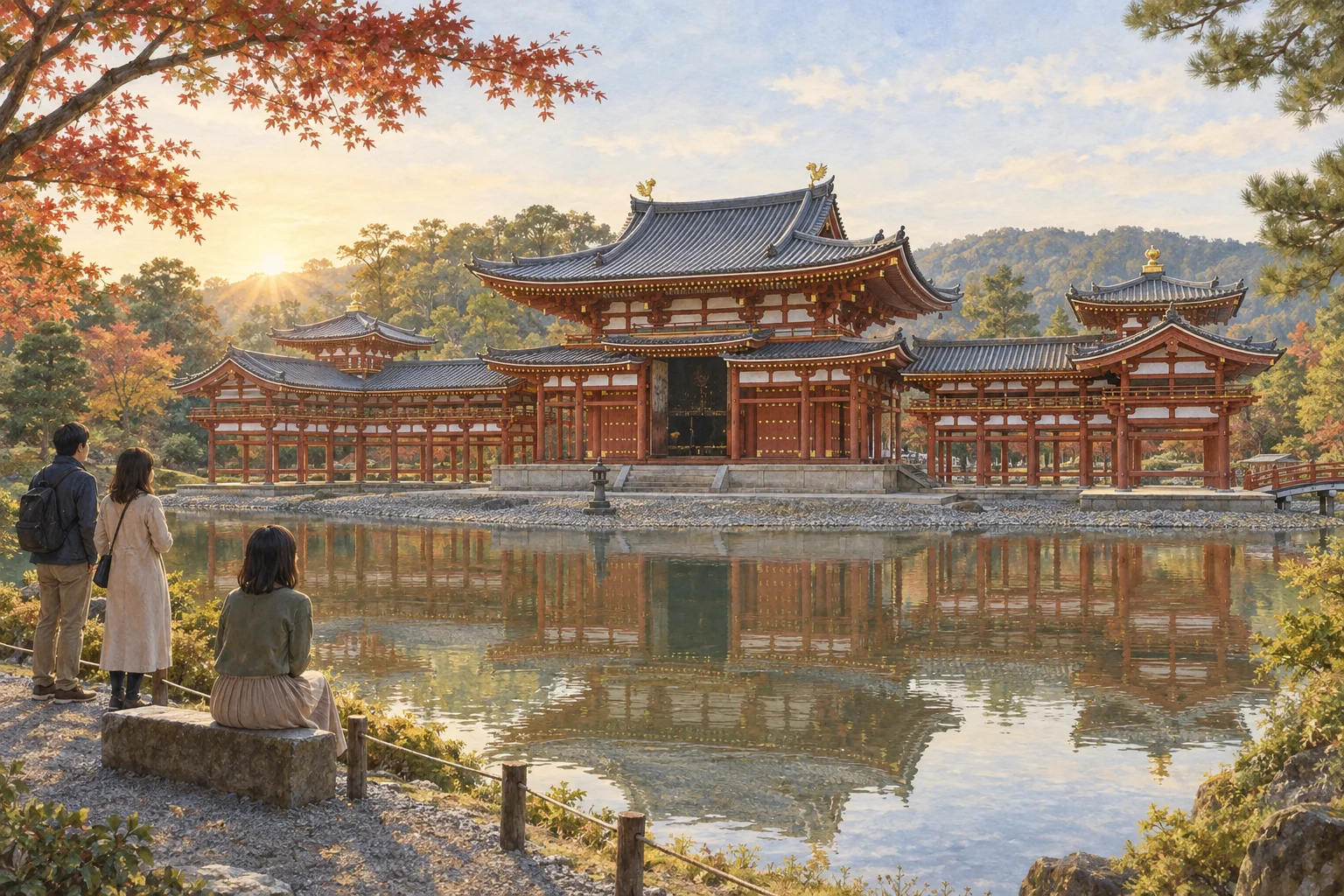
So Yorimichi built a picture of that place: a hall on an island in a pond, with the golden Amida Buddha inside visible through a window from across the water. More than nine hundred and seventy years later, you can still stand where he intended you to stand.
日本のお金を持っていたら、十円玉を出してみてください。裏に描かれている建物が平等院で、京都のすぐ南の宇治にあり、1053年から建っています。建てたのは事実上この国を動かしていた藤原頼通で、もとは一族の別荘でしたが、それを寺に改めました。
背景にある考えを知ると面白いです。当時の人々は、修行では悟れない時代に入ったと信じていて、望みは極楽浄土に生まれ変わることだけだと考えました。そこで頼通は、その場所の絵を建ててしまったのです。
池の中島に建つお堂、そして水の向こうから窓ごしに見える金色の阿弥陀如来。970年余りたったいまも、彼が立たせようとした場所に立つことができます。
こう聞かれたら
外国人から実際にされる質問と、その答え方。
Is the building a reconstruction?
この建物は再建されたものですか。
No. The hall itself dates from 1053 and has been repaired many times but never rebuilt from scratch. That makes it one of the oldest wooden buildings in Japan that you can still see in its original setting.
いいえ。お堂そのものが1053年のもので、修理は何度も受けていますが建て直されてはいません。当初の場所と景観のまま見られる木造建築としては、日本でも古いほうです。
Why is there a window in the front?
どうして正面に窓があるのですか。
It is there so that the face of the Amida Buddha can be seen from outside, across the pond. The hall was designed to be looked at from the far bank, not only entered.
池の向こう岸から阿弥陀如来の顔が見えるようにするための窓です。お堂は中に入るだけでなく、対岸から眺めるように設計されています。
Why phoenixes?
どうして鳳凰なのですか。
Two bronze phoenixes stand on the roof, and the building's wings spread like a bird, so people started calling it the Phoenix Hall. The name is later than the building itself.
屋根に青銅の鳳凰が二羽立っていること、建物が鳥のように翼を広げた形であることから、鳳凰堂と呼ばれるようになりました。名前は建物より後のものです。
そのまま使えるフレーズ
- Look at the back of a ten-yen coin — that's this building.十円玉の裏を見てください。この建物です。
- It was built in 1053 and has never been rebuilt.1053年に建てられて、建て直されていません。
- It's meant to look like paradise floating on water.水に浮かぶ極楽浄土に見えるように造られています。
- The Buddha's face is visible from across the pond.池の向こうから仏の顔が見えます。
- Uji is also famous for green tea.宇治は緑茶でも有名です。
説明に使う語句
- the Pure Land極楽浄土
- Amida Buddha阿弥陀如来
- villa別荘
- phoenix鳳凰
- regent, chief adviser関白
動画で見る
YouTube より豆知識
鳳凰堂は天喜元年(1053年)の建立。堂内の本尊は平安時代を代表する仏師・定朝の作で、現存が確実な定朝作の仏像はこの一体だけとされる。壁と扉には来迎の場面が描かれ、天井近くには楽器を持つ雲中供養菩薩像52体が掛けられている。屋根の鳳凰は、2004年から発行された福沢諭吉の一万円札の裏にも描かれた。境内のある宇治は、鎌倉時代から茶の産地として知られてきた。
