紫陽花あじさい
ajisai
hydrangea
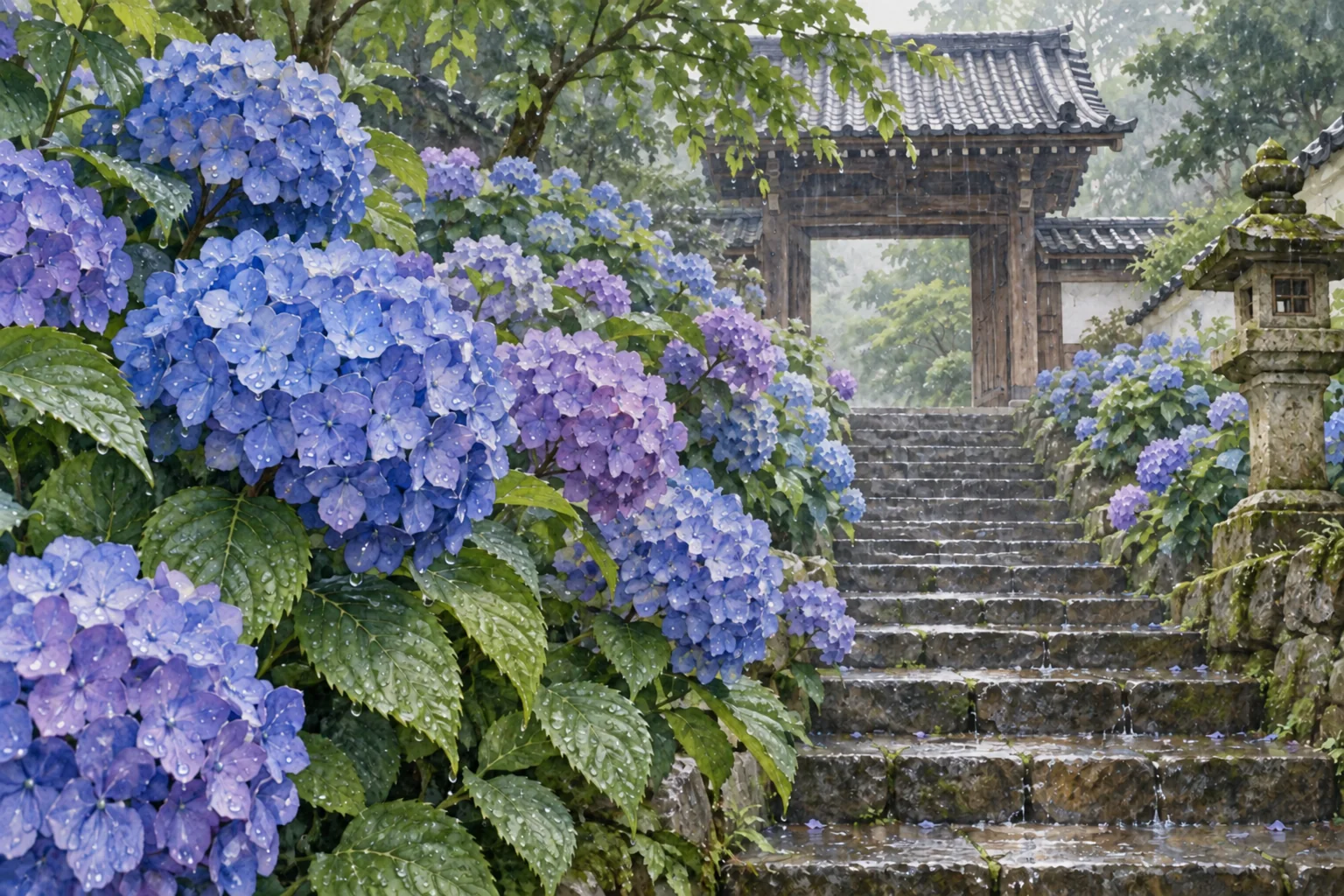
土の性質で色が変わる。だから同じ株でも去年と色が違う。
一言で言うと
これだけ覚えれば最低限伝わる一文
Ajisai are hydrangeas, the flower of Japan's rainy season, and their color depends on the soil.
紫陽花は梅雨の時期の花で、色は土の性質によって変わります。
30秒で説明する
外国人に説明するときの標準サイズ
Ajisai, hydrangeas, bloom in June during the rainy season, and they are the flower people associate with rain rather than sunshine. Temples famous for them get crowds in a month when few other flowers are at their best. The color shifts with soil acidity, blue in acid soil and pink in alkaline soil, so the same plant can change over the years.
紫陽花は6月、梅雨の時期に咲き、晴れではなく雨と結びつけて思い浮かべられる花です。紫陽花で知られる寺は、ほかに見ごろの花が少ない時季に人を集めます。色は土の酸性度で変わり、酸性なら青、アルカリ性なら赤みを帯びるため、同じ株でも年によって色が変わります。
スピーチ・英作文
通訳案内士の二次口述・大学入試の自由英作文に
Hydrangeas are the flower of the Japanese rainy season. They open in June, just when the weather turns gray and humid and everyone is complaining, and that timing is exactly why they are loved: they are the one thing that looks better in rain.
Temples and shrines with hydrangea gardens draw real crowds in a month that is otherwise quiet, and some places line thousands of plants along stone steps. The color is not fixed. The same variety turns blue in acidic soil and pink in alkaline soil, because acidity changes how the plant takes up aluminum, so gardeners can shift the color by treating the ground.
The Japanese name has been used since at least the eighth century, and the plant was later taken to Europe from Japan, which is why so many garden hydrangeas there descend from Japanese stock.
紫陽花は日本の梅雨の花です。天気が灰色に湿り、誰もが文句を言い始める6月に咲きます。その時期こそが愛される理由で、雨の中でこそよく見える唯一のものだからです。
紫陽花の庭を持つ寺社は、ふだんは静かな月に本当に人を集め、石段沿いに何千株も並べる場所もあります。色は決まっていません。同じ品種でも、酸性の土では青く、アルカリ性の土では赤みを帯びます。
酸性度が植物のアルミニウムの吸収の仕方を変えるためで、土を手入れすれば色を動かせます。日本語の名は遅くとも8世紀には使われており、のちに日本からヨーロッパへ持ち出されました。向こうの庭の紫陽花の多くが日本の系統を引くのはそのためです。
こう聞かれたら
外国人から実際にされる質問と、その答え方。
Why do the colors differ in the same garden?
同じ庭でも、どうして色が違うのですか。
Soil acidity varies from spot to spot, and acidity controls how much aluminum the plant can absorb. More acidic soil gives blue, more alkaline gives pink. Gardeners deliberately add lime or aluminum sulfate to steer this.
土の酸性度が場所ごとに違い、それが植物の吸収できるアルミニウムの量を左右するからです。酸性が強いほど青く、アルカリ性に傾くほど赤くなります。園芸では石灰や硫酸アルミニウムを加えて色を操ります。
Are they edible? I've seen them used as a garnish.
あれは食べられるのですか。料理に添えてあるのを見ました。
No, and this matters. Hydrangea leaves have caused poisoning cases in Japan when used as decoration on restaurant dishes and eaten by mistake. Enjoy them in the garden, not on the plate.
食べられませんし、これは大事な点です。日本では料理の飾りに使われた紫陽花の葉を誤って食べ、中毒になった例が報告されています。庭で楽しむもので、皿の上のものではありません。
そのまま使えるフレーズ
- They look their best in the rain.雨のときがいちばんきれいです。
- The color depends on the soil.色は土によって決まります。
- This temple is famous for them.この寺は紫陽花で有名です。
- Don't eat the leaves. They're toxic.葉は有毒なので食べないでください。
説明に使う語句
- hydrangea紫陽花
- soil acidity土の酸性度
- in bloom咲いている
- rainy season梅雨
動画で見る
YouTube より豆知識
紫陽花は『万葉集』にも詠まれており、古くから知られていた花です。江戸時代に日本を訪れたシーボルトが本国に紹介し、ヨーロッパで品種改良された系統が「西洋あじさい」として日本に戻ってきました。私たちが花びらと思っている部分は、正確には萼が色づいたものです。色が変わることから「移り気」という花言葉がつく一方、小さな花が集まる姿から「家族の団らん」とする見方もあります。葉には有毒成分があるとされ、飾りに使って食べた中毒例が報告されています。
