誕生日の祝い方たんじょうびのいわいかた
tanjobi no iwaikata
how birthdays are marked across a Japanese life, beyond a party
普通の誕生日は静かなもの。年齢の数え方そのものが法律で変わった歴史もある。
一言で言うと
これだけ覚えれば最低限伝わる一文
Tanjobi no iwaikata, or how birthdays are celebrated, is mostly low-key in Japan, with ceremony saved for a few birthdays.
誕生日の祝い方は、日本ではふだんは静かに済ませることが多く、特定の年齢の誕生日にだけしっかりした儀式を設けるのが特徴です。
30秒で説明する
外国人に説明するときの標準サイズ
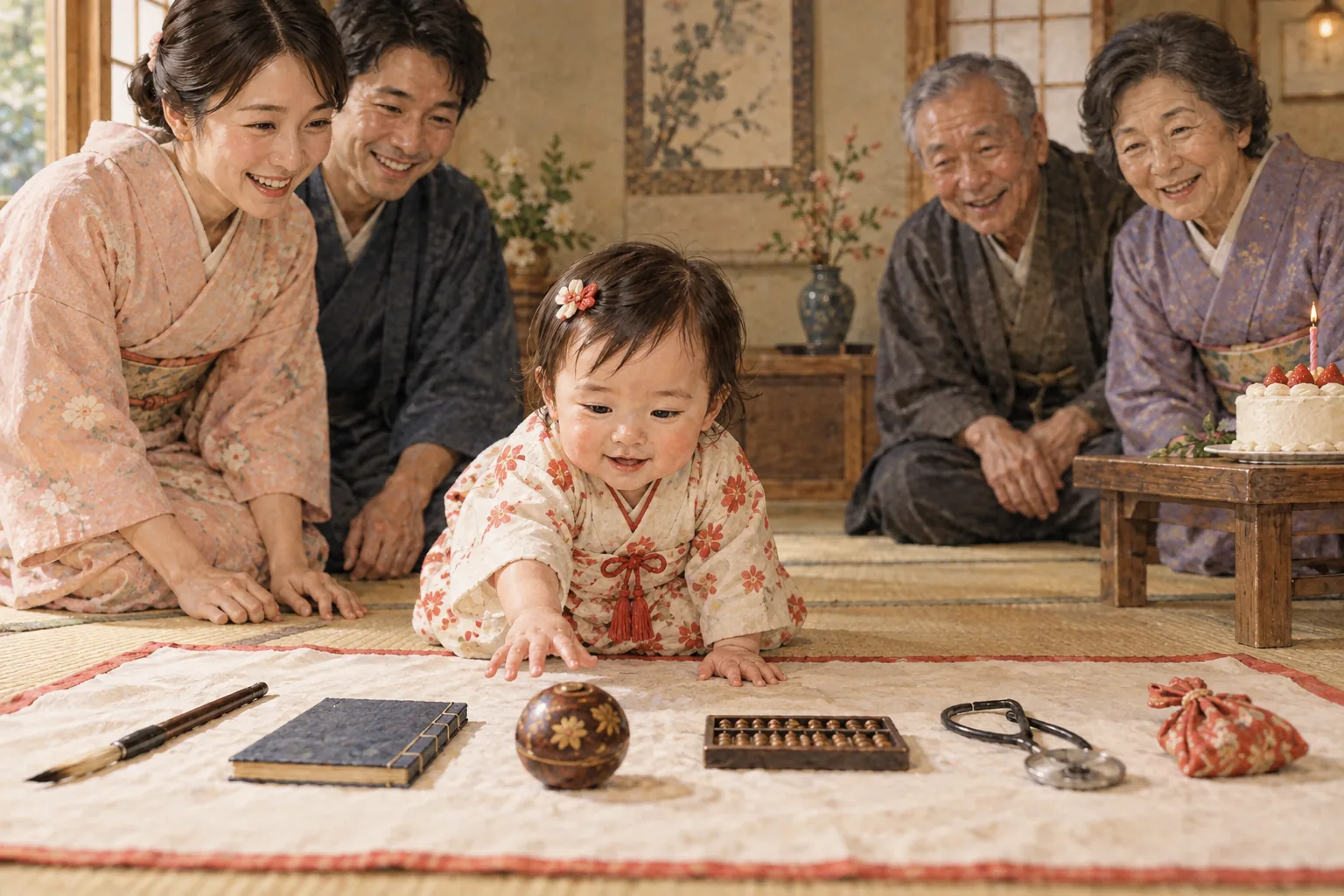
A routine adult birthday in Japan is usually low-key: a family dinner, a cake, no expectation of a big party every single year. Real ceremony is saved for specific milestones — a baby's first birthday, hatsu tanjobi, where the child chooses one object from several laid out as a playful fortune-telling, and later the sixtieth birthday, kanreki, marking a full cycle of the old sixty-year calendar with a gift of something red. Until around 1950, most people even counted age differently in daily life, adding a year to everyone at New Year rather than on their birthday.
日本のふだんの誕生日は、たいてい控えめです。家族での食事とケーキ程度で、毎年必ず盛大に祝う文化ではありません。しっかりした儀式が用意されるのは特定の節目で、たとえば赤ちゃんの初誕生日には、いくつかの品物を並べて一つを選ばせ、将来を占う「選び取り」という遊びが行われます。のちには六十歳の還暦があり、これは昔の暦の干支が一巡することにちなみ、赤いものを贈る習わしがあります。1950年ごろまでは、ふだんの年齢の数え方自体も違い、誕生日ではなく正月に全員が一斉に一つ年をとる数え方が広く使われていました。
スピーチ・英作文
通訳案内士の二次口述・大学入試の自由英作文に
Ask a Japanese adult what they did for their last birthday and the answer is often plain: dinner with family, maybe a cake, nothing like the party culture some countries have for every single year. Ceremony is saved for a handful of specific ages.
A baby's first birthday, hatsu tanjobi, often includes erabitori, where the child crawls toward objects — a pen, money, a ruler — laid on the floor, and whichever they touch first is read as a playful hint about their future. Some families still have the child step on or carry a heavy rice cake, an older custom wishing them a sturdy life.
At the other end, the sixtieth birthday, kanreki, is treated as genuinely significant: it marks a full cycle of the old sixty-term calendar returning to where it started, and the honoree traditionally receives something red, historically a vest and cap, symbolizing rebirth into a second childhood. One curiosity: until a 1949 law took effect, most people counted age by kazoedoshi, where a baby was born one year old and everyone gained a year at New Year, though official records had used birthdays since 1902.
日本の大人に、この前の誕生日に何をしたか尋ねると、答えは案外あっさりしていることが多くあります。家族での食事、あればケーキ程度で、毎年欠かさず盛大に祝う文化とは違います。しっかりした儀式が用意されるのは、特定の年齢に限られます。赤ちゃんの初誕生日には、選び取りといって、床に並べた筆やお金、物差しなどに赤ちゃんを這わせ、最初に触れたもので将来をやんわり占う遊びが行われます。
家庭によっては、一升餅という重い餅を背負わせたり踏ませたりする、もっと古い習わしも残っており、丈夫に育つようにという願いが込められています。人生の反対の端には、六十歳の還暦があります。これは干支と五行が一巡し、生まれた年に戻ることを意味し、本人には赤いもの、伝統的には赤いちゃんちゃんこと帽子が贈られます。
赤ん坊に還ることを象徴するものです。歴史として興味深いのは、1949年の法律が施行されるまで、ふだんの年齢は数え年で数えることが多く、赤ちゃんは生まれた時点で一歳とされ、正月にみなが一斉に年をとっていたことです。公の記録では1902年から誕生日を基準にしていました。
こう聞かれたら
外国人から実際にされる質問と、その答え方。
Do Japanese people not celebrate ordinary birthdays much?
日本人は、ふだんの誕生日をあまり祝わないのですか。
They do celebrate, usually with a family dinner or cake, but it tends to be quieter and more private than birthdays are treated in some other countries, without an expectation of a big party every year.
祝いはします。たいてい家族での食事やケーキという形で、ただ、ほかの国のように毎年大きなパーティーを開くものだという前提はあまりなく、より静かで身内向けです。
What is kanreki and why the color red?
還暦とは何で、なぜ赤い色なのですか。
It's the sixtieth birthday, when the traditional sixty-term calendar of zodiac signs and elements completes one full cycle and returns to the combination present at birth. Red symbolizes a symbolic return to infancy, so the honoree traditionally wears a red vest and cap.
六十歳の誕生日で、干支と五行を組み合わせた六十通りの暦が一巡し、生まれたときと同じ組み合わせに戻ることを指します。赤は赤ん坊に還ることを象徴し、本人は伝統的に赤いちゃんちゃんこと帽子を身につけます。
Is it true Japan used to count age differently?
日本ではかつて年齢の数え方が違っていたというのは本当ですか。
Yes. Under the older kazoedoshi system, a baby was one year old at birth and everyone's age went up together at New Year. Official records had counted from birthdays since 1902, and a 1949 law, effective in 1950, asked people to use that count in daily life as well.
本当です。数え年という昔の数え方では、赤ちゃんは生まれた時点で一歳とされ、全員の年齢が正月に一斉に上がりました。法律上は1902年から誕生日を基準にする満年齢が使われており、1949年の法律(1950年施行)で、ふだんの暮らしでも満年齢を使うよう定められました。
そのまま使えるフレーズ
- We just had a quiet dinner for my birthday.誕生日は静かに食事をしただけです。
- We're doing erabitori for the baby's first birthday.初誕生日に選び取りをします。
- My grandfather's kanreki is this year.祖父の還暦は今年です。
- He got a red vest for turning sixty.六十歳の祝いに赤いちゃんちゃんこをもらいました。
- Age used to be counted differently before 1950.1950年より前は年齢の数え方が違いました。
説明に使う語句
- first birthday初誕生日
- object-choosing game for a baby選び取り
- sixtieth-birthday celebration還暦
- traditional age counting数え年
- current age counting満年齢
動画で見る
YouTube より豆知識
赤ちゃんの初誕生日に行う選び取りは、筆やそろばん、お金などを並べて赤ちゃんに選ばせ、将来をやんわりと占う遊びである。六十歳の還暦は、干支と五行を組み合わせた六十通りの暦が生まれた年の組み合わせに戻ることにちなみ、赤ん坊への回帰を意味する赤いものを贈る。日本では法律上は1902年から満年齢が使われていたが、日常では数え年(生まれた時点で一歳とし、正月に一斉に加齢する数え方)が広く残っていたため、1949年制定・1950年施行の「年齢のとなえ方に関する法律」で、日常でも満年齢を使うよう定められた。
