食べ歩きたべあるき
tabearuki
eating while walking
買った場所で食べきるのが基本。歩きながらは避けられる。
一言で言うと
これだけ覚えれば最低限伝わる一文
Japanese people generally avoid eating while walking, and finish street food where they bought it.
日本では歩きながら食べることは避けられ、買った場所で食べきるのがふつうです。
30秒で説明する
外国人に説明するときの標準サイズ
Eating on the move is not illegal but is widely avoided. People stand near the stall or shop, finish what they bought, and put the wrapper in the bin there. Crowded tourist streets have made this a live issue, and some districts now display signs asking visitors not to walk and eat.
歩きながら食べることは違法ではありませんが、広く避けられています。人は屋台や店の近くに立ち、買ったものをその場で食べきり、包み紙をそこのごみ箱に入れます。観光地の混雑でこれが現実の問題になり、歩きながら食べないよう掲示を出す地区も出てきました。
スピーチ・英作文
通訳案内士の二次口述・大学入試の自由英作文に
Eating while walking is one of those things that is not forbidden in Japan but is quietly not done. There is no law against it, yet on an ordinary street you will not often see a Japanese adult walking along with food in hand. Several reasons combine.
Public bins are scarce, so a wrapper becomes something you carry for an hour. Trains and shops are crowded, and food on the move means someone's jacket gets marked. And eating is treated as a thing with a beginning and an end, marked by set phrases, rather than something layered over another activity.
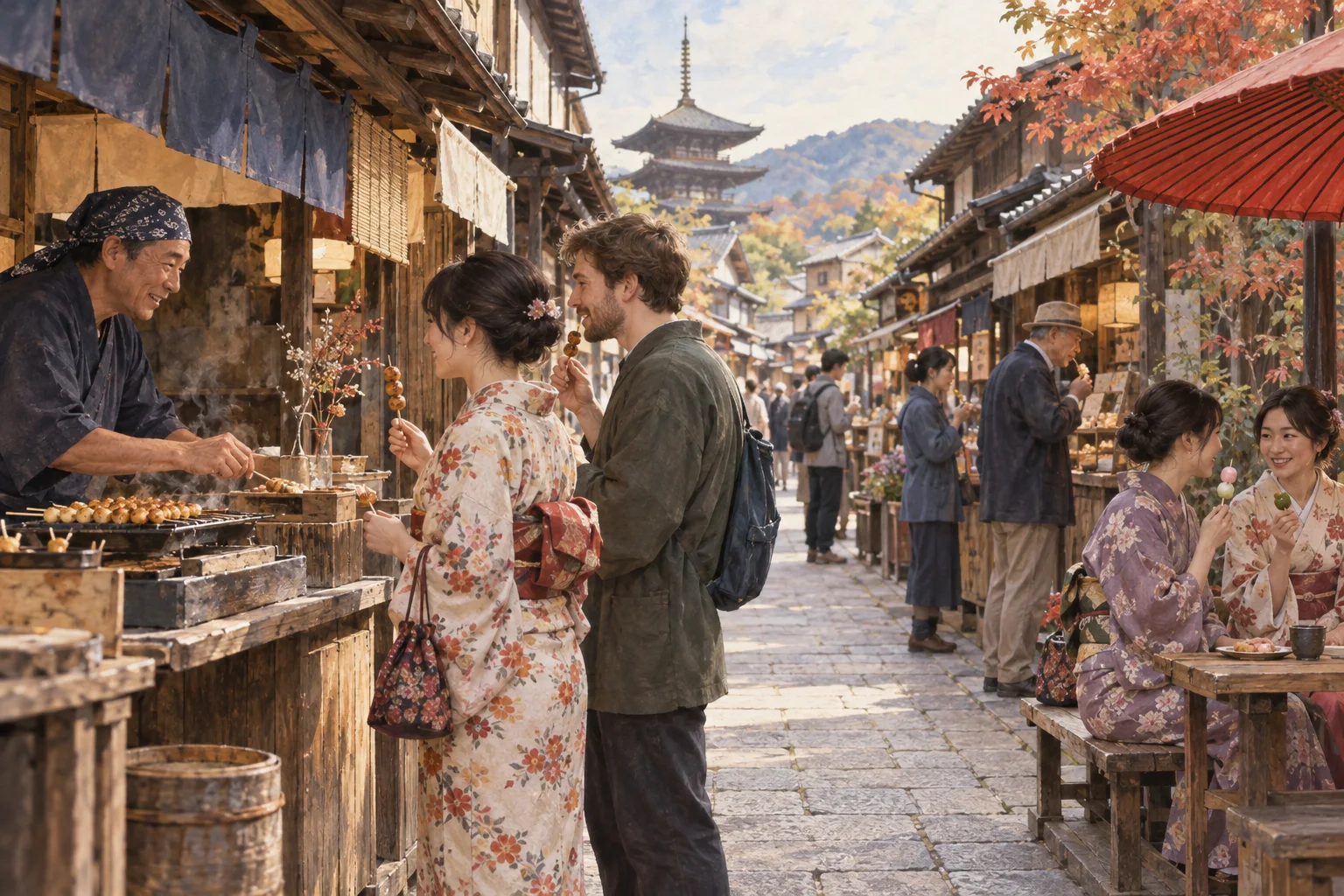
The usual practice at a festival or a market street is to buy, step aside, eat where you stand, and use the stall's own bin. This has become a practical issue in busy tourist areas, where districts have put up signs asking people not to eat while walking, after complaints about litter and stained shopfronts. Following the local sign is the simplest guide.
歩きながら食べることは、日本では禁じられてはいないのに、静かに行われないことの一つです。それを禁じる法律はありませんが、ふだんの通りで日本の大人が食べものを手に歩く姿は、あまり見かけません。理由はいくつも重なっています。
公共のごみ箱が少ないので、包み紙は一時間持ち歩くものになります。電車も店も混んでいて、動きながら食べれば誰かの上着に跡がつきます。そして食事は、ほかの行為に重ねるものではなく、決まった言葉で区切られた始まりと終わりのあるものとして扱われています。
祭りや商店街でのふつうのやり方は、買って、脇に寄り、その場で立って食べ、その店のごみ箱を使うことです。これは混み合う観光地では現実の問題になっており、ごみや店先の汚れへの苦情を受けて、歩きながら食べないよう掲示を出した地区もあります。その土地の掲示に従うのが、いちばん分かりやすい目安です。
こう聞かれたら
外国人から実際にされる質問と、その答え方。
So where am I supposed to eat what I just bought?
では、買ったものはどこで食べればよいのですか。
Right there. Most stalls expect you to stand near them, and many provide a small counter and a bin. If a shop has an eat-in corner, use it.
その場です。多くの屋台は、すぐそばに立って食べることを想定しており、小さなカウンターとごみ箱を置いている店もあります。イートインの場所があれば、そこを使ってください。
Is drinking while walking also frowned on?
歩きながら飲むのも、よく思われないのですか。
Less so. A bottle with a cap is generally accepted, and people drink on the street and even on some trains. Eating hot food with sauce is the case people object to.
それほどではありません。ふたのできるボトルはおおむね受け入れられており、街でも、列車によっては車内でも飲みます。人が気にするのは、たれのついた熱い食べものを持ち歩くほうです。
Why are there so few trash cans?
どうしてゴミ箱が少ないのですか。
Many public bins were removed in the mid-1990s for security reasons and were never fully restored. People carry their trash home, and convenience stores ask that their bins be used for items bought there.
1990年代なかばに安全上の理由で公共のごみ箱が多く撤去され、そのまま元に戻りませんでした。人はごみを持ち帰りますし、コンビニのごみ箱はその店で買ったものに使ってほしいと掲示されています。
誤解されやすい
MYTHEating while walking is banned in Japan.
日本では歩きながら食べることが禁止されている、と思われがちです。
FACTIt is not illegal nationally. It is avoided by custom, and a few tourist districts have their own signs and local rules asking people not to do it.
全国的に違法なわけではありません。習慣として避けられているもので、一部の観光地区が独自の掲示や取り決めで控えるよう求めています。
そのまま使えるフレーズ
- Is there somewhere I can eat this?ここで食べられる場所はありますか。
- Please eat it here by the stall.お店の前でお召し上がりください。
- Could I have a bag for the trash?ごみ袋をいただけますか。
- I'll finish it before we go.行く前に食べきります。
- There's a sign asking people not to walk and eat.食べ歩きを控えるよう掲示が出ています。
説明に使う語句
- eating while walking食べ歩き
- food stall屋台
- trash canごみ箱
- to take your trash homeごみを持ち帰る
- eat-in cornerイートイン
動画で見る
YouTube より豆知識
食べ歩きを避ける感覚は、混雑した場所で他人に触れる危険や、ごみの行き場の少なさと結びついています。公共のごみ箱は1990年代なかばに安全上の理由で多くが撤去され、その後も戻っていません。一方、祭りの屋台や商店街では、その場で立って食べるのがふつうの光景です。近年は観光地の混雑を受けて、地区ごとに食べ歩きの自粛を掲示したり、店の前に食べる場所とごみ箱を用意したりする取り組みが見られます。
