儒教じゅきょう
jukyo
Confucian ideas as they took root in Japan
先輩後輩や年功序列の背景として、よく挙げられる考え方。
一言で言うと
これだけ覚えれば最低限伝わる一文
Jukyo, or Confucianism, is often seen as the root of Japanese hierarchy, duty and respect for age.
儒教とは、日本の上下関係や務め、年長者を立てる習慣の根にあるとよく言われる考えです。
30秒で説明する
外国人に説明するときの標準サイズ
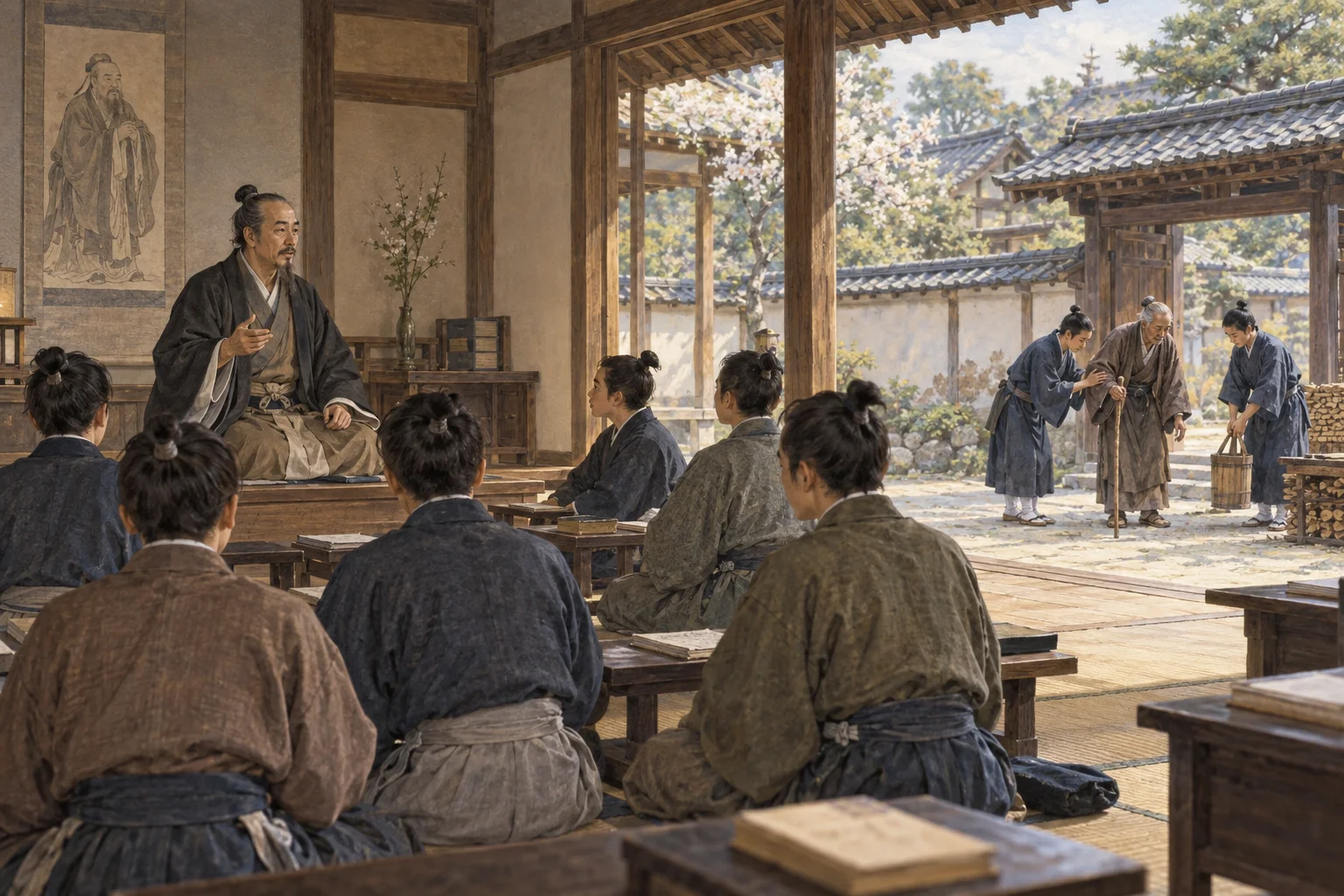
Confucianism came to Japan with Chinese writing and became official teaching in the Edo period, when the shogunate promoted one school of it. In Japan it worked as ethics rather than as a faith: rules for how ranks, ages and family members should treat each other. Its traces are in senior and junior relationships, in seniority at work, and in the care given to ancestors.
儒教は漢字とともに日本に入り、江戸時代には幕府が一つの学派を重んじたことで公の学問になりました。日本では信仰というより道徳として働きました。身分や年齢、家族のあいだで、互いにどうふるまうべきかを定める考え方です。その痕跡は、先輩と後輩の関係、年功による扱い、先祖を大事にする習慣に残っています。
スピーチ・英作文
通訳案内士の二次口述・大学入試の自由英作文に
Confucianism is not a religion in Japan; there are no congregations, and almost nobody would name it as their belief. It arrived with Chinese writing and was absorbed as a set of ethics, and in the Edo period the shogunate adopted one school of it as the official teaching for the samurai class.
What it left behind is structural. The idea that relationships come in ranked pairs, and that each side owes the other something, is still visible in the senior and junior system at school and at work, in the older habit of promotion by age, and in the duty to look after parents and tend the family grave.
Foreign visitors often put all of this down to Shinto or to Zen. It is closer to the truth to say that Japan borrowed much of its social grammar from Confucianism.
儒教は、日本では宗教として機能していません。信徒の集まりはなく、自分の信仰だと答える人もまずいません。漢字とともに入り、道徳として受け取られ、江戸時代には幕府がその一学派を武士のための公の学問としました。
残ったのは、仕組みのほうです。人と人の関係は上下の組になっていて、それぞれが相手に負うものがある。この考えは、学校や職場の先輩後輩、年齢による処遇、親の世話をして家の墓を守る務めに、今も見えています。
外国から来た人は、これらをまとめて神道や禅のせいにしがちです。日本は社会の文法の多くを儒教から借りた、と言うほうが実際に近いでしょう。
こう聞かれたら
外国人から実際にされる質問と、その答え方。
Do Japanese people worship Confucius?
日本人は孔子を拝むのですか。
No. A handful of halls dedicated to him exist, the best known in Tokyo and Nagasaki, and some hold an annual ceremony in his honor, but most visitors treat them as historical sites. Confucianism here is ethics, not devotion.
しません。孔子を祀る堂はいくつかあり、東京と長崎のものがよく知られています。年に一度の祭典を続けているところもありますが、訪れる人の多くは史跡として見ています。日本の儒教は、信仰ではなく道徳です。
Is it the same as in Korea or China?
韓国や中国の儒教と同じですか。
The vocabulary is shared but the emphasis differs. Japan took the hierarchy and the duty but never kept the examination system that made Confucian learning the route into office there, so rank in Japan stayed hereditary.
使う言葉は同じでも、重きの置き方が違います。日本は上下の秩序と務めを受け取りましたが、学問が官職への道になる科挙の仕組みは続きませんでした。そのため、地位は家柄で決まるままでした。
Is its influence fading?
その影響は薄れているのですか。
The formal parts are, especially pay by seniority and the eldest son's duty to the household. The everyday parts, such as speech levels by age and the senior and junior habit in clubs, are still strong among young people.
制度の部分は薄れています。年功による賃金や、長男が家を継ぐという務めがそうです。日常の部分は残っています。年齢による言葉づかいや、部活の先輩後輩は、若い世代でも健在です。
誤解されやすい
MYTHJapanese hierarchy comes from Shinto or Zen.
日本の上下関係は神道や禅から来ている、と思われがちです。
FACTMuch of it is usually traced to Confucian ethics, which arrived with Chinese writing and became the shogunate's official teaching in the Edo period.
その多くは、儒教の道徳に由来すると考えられています。儒教は漢字とともに伝わり、江戸時代には幕府の公の学問になりました。
そのまま使えるフレーズ
- Respect for age comes from this tradition.年長者を立てる習慣はここから来ています。
- It is ethics rather than religion.宗教というより道徳です。
- Seniors and juniors have set roles.先輩と後輩には役割があります。
- Looking after your parents is a duty.親の面倒を見るのは務めとされてきました。
- It came in with Chinese writing.漢字とともに入ってきました。
説明に使う語句
- Confucianism儒教
- filial duty孝行
- senior and junior先輩と後輩
- hierarchy上下関係
- ethics道徳
動画で見る
YouTube より豆知識
儒教は漢字とともに日本に入り、宗教というより、人と人の関係を定める道徳として受け取られました。江戸幕府は朱子学を重んじ、1790年の寛政異学の禁によって、幕府の学問所で教える学問を朱子学に限りました。父子、君臣、夫婦、兄弟、友という五つの関係を説く五倫の考えは、長幼の序として学校や職場に残っています。ただし、中国や朝鮮のような科挙は日本では続かず、学問が官職に直結する仕組みにはなりませんでした。
