島型デスクしまがたデスク
shimagata desuku
the open office facing each other
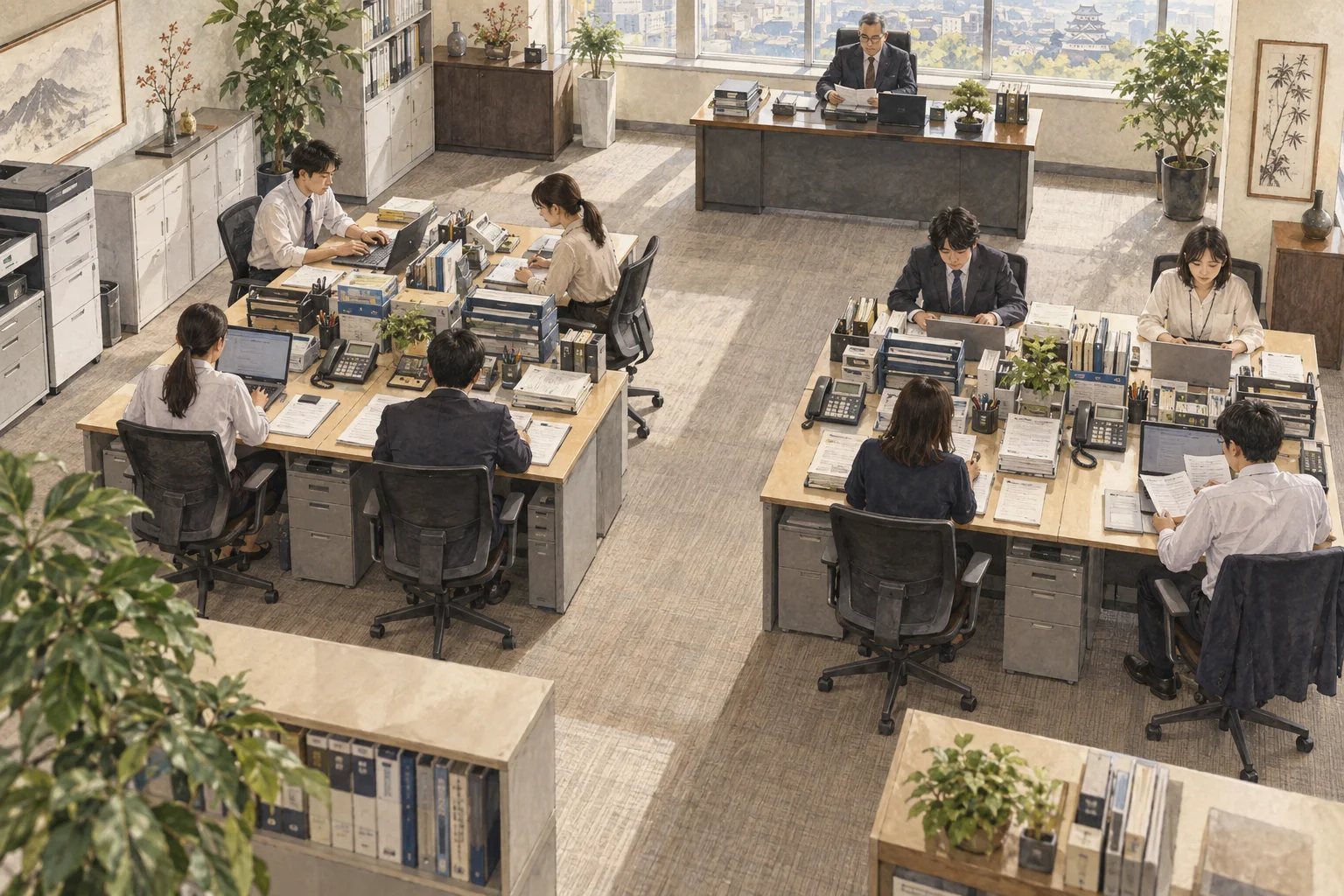
机を向かい合わせに並べ、奥に上司が座る。個室はまれ。
一言で言うと
これだけ覚えれば最低限伝わる一文
Shimagata desuku, or island desks, are the Japanese office layout of facing desks, with the manager at the end.
島型デスクとは、机を向かい合わせに並べた島に部署が座り、端に上司が座る日本の職場の配置です。
30秒で説明する
外国人に説明するときの標準サイズ
The standard Japanese office layout puts a team's desks together in a block, facing each other with no partitions, and the section head at the end of the row where the whole group is visible. Private offices are rare below executive level. Free-address seating has spread since remote work.
日本の職場の標準的な配置は、部署の机をひとまとまりに寄せ、仕切りなしで向かい合わせにし、課長がその列の端に座って全体を見渡せるようにするものです。役員より下の階層に個室はまれです。在宅勤務が広がって以降は、席を決めないフリーアドレスも増えました。
スピーチ・英作文
通訳案内士の二次口述・大学入試の自由英作文に
Walk into a traditional Japanese office and you see rows of desks pushed together facing each other, with no partitions, and at the end of each block a desk set crosswise where the section head sits looking down the row. This layout is called shimagata, island type, and it is not accidental.
It supports a way of working in which colleagues overhear each other's calls, a junior can watch how a senior handles a client, questions are asked aloud without booking a meeting, and a manager can see who is struggling. The costs are equally clear: no acoustic privacy, no visual privacy, difficulty concentrating, and pressure not to leave before the person at the end of the row.
Since remote work spread, many companies have reduced desk numbers and moved to free-address seating where you take any available desk, which has weakened the layout's original logic. Whether that improves things is genuinely debated inside Japanese companies.
昔ながらの日本の職場に入ると、仕切りなしで向かい合わせに寄せられた机の列が見え、それぞれのまとまりの端には、列を見渡す向きに置かれた課長の机があります。この配置は島型と呼ばれ、偶然そうなったのではありません。
互いの電話が耳に入り、若手が先輩の取引先への対応を見て学び、会議を設けなくても声に出して質問でき、上司が誰が苦しんでいるかを見て取れる。そういう働き方を支える形です。代償も同じくらいはっきりしています。音も視線もさえぎられず、集中しにくく、列の端の人より先に帰りにくい圧力が働きます。
在宅勤務が広がって以降、机の数を減らし、空いている席を自由に使うフリーアドレスに移った会社が多くあります。これによって、この配置がもともと持っていた理屈は弱まりました。それがよいことなのかどうかは、日本の企業の中で本当に議論されています。
こう聞かれたら
外国人から実際にされる質問と、その答え方。
Does anyone have a private office?
個室を持っている人はいるのですか。
Usually only executives, and often not even them; a president may sit at the end of the floor. Meeting rooms are booked for anything confidential, which is why they are always in short supply.
ふつうは役員だけで、役員にもないことがあります。社長がフロアの端に座っている会社もあります。内密の話は会議室を予約して行うので、会議室はいつも足りません。
Why is the manager at the end of the row?
どうして上司は列の端に座るのですか。
So the whole team is visible and approachable, and so documents can be passed along the row for approval. The seat also has the best view of who is present, which cuts both ways.
部署全体が見えて声をかけやすいからであり、決裁の書類を列に沿って回せるからです。誰がいるかも最もよく見える席で、それは良し悪しの両面があります。
What is free address?
フリーアドレスとは何ですか。
An unassigned seating system where you take any free desk each day, with a locker for your things. It spread with remote work and is popular with companies reducing floor space.
席を固定せず、毎日空いている机を使う方式で、私物はロッカーに置きます。在宅勤務の広がりとともに普及し、床面積を減らす企業に好まれています。
そのまま使えるフレーズ
- Our desks face each other.机は向かい合わせです。
- The section head sits at the end.課長は列の端に座っています。
- Let's take this to a meeting room.この話は会議室でしましょう。
- We moved to free seating last year.昨年からフリーアドレスになりました。
- It's hard to concentrate here.ここでは集中しにくいです。
説明に使う語句
- facing desks島型のレイアウト
- open-plan office大部屋
- partition仕切り
- unassigned seatingフリーアドレス
- meeting room会議室
動画で見る
YouTube より豆知識
島型と呼ばれる配置は、部署ごとに机を向かい合わせで寄せ、管理職が端に座る形です。大部屋で全員が働くこの形は、情報の共有と指導のしやすさを重んじる働き方と結びついて広まりました。個室が少ないため、内密の相談は会議室や外で行われます。在宅勤務の普及に伴い、出社する人数に合わせて席数を減らし、フリーアドレスを導入する企業が増えました。集中のための区切られた席を別に設ける例も見られます。
