遺影いえい
iei
the portrait photograph displayed at a funeral
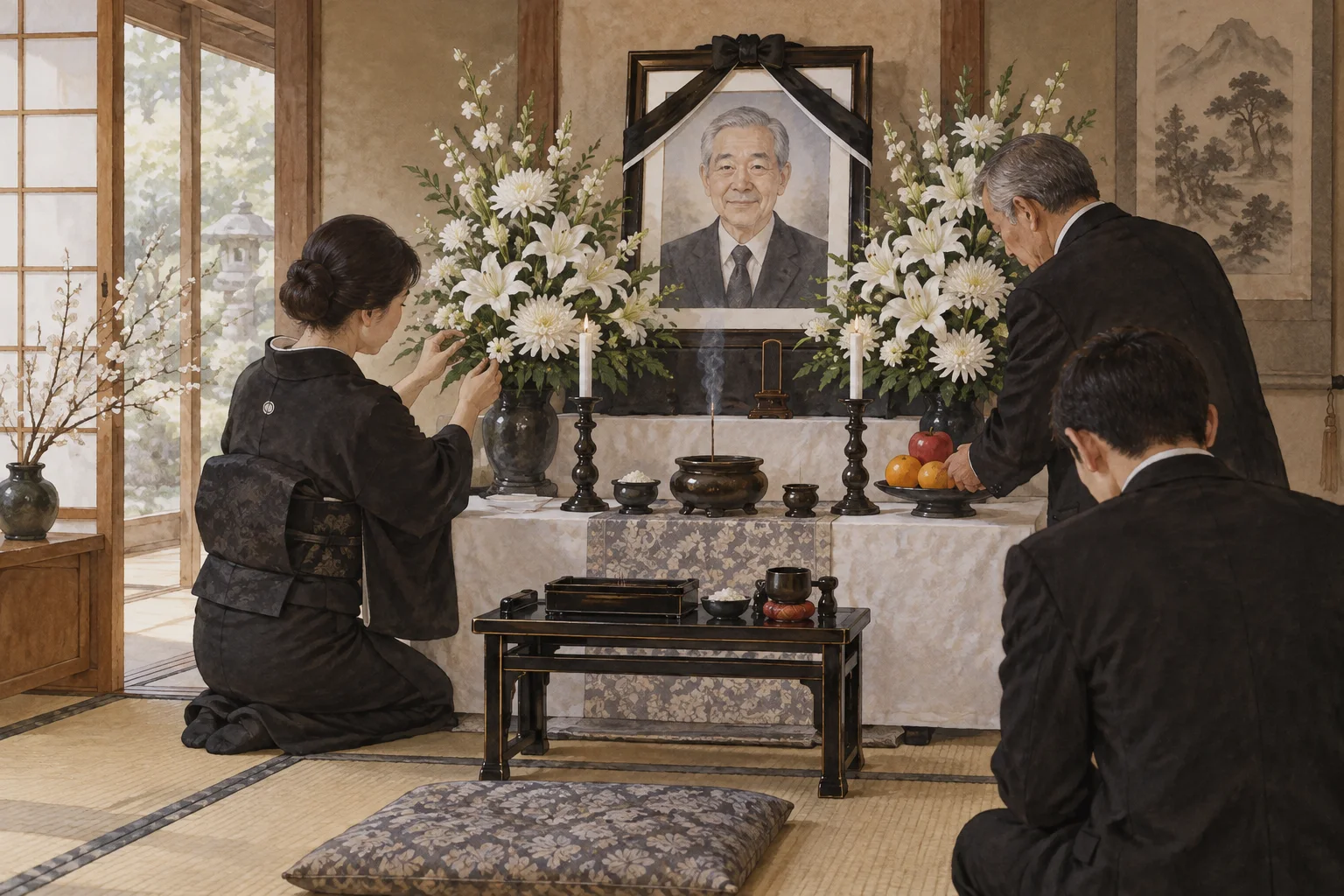
祭壇の中心に飾る、故人の写真。生前に自分で選んでおく人も増えている。
一言で言うと
これだけ覚えれば最低限伝わる一文
Iei is the framed portrait of the deceased placed at the center of the altar at a Japanese funeral.
遺影とは、日本の葬儀で祭壇の中心に飾られる、故人の写真のことです。
30秒で説明する
外国人に説明するときの標準サイズ
At the center of nearly every Japanese funeral altar sits a large framed photograph of the person who died, often a smiling close-up, sometimes taken years before death. Family members traditionally chose the photo afterward from whatever pictures existed, sometimes retouching an old snapshot into formal dress. It has become common for older people to pick and even have professionally taken their own portrait in advance, so the family isn't left searching. The frame is typically decorated with a black ribbon and displayed again at later memorial services.
日本の葬儀では、ほぼ必ず祭壇の中心に、亡くなった人の大きく引き伸ばされた写真が飾られます。笑顔の顔写真であることが多く、亡くなる何年も前に撮られたものであることも珍しくありません。伝統的には遺族が亡くなったあとに、手持ちの写真の中から選んでいました。古いスナップ写真を礼服姿に加工することもあります。最近は、高齢者が自分であらかじめ写真を選んだり、専門の写真館で撮っておいたりすることが増え、遺族が探し回らずに済むようにしています。額には黒いリボンが結ばれるのが一般的で、その後の法要でも改めて飾られます。
スピーチ・英作文
通訳案内士の二次口述・大学入試の自由英作文に
Walk into a Japanese funeral hall and the first thing most people notice is a large photograph, framed and often decorated with a black ribbon, standing at the very center of the altar above the coffin. That is the iei, the memorial portrait, and it stays on display through the wake, the funeral, and is often brought out again at the forty-ninth day service and the first anniversary. Traditionally the family chose it in a hurry after a death, picking the clearest recent photo available and having a photo studio touch it up, sometimes swapping the clothing digitally into formal black.
That rush is exactly what has driven a newer trend: healthy people in their sixties, seventies and eighties now often choose, or professionally have taken, their own iei in advance, as part of the broader end-of-life planning movement called shukatsu. Having a photo ready removes one difficult task from grieving relatives, and some people deliberately pick a portrait that looks genuinely like them rather than an overly formal studio shot.
日本の葬儀場に入ると、多くの人がまず目にするのが、棺の上、祭壇のまさに中心に置かれた大きな写真です。黒いリボンで飾られていることが多くあります。これが遺影で、通夜と葬儀のあいだ飾られたままになり、四十九日や一周忌の法要でも改めて掲げられることがよくあります。
伝統的には、亡くなったあとに遺族が急いで選び、手元にある一番はっきりした最近の写真を写真館で加工してもらい、服装だけ礼服にデジタルで替えることもありました。その慌ただしさこそが、新しい傾向を生んでいます。
六十代、七十代、八十代の元気な人たちが、終活と呼ばれる人生の終わりに向けた準備の一環として、あらかじめ自分の遺影を選んだり、写真館で撮っておいたりするようになっています。写真を用意しておけば、悲しみのさなかにある遺族の負担が一つ減りますし、あらたまった証明写真のようなものより、本当に自分らしい一枚を選びたいという人もいます。
こう聞かれたら
外国人から実際にされる質問と、その答え方。
Does the photo have to be recent?
写真は最近のものでなければいけませんか。
No, there is no rule about age. Families traditionally chose whatever clear, well-lit photo best showed the person's face and expression, even if it was taken years earlier.
決まりはありません。伝統的には、何年か前の写真であっても、顔立ちや表情がよくわかる、はっきりと写った一枚を選んできました。
Why do some elderly people take their own iei in advance?
なぜ生前に自分で遺影を用意する高齢者がいるのですか。
It is part of shukatsu, end-of-life preparation, and it spares grieving family members the task of searching for and editing a photo under time pressure. Some photo studios now offer sessions marketed specifically for this purpose.
終活と呼ばれる人生の終わりに向けた準備の一部で、悲しみの中にある遺族が急いで写真を探して加工する手間を減らせます。この目的に特化した撮影プランを用意する写真館も出てきています。
What happens to it after the funeral?
葬儀のあと、この写真はどうなりますか。
Many families keep it, often a smaller version, near the household Buddhist altar or displayed in the home, and bring it out again for the forty-ninth day service and later memorials.
多くの家庭では、小さめに複製したものを仏壇のそばや家の中に飾って保管し、四十九日やその後の法要でも改めて掲げます。
そのまま使えるフレーズ
- The portrait is placed at the center of the altar.遺影は祭壇の中心に置かれます。
- She chose her own portrait years in advance.彼女は何年も前に自分で遺影を選んでいました。
- The photo studio can retouch the clothing digitally.写真館で服装をデジタルで加工してもらえます。
- It's brought out again at later memorial services.その後の法要でも改めて飾られます。
- A black ribbon is tied across the corner of the frame.額の角に黒いリボンが結ばれます。
説明に使う語句
- memorial portrait遺影
- altar祭壇
- end-of-life planning終活
- photo studio写真館
- black mourning ribbon黒リボン
動画で見る
YouTube より豆知識
遺影は祭壇の中心に置かれる故人の写真で、通夜・葬儀のあいだ飾られ、四十九日や一周忌でも改めて掲げられる。伝統的には遺族が死後に手持ちの写真から選び、写真館で服装や背景を礼服風に加工することが多かった。近年は終活の一環として、元気なうちに自分で遺影用の写真を撮っておく高齢者が増えており、専用の撮影プランを設ける写真館もある。もとの写真がいつ撮られたものかについての決まりはなく、故人らしさが伝わる一枚が選ばれる。
