"Eh? Wot I say? I spik true w'en I say dat Buck two devils." This was François's speech next morning when he discovered Spitz missing and Buck covered with wounds. He drew him to the fire and by its light pointed them out.
「え?おれ、なんて言った?あのバックは悪魔二匹分だって言ったろう。ほんとだったじゃないか」翌朝、スピッツがいなくなり、バックが傷だらけになっているのを見て、フランソワはそう言った。フランソワはバックを火のそばに引き寄せ、その明かりで傷をひとつひとつ指さした。
"Dat Spitz fight lak hell," said Perrault, as he surveyed the gaping rips and cuts.
「スピッツのやつ、すごい戦いぶりだったな」と、ぱっくり開いた裂け目や切り傷を眺めながらペローが言った。
"An' dat Buck fight lak two hells," was François's answer. "An' now we make good time. No more Spitz, no more trouble, sure."
「バックのほうは、その倍もすごかった」とフランソワは答えた。「これで、どんどん進める。スピッツはもういない。もめごとももうない。きっとだ」
While Perrault packed the camp outfit and loaded the sled, the dog-driver proceeded to harness the dogs. Buck trotted up to the place Spitz would have occupied as leader; but François, not noticing him, brought Sol-leks to the coveted position. In his judgment, Sol-leks was the best lead-dog left. Buck sprang upon Sol-leks in a fury, driving him back and standing in his place.
ペローが野営の道具をまとめて橇に積むあいだに、犬ぞり使いは犬たちに引き具をつけにかかった。バックは、スピッツがいれば先導犬として立っていたはずの場所へ、小走りで向かった。だがフランソワはバックに気づかず、誰もがほしがるその位置にソル=レクスを連れてきた。残った犬のなかでは、ソル=レクスがいちばんの先導犬だと見たのだ。バックは猛然とソル=レクスに飛びかかって追い払い、かわりにその場所に立った。
"Eh? eh?" François cried, slapping his thighs gleefully. "Look at dat Buck. Heem keel dat Spitz, heem t'ink to take de job."
「え?え?」フランソワは愉快そうに太ももを叩いて叫んだ。「あのバックを見ろ。スピッツを殺したから、自分がその仕事をもらうつもりだ」
"Go 'way, Chook!" he cried, but Buck refused to budge.
「どけ、こら!」とフランソワは叫んだが、バックは動こうとしなかった。
He took Buck by the scruff of the neck, and though the dog growled threateningly, dragged him to one side and replaced Sol-leks. The old dog did not like it, and showed plainly that he was afraid of Buck. François was obdurate, but when he turned his back Buck again displaced Sol-leks, who was not at all unwilling to go.
フランソワはバックの首根っこをつかみ、うなって脅すのもかまわず脇へ引きずっていくと、ソル=レクスを元の場所に戻した。老犬は気が進まない様子で、バックを怖がっているのがはっきりわかった。フランソワは頑として譲らなかった。だが背を向けたとたん、バックはまたソル=レクスを押しのけた。ソル=レクスのほうも、少しもいやがらずに場所を明けわたした。
François was angry. "Now, by Gar, I feex you!" he cried, coming back with a heavy club in his hand.
フランソワは怒った。「こんちくしょう、思い知らせてやる!」と叫び、重い棍棒を手にして戻ってきた。
Buck remembered the man in the red sweater, and retreated slowly; nor did he attempt to charge in when Sol-leks was once more brought forward. But he circled just beyond the range of the club, snarling with bitterness and rage; and while he circled he watched the club so as to dodge it if thrown by François, for he was become wise in the way of clubs. The driver went about his work, and he called to Buck when he was ready to put him in his old place in front of Dave. Buck retreated two or three steps. François followed him up, whereupon he again retreated. After some time of this, François threw down the club, thinking that Buck feared a thrashing. But Buck was in open revolt. He wanted, not to escape a clubbing, but to have the leadership. It was his by right. He had earned it, and he would not be content with less.
バックは赤いセーターの男のことを思い出し、ゆっくり後ずさりした。ソル=レクスがまた前に連れてこられても、飛びかかろうとはしなかった。だが棍棒の届かないぎりぎりのところを、恨みと怒りをこめてうなりながら回った。回りながら、棍棒から目を離さなかった。フランソワが投げてきたら、よけるつもりだった。棍棒については、もうすっかり賢くなっていたのだ。犬ぞり使いは仕事を続け、準備ができると、デイヴの前の元の位置につかせようとバックを呼んだ。バックは二、三歩さがった。フランソワが近づくと、またさがった。しばらくそれをくり返したあと、フランソワは棍棒を投げ捨てた。叩かれるのが怖いのだろうと思ったのだ。だがバックは、はっきりと逆らっていた。棍棒から逃げたいのではない。先導の座がほしいのだ。それは当然自分のものだった。自分の力で勝ち取ったのだから、それより下で満足するつもりはなかった。
Perrault took a hand. Between them they ran him about for the better part of an hour. They threw clubs at him. He dodged. They cursed him, and his fathers and mothers before him, and all his seed to come after him down to the remotest generation, and every hair on his body and drop of blood in his veins; and he answered curse with snarl and kept out of their reach. He did not try to run away, but retreated around and around the camp, advertising plainly that when his desire was met, he would come in and be good.
ペローも手を貸した。二人がかりで、一時間近くもバックを追い回した。棍棒を投げつけたが、バックはよけた。二人はバックをののしった。バックの父親と母親とその先祖を、はるか末代までの子孫を、体の毛一本一本を、血管を流れる血の一滴一滴をののしった。バックはののしりにうなり声で答え、二人の手の届かないところにいた。逃げ出しはせず、野営地のまわりをぐるぐる回って、近づけば離れた。望みをかなえてくれたら戻っていい子にする、とはっきり態度で示していた。
François sat down and scratched his head. Perrault looked at his watch and swore. Time was flying, and they should have been on the trail an hour gone. François scratched his head again. He shook it and grinned sheepishly at the courier, who shrugged his shoulders in sign that they were beaten. Then François went up to where Sol-leks stood and called to Buck. Buck laughed, as dogs laugh, yet kept his distance. François unfastened Sol-leks's traces and put him back in his old place. The team stood harnessed to the sled in an unbroken line, ready for the trail. There was no place for Buck save at the front. Once more François called, and once more Buck laughed and kept away.
フランソワは座りこんで頭をかいた。ペローは時計を見て悪態をついた。時間はどんどん過ぎていく。一時間前には出発しているはずだったのだ。フランソワはまた頭をかいた。首を振り、急使に向かって照れくさそうににやりと笑った。急使は、負けたよというように肩をすくめた。そこでフランソワは、ソル=レクスの立っているところへ行き、バックを呼んだ。バックは犬らしく笑ったが、近づこうとはしなかった。フランソワはソル=レクスの引き綱をはずし、元の位置に戻した。チームはすき間なく一列に橇につながれ、いつでも出発できるようになった。バックが入れる場所は先頭しかない。フランソワがもう一度呼んだ。バックはもう一度笑って、離れたままでいた。
"T'row down de club," Perrault commanded.
「棍棒を捨てろ」とペローが命じた。
François complied, whereupon Buck trotted in, laughing triumphantly, and swung around into position at the head of the team. His traces were fastened, the sled broken out, and with both men running they dashed out on to the river trail.
フランソワが言われたとおりにすると、バックは勝ち誇ったように笑いながら小走りでやって来た。そして、くるりと回ってチームの先頭についた。引き綱が留められ、雪に張りついた橇が引きはがされた。二人の男が並んで走り、一行は川の道へ勢いよく飛び出していった。
Highly as the dog-driver had forevalued Buck, with his two devils, he found, while the day was yet young, that he had undervalued. At a bound Buck took up the duties of leadership; and where judgment was required, and quick thinking and quick acting, he showed himself the superior even of Spitz, of whom François had never seen an equal.
犬ぞり使いは、悪魔二匹分とまで言ってバックを高く買っていた。だが、まだ朝のうちに、それでも見くびっていたことに気づいた。バックはたちまち先導犬の務めを身につけた。判断が必要なとき、すばやく考えて、すばやく動かなければならないときには、スピッツよりもさらにすぐれていた。フランソワが、あれほどの犬は見たことがないと思っていた、あのスピッツよりもである。
But it was in giving the law and making his mates live up to it, that Buck excelled. Dave and Sol-leks did not mind the change in leadership. It was none of their business. Their business was to toil, and toil mightily, in the traces. So long as that were not interfered with, they did not care what happened. Billee, the good-natured, could lead for all they cared, so long as he kept order. The rest of the team, however, had grown unruly during the last days of Spitz, and their surprise was great now that Buck proceeded to lick them into shape.
だがバックがいちばんすぐれていたのは、掟を定めて、仲間たちにそれを守らせることだった。デイヴとソル=レクスは、先導犬が代わってもかまわなかった。自分たちの知ったことではないのだ。二匹の仕事は、引き綱につながれて、力のかぎり働くことだった。そのじゃまさえされなければ、何が起きようとかまわない。秩序さえ保ってくれるなら、気のいいビリーが先導したってかまわないくらいだった。だがほかの犬たちは、スピッツの最後のころにすっかり手に負えなくなっていた。だから、バックがびしびしと鍛えはじめると、たいそう驚いた。
Pike, who pulled at Buck's heels, and who never put an ounce more of his weight against the breast-band than he was compelled to do, was swiftly and repeatedly shaken for loafing; and ere the first day was done he was pulling more than ever before in his life. The first night in camp, Joe, the sour one, was punished roundly—a thing that Spitz had never succeeded in doing. Buck simply smothered him by virtue of superior weight, and cut him up till he ceased snapping and began to whine for mercy.
バックのすぐ後ろで引いているパイクは、どうしても必要なとき以外、胸帯に一オンスたりとも余分に体重をかけたことがなかった。そのパイクが、怠けたというので、すばやく何度も揺さぶられた。最初の日が終わらないうちに、パイクは生まれてこのかたなかったほど、よく引くようになった。最初の晩の野営では、気むずかし屋のジョーがこっぴどくこらしめられた。スピッツには一度もできなかったことだ。バックは重い体でジョーを押さえこみ、ジョーがかみつくのをやめて、くんくん許しを請いはじめるまで、切りつけた。
The general tone of the team picked up immediately. It recovered its old-time solidarity, and once more the dogs leaped as one dog in the traces. At the Rink Rapids two native huskies, Teek and Koona, were added; and the celerity with which Buck broke them in took away François's breath.
チームの空気はたちまちよくなった。昔のまとまりを取り戻し、犬たちはまた一匹の犬のように息を合わせて引いた。リンク急流では、ティークとクーナという土地のハスキー犬が二匹加わった。バックがこの二匹をあまりに手早く仕込んだので、フランソワは息をのんだ。
"Nevaire such a dog as dat Buck!" he cried. "No, nevaire! Heem worth one t'ousan' dollair, by Gar! Eh? Wot you say, Perrault?"
「あのバックみたいな犬は、ほかにいない!」とフランソワは叫んだ。「いない、ぜったいにいない!千ドルの値打ちがある、ちくしょう!え?どう思う、ペロー?」
And Perrault nodded. He was ahead of the record then, and gaining day by day. The trail was in excellent condition, well packed and hard, and there was no new-fallen snow with which to contend. It was not too cold. The temperature dropped to fifty below zero and remained there the whole trip. The men rode and ran by turn, and the dogs were kept on the jump, with but infrequent stoppages.
ペローはうなずいた。そのころには記録を上回る速さで進んでいて、その差は日ごとに広がっていた。道はすばらしく、よく踏み固められて硬く、新しく降った雪に苦しめられることもなかった。寒すぎることもなかった。気温は零下五十度まで下がり、旅のあいだずっとそのままだった。男たちは交代で橇に乗ったり走ったりした。犬たちはめったに止まらず、跳ねるように走りつづけた。
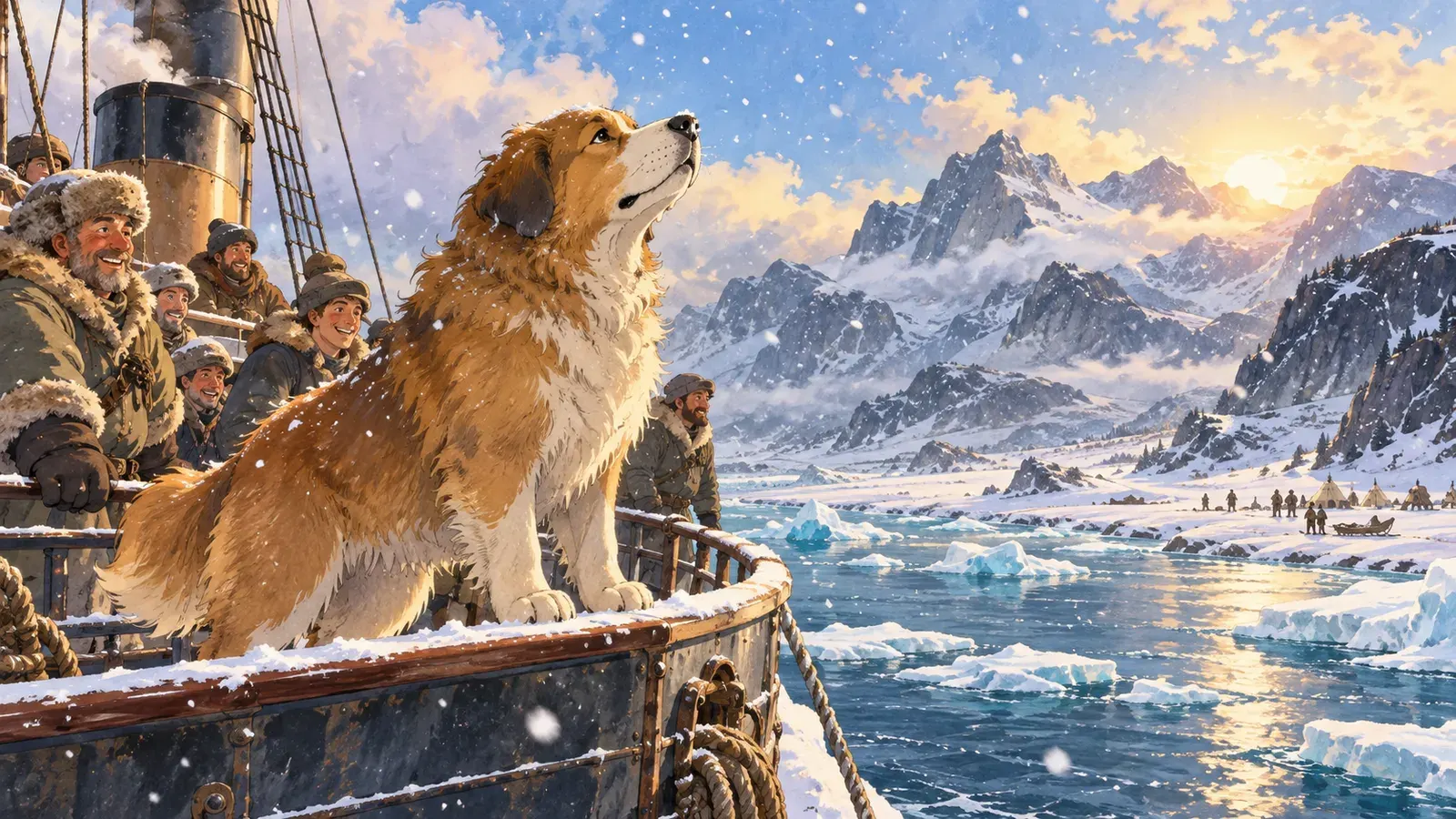
The Thirty Mile River was comparatively coated with ice, and they covered in one day going out what had taken them ten days coming in. In one run they made a sixty-mile dash from the foot of Lake Le Barge to the White Horse Rapids. Across Marsh, Tagish, and Bennett (seventy miles of lakes), they flew so fast that the man whose turn it was to run towed behind the sled at the end of a rope. And on the last night of the second week they topped White Pass and dropped down the sea slope with the lights of Skaguay and of the shipping at their feet.
サーティ・マイル川も今度はわりあいよく凍っていて、来るときに十日かかった道のりを、帰りは一日で走りぬけた。ラ・バージュ湖の端からホワイトホース急流まで、六十マイルを一気に駆けぬけたこともあった。マーシュ湖、タギシュ湖、ベネット湖と、七十マイルにわたって湖を渡るときは、あまりに速く飛ぶように進んだので、走る番の男は、ロープにつかまって橇の後ろを引っぱられていった。そして二週目の最後の晩、一行はホワイト峠を越え、海側の斜面をくだっていった。足もとには、スカグウェイの町の明かりと、港の船の明かりが見えていた。
It was a record run. Each day for fourteen days they had averaged forty miles. For three days Perrault and François threw chests up and down the main street of Skaguay and were deluged with invitations to drink, while the team was the constant centre of a worshipful crowd of dog-busters and mushers. Then three or four western bad men aspired to clean out the town, were riddled like pepper-boxes for their pains, and public interest turned to other idols. Next came official orders. François called Buck to him, threw his arms around him, wept over him. And that was the last of François and Perrault. Like other men, they passed out of Buck's life for good.
記録的な旅だった。十四日間、毎日平均四十マイル進んだのだ。三日のあいだ、ペローとフランソワはスカグウェイの大通りを胸を張って歩き回り、あちこちから酒に誘われた。チームのほうは、いつも犬の調教師や犬ぞり使いたちに取り囲まれ、あこがれのまなざしを浴びていた。やがて、西部のならず者が三、四人、町を荒らそうとして、逆に蜂の巣のように撃ち抜かれた。すると町の人々の関心は、ほかの英雄たちへ移っていった。それから正式な命令が届いた。フランソワはバックを呼び寄せ、首に腕を回して抱きしめ、泣いた。それが、フランソワとペローを見た最後だった。ほかの人間たちと同じように、二人はバックの一生から永遠に去っていった。
A Scotch half-breed took charge of him and his mates, and in company with a dozen other dog-teams he started back over the weary trail to Dawson. It was no light running now, nor record time, but heavy toil each day, with a heavy load behind; for this was the mail train, carrying word from the world to the men who sought gold under the shadow of the Pole.
バックと仲間たちを引き取ったのは、スコットランド人の血を引く混血の男だった。バックたちは、ほかの十数組の犬ぞりチームと一緒に、ドーソンへの長くつらい道を引き返しはじめた。今度は身軽な走りでも、記録を競う旅でもなかった。重い荷を引いての、毎日の重労働だった。これは郵便橇の隊で、北極の近くで金を探す男たちに、外の世界からの便りを運んでいたのだ。
Buck did not like it, but he bore up well to the work, taking pride in it after the manner of Dave and Sol-leks, and seeing that his mates, whether they prided in it or not, did their fair share. It was a monotonous life, operating with machine-like regularity. One day was very like another. At a certain time each morning the cooks turned out, fires were built, and breakfast was eaten. Then, while some broke camp, others harnessed the dogs, and they were under way an hour or so before the darkness fell which gave warning of dawn. At night, camp was made. Some pitched the flies, others cut firewood and pine boughs for the beds, and still others carried water or ice for the cooks. Also, the dogs were fed. To them, this was the one feature of the day, though it was good to loaf around, after the fish was eaten, for an hour or so with the other dogs, of which there were fivescore and odd. There were fierce fighters among them, but three battles with the fiercest brought Buck to mastery, so that when he bristled and showed his teeth they got out of his way.
バックはこの仕事が好きではなかったが、よく耐えて働いた。デイヴやソル=レクスのように仕事に誇りを持ち、仲間たちが、誇りを持っていようといまいと、きちんと自分の分を果たすよう目を配った。機械のように規則正しい、単調な暮らしだった。毎日がよく似ていた。毎朝決まった時刻に料理番が起き出し、火をたいて、朝食をとる。それから、野営をたたむ者もいれば、犬に引き具をつける者もいる。夜明けが近いことを告げる暗闇が来る、一時間ほど前には出発していた。夜になると野営を張った。天幕を張る者もいれば、薪や、寝床に敷く松の枝を切る者もいる。料理番のために水や氷を運ぶ者もいた。そして犬たちに餌をやった。犬たちにとっては、これが一日のなかでただひとつの楽しみだった。もっとも、魚を食べたあと一時間ほど、ほかの犬たちとぶらぶらするのも悪くなかった。犬は百匹あまりもいた。なかには猛者もいたが、いちばん手ごわい犬たちと三度戦っただけで、バックはかしらになった。それからは、バックが毛を逆立てて歯をむくと、犬たちは道をあけた。
Best of all, perhaps, he loved to lie near the fire, hind legs crouched under him, fore legs stretched out in front, head raised, and eyes blinking dreamily at the flames. Sometimes he thought of Judge Miller's big house in the sun-kissed Santa Clara Valley, and of the cement swimming-tank, and Ysabel, the Mexican hairless, and Toots, the Japanese pug; but oftener he remembered the man in the red sweater, the death of Curly, the great fight with Spitz, and the good things he had eaten or would like to eat. He was not homesick. The Sunland was very dim and distant, and such memories had no power over him. Far more potent were the memories of his heredity that gave things he had never seen before a seeming familiarity; the instincts (which were but the memories of his ancestors become habits) which had lapsed in later days, and still later, in him, quickened and become alive again.
バックがいちばん好きだったのは、たぶん火のそばに寝そべることだった。後ろ足を体の下に折りこみ、前足を前に伸ばし、頭を上げて、夢見るように目をしばたたかせながら炎を見つめる。ときには、日ざしあふれるサンタクララ・ヴァレーのミラー判事の大きな屋敷を思った。セメントの水槽や、メキシカン・ヘアレスのイザベルや、日本のパグのトゥーツのことも思った。だが、それよりよく思い出したのは、赤いセーターの男のことや、カーリーの死、スピッツとの大げんか、それにこれまで食べたうまいものや、これから食べたいうまいもののことだった。故郷が恋しいわけではなかった。日ざしの国は、もうひどくぼんやりと遠くなっていて、そんな思い出に心を動かされることはなかった。それよりはるかに強かったのは、血に受け継がれた記憶だった。そのせいで、見たこともないものに、なぜか見覚えがあるように感じられた。本能とは、祖先の記憶が習性になったものにすぎない。その本能は、のちの時代には眠りかけていた。それが、さらにのちのバックのなかで、ふたたび目を覚まし、生き生きと動きだしていたのだ。
Sometimes as he crouched there, blinking dreamily at the flames, it seemed that the flames were of another fire, and that as he crouched by this other fire he saw another and different man from the half-breed cook before him. This other man was shorter of leg and longer of arm, with muscles that were stringy and knotty rather than rounded and swelling. The hair of this man was long and matted, and his head slanted back under it from the eyes. He uttered strange sounds, and seemed very much afraid of the darkness, into which he peered continually, clutching in his hand, which hung midway between knee and foot, a stick with a heavy stone made fast to the end. He was all but naked, a ragged and fire-scorched skin hanging part way down his back, but on his body there was much hair. In some places, across the chest and shoulders and down the outside of the arms and thighs, it was matted into almost a thick fur. He did not stand erect, but with trunk inclined forward from the hips, on legs that bent at the knees. About his body there was a peculiar springiness, or resiliency, almost catlike, and a quick alertness as of one who lived in perpetual fear of things seen and unseen.
ときどき、そこにうずくまって夢見るように炎を見つめていると、それが別の火の炎のように思えることがあった。そして、その別の火のそばにうずくまっていると、目の前の混血の料理番とは違う、別の人間が見えるのだった。その人間は脚が短く、腕が長かった。筋肉は丸く盛り上がっているのではなく、筋張ってごつごつしていた。髪は長くもつれ、額はその髪の下で、目のすぐ上から後ろへ傾いていた。男は奇妙な声を出し、暗闇をひどく恐れているようで、絶えず暗がりをのぞきこんでいた。膝と足のあいだまで垂れた手には、先に重い石をしっかりくくりつけた棒を握りしめていた。ほとんど裸で、ぼろぼろの焦げた毛皮を背中に半分ほど垂らしているだけだった。だが体には毛がたくさん生えていた。胸や肩、腕と太ももの外側など、ところどころは、毛がもつれ合って厚い毛皮のようになっていた。男はまっすぐには立たず、腰から上を前に傾け、膝を曲げて立っていた。その体には、猫のような独特のばね、しなやかさがあった。そして、見えるものにも見えないものにも絶えずおびえて暮らす者らしく、すばやく油断なく身構えていた。
At other times this hairy man squatted by the fire with head between his legs and slept. On such occasions his elbows were on his knees, his hands clasped above his head as though to shed rain by the hairy arms. And beyond that fire, in the circling darkness, Buck could see many gleaming coals, two by two, always two by two, which he knew to be the eyes of great beasts of prey. And he could hear the crashing of their bodies through the undergrowth, and the noises they made in the night. And dreaming there by the Yukon bank, with lazy eyes blinking at the fire, these sounds and sights of another world would make the hair to rise along his back and stand on end across his shoulders and up his neck, till he whimpered low and suppressedly, or growled softly, and the half-breed cook shouted at him, "Hey, you Buck, wake up!" Whereupon the other world would vanish and the real world come into his eyes, and he would get up and yawn and stretch as though he had been asleep.
またあるときは、この毛深い男が火のそばにしゃがみ、両膝のあいだに頭をうずめて眠っていた。そんなとき、男は肘を膝に置き、毛深い腕で雨をはじこうとでもするように、両手を頭の上で組んでいた。その火の向こう、まわりを取り巻く暗闇のなかに、燃える炭火のような光がいくつも見えた。二つずつ、いつも二つずつ並んでいる。大きな肉食獣の目だと、バックにはわかっていた。獣たちが茂みを押し分けて進む音や、夜に立てる物音も聞こえた。ユーコン川の岸辺で、けだるい目を火に向けてしばたたかせながら、そんな夢を見ていると、別の世界の音や光景のせいで、背中の毛が逆立ち、肩から首にかけての毛もぴんと立った。やがてバックは、低く押し殺したように鼻を鳴らしたり、静かにうなったりした。すると混血の料理番が「おい、バック、起きろ!」とどなる。とたんに別の世界は消え去り、目の前に現実の世界が戻ってきた。バックは立ち上がり、まるで眠っていたかのように、あくびをして伸びをするのだった。
It was a hard trip, with the mail behind them, and the heavy work wore them down. They were short of weight and in poor condition when they made Dawson, and should have had a ten days' or a week's rest at least. But in two days' time they dropped down the Yukon bank from the Barracks, loaded with letters for the outside. The dogs were tired, the drivers grumbling, and to make matters worse, it snowed every day. This meant a soft trail, greater friction on the runners, and heavier pulling for the dogs; yet the drivers were fair through it all, and did their best for the animals.
郵便を引いての旅はきつく、重労働で犬たちはすっかり弱っていった。ドーソンに着いたときには、体重が落ちて調子も悪く、少なくとも十日か一週間は休ませるべきだった。だが、二日後にはもう、外の世界への手紙を積んで、兵営のそばからユーコン川の土手をくだっていた。犬たちは疲れ、犬ぞり使いたちはぶつぶつ文句を言った。そのうえ悪いことに、毎日雪が降った。道が柔らかくなれば、橇の滑り木がこすれて重くなり、犬たちが引くのはいっそうきつくなる。それでも犬ぞり使いたちは、そのあいだずっと公平で、犬たちのためにできるかぎりのことをした。
Each night the dogs were attended to first. They ate before the drivers ate, and no man sought his sleeping-robe till he had seen to the feet of the dogs he drove. Still, their strength went down. Since the beginning of the winter they had travelled eighteen hundred miles, dragging sleds the whole weary distance; and eighteen hundred miles will tell upon life of the toughest. Buck stood it, keeping his mates up to their work and maintaining discipline, though he, too, was very tired. Billee cried and whimpered regularly in his sleep each night. Joe was sourer than ever, and Sol-leks was unapproachable, blind side or other side.
毎晩、まず犬たちの世話をした。犬たちは人間より先に食べた。自分が受け持つ犬の足の手当てをすませるまでは、誰も寝袋に入らなかった。それでも犬たちの体力は落ちていった。冬の初めから、千八百マイルも旅をしてきたのだ。そのつらい道のりのあいだずっと、橇を引いてきた。千八百マイルともなれば、どんなにたくましい生きものでもこたえる。バックは持ちこたえていた。仲間たちに仕事をさせ、規律を保っていた。だがそのバックも、ひどく疲れていた。ビリーは毎晩決まって、眠りながら鼻を鳴らして泣いた。ジョーはこれまで以上に気むずかしくなった。ソル=レクスは、見えない側からだろうと反対側からだろうと、近寄れなくなった。
But it was Dave who suffered most of all. Something had gone wrong with him. He became more morose and irritable, and when camp was pitched at once made his nest, where his driver fed him. Once out of the harness and down, he did not get on his feet again till harness-up time in the morning. Sometimes, in the traces, when jerked by a sudden stoppage of the sled, or by straining to start it, he would cry out with pain. The driver examined him, but could find nothing. All the drivers became interested in his case. They talked it over at meal-time, and over their last pipes before going to bed, and one night they held a consultation. He was brought from his nest to the fire and was pressed and prodded till he cried out many times. Something was wrong inside, but they could locate no broken bones, could not make it out.
だが、誰よりも苦しんでいたのはデイヴだった。体のどこかが悪くなっていたのだ。デイヴはますます陰気で怒りっぽくなった。野営を張るとすぐに寝床を作り、そこで犬ぞり使いから餌をもらった。いったん引き具をはずされて横になると、翌朝引き具をつける時間まで、二度と立ち上がらなかった。引き綱につながれているときに、橇が急に止まって体を引っぱられたり、動きだす橇を引こうと力をこめたりすると、痛みで悲鳴をあげることがあった。犬ぞり使いが調べたが、どこが悪いのかわからなかった。犬ぞり使いたちはみな、デイヴの具合を気にかけるようになった。食事のときや、寝る前の最後の一服のときに話し合い、ある晩、みんなで診てみることにした。デイヴは寝床から火のそばへ連れてこられ、あちこち押されたり、つつかれたりして、何度も悲鳴をあげた。体の中のどこかがおかしかったが、骨が折れているところは見つからず、原因はわからなかった。
By the time Cassiar Bar was reached, he was so weak that he was falling repeatedly in the traces. The Scotch half-breed called a halt and took him out of the team, making the next dog, Sol-leks, fast to the sled. His intention was to rest Dave, letting him run free behind the sled. Sick as he was, Dave resented being taken out, grunting and growling while the traces were unfastened, and whimpering broken-heartedly when he saw Sol-leks in the position he had held and served so long. For the pride of trace and trail was his, and, sick unto death, he could not bear that another dog should do his work.
カッシアー・バーに着くころには、デイヴはすっかり弱って、引き綱につながれたまま何度も倒れるようになった。スコットランド人の血を引く男は橇を止めさせ、デイヴをチームからはずした。そして、すぐ前にいたソル=レクスを橇につないだ。デイヴを休ませ、橇の後ろを自由に走らせてやるつもりだったのだ。ところがデイヴは、病気なのに、はずされることに腹を立てた。引き綱がはずされるあいだ、ぶうぶう鳴いたり、うなったりした。そして、長いあいだ自分が守り、務めてきた場所にソル=レクスがいるのを見ると、胸が張り裂けたように鼻を鳴らした。引き綱と旅の誇りは、デイヴのものだった。死ぬほど病んでいても、ほかの犬が自分の仕事をするのは耐えられなかったのだ。
When the sled started, he floundered in the soft snow alongside the beaten trail, attacking Sol-leks with his teeth, rushing against him and trying to thrust him off into the soft snow on the other side, striving to leap inside his traces and get between him and the sled, and all the while whining and yelping and crying with grief and pain. The half-breed tried to drive him away with the whip; but he paid no heed to the stinging lash, and the man had not the heart to strike harder. Dave refused to run quietly on the trail behind the sled, where the going was easy, but continued to flounder alongside in the soft snow, where the going was most difficult, till exhausted. Then he fell, and lay where he fell, howling lugubriously as the long train of sleds churned by.
橇が動きだすと、デイヴは踏み固められた道の脇の、柔らかい雪のなかをもがきながら進んだ。ソル=レクスにかみつき、体当たりして、反対側の柔らかい雪へ押しやろうとした。引き綱の内側に跳びこんで、ソル=レクスと橇のあいだに割りこもうともした。そのあいだずっと、悲しみと痛みに鼻を鳴らし、吠え、泣き叫んでいた。混血の男は鞭で追い払おうとした。だがデイヴは、鞭がいくら痛くても気にもとめなかった。男もそれ以上強く打つ気にはなれなかった。橇の後ろの道なら楽に走れるのに、デイヴはそこを静かに走ろうとはしなかった。いちばん進みにくい脇の柔らかい雪のなかを、力つきるまでもがきつづけた。そしてとうとう倒れ、倒れたところに横たわったまま、悲しげに遠吠えをあげた。そのそばを、長い橇の列が雪をけたてて通りすぎていった。
With the last remnant of his strength he managed to stagger along behind till the train made another stop, when he floundered past the sleds to his own, where he stood alongside Sol-leks. His driver lingered a moment to get a light for his pipe from the man behind. Then he returned and started his dogs. They swung out on the trail with remarkable lack of exertion, turned their heads uneasily, and stopped in surprise. The driver was surprised, too; the sled had not moved. He called his comrades to witness the sight. Dave had bitten through both of Sol-leks's traces, and was standing directly in front of the sled in his proper place.
デイヴは最後の力をふりしぼり、よろよろと後ろからついてきた。列がまた止まると、橇のあいだをもがきながら抜けて自分の橇までたどり着き、ソル=レクスの横に立った。犬ぞり使いは、後ろの男にパイプの火をもらうため、少しのあいだそこにいた。それから戻ってきて、犬たちを出発させた。犬たちは道へ出たが、驚くほど手ごたえがない。不安げに振り返り、驚いて立ち止まった。犬ぞり使いも驚いた。橇が動いていなかったのだ。犬ぞり使いは仲間を呼んで、その光景を見せた。デイヴがソル=レクスの引き綱を二本ともかみ切って、橇のすぐ前の、自分の本来の場所に立っていたのだ。
He pleaded with his eyes to remain there. The driver was perplexed. His comrades talked of how a dog could break its heart through being denied the work that killed it, and recalled instances they had known, where dogs, too old for the toil, or injured, had died because they were cut out of the traces. Also, they held it a mercy, since Dave was to die anyway, that he should die in the traces, heart-easy and content. So he was harnessed in again, and proudly he pulled as of old, though more than once he cried out involuntarily from the bite of his inward hurt. Several times he fell down and was dragged in the traces, and once the sled ran upon him so that he limped thereafter in one of his hind legs.
ここにいさせてくれ、とデイヴは目で訴えた。犬ぞり使いは困りはてた。仲間たちは話し合った。犬というものは、たとえその仕事で死ぬことになっても、仕事を取り上げられると、心が張り裂けてしまうことがある。仲間たちは、自分の知っている例を思い出した。年をとりすぎた犬や、けがをした犬が、引き綱からはずされたせいで死んでしまったという話だ。どうせデイヴは死ぬのだから、引き綱につながれたまま、心安らかに満ち足りて死なせてやるのが情けだ、ということにもなった。こうしてデイヴはまた引き具をつけられ、昔のように誇らしげに橇を引いた。体の中の痛みにさいなまれ、思わず悲鳴をあげることも一度や二度ではなかった。何度か倒れて引き綱に引きずられ、一度は橇にひかれて、それからは片方の後ろ足を引きずるようになった。
But he held out till camp was reached, when his driver made a place for him by the fire. Morning found him too weak to travel. At harness-up time he tried to crawl to his driver. By convulsive efforts he got on his feet, staggered, and fell. Then he wormed his way forward slowly toward where the harnesses were being put on his mates. He would advance his fore legs and drag up his body with a sort of hitching movement, when he would advance his fore legs and hitch ahead again for a few more inches. His strength left him, and the last his mates saw of him he lay gasping in the snow and yearning toward them. But they could hear him mournfully howling till they passed out of sight behind a belt of river timber.
それでもデイヴは野営地に着くまで持ちこたえた。犬ぞり使いは、火のそばにデイヴの場所を作ってやった。朝になると、デイヴはもう旅ができないほど弱っていた。引き具をつける時間になると、デイヴは犬ぞり使いのところへ這っていこうとした。けいれんするように体をふるわせて立ち上がったが、よろめいて倒れた。それから、仲間たちが引き具をつけられているほうへ、ゆっくりと這い進んだ。前足を前に出し、体をずるずると引き寄せる。また前足を出して、さらに数インチにじり寄る。やがて力がつきた。仲間たちが最後に見たデイヴは、雪の上であえぎながら、こちらへ行きたそうに身を乗り出している姿だった。川べりの木立の向こうに見えなくなるまで、悲しげな遠吠えが聞こえていた。
Here the train was halted. The Scotch half-breed slowly retraced his steps to the camp they had left. The men ceased talking. A revolver-shot rang out. The man came back hurriedly. The whips snapped, the bells tinkled merrily, the sleds churned along the trail; but Buck knew, and every dog knew, what had taken place behind the belt of river trees.
そこで列が止まった。スコットランド人の血を引く男は、出てきたばかりの野営地へ、ゆっくり引き返していった。男たちは話をやめた。拳銃の音が一発響いた。男は急いで戻ってきた。鞭が鳴り、鈴が楽しげにちりんちりんと鳴って、橇は雪をけたてて道を進んでいった。だがバックにはわかっていた。どの犬にもわかっていた。川べりの木立の向こうで、何が起きたのかが。