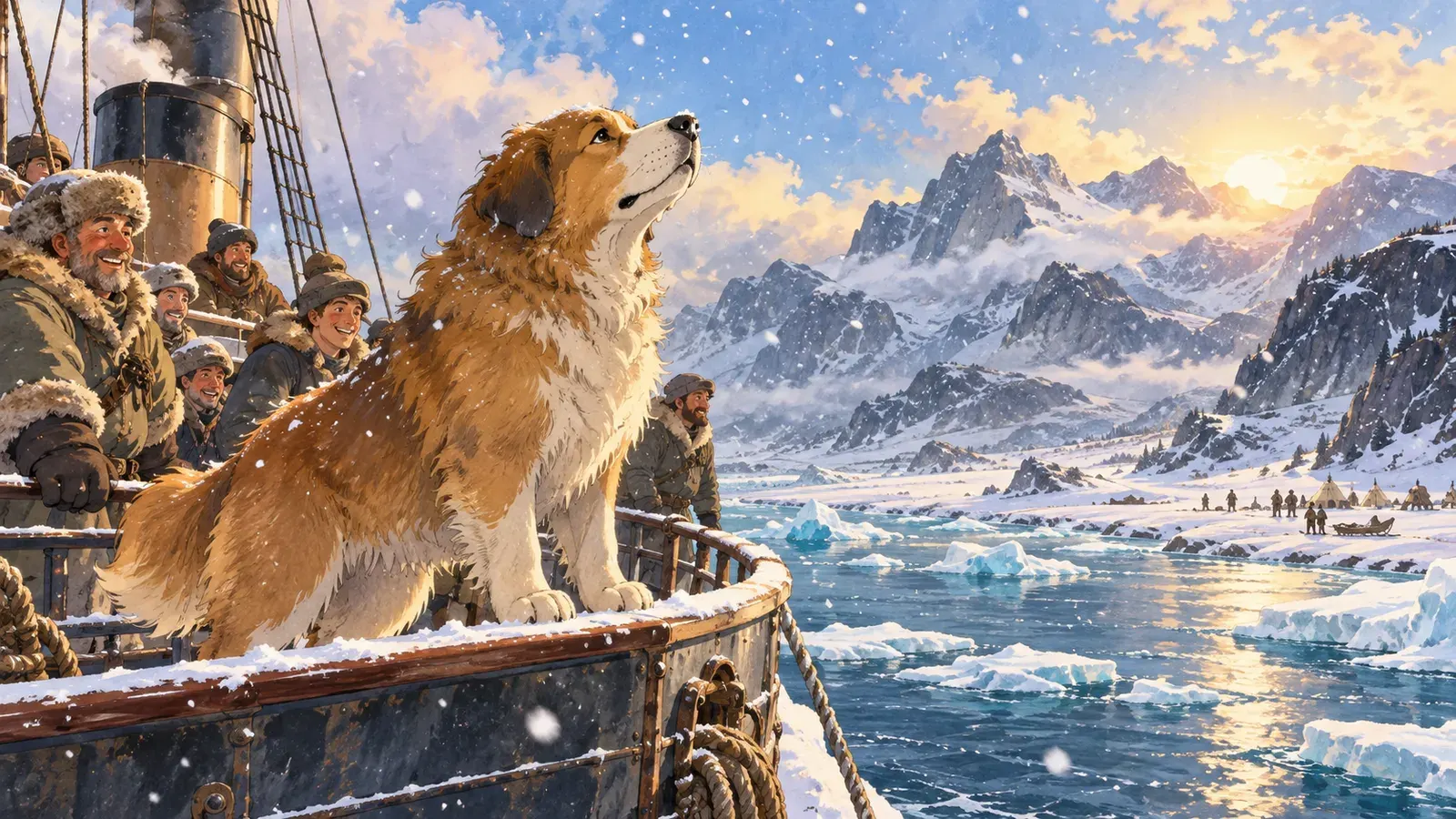
Thirty days from the time it left Dawson, the Salt Water Mail, with Buck and his mates at the fore, arrived at Skaguay. They were in a wretched state, worn out and worn down. Buck's one hundred and forty pounds had dwindled to one hundred and fifteen. The rest of his mates, though lighter dogs, had relatively lost more weight than he. Pike, the malingerer, who, in his lifetime of deceit, had often successfully feigned a hurt leg, was now limping in earnest. Sol-leks was limping, and Dub was suffering from a wrenched shoulder-blade.
ドーソンを出てから三十日後、バックたちを先頭にした海岸行きの郵便橇の隊は、スカグウェイに着いた。犬たちはみじめなありさまだった。疲れきって、すっかりやせ衰えていた。百四十ポンドあったバックの体重は、百十五ポンドにまで減っていた。ほかの犬たちは、もともとバックより軽かったが、割合でいえばバック以上にやせていた。仮病使いのパイクは、ずるをして生きてきたあいだ、何度も足をけがしたふりをしてうまくやってきた。そのパイクが、いまは本当に足を引きずっていた。ソル=レクスも足を引きずり、ダブは肩甲骨をくじいて苦しんでいた。
They were all terribly footsore. No spring or rebound was left in them. Their feet fell heavily on the trail, jarring their bodies and doubling the fatigue of a day's travel. There was nothing the matter with them except that they were dead tired. It was not the dead-tiredness that comes through brief and excessive effort, from which recovery is a matter of hours; but it was the dead-tiredness that comes through the slow and prolonged strength drainage of months of toil. There was no power of recuperation left, no reserve strength to call upon. It had been all used, the last least bit of it. Every muscle, every fibre, every cell, was tired, dead tired. And there was reason for it. In less than five months they had travelled twenty-five hundred miles, during the last eighteen hundred of which they had had but five days' rest. When they arrived at Skaguay they were apparently on their last legs. They could barely keep the traces taut, and on the down grades just managed to keep out of the way of the sled.
どの犬も、ひどく足を痛めていた。体にはもう、ばねも弾みも残っていなかった。足はどさりと重く道に落ち、そのたびに体に響いて、一日の旅の疲れを倍にした。どこが悪いわけでもない。ただ、死ぬほど疲れていたのだ。短いあいだ無理をしただけの疲れなら、数時間で回復する。だがこれは違った。何か月も働きつづけて、ゆっくりと長いあいだ体力をしぼり取られてきた疲れだった。もう回復する力は残っておらず、いざというときに使える力の蓄えもなかった。最後のひとかけらまで、使いはたしていたのだ。筋肉のひとつひとつ、筋の一本一本、細胞のひとつひとつまでが疲れ、死ぬほど疲れていた。それも無理はなかった。五か月足らずのあいだに二千五百マイルを旅し、そのうち最後の千八百マイルのあいだには、わずか五日しか休んでいなかったのだ。スカグウェイに着いたときには、どの犬も見るからに倒れる寸前だった。引き綱をぴんと張っておくのがやっとで、下り坂では、橇にぶつからないようにするのが精いっぱいだった。
"Mush on, poor sore feets," the driver encouraged them as they tottered down the main street of Skaguay. "Dis is de las'. Den we get one long res'. Eh? For sure. One bully long res'."
「進め、かわいそうな痛い足ども」スカグウェイの大通りをよろよろと進む犬たちを、犬ぞり使いは元気づけた。「これで最後だ。そしたら、うんと長く休める。な?きっとだ。うんと長い休みだぞ」
The drivers confidently expected a long stopover. Themselves, they had covered twelve hundred miles with two days' rest, and in the nature of reason and common justice they deserved an interval of loafing. But so many were the men who had rushed into the Klondike, and so many were the sweethearts, wives, and kin that had not rushed in, that the congested mail was taking on Alpine proportions; also, there were official orders. Fresh batches of Hudson Bay dogs were to take the places of those worthless for the trail. The worthless ones were to be got rid of, and, since dogs count for little against dollars, they were to be sold.
犬ぞり使いたちは、長い休みがもらえるものと信じきっていた。自分たちも、二日しか休まずに千二百マイルを走ってきたのだ。道理からいっても、当たり前の公平さからいっても、のんびり休ませてもらって当然だった。だが、クロンダイクに押し寄せた男たちはあまりにも多く、あとに残った恋人や妻や家族もあまりにも多かった。たまった郵便は、アルプスの山のような量になっていた。そのうえ、正式な命令も出ていた。旅の役に立たなくなった犬のかわりに、ハドソン湾から来た新しい犬たちを使うことになったのだ。役に立たない犬は処分される。ドルの前では犬の値打ちなどないも同然だから、売り払われることになった。
Three days passed, by which time Buck and his mates found how really tired and weak they were. Then, on the morning of the fourth day, two men from the States came along and bought them, harness and all, for a song. The men addressed each other as "Hal" and "Charles." Charles was a middle-aged, lightish-colored man, with weak and watery eyes and a mustache that twisted fiercely and vigorously up, giving the lie to the limply drooping lip it concealed. Hal was a youngster of nineteen or twenty, with a big Colt's revolver and a hunting-knife strapped about him on a belt that fairly bristled with cartridges. This belt was the most salient thing about him. It advertised his callowness—a callowness sheer and unutterable. Both men were manifestly out of place, and why such as they should adventure the North is part of the mystery of things that passes understanding.
三日たつころには、バックたちは、自分がどれほど疲れ、弱っているかを思い知っていた。そして四日目の朝、合衆国から来た二人の男がやって来て、引き具ごと、二束三文で犬たちを買い取った。男たちは互いを「ハル」「チャールズ」と呼んでいた。チャールズは中年の、色の白っぽい男だった。目は弱々しく潤んでいた。口ひげは威勢よくぴんと上にねじれていたが、その下に隠れた唇はだらしなく垂れていて、ひげの勇ましさとまるで釣り合っていなかった。ハルは十九か二十の若者だった。大きなコルトの拳銃と狩猟用ナイフを、弾薬がずらりと並んだベルトにつけて腰に下げていた。このベルトが、ハルのいちばん目立つところだった。世間知らずの青二才だと、自分から言いふらしているようなものだった。それも、あきれるほどの青二才だ。二人とも、この土地にまるで似合っていなかった。こんな連中がなぜ北の地へ冒険に来たのか、それはこの世の、人知を超えた謎のひとつだった。
Buck heard the chaffering, saw the money pass between the man and the Government agent, and knew that the Scotch half-breed and the mail-train drivers were passing out of his life on the heels of Perrault and François and the others who had gone before. When driven with his mates to the new owners' camp, Buck saw a slipshod and slovenly affair, tent half stretched, dishes unwashed, everything in disorder; also, he saw a woman. "Mercedes" the men called her. She was Charles's wife and Hal's sister—a nice family party.
値段をかけ合う声が聞こえ、男と政府の役人とのあいだで金が手渡されるのが見えた。それでバックは悟った。スコットランド人の血を引く男も、郵便隊の犬ぞり使いたちも、ペローやフランソワ、それより前に去っていった人間たちのあとを追って、自分の一生から去っていくのだと。仲間たちと一緒に新しい持ち主の野営地へ連れていかれると、そこはだらしなく散らかっていた。テントは半分しか張られておらず、皿は洗っていないし、何もかもがめちゃくちゃだった。そして、女が一人いた。男たちは女を「メルセデス」と呼んでいた。チャールズの妻で、ハルの姉だった。なんともけっこうな家族連れである。
Buck watched them apprehensively as they proceeded to take down the tent and load the sled. There was a great deal of effort about their manner, but no businesslike method. The tent was rolled into an awkward bundle three times as large as it should have been. The tin dishes were packed away unwashed. Mercedes continually fluttered in the way of her men and kept up an unbroken chattering of remonstrance and advice. When they put a clothes-sack on the front of the sled, she suggested it should go on the back; and when they had put it on the back, and covered it over with a couple of other bundles, she discovered overlooked articles which could abide nowhere else but in that very sack, and they unloaded again.
三人がテントをたたみ、橇に荷を積みはじめるのを、バックは不安な気持ちで見ていた。やたらと力んでいるが、手際というものがまるでない。テントは、本来の三倍もの大きさの、ぶかっこうな包みに丸められた。ブリキの皿は洗わないまましまいこまれた。メルセデスはしきりに男たちのじゃまになるところをひらひらと動き回り、文句や指図をひっきりなしにしゃべりつづけた。男たちが衣類の袋を橇の前に置くと、後ろに置くべきだと言う。後ろに置いて、上にほかの包みを二つほどのせると、今度は入れ忘れた品物が見つかった。それはほかのどこでもなく、どうしてもその袋に入れなければならないと言う。そこで男たちは、また荷を下ろした。
Three men from a neighboring tent came out and looked on, grinning and winking at one another.
隣のテントから三人の男が出てきて、にやにや笑い、互いに目くばせしながら見物していた。
"You've got a right smart load as it is," said one of them; "and it's not me should tell you your business, but I wouldn't tote that tent along if I was you."
「いまのままでも、たいした荷物だね」と一人が言った。「おれが口出しすることじゃないが、おれだったら、そのテントは持っていかないね」
"Undreamed of!" cried Mercedes, throwing up her hands in dainty dismay. "However in the world could I manage without a tent?"
「とんでもないわ!」メルセデスは、しとやかにうろたえて両手を上げた。「テントなしで、いったいどうやって暮らせっていうの?」
"It's springtime, and you won't get any more cold weather," the man replied.
「もう春だから、これ以上寒くはならないよ」と男は答えた。
She shook her head decidedly, and Charles and Hal put the last odds and ends on top the mountainous load.
メルセデスはきっぱりと首を振った。チャールズとハルは、山のような荷物のてっぺんに、最後のこまごましたものをのせた。
"Think it'll ride?" one of the men asked.
「それで走れると思うかい?」と男の一人がきいた。
"Why shouldn't it?" Charles demanded rather shortly.
「走れないわけがあるか?」とチャールズは、いくぶんむっとして言い返した。
"Oh, that's all right, that's all right," the man hastened meekly to say. "I was just a-wonderin', that is all. It seemed a mite top-heavy."
「いや、いいんだ、いいんだ」と男はあわてて、おとなしく言った。「ちょっと気になっただけさ。ちょいと上が重すぎるように見えたもんでね」
Charles turned his back and drew the lashings down as well as he could, which was not in the least well.
チャールズは背を向け、できるかぎりしっかりと荷の縛り綱を締めた。だが、少しもしっかりとは締まっていなかった。
"An' of course the dogs can hike along all day with that contraption behind them," affirmed a second of the men.
「それにもちろん、犬どもはあんな代物を引いて、一日じゅう歩けるってわけだ」と、二人目の男が言った。
"Certainly," said Hal, with freezing politeness, taking hold of the gee-pole with one hand and swinging his whip from the other. "Mush!" he shouted. "Mush on there!"
「もちろんだ」とハルは、冷ややかなほど丁寧に言った。片手で舵棒をつかみ、もう片方の手で鞭を振り回す。「マッシュ!」とハルは叫んだ。「そら、進め!」
The dogs sprang against the breast-bands, strained hard for a few moments, then relaxed. They were unable to move the sled.
犬たちは胸帯に体をぶつけ、しばらく懸命にふんばったが、やがて力を抜いた。橇はびくとも動かなかった。
"The lazy brutes, I'll show them," he cried, preparing to lash out at them with the whip.
「怠けやがって。思い知らせてやる」とハルは叫び、鞭で打ちすえようと振りかぶった。
But Mercedes interfered, crying, "Oh, Hal, you mustn't," as she caught hold of the whip and wrenched it from him. "The poor dears! Now you must promise you won't be harsh with them for the rest of the trip, or I won't go a step."
だがメルセデスが割って入った。「まあ、ハル、だめよ」と叫んで鞭をつかみ、ハルからもぎ取った。「かわいそうに!旅のあいだ、この子たちにひどいことはしないって約束してちょうだい。でなきゃ、わたし一歩も行かないわ」
"Precious lot you know about dogs," her brother sneered; "and I wish you'd leave me alone. They're lazy, I tell you, and you've got to whip them to get anything out of them. That's their way. You ask any one. Ask one of those men."
「犬のことなんか、何も知らないくせに」と弟はせせら笑った。「ほっといてくれよ。こいつらは怠けてるんだ。何かさせようと思ったら、鞭で叩かなきゃだめなんだよ。犬ってのはそういうもんなんだ。誰にでもきいてみろよ。あそこの人たちにきいてみな」
Mercedes looked at them imploringly, untold repugnance at sight of pain written in her pretty face.
メルセデスは、すがるように男たちを見た。痛そうなものを見るのはたまらなくいやだと、そのかわいらしい顔に書いてあった。
"They're weak as water, if you want to know," came the reply from one of the men. "Plum tuckered out, that's what's the matter. They need a rest."
「言わせてもらうがね、こいつらはふらふらに弱ってるんだ」と男の一人が答えた。「すっかりへばってる。それがいけないのさ。休ませてやらなきゃだめだ」
"Rest be blanked," said Hal, with his beardless lips; and Mercedes said, "Oh!" in pain and sorrow at the oath.
「休みなんかくそくらえだ」と、まだひげも生えそろわないハルは言った。メルセデスはその汚い言葉に胸を痛め、悲しげに「まあ!」と言った。
But she was a clannish creature, and rushed at once to the defence of her brother. "Never mind that man," she said pointedly. "You're driving our dogs, and you do what you think best with them."
だがメルセデスは身内びいきで、すぐさま弟の味方についた。「あんな人の言うことなんか気にしないで」と、あてつけがましく言った。「うちの犬を走らせてるのはあなたなんだから、いちばんいいと思うようにすればいいのよ」
Again Hal's whip fell upon the dogs. They threw themselves against the breast-bands, dug their feet into the packed snow, got down low to it, and put forth all their strength. The sled held as though it were an anchor. After two efforts, they stood still, panting. The whip was whistling savagely, when once more Mercedes interfered. She dropped on her knees before Buck, with tears in her eyes, and put her arms around his neck.
ふたたびハルの鞭が犬たちに振りおろされた。犬たちは胸帯に体をぶつけ、固く踏みならされた雪に足を食いこませ、身を低くして、ありったけの力をふりしぼった。橇は錨をおろしたように動かなかった。二度やってみたあと、犬たちはあえぎながら立ちつくした。鞭がひゅうひゅうと容赦なく鳴っていると、またメルセデスが割って入った。目に涙を浮かべてバックの前にひざまずき、その首に腕を回した。
"You poor, poor dears," she cried sympathetically, "why don't you pull hard?—then you wouldn't be whipped." Buck did not like her, but he was feeling too miserable to resist her, taking it as part of the day's miserable work.
「かわいそうに、ほんとにかわいそうに」とメルセデスは、いかにも同情したように叫んだ。「どうしてしっかり引かないの?そうすれば鞭で打たれずにすむのに」バックはこの女が好きではなかった。だが、みじめすぎて逆らう気にもなれなかった。これもその日のみじめな仕事のうちだと思って、されるままになっていた。
One of the onlookers, who had been clenching his teeth to suppress hot speech, now spoke up:—
見物人の一人は、さっきから歯を食いしばって、きつい言葉が飛び出しそうになるのをこらえていた。だが、ここでとうとう口を開いた。
"It's not that I care a whoop what becomes of you, but for the dogs' sakes I just want to tell you, you can help them a mighty lot by breaking out that sled. The runners are froze fast. Throw your weight against the gee-pole, right and left, and break it out."
「あんたたちがどうなろうと、おれの知ったことじゃない。だが犬たちのために言っておくよ。橇を雪から引きはがしてやれば、ずいぶん犬たちが楽になる。滑り木が凍りついてるんだ。舵棒に体重をかけて右へ左へ揺すって、はがしてやるんだよ」
A third time the attempt was made, but this time, following the advice, Hal broke out the runners which had been frozen to the snow. The overloaded and unwieldy sled forged ahead, Buck and his mates struggling frantically under the rain of blows. A hundred yards ahead the path turned and sloped steeply into the main street. It would have required an experienced man to keep the top-heavy sled upright, and Hal was not such a man. As they swung on the turn the sled went over, spilling half its load through the loose lashings. The dogs never stopped. The lightened sled bounded on its side behind them. They were angry because of the ill treatment they had received and the unjust load. Buck was raging. He broke into a run, the team following his lead. Hal cried "Whoa! whoa!" but they gave no heed. He tripped and was pulled off his feet. The capsized sled ground over him, and the dogs dashed on up the street, adding to the gayety of Skaguay as they scattered the remainder of the outfit along its chief thoroughfare.
三度目に試みたとき、今度はハルも忠告どおりに、雪に凍りついていた滑り木をはがした。荷を積みすぎて扱いにくい橇が、前へ進みだした。バックたちは雨のように降る鞭の下で、必死にもがいた。百ヤード先で道は曲がり、急な下り坂になって大通りへ続いていた。上が重すぎる橇を倒さずに進ませるには、慣れた者でなければ無理だった。ハルはそういう男ではなかった。角を曲がったとたん、橇はひっくり返り、ゆるい縛り綱のあいだから荷物の半分をぶちまけた。犬たちは止まらなかった。軽くなった橇が、横倒しのまま後ろで跳ねていた。ひどい扱いを受け、むちゃな荷物を引かされて、犬たちは腹を立てていたのだ。バックは怒り狂っていた。バックが駆けだすと、ほかの犬たちもあとに続いた。ハルが「止まれ!止まれ!」と叫んだが、犬たちは耳を貸さなかった。ハルはつまずいて、引きずり倒された。ひっくり返った橇がハルの上をごりごりと乗りこえ、犬たちは通りを駆けていった。残りの荷物をスカグウェイの目抜き通りにまき散らしながら走っていくので、町の人々はおおいに楽しんだ。
Kind-hearted citizens caught the dogs and gathered up the scattered belongings. Also, they gave advice. Half the load and twice the dogs, if they ever expected to reach Dawson, was what was said. Hal and his sister and brother-in-law listened unwillingly, pitched tent, and overhauled the outfit. Canned goods were turned out that made men laugh, for canned goods on the Long Trail is a thing to dream about. "Blankets for a hotel" quoth one of the men who laughed and helped. "Half as many is too much; get rid of them. Throw away that tent, and all those dishes,—who's going to wash them, anyway? Good Lord, do you think you're travelling on a Pullman?"
親切な町の人たちが犬を捕まえ、散らばった持ち物を拾い集めてくれた。忠告もしてくれた。ドーソンにたどり着きたいなら、荷物は半分に、犬は倍にしろというのだ。ハルと姉と義兄は、しぶしぶ耳を傾けた。そしてテントを張り、持ち物を一から調べなおした。缶詰が出てくると、男たちは笑った。長い雪の旅で缶詰を持ち歩けるなど、夢のような話だったからだ。「ホテル並みの毛布だな」と、笑いながら手伝っていた男の一人が言った。「この半分でも多すぎる。捨てちまいな。そのテントも捨てろ。皿も全部だ。どうせ誰が洗うっていうんだ?まったく、豪華な寝台車で旅でもするつもりかね?」
And so it went, the inexorable elimination of the superfluous. Mercedes cried when her clothes-bags were dumped on the ground and article after article was thrown out. She cried in general, and she cried in particular over each discarded thing. She clasped hands about knees, rocking back and forth broken-heartedly. She averred she would not go an inch, not for a dozen Charleses. She appealed to everybody and to everything, finally wiping her eyes and proceeding to cast out even articles of apparel that were imperative necessaries. And in her zeal, when she had finished with her own, she attacked the belongings of her men and went through them like a tornado.
こうして、いらないものが容赦なく捨てられていった。衣類の袋が地面にぶちまけられ、品物が次々に放り出されると、メルセデスは泣いた。全部まとめて嘆いて泣き、捨てられる品をひとつひとつ惜しんでは泣いた。膝を抱え、悲しみにくれて体を前後に揺すった。チャールズが十人いたって、一インチだって行くものですかと言いはった。誰彼かまわず、何にでも訴えかけた。そして、とうとう涙をふくと、どうしても必要な着るものまで捨てはじめた。勢いあまって、自分のものを片づけ終えると、男たちの持ち物にまで襲いかかり、竜巻のように引っかき回した。
This accomplished, the outfit, though cut in half, was still a formidable bulk. Charles and Hal went out in the evening and bought six Outside dogs. These, added to the six of the original team, and Teek and Koona, the huskies obtained at the Rink Rapids on the record trip, brought the team up to fourteen. But the Outside dogs, though practically broken in since their landing, did not amount to much. Three were short-haired pointers, one was a Newfoundland, and the other two were mongrels of indeterminate breed. They did not seem to know anything, these newcomers. Buck and his comrades looked upon them with disgust, and though he speedily taught them their places and what not to do, he could not teach them what to do. They did not take kindly to trace and trail. With the exception of the two mongrels, they were bewildered and spirit-broken by the strange savage environment in which they found themselves and by the ill treatment they had received. The two mongrels were without spirit at all; bones were the only things breakable about them.
これがすむと、荷物は半分に減ったものの、まだ大変な量だった。チャールズとハルは夕方出かけていき、外から来た犬を六匹買ってきた。元のチームの六匹と、記録の旅のときにリンク急流で手に入れたハスキー犬のティークとクーナに、この六匹を加えると、チームは十四匹になった。だが外から来た犬たちは、上陸してからひととおり仕込まれていたとはいえ、ほとんど役に立たなかった。三匹は毛の短いポインターで、一匹はニューファンドランド犬、残る二匹はどんな血筋かもわからない雑種だった。新入りたちは何も知らないようだった。バックや仲間たちは、うんざりした目で新入りを見た。バックは、自分の立場と、してはいけないことはすぐに教えこんだ。だが、何をすべきかは教えられなかった。新入りたちは、引き綱にも雪の旅にもなじまなかった。二匹の雑種をのぞけば、どれも、放りこまれた見知らぬ荒々しい土地と、受けてきたひどい扱いのせいで、すっかりとまどい、気力をなくしていた。二匹の雑種には、もともと気力などまるでなかった。くじけるものといえば、骨くらいのものだった。
With the newcomers hopeless and forlorn, and the old team worn out by twenty-five hundred miles of continuous trail, the outlook was anything but bright. The two men, however, were quite cheerful. And they were proud, too. They were doing the thing in style, with fourteen dogs. They had seen other sleds depart over the Pass for Dawson, or come in from Dawson, but never had they seen a sled with so many as fourteen dogs. In the nature of Arctic travel there was a reason why fourteen dogs should not drag one sled, and that was that one sled could not carry the food for fourteen dogs. But Charles and Hal did not know this. They had worked the trip out with a pencil, so much to a dog, so many dogs, so many days, Q.E.D. Mercedes looked over their shoulders and nodded comprehensively, it was all so very simple.
新入りたちは頼りなく、しょんぼりしていた。古くからの犬たちは、二千五百マイルも休みなく旅をして疲れきっていた。先行きは、とても明るいとはいえなかった。それなのに二人の男は、すっかり上機嫌だった。しかも得意になっていた。犬を十四匹もそろえて、堂々とやっているのだから。ほかの橇が峠を越えてドーソンへ出発していくのも、ドーソンから着くのも見てきたが、十四匹もの犬をつけた橇は見たことがなかった。だが北極圏の旅では、一台の橇に十四匹の犬をつけてはいけない理由があった。一台の橇では、十四匹分の食料を運びきれないのだ。チャールズとハルは、それを知らなかった。二人は鉛筆で旅の計算をしていた。犬一匹にこれだけ、犬が何匹、日数が何日、よって証明終わり。メルセデスは二人の肩ごしにのぞきこみ、わかったようにうなずいた。何もかも、じつに簡単なことだった。
Late next morning Buck led the long team up the street. There was nothing lively about it, no snap or go in him and his fellows. They were starting dead weary. Four times he had covered the distance between Salt Water and Dawson, and the knowledge that, jaded and tired, he was facing the same trail once more, made him bitter. His heart was not in the work, nor was the heart of any dog. The Outsides were timid and frightened, the Insides without confidence in their masters.
翌朝遅く、バックは長いチームを率いて通りを進んでいった。活気などまるでなく、バックにも仲間たちにも、きびきびした勢いはなかった。死ぬほど疲れたまま出発したのだ。バックは海岸とドーソンのあいだを、もう四度も走っていた。へとへとに疲れた体で、また同じ道を行くのだと思うと、苦い気持ちになった。仕事に気持ちが入らなかった。ほかのどの犬も同じだった。外から来た犬たちはおどおどとおびえ、土地の犬たちは主人を信用していなかった。
Buck felt vaguely that there was no depending upon these two men and the woman. They did not know how to do anything, and as the days went by it became apparent that they could not learn. They were slack in all things, without order or discipline. It took them half the night to pitch a slovenly camp, and half the morning to break that camp and get the sled loaded in fashion so slovenly that for the rest of the day they were occupied in stopping and rearranging the load. Some days they did not make ten miles. On other days they were unable to get started at all. And on no day did they succeed in making more than half the distance used by the men as a basis in their dog-food computation.
この二人の男と女には頼れない、とバックはなんとなく感じていた。三人とも、何をどうすればいいのかまるで知らなかった。日がたつにつれて、覚えることもできないのがはっきりしてきた。何をするにもだらしなく、きちんとした手順もけじめもなかった。だらしない野営を張るのに夜の半分をかけ、それをたたんで橇に荷を積むのに朝の半分をかけた。しかも積み方がひどいので、その日のうちは、止まっては荷を積みなおしてばかりいた。十マイルも進めない日もあった。まったく出発できない日もあった。犬の餌を計算したとき、一日にこれだけ進むと見こんだ距離の半分以上を進めた日は、一日もなかった。
It was inevitable that they should go short on dog-food. But they hastened it by overfeeding, bringing the day nearer when underfeeding would commence. The Outside dogs, whose digestions had not been trained by chronic famine to make the most of little, had voracious appetites. And when, in addition to this, the worn-out huskies pulled weakly, Hal decided that the orthodox ration was too small. He doubled it. And to cap it all, when Mercedes, with tears in her pretty eyes and a quaver in her throat, could not cajole him into giving the dogs still more, she stole from the fish-sacks and fed them slyly. But it was not food that Buck and the huskies needed, but rest. And though they were making poor time, the heavy load they dragged sapped their strength severely.
犬の餌が足りなくなるのは目に見えていた。それなのに三人は、餌をやりすぎて、餌が足りなくなる日をいっそう早めてしまった。外から来た犬たちは、いつも飢えに耐えてきたわけではないから、少ない食べ物を体のなかでむだなく使うことができない。だから、ものすごい食欲だった。そのうえ、疲れきったハスキー犬たちが弱々しくしか引かないので、ハルは決まった量では少なすぎると考えた。そして量を倍にした。とどめに、メルセデスまでが餌をくすねた。かわいい目に涙を浮かべ、声をふるわせても、ハルがもっと餌をやってくれないとわかると、魚の袋からこっそり盗んで犬たちに食べさせたのだ。だがバックやハスキー犬たちに必要なのは、食べ物ではなく休みだった。ろくに進んではいなかったが、重い荷物を引くせいで、犬たちの体力はひどくすり減っていった。
Then came the underfeeding. Hal awoke one day to the fact that his dog-food was half gone and the distance only quarter covered; further, that for love or money no additional dog-food was to be obtained. So he cut down even the orthodox ration and tried to increase the day's travel. His sister and brother-in-law seconded him; but they were frustrated by their heavy outfit and their own incompetence. It was a simple matter to give the dogs less food; but it was impossible to make the dogs travel faster, while their own inability to get under way earlier in the morning prevented them from travelling longer hours. Not only did they not know how to work dogs, but they did not know how to work themselves.
やがて餌が足りなくなった。ある日ハルは、はっと気づいた。犬の餌はもう半分なくなっているのに、道のりはまだ四分の一しか来ていない。しかも、どんなに頼んでも、どんなに金を積んでも、餌をよそで手に入れることはできない。そこでハルは、決まった量よりもさらに餌を減らし、一日に進む距離をのばそうとした。姉と義兄も賛成した。だが重い荷物と、自分たちの腕のなさのせいで、うまくいかなかった。犬の餌を減らすのはたやすい。だが犬を速く走らせることはできない。朝早く出発できないので、長い時間旅をすることもできない。犬の働かせ方を知らないばかりか、自分たちがどう働けばいいのかも知らなかったのだ。
The first to go was Dub. Poor blundering thief that he was, always getting caught and punished, he had none the less been a faithful worker. His wrenched shoulder-blade, untreated and unrested, went from bad to worse, till finally Hal shot him with the big Colt's revolver. It is a saying of the country that an Outside dog starves to death on the ration of the husky, so the six Outside dogs under Buck could do no less than die on half the ration of the husky. The Newfoundland went first, followed by the three short-haired pointers, the two mongrels hanging more grittily on to life, but going in the end.
最初に死んだのはダブだった。いつも見つかってはこらしめられる、かわいそうな不器用な泥棒だったが、それでも働き者だった。くじいた肩甲骨は、手当てもされず休ませてももらえずに、どんどん悪くなっていった。そしてとうとう、ハルが大きなコルトの拳銃でダブを撃ち殺した。この土地には、外から来た犬はハスキー犬と同じ量の餌では飢え死にする、という言い伝えがある。それなら、バックの下にいた外から来た六匹が、ハスキー犬の半分の餌で死なないはずがなかった。ニューファンドランド犬が最初に死に、続いて三匹のポインターが死んだ。二匹の雑種はもっとしぶとく命にしがみついていたが、最後には死んでしまった。
By this time all the amenities and gentlenesses of the Southland had fallen away from the three people. Shorn of its glamour and romance, Arctic travel became to them a reality too harsh for their manhood and womanhood. Mercedes ceased weeping over the dogs, being too occupied with weeping over herself and with quarrelling with her husband and brother. To quarrel was the one thing they were never too weary to do. Their irritability arose out of their misery, increased with it, doubled upon it, outdistanced it. The wonderful patience of the trail which comes to men who toil hard and suffer sore, and remain sweet of speech and kindly, did not come to these two men and the woman. They had no inkling of such a patience. They were stiff and in pain; their muscles ached, their bones ached, their very hearts ached; and because of this they became sharp of speech, and hard words were first on their lips in the morning and last at night.
このころには、南の国で身につけた礼儀やおだやかさは、三人からすっかりはがれ落ちていた。北極圏の旅から華やかさもロマンもはぎ取られてしまうと、残ったのは、男にも女にも耐えきれないほど過酷な現実だった。メルセデスは犬のことで泣くのをやめた。自分のことで泣いたり、夫や弟とけんかしたりするのに忙しかったのだ。けんかだけは、どんなに疲れていてもやめなかった。三人のいらだちは、みじめさから生まれた。そして、みじめさが増すにつれてふくれあがり、やがてみじめさを追いこすほどになった。どんなに働き、どんなに苦しんでも、言葉をやわらげ、人に親切でいられる者がいる。そういう人には、旅のすばらしい忍耐が身につく。だが、この二人の男と女には身につかなかった。そんな忍耐があることさえ、知らなかった。体はこわばって痛み、筋肉も骨も、心まで痛んだ。そのせいで言葉はとげとげしくなり、朝いちばんに口にするのも、夜最後に口にするのも、きつい言葉だった。
Charles and Hal wrangled whenever Mercedes gave them a chance. It was the cherished belief of each that he did more than his share of the work, and neither forbore to speak this belief at every opportunity. Sometimes Mercedes sided with her husband, sometimes with her brother. The result was a beautiful and unending family quarrel. Starting from a dispute as to which should chop a few sticks for the fire (a dispute which concerned only Charles and Hal), presently would be lugged in the rest of the family, fathers, mothers, uncles, cousins, people thousands of miles away, and some of them dead. That Hal's views on art, or the sort of society plays his mother's brother wrote, should have anything to do with the chopping of a few sticks of firewood, passes comprehension; nevertheless the quarrel was as likely to tend in that direction as in the direction of Charles's political prejudices. And that Charles's sister's tale-bearing tongue should be relevant to the building of a Yukon fire, was apparent only to Mercedes, who disburdened herself of copious opinions upon that topic, and incidentally upon a few other traits unpleasantly peculiar to her husband's family. In the meantime the fire remained unbuilt, the camp half pitched, and the dogs unfed.
チャールズとハルは、メルセデスが少しでも口を閉じれば、そのすきに言い争った。二人とも、自分は人一倍働いていると固く信じていて、何かあるたびにそれを口にせずにいられなかった。メルセデスは、夫の味方をするときもあれば、弟の味方をするときもあった。こうして、みごとなまでに果てしない家族げんかが続いた。はじまりは、たき火の薪を数本どちらが割るかという、チャールズとハルだけの言い争いだ。ところが、やがて家族じゅうが引っぱりこまれる。父親、母親、おじ、いとこ、何千マイルも離れたところにいる人たち、なかにはもう死んだ人までが話に出てくる。ハルの芸術についての考えや、母方のおじが書いた社交劇の出来ばえが、薪を数本割ることとどう関係があるのか、まったく理解に苦しむ。それでも、けんかはチャールズの政治の考えのかたよりのほうへ向かうのと同じくらい、そちらへ向かいがちだった。チャールズの妹が告げ口好きなことが、ユーコンでたき火をすることとどう関係があるのか、それはメルセデスにしかわからなかった。メルセデスはその話になると、意見をたっぷりとぶちまけた。ついでに、夫の家族にだけある、いくつかのいやな性質についてもぶちまけた。そのあいだ、火はたかれず、野営は半分しか張られず、犬たちは餌をもらえないままだった。
Mercedes nursed a special grievance—the grievance of sex. She was pretty and soft, and had been chivalrously treated all her days. But the present treatment by her husband and brother was everything save chivalrous. It was her custom to be helpless. They complained. Upon which impeachment of what to her was her most essential sex-prerogative, she made their lives unendurable. She no longer considered the dogs, and because she was sore and tired, she persisted in riding on the sled. She was pretty and soft, but she weighed one hundred and twenty pounds—a lusty last straw to the load dragged by the weak and starving animals. She rode for days, till they fell in the traces and the sled stood still. Charles and Hal begged her to get off and walk, pleaded with her, entreated, the while she wept and importuned Heaven with a recital of their brutality.
メルセデスには、ひとつ特別な不満があった。女としての不満である。メルセデスはかわいらしく、か弱かった。生まれてこのかた、ずっと男たちから大事にされてきた。ところが、いまの夫と弟の扱いは、大事にするどころではなかった。メルセデスは、何もできずに人に頼るのが当たり前だった。それに男たちが文句を言った。女にとっていちばん大切な特権を責められたと思ったメルセデスは、二人の毎日を耐えがたいものにした。もう犬のことなど考えなかった。体が痛くて疲れているからと、どうしても橇に乗ると言ってきかなかった。かわいらしく、か弱かったが、体重は百二十ポンドあった。弱りきって飢えた犬たちが引く荷物に、これがずっしりと最後の重みを加えた。メルセデスは何日も乗りつづけ、とうとう犬たちは引き綱につながれたまま倒れ、橇は止まってしまった。チャールズとハルは、降りて歩いてくれと頼み、拝むように頼みこんだ。そのあいだメルセデスは泣きながら、二人がどれほどひどいかを並べたてて、天に訴えるのだった。
On one occasion they took her off the sled by main strength. They never did it again. She let her legs go limp like a spoiled child, and sat down on the trail. They went on their way, but she did not move. After they had travelled three miles they unloaded the sled, came back for her, and by main strength put her on the sled again.
一度、二人は力ずくでメルセデスを橇から降ろしたことがあった。だが二度とそんなことはしなかった。メルセデスは、甘やかされた子どものように足の力を抜き、道の上に座りこんでしまったのだ。二人はそのまま進んだが、メルセデスは動かなかった。三マイル進んだところで、二人は橇の荷を下ろして迎えに戻り、力ずくでまた橇に乗せた。
In the excess of their own misery they were callous to the suffering of their animals. Hal's theory, which he practised on others, was that one must get hardened. He had started out preaching it to his sister and brother-in-law. Failing there, he hammered it into the dogs with a club. At the Five Fingers the dog-food gave out, and a toothless old squaw offered to trade them a few pounds of frozen horse-hide for the Colt's revolver that kept the big hunting-knife company at Hal's hip. A poor substitute for food was this hide, just as it had been stripped from the starved horses of the cattlemen six months back. In its frozen state it was more like strips of galvanized iron, and when a dog wrestled it into his stomach it thawed into thin and innutritious leathery strings and into a mass of short hair, irritating and indigestible.
自分たちがあまりにみじめなので、三人は犬たちの苦しみなど気にもとめなくなっていた。ハルには持論があった。人はたくましくならなければならない、というのだ。ただし、それを実行させる相手はいつも他人だった。はじめは姉と義兄に説いていたが、相手にされなかった。そこで、犬たちに棍棒でそれを叩きこんだ。ファイブ・フィンガーズで、犬の餌がとうとう尽きた。すると歯の抜けた先住民の老婆が、凍った馬の皮を数ポンド、コルトの拳銃と取りかえてやろうと言ってきた。ハルの腰で、大きな狩猟用ナイフと並んでいた拳銃である。この皮は、六か月前に牧場の男たちの飢えた馬からはいだままのもので、食べ物のかわりとしてはお粗末なものだった。凍ったままでは、まるでトタン板の切れはしのようだった。犬が苦労してそれを腹に収めると、皮は解けて、栄養のない薄い革ひものようなものと、短い毛のかたまりになった。毛は胃を刺激するばかりで、消化もできなかった。
And through it all Buck staggered along at the head of the team as in a nightmare. He pulled when he could; when he could no longer pull, he fell down and remained down till blows from whip or club drove him to his feet again. All the stiffness and gloss had gone out of his beautiful furry coat. The hair hung down, limp and draggled, or matted with dried blood where Hal's club had bruised him. His muscles had wasted away to knotty strings, and the flesh pads had disappeared, so that each rib and every bone in his frame were outlined cleanly through the loose hide that was wrinkled in folds of emptiness. It was heartbreaking, only Buck's heart was unbreakable. The man in the red sweater had proved that.
そのあいだずっと、バックは悪夢のなかにいるように、チームの先頭をよろめきながら進んでいた。引けるときは引いた。もう引けなくなると倒れ、鞭や棍棒で打たれて立ち上がらされるまで、倒れたままでいた。美しい毛皮からは、張りもつやもすっかり消えていた。毛はだらりと垂れて汚れ、ハルの棍棒で打たれた傷のあたりは、乾いた血で固まっていた。筋肉はやせ細って、筋張ったひものようになっていた。肉はすっかり落ち、あばら骨の一本一本、体じゅうの骨のひとつひとつが、くっきりと浮き出ていた。中身のなくなった皮は、たるんでしわだらけになっていた。胸が張り裂けるような姿だった。だがバックの心は、張り裂けることのない心だった。それは、あの赤いセーターの男が証明していた。
As it was with Buck, so was it with his mates. They were perambulating skeletons. There were seven all together, including him. In their very great misery they had become insensible to the bite of the lash or the bruise of the club. The pain of the beating was dull and distant, just as the things their eyes saw and their ears heard seemed dull and distant. They were not half living, or quarter living. They were simply so many bags of bones in which sparks of life fluttered faintly. When a halt was made, they dropped down in the traces like dead dogs, and the spark dimmed and paled and seemed to go out. And when the club or whip fell upon them, the spark fluttered feebly up, and they tottered to their feet and staggered on.
バックがそうなら、仲間たちも同じだった。どれも歩く骸骨だった。バックを入れて、全部で七匹になっていた。あまりにみじめで、鞭に打たれても、棍棒で殴られても、何も感じなくなっていた。打たれる痛みは、ぼんやりと遠くに感じられるだけだった。目に見えるものも、耳に聞こえるものも、同じようにぼんやりと遠かった。半分も生きていなかった。四分の一も生きていなかった。かすかな命の火がちらちら揺れているだけの、骨の袋にすぎなかった。橇が止まると、犬たちは引き綱につながれたまま死んだように倒れた。命の火はかすみ、色を失って、いまにも消えそうに見えた。そして棍棒や鞭が振りおろされると、火は弱々しく揺れて燃え上がり、犬たちはよろよろと立ち上がって、ふらふらと歩きだすのだった。
There came a day when Billee, the good-natured, fell and could not rise. Hal had traded off his revolver, so he took the axe and knocked Billee on the head as he lay in the traces, then cut the carcass out of the harness and dragged it to one side. Buck saw, and his mates saw, and they knew that this thing was very close to them. On the next day Koona went, and but five of them remained: Joe, too far gone to be malignant; Pike, crippled and limping, only half conscious and not conscious enough longer to malinger; Sol-leks, the one-eyed, still faithful to the toil of trace and trail, and mournful in that he had so little strength with which to pull; Teek, who had not travelled so far that winter and who was now beaten more than the others because he was fresher; and Buck, still at the head of the team, but no longer enforcing discipline or striving to enforce it, blind with weakness half the time and keeping the trail by the loom of it and by the dim feel of his feet.
ある日、気のいいビリーが倒れて、起き上がれなくなった。ハルはもう拳銃を手放していた。そこで斧を手にとり、引き綱につながれたまま横たわっているビリーの頭を打った。それから死骸を引き具から切り離し、脇へ引きずっていった。バックはそれを見た。仲間たちも見た。そして、同じことが自分たちのすぐそばまで迫っていることを知った。次の日にはクーナが死に、残りは五匹になった。ジョーは、弱りすぎて意地悪をする元気もなくなっていた。パイクは足が不自由で、引きずって歩き、意識も半分しかなかった。もう仮病を使えるほど頭がはっきりしていなかった。片目のソル=レクスは、あいかわらず引き綱と旅の仕事にひたむきだった。引く力がほとんど残っていないことを、悲しんでいた。ティークは、その冬それほど長く旅をしていなかったので、ほかの犬より元気があった。そのせいで、ほかの犬より多く打たれた。そしてバックは、あいかわらずチームの先頭にいた。だがもう規律を守らせることはなく、守らせようともしなかった。弱りすぎて、半分は目が見えなかった。道がぼんやり見える感じと、足の裏にかすかに伝わる感触をたよりに、道をたどっていた。
It was beautiful spring weather, but neither dogs nor humans were aware of it. Each day the sun rose earlier and set later. It was dawn by three in the morning, and twilight lingered till nine at night. The whole long day was a blaze of sunshine. The ghostly winter silence had given way to the great spring murmur of awakening life. This murmur arose from all the land, fraught with the joy of living. It came from the things that lived and moved again, things which had been as dead and which had not moved during the long months of frost. The sap was rising in the pines. The willows and aspens were bursting out in young buds. Shrubs and vines were putting on fresh garbs of green. Crickets sang in the nights, and in the days all manner of creeping, crawling things rustled forth into the sun. Partridges and woodpeckers were booming and knocking in the forest. Squirrels were chattering, birds singing, and overhead honked the wild-fowl driving up from the south in cunning wedges that split the air.
美しい春の陽気だったが、犬も人間もそれに気づかなかった。日ごとに太陽は早く昇り、遅く沈むようになった。朝の三時には夜が明け、夜の九時まで薄明かりが残った。長い一日じゅう、日の光がまぶしく降りそそいだ。幽霊のような冬の静けさは消え、目覚めていく命の、春の大きなざわめきに変わっていた。生きる喜びにあふれたこのざわめきは、大地のいたるところからわき起こっていた。長い凍てつく月日のあいだ、死んだように動かなかったものたちが、ふたたび生きて動きはじめたのだ。松の木には樹液がのぼってきていた。ヤナギやポプラは若芽をふいていた。低い木々や蔓草は、新しい緑の衣をまといはじめていた。夜にはコオロギが鳴き、昼には這う虫やうごめく虫が、ありとあらゆる種類、がさごそと日なたへ出てきた。森ではライチョウが羽を打ち鳴らし、キツツキがこつこつと木をつついていた。リスはちいちいと鳴き、鳥たちはさえずった。頭上では、南から渡ってくる野鳥の群れが、空を切りさくようなくさび形の隊列を組んで、があがあと鳴いていた。
From every hill slope came the trickle of running water, the music of unseen fountains. All things were thawing, bending, snapping. The Yukon was straining to break loose the ice that bound it down. It ate away from beneath; the sun ate from above. Air-holes formed, fissures sprang and spread apart, while thin sections of ice fell through bodily into the river. And amid all this bursting, rending, throbbing of awakening life, under the blazing sun and through the soft-sighing breezes, like wayfarers to death, staggered the two men, the woman, and the huskies.
どの丘の斜面からも、水の流れるちょろちょろという音、目に見えない泉の音楽が聞こえてきた。何もかもが解け、たわみ、はじけていた。ユーコン川は、自分を押さえつけている氷を打ち破ろうと、身をよじっていた。川は下から氷を食い破り、太陽は上から氷を解かしていった。氷に穴があき、割れ目が走って広がり、薄くなった氷のかたまりがそっくり川へ落ちていった。目覚めた命がはじけ、裂け、脈打つ、そのまっただなかを、燃えるような太陽の下、やさしくため息をつくようなそよ風のなかを、二人の男と、女と、ハスキー犬たちが、死に向かう旅人のようによろめきながら進んでいった。
With the dogs falling, Mercedes weeping and riding, Hal swearing innocuously, and Charles's eyes wistfully watering, they staggered into John Thornton's camp at the mouth of White River. When they halted, the dogs dropped down as though they had all been struck dead. Mercedes dried her eyes and looked at John Thornton. Charles sat down on a log to rest. He sat down very slowly and painstakingly what of his great stiffness. Hal did the talking. John Thornton was whittling the last touches on an axe-handle he had made from a stick of birch. He whittled and listened, gave monosyllabic replies, and, when it was asked, terse advice. He knew the breed, and he gave his advice in the certainty that it would not be followed.
犬たちは倒れ、メルセデスは泣きながら橇に乗り、ハルは何の役にも立たない悪態をつき、チャールズは悲しげに目を潤ませていた。そんなありさまで、一行はホワイト川の河口にあるジョン・ソーントンの野営地に、よろめきながらたどり着いた。止まったとたん、犬たちはみな打ち殺されたように、ばったりと倒れた。メルセデスは涙をふいて、ジョン・ソーントンを見た。チャールズは丸太に腰をおろして休んだ。体がひどくこわばっていたので、ひどくゆっくりと、苦労して腰をおろした。話をしたのはハルだった。ジョン・ソーントンは、樺の枝で作った斧の柄に、最後の仕上げの削りを入れているところだった。削りながら耳を傾け、ひとことで返事をし、たずねられると短く忠告した。こういう連中のことはよく知っていた。どうせ忠告は聞かないだろうと思いながら、忠告したのだ。
"They told us up above that the bottom was dropping out of the trail and that the best thing for us to do was to lay over," Hal said in response to Thornton's warning to take no more chances on the rotten ice. "They told us we couldn't make White River, and here we are." This last with a sneering ring of triumph in it.
腐った氷の上でこれ以上危ない橋を渡るのはよせ、とソーントンは忠告した。するとハルはこう答えた。「上流でも言われたよ。道の底が抜けかけてるから、しばらく様子を見たほうがいいって。ホワイト川まではたどり着けないとも言われた。だが、このとおり、ちゃんと来たぜ」最後の言葉は、相手をばかにしたように、得意げに響いた。
"And they told you true," John Thornton answered. "The bottom's likely to drop out at any moment. Only fools, with the blind luck of fools, could have made it. I tell you straight, I wouldn't risk my carcass on that ice for all the gold in Alaska."
「そいつらの言ったことは本当だよ」とジョン・ソーントンは答えた。「いつ底が抜けてもおかしくない。ここまで来られたのは、ばかには、ばかなりの運があったからさ。はっきり言っておくが、アラスカじゅうの金をくれると言われたって、おれならあの氷に命を預ける気にはならないね」
"That's because you're not a fool, I suppose," said Hal. "All the same, we'll go on to Dawson." He uncoiled his whip. "Get up there, Buck! Hi! Get up there! Mush on!"
「そりゃ、あんたがばかじゃないからだろうよ」とハルは言った。「とにかく、おれたちはドーソンへ行く」ハルは鞭をほどいた。「立て、バック!おい!立つんだ!進め!」
Thornton went on whittling. It was idle, he knew, to get between a fool and his folly; while two or three fools more or less would not alter the scheme of things.
ソーントンは削りつづけた。ばかがばかなことをしようとしているのを止めようとしても、むだだとわかっていた。それに、ばかが二、三人増えようが減ろうが、世の中が変わるわけでもない。
But the team did not get up at the command. It had long since passed into the stage where blows were required to rouse it. The whip flashed out, here and there, on its merciless errands. John Thornton compressed his lips. Sol-leks was the first to crawl to his feet. Teek followed. Joe came next, yelping with pain. Pike made painful efforts. Twice he fell over, when half up, and on the third attempt managed to rise. Buck made no effort. He lay quietly where he had fallen. The lash bit into him again and again, but he neither whined nor struggled. Several times Thornton started, as though to speak, but changed his mind. A moisture came into his eyes, and, as the whipping continued, he arose and walked irresolutely up and down.
だが犬たちは、号令をかけられても立ち上がらなかった。もうとっくに、打たれなければ起き上がれないところまで来ていたのだ。鞭があちこちでひらめき、容赦なく犬たちを打った。ジョン・ソーントンは唇をかたく結んだ。最初によろよろと立ち上がったのはソル=レクスだった。ティークがそれに続いた。次に、ジョーが痛みにきゃんきゃん鳴きながら立った。パイクは痛々しいほど懸命だった。半分立ち上がったところで二度倒れ、三度目にやっと起き上がった。バックは立とうとしなかった。倒れたところに、静かに横たわっていた。鞭が何度も何度も体に食いこんだが、鳴きもせず、もがきもしなかった。ソーントンは何度か、何か言おうとするように身を動かしかけたが、思いとどまった。目に涙がにじんだ。鞭打ちが続くと、ソーントンは立ち上がり、どうしたものかと迷うように行ったり来たりした。
This was the first time Buck had failed, in itself a sufficient reason to drive Hal into a rage. He exchanged the whip for the customary club. Buck refused to move under the rain of heavier blows which now fell upon him. Like his mates, he was barely able to get up, but, unlike them, he had made up his mind not to get up. He had a vague feeling of impending doom. This had been strong upon him when he pulled in to the bank, and it had not departed from him. What of the thin and rotten ice he had felt under his feet all day, it seemed that he sensed disaster close at hand, out there ahead on the ice where his master was trying to drive him. He refused to stir. So greatly had he suffered, and so far gone was he, that the blows did not hurt much. And as they continued to fall upon him, the spark of life within flickered and went down. It was nearly out. He felt strangely numb. As though from a great distance, he was aware that he was being beaten. The last sensations of pain left him. He no longer felt anything, though very faintly he could hear the impact of the club upon his body. But it was no longer his body, it seemed so far away.
バックが言うことをきかなかったのは、これが初めてだった。それだけでも、ハルを激怒させるには十分だった。ハルは鞭をいつもの棍棒に持ちかえた。前よりも重い打撃が雨のように降りそそいだ。それでもバックは動こうとしなかった。仲間たちと同じく、バックもやっと立ち上がれるかどうかだった。だが仲間たちと違って、立ち上がるまいと心に決めていた。何か恐ろしいことが待ち受けている、という予感がぼんやりとあった。岸に着いたときから、その予感は強くなっていて、それからずっと消えなかった。一日じゅう、足の下に薄く腐った氷を感じていたせいかもしれない。主人が追い立てようとしている先の氷の上に、災いがすぐそこまで迫っているのを感じとっているようだった。バックは身じろぎもしなかった。あまりにひどく苦しみ、あまりに弱りきっていたので、打たれてもそれほど痛くはなかった。打撃が降りつづけるうちに、体のなかの命の火は揺らめき、小さくなっていった。いまにも消えそうだった。妙にしびれたような感じがした。はるか遠くのことのように、自分が打たれているのがわかった。最後の痛みの感覚も消えていった。もう何も感じなかった。ごくかすかに、棍棒が体に当たる音が聞こえるだけだった。だが、それはもう自分の体ではないようだった。とても遠くにあるもののように思えた。
And then, suddenly, without warning, uttering a cry that was inarticulate and more like the cry of an animal, John Thornton sprang upon the man who wielded the club. Hal was hurled backward, as though struck by a falling tree. Mercedes screamed. Charles looked on wistfully, wiped his watery eyes, but did not get up because of his stiffness.
そのとき突然、何の前ぶれもなく、ジョン・ソーントンが棍棒をふるう男に飛びかかった。言葉にならない、獣のような叫び声をあげていた。ハルは倒れてきた木にぶつかったように、後ろへはじき飛ばされた。メルセデスが悲鳴をあげた。チャールズは悲しげに眺め、潤んだ目をぬぐったが、体がこわばっているので立ち上がらなかった。
John Thornton stood over Buck, struggling to control himself, too convulsed with rage to speak.
ジョン・ソーントンはバックをかばうように立ちはだかり、懸命に自分を抑えようとしていた。怒りに身をふるわせ、口もきけなかった。
"If you strike that dog again, I'll kill you," he at last managed to say in a choking voice.
「もう一度その犬を打ってみろ。殺してやる」ようやく、ソーントンは声をつまらせながら言った。
"It's my dog," Hal replied, wiping the blood from his mouth as he came back. "Get out of my way, or I'll fix you. I'm going to Dawson."
「おれの犬だ」ハルは口もとの血をふきながら戻ってきて、言い返した。「どけ。どかないと痛い目にあわせるぞ。おれはドーソンへ行くんだ」
Thornton stood between him and Buck, and evinced no intention of getting out of the way. Hal drew his long hunting-knife. Mercedes screamed, cried, laughed, and manifested the chaotic abandonment of hysteria. Thornton rapped Hal's knuckles with the axe-handle, knocking the knife to the ground. He rapped his knuckles again as he tried to pick it up. Then he stooped, picked it up himself, and with two strokes cut Buck's traces.
ソーントンはハルとバックのあいだに立ち、どく気配を少しも見せなかった。ハルは長い狩猟用ナイフを抜いた。メルセデスは悲鳴をあげ、泣き、笑い、すっかり取り乱してヒステリーを起こした。ソーントンは斧の柄でハルの指を打ち、ナイフを地面に叩き落とした。ハルが拾おうとすると、また指を打った。それから自分でかがんでナイフを拾い、ふた振りでバックの引き綱を切った。
Hal had no fight left in him. Besides, his hands were full with his sister, or his arms, rather; while Buck was too near dead to be of further use in hauling the sled. A few minutes later they pulled out from the bank and down the river. Buck heard them go and raised his head to see, Pike was leading, Sol-leks was at the wheel, and between were Joe and Teek. They were limping and staggering. Mercedes was riding the loaded sled. Hal guided at the gee-pole, and Charles stumbled along in the rear.
ハルには、もう戦う気力は残っていなかった。それに、姉のことで手がふさがっていた。というより、姉を抱きかかえて腕がふさがっていた。バックのほうは死にかけていて、もう橇を引く役には立ちそうもなかった。数分後、一行は岸を離れ、川を下っていった。バックは一行が出ていく音を聞き、頭を上げて見送った。パイクが先頭に立ち、ソル=レクスが後尾につき、そのあいだにジョーとティークがいた。犬たちは足を引きずり、よろめいていた。メルセデスは荷を積んだ橇に乗っていた。ハルが舵棒を握って橇を操り、チャールズはいちばん後ろを、つまずきながらついていった。
As Buck watched them, Thornton knelt beside him and with rough, kindly hands searched for broken bones. By the time his search had disclosed nothing more than many bruises and a state of terrible starvation, the sled was a quarter of a mile away. Dog and man watched it crawling along over the ice. Suddenly, they saw its back end drop down, as into a rut, and the gee-pole, with Hal clinging to it, jerk into the air. Mercedes's scream came to their ears. They saw Charles turn and make one step to run back, and then a whole section of ice give way and dogs and humans disappear. A yawning hole was all that was to be seen. The bottom had dropped out of the trail.
バックが見送っているあいだ、ソーントンはそばにひざまずいて、荒っぽいがやさしい手つきで、折れた骨がないか探った。調べてわかったのは、あちこちの打ち身と、ひどい飢えだけだった。そのころには、橇は四分の一マイル先にいた。犬と人は、橇が氷の上をのろのろ進んでいくのを見つめていた。突然、橇の後ろがわだちにはまったように沈み、ハルがしがみついている舵棒が宙にはね上がるのが見えた。メルセデスの悲鳴が聞こえてきた。チャールズが振り向いて、引き返そうと一歩踏み出すのが見えた。次の瞬間、氷がひと続きまるごとくずれ落ち、犬も人も消えてしまった。あとには、ぽっかりと口をあけた穴が見えるだけだった。道の底が抜けたのだ。
John Thornton and Buck looked at each other.
ジョン・ソーントンとバックは、顔を見合わせた。
"You poor devil," said John Thornton, and Buck licked his hand.
「かわいそうに、おまえ」とジョン・ソーントンが言った。バックはその手をなめた。