In religion the Future is behind us. In art the present is the eternal. The tea-masters held that real appreciation of art is only possible to those who make of it a living influence. Thus they sought to regulate their daily life by the high standard of refinement which obtained in the tea-room. In all circumstances serenity of mind should be maintained, and conversation should be conducted as never to mar the harmony of the surroundings. The cut and color of the dress, the poise of the body, and the manner of walking could all be made expressions of artistic personality. These were matters not to be lightly ignored, for until one has made himself beautiful he has no right to approach beauty. Thus the tea-master strove to be something more than the artist,—art itself. It was the Zen of aestheticism. Perfection is everywhere if we only choose to recognise it. Rikiu loved to quote an old poem which says: "To those who long only for flowers, fain would I show the full-blown spring which abides in the toiling buds of snow-covered hills."
宗教では、未来は私たちの後ろにある。芸術では、今この時が永遠である。茶人たちは、芸術を本当に味わえるのは、芸術を自分の暮らしに生きて働く力とする人だけだと考えた。そこで、茶室で守られている高い洗練の基準に従って、日々の暮らしを律しようとした。どんなときにも心の静けさを保たなければならない。話をするときも、まわりの調和を決して乱さないようにしなければならない。着物の仕立てや色、体の構え、歩き方。これらすべてが、芸術を愛する人柄の表れとなりうる。だから軽々しく無視してよいことではなかった。自分自身を美しくしないかぎり、美に近づく資格はないからである。こうして茶人は、芸術家以上のもの、つまり芸術そのものになろうと努めた。それは美の道における禅であった。完全なものは、私たちが認めようとさえすれば、どこにでもある。利休は、ある古い歌を好んで引いた。「花をのみ待つらん人に山里の雪間の草の春を見せばや。」花が咲くのばかり待っている人に、雪におおわれた山里で、雪のあいだから懸命に芽吹こうとしている草の中に、もう満ちあふれている春を見せてやりたい、というのである。
Manifold indeed have been the contributions of the tea-masters to art. They completely revolutionised the classical architecture and interior decorations, and established the new style which we have described in the chapter of the tea-room, a style to whose influence even the palaces and monasteries built after the sixteenth century have all been subject. The many-sided Kobori-Enshiu has left notable examples of his genius in the Imperial villa of Katsura, the castles of Nagoya and Nijo, and the monastery of Kohoan. All the celebrated gardens of Japan were laid out by the tea-masters. Our pottery would probably never have attained its high quality of excellence if the tea-masters had not lent it to their inspiration, the manufacture of the utensils used in the tea-ceremony calling forth the utmost expenditure of ingenuity on the parts of our ceramists. The Seven Kilns of Enshiu are well known to all students of Japanese pottery. Many of our textile fabrics bear the names of tea-masters who conceived their color or design. It is impossible, indeed, to find any department of art in which the tea-masters have not left marks of their genius. In painting and lacquer it seems almost superfluous to mention the immense services they have rendered. One of the greatest schools of painting owes its origin to the tea-master Honnami-Koyetsu, famed also as a lacquer artist and potter. Beside his works, the splendid creation of his grandson, Koho, and of his grand-nephews, Korin and Kenzan, almost fall into the shade. The whole Korin school, as it is generally designated, is an expression of Teaism. In the broad lines of this school we seem to find the vitality of nature herself.
茶人たちが芸術にもたらしたものは、まことにさまざまである。彼らは、古典的な建築と部屋の飾り方をすっかり変え、茶室の章で述べた新しい様式を打ち立てた。十六世紀より後に建てられた宮殿や寺院でさえ、皆その影響を受けている。多才な小堀遠州は、桂離宮、名古屋城と二条城、孤篷庵(こほうあん)に、その天才を示すみごとな作品を残している。日本の名高い庭園は、すべて茶人たちが作ったものである。わが国の焼き物も、茶人たちが創意を吹き込まなかったら、おそらくこれほど高いところまでは達しなかっただろう。茶の湯の道具を作るために、陶工たちは知恵のかぎりを尽くしたのである。「遠州七窯」は、日本の焼き物を学ぶ人なら誰でも知っている。わが国の織物の多くには、その色や柄を考え出した茶人の名がついている。実際、茶人たちが天才の跡を残していない芸術の分野など、一つも見つからない。絵や漆の分野でどれほど大きな働きをしたかは、言うまでもないほどである。日本画の最大の流派の一つは、茶人の本阿弥光悦(ほんあみこうえつ)に始まる。光悦は漆芸家としても陶芸家としても名高い。光悦の作品の前では、その孫の光甫(こうほ)や、甥の子である光琳(こうりん)と乾山(けんざん)のすばらしい作品でさえ、影が薄くなってしまうほどである。ふつう光琳派と呼ばれるこの流派全体が、茶道の一つの表れなのである。この流派の大胆な線の中に、私たちは自然そのものの生命力を見る思いがする。
Great as has been the influence of the tea-masters in the field of art, it is as nothing compared to that which they have exerted on the conduct of life. Not only in the usages of polite society, but also in the arrangement of all our domestic details, do we feel the presence of the tea-masters. Many of our delicate dishes, as well as our way of serving food, are their inventions. They have taught us to dress only in garments of sober colors. They have instructed us in the proper spirit in which to approach flowers. They have given emphasis to our natural love of simplicity, and shown us the beauty of humility. In fact, through their teachings tea has entered the life of the people.
芸術の分野での茶人たちの影響は大きかった。だがそれも、暮らし方に与えた影響に比べれば、物の数ではない。上流の人々の礼儀作法だけでなく、家の中のこまごました整え方にまで、私たちは茶人たちの存在を感じる。わが国の繊細な料理の多くも、料理の出し方も、茶人たちが考え出したものである。茶人たちは、落ち着いた色の着物だけを着るよう教えてくれた。花にどんな心で接すればよいかを教えてくれた。簡素なものを愛する、私たちの生まれつきの心をさらに強め、へりくだることの美しさを示してくれた。実際、茶人たちの教えを通して、茶は人々の暮らしの中に入っていったのである。
Those of us who know not the secret of properly regulating our own existence on this tumultuous sea of foolish troubles which we call life are constantly in a state of misery while vainly trying to appear happy and contented. We stagger in the attempt to keep our moral equilibrium, and see forerunners of the tempest in every cloud that floats on the horizon. Yet there is joy and beauty in the roll of billows as they sweep outward toward eternity. Why not enter into their spirit, or, like Liehtse, ride upon the hurricane itself?
私たちが人生と呼んでいるのは、愚かな苦労が荒れ狂う海のようなものである。その上で、自分の生き方を正しく律する秘訣を知らない人は、幸せで満ち足りているように見せようとむなしく努めながら、いつもみじめな思いをしている。心の釣り合いを保とうとしてよろめき、水平線に浮かぶ雲を見るたびに、嵐の前ぶれではないかとおびえる。だが、永遠に向かって沖へとうねっていく大波の中にも、喜びと美しさがある。その心の中に入り込んでみてはどうだろう。あるいは列子のように、つむじ風そのものに乗ってみてはどうだろう。
He only who has lived with the beautiful can die beautifully. The last moments of the great tea-masters were as full of exquisite refinement as had been their lives. Seeking always to be in harmony with the great rhythm of the universe, they were ever prepared to enter the unknown. The "Last Tea of Rikiu" will stand forth forever as the acme of tragic grandeur.
美とともに生きた人だけが、美しく死ぬことができる。偉大な茶人たちの最期は、その生涯と同じく、このうえない洗練に満ちていた。いつも宇宙の大いなるリズムと調和していようと努めていた彼らは、いつでも未知の世界へ入っていく用意ができていた。「利休の最後の茶」は、悲劇的な崇高さの極みとして、いつまでも輝き続けるだろう。
Long had been the friendship between Rikiu and the Taiko-Hideyoshi, and high the estimation in which the great warrior held the tea-master. But the friendship of a despot is ever a dangerous honour. It was an age rife with treachery, and men trusted not even their nearest kin. Rikiu was no servile courtier, and had often dared to differ in argument with his fierce patron. Taking advantage of the coldness which had for some time existed between the Taiko and Rikiu, the enemies of the latter accused him of being implicated in a conspiracy to poison the despot. It was whispered to Hideyoshi that the fatal potion was to be administered to him with a cup of the green beverage prepared by the tea-master. With Hideyoshi suspicion was sufficient ground for instant execution, and there was no appeal from the will of the angry ruler. One privilege alone was granted to the condemned—the honor of dying by his own hand.
利休と太閤秀吉の友情は長く、この偉大な武将は茶人利休を高く評価していた。だが、独裁者の友情は、いつも危うい名誉である。裏切りの横行する時代で、人々はもっとも近い身内さえ信じなかった。利休は、こびへつらう家来ではなかった。この荒々しい後ろだてに対して、議論で逆らうこともたびたびあった。しばらく前から、太閤と利休のあいだは冷えきっていた。利休の敵たちは、それにつけ込んで、利休が独裁者を毒殺するたくらみに加わっていると訴えた。茶人のいれる緑の茶に、命取りの毒を盛ることになっている、と秀吉の耳にささやいたのである。秀吉にとっては、疑いがあるだけで、すぐに死を命じる十分な理由になった。怒った支配者の意志に逆らうすべはなかった。死を命じられた利休に許されたのは、ただ一つの特権だけだった。自分の手で死ぬという名誉である。
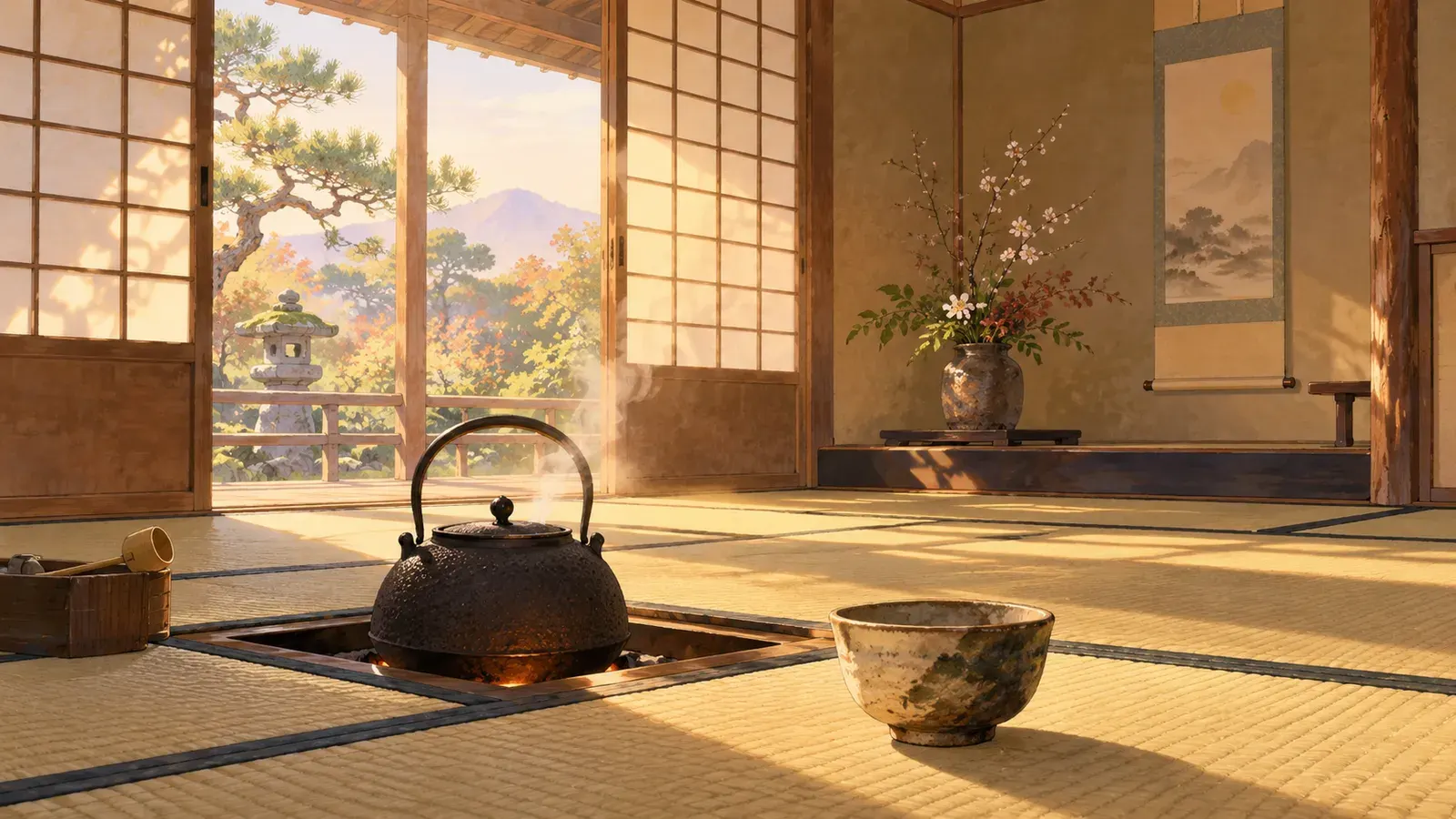
On the day destined for his self-immolation, Rikiu invited his chief disciples to a last tea-ceremony. Mournfully at the appointed time the guests met at the portico. As they look into the garden path the trees seem to shudder, and in the rustling of their leaves are heard the whispers of homeless ghosts. Like solemn sentinels before the gates of Hades stand the grey stone lanterns. A wave of rare incense is wafted from the tea-room; it is the summons which bids the guests to enter. One by one they advance and take their places. In the tokonoma hangs a kakemon,—a wonderful writing by an ancient monk dealing with the evanescence of all earthly things. The singing kettle, as it boils over the brazier, sounds like some cicada pouring forth his woes to departing summer. Soon the host enters the room. Each in turn is served with tea, and each in turn silently drains his cup, the host last of all. According to established etiquette, the chief guest now asks permission to examine the tea-equipage. Rikiu places the various articles before them, with the kakemono. After all have expressed admiration of their beauty, Rikiu presents one of them to each of the assembled company as a souvenir. The bowl alone he keeps. "Never again shall this cup, polluted by the lips of misfortune, be used by man." He speaks, and breaks the vessel into fragments.
自害すると決められた日、利休はおもだった弟子たちを、最後の茶の湯に招いた。約束の時刻に、客たちは悲しみに沈んで待合に集まる。露地をのぞくと、木々は身ぶるいしているように見える。葉のさやぎの中に、さまよう亡霊のささやきが聞こえる。灰色の石灯籠が、あの世の門の前に立つおごそかな番兵のように立っている。茶室から、珍しい香のかおりがふわりと漂ってくる。客に入るよう知らせる合図である。客たちは一人ずつ進み出て、席に着く。床の間には一幅の掛け物がかかっている。この世のすべてのもののはかなさを説いた、昔のある僧のみごとな書である。炉の上で煮えたつ釜の鳴る音は、去っていく夏に悲しみを訴える蝉の声のように聞こえる。やがて主人の利休が部屋に入ってくる。一人ひとりに順に茶が出され、一人ひとりが黙って茶を飲み干す。主人は最後に飲む。決まった作法どおり、正客が茶道具を拝見したいと願い出る。利休は、さまざまな道具を掛け物といっしょに客の前に並べる。皆がその美しさをほめたたえると、利休は道具を一つずつ、集まった人々に形見として贈る。茶碗だけは手もとに残す。「不幸な者の唇でけがれたこの茶碗は、二度と人に使われてはならぬ。」そう言って、利休は茶碗を粉々に打ち砕く。
The ceremony is over; the guests with difficulty restraining their tears, take their last farewell and leave the room. One only, the nearest and dearest, is requested to remain and witness the end. Rikiu then removes his tea-gown and carefully folds it upon the mat, thereby disclosing the immaculate white death robe which it had hitherto concealed. Tenderly he gazes on the shining blade of the fatal dagger, and in exquisite verse thus addresses it:
儀式は終わった。客たちは、やっとのことで涙をこらえ、最後の別れを告げて部屋を出ていく。もっとも親しく、もっとも愛する一人だけが、残って最期を見届けるよう頼まれる。利休は茶の湯の衣を脱ぎ、ていねいにたたんで畳の上に置く。すると、それまで下に隠れていた、汚れ一つない白い死に装束が現れる。利休は、命を断つ短刀の輝く刃をいとおしむように見つめ、みごとな詩句でこう呼びかける。
"Welcome to thee, O sword of eternity! Through Buddha And through Dharuma alike Thou hast cleft thy way."
ようこそ、 おお、永遠の剣よ! 仏をも また 達磨をも ひとしく切り裂いて なんじはおのが道を開いてきた。
With a smile upon his face Rikiu passed forth into the unknown.
顔に微笑みを浮かべて、利休は未知の世界へと旅立っていった。