In 1906, a Japanese art expert named Okakura Kakuzo published a small book in New York. It was written in elegant English, and its title was The Book of Tea. Okakura was working at the Museum of Fine Arts in Boston, where he looked after the museum's collection of Asian art. He wanted to help Western readers understand something they often saw only as a strange and quaint custom: the Japanese tea ceremony. In doing so, he wrote one of the most beautiful introductions to Japanese culture ever written.
1906年、日本の美術の専門家、岡倉覚三(天心)が、ニューヨークで一冊の小さな本を出しました。気品のある英語で書かれたその本の題は、『茶の本』でした。岡倉はボストン美術館に勤め、アジア美術のコレクションを担当していました。西洋の人々は、日本の茶道を、奇妙で古めかしい風習としか見ていないことがよくありました。岡倉は、その茶道を西洋の読者に分かってもらいたいと思ったのです。そうしてできあがったのが、日本文化への手引きとして、これまでに書かれた中でもとりわけ美しい一冊でした。
Okakura begins with a short history. Tea began as a medicine and grew into a drink. In China, in the eighth century, it entered the world of poetry as one of the refined pleasures. In fifteenth-century Japan, it was raised into something like a religion of beauty, which Okakura calls Teaism.
岡倉は、まず短い歴史から話を始めます。茶は、はじめは薬でしたが、やがて飲み物になりました。八世紀の中国では、上品な楽しみの一つとして、詩の世界に入っていきました。そして十五世紀の日本で、一種の美の宗教にまで高められました。岡倉はそれを「茶道(ティーイズム)」と呼んでいます。
What is Teaism? Okakura's definition is famous. It is the worship of the beautiful among the dirty and ordinary facts of daily life. It teaches purity and harmony, kindness to one another, and a gentle sense of order in society. Above all, he says, it is a worship of the Imperfect, a tender attempt to achieve something possible in this impossible thing we call life.
では、茶道とは何でしょうか。岡倉の定義はよく知られています。茶道とは、日々の暮らしのむさくるしく平凡なことがらの中に、美しいものを見いだしてあがめることだ、というのです。茶道は、清らかさと調和、互いへの思いやり、そして世の中のおだやかな秩序を教えてくれます。そして何よりも、茶道は「不完全なもの」をあがめることだ、と岡倉は言います。人生という、どうにもならないものの中で、何かできることを成しとげようとする、やさしい試みなのだ、と。
Teaism, Okakura continues, is not just a matter of taste. It is a way of looking at the whole relationship between people and nature. It is about health, because it demands cleanliness. It is about economics, because it shows comfort in simplicity rather than in expensive and complicated things. It is also about our sense of proportion: how large or small we are compared to the universe.
茶道は、ただの好みの問題ではない、と岡倉は続けます。人と自然とのかかわり全体をどう見るか、という問題なのです。清潔を重んじるので、健康にかかわっています。高価で手のこんだものではなく、簡素なものの中に心地よさがあることを示すので、暮らしむきの問題にもかかわっています。そしてまた、ものごとのつりあいの感覚、つまり宇宙と比べて自分がどれほどの大きさなのかという感覚にもかかわっているのです。
Okakura also explains some of the old ideas behind tea, which came from Taoism and Zen Buddhism. The Chinese teacher Laozi, he writes, loved to talk about emptiness. The reality of a room is found in the empty space inside the roof and walls, not in the roof and walls themselves. The usefulness of a water jug is in the emptiness where water can be poured, not in its shape or the clay it is made of. This is why a tea room is kept nearly empty. Its emptiness leaves space for the guest's own mind.
岡倉は、茶の背景にある、道教や禅から来た古い考え方も説明しています。中国の老子は、「からっぽ」について語るのを好んだ、と岡倉は書いています。部屋の本質は、屋根や壁そのものにあるのではなく、屋根と壁に囲まれた何もない空間にあります。水差しが役に立つのは、その形や、それを作っている土のおかげではありません。水を注ぎ入れられる、からっぽの部分があるからです。だからこそ、茶室はほとんど何も置かずにおくのです。そのからっぽの空間があるからこそ、客は自分の心を自由に働かせることができるのです。
Its influence, he says, reached every corner of Japanese life: houses, clothing, cooking, pottery, painting and even literature. Even farmers learned to arrange flowers, and the humblest workers learned to admire rocks and water. In everyday Japanese, people say that someone who cannot feel the gentle humor and sadness of life has "no tea" in him. And they say that someone whose feelings run wild, without any control, has "too much tea" in him.
茶道の影響は、日本人の暮らしのすみずみにまで及んだ、と岡倉は言います。家にも、着るものにも、料理にも、焼き物にも、絵にも、さらには文学にもです。農民でさえ花を生けることを覚え、最も身分の低い働き手でさえ、石や水をめでることを覚えました。日本のふだんの言葉では、人生のほのかなおかしみや哀しみを感じとれない人のことを、「茶気がない」と言います。反対に、気持ちがまるで抑えられずに暴れまわる人のことは、「茶気がありすぎる」と言うのです。
Some foreigners laughed at all this fuss about a cup of tea. It is a storm in a teacup, they said. Okakura replies with a lovely thought. When we consider how small the cup of human happiness really is, how soon it overflows with tears, and how quickly we drink it to the bottom in our endless thirst for more, we should not blame ourselves for making so much of a teacup. People have done worse things.
たかが一杯のお茶で大さわぎをして、と笑う外国人もいました。茶碗の中の嵐だ、と言ったのです。岡倉は、それにすてきな言葉で答えています。人間の幸せという器が、本当はどれほど小さいか。それがどれほどすぐに涙であふれてしまうか。もっと、もっととかぎりなく渇いて、私たちがどれほどすぐにそれを飲み干してしまうか。そう考えれば、茶碗をこれほど大事にするからといって、自分を責めることはないでしょう。人間は、もっとひどいことをしてきたのですから。
Then he writes one of the sharpest sentences in the book. Those who cannot feel the littleness of great things in themselves, he says, tend to overlook the greatness of little things in others. Okakura was writing just after Japan had won a war against Russia. Western people, he points out, used to think Japan was uncivilized while it practiced the gentle arts of peace. They began to call it civilized only after it started winning terrible battles. Much had been written about the samurai code, which he calls the art of death. Very little had been written about Teaism, which he calls the art of life. If being called civilized depends on the cruel glory of war, Okakura writes, then we would rather remain barbarians.
続いて岡倉は、この本でもとくに鋭い一文を書いています。自分の中にある大きなものの小ささを感じとれない者は、人の中にある小さなものの大きさを見落としがちだ、というのです。岡倉がこれを書いたのは、日本がロシアとの戦争に勝った直後でした。日本がおだやかな平和の芸術にいそしんでいたころ、西洋の人々は日本を野蛮な国だと思っていた、と岡倉は指摘します。日本を文明国と呼ぶようになったのは、日本がおそろしい戦争で勝ちはじめてからでした。岡倉が「死の術」と呼ぶ武士道については、たくさんのことが書かれてきました。一方、岡倉が「生の術」と呼ぶ茶道については、ほとんど何も書かれていませんでした。文明国と呼ばれるには、戦争のむごたらしい栄光が要るというのなら、われわれは喜んで野蛮人のままでいよう、と岡倉は書いています。
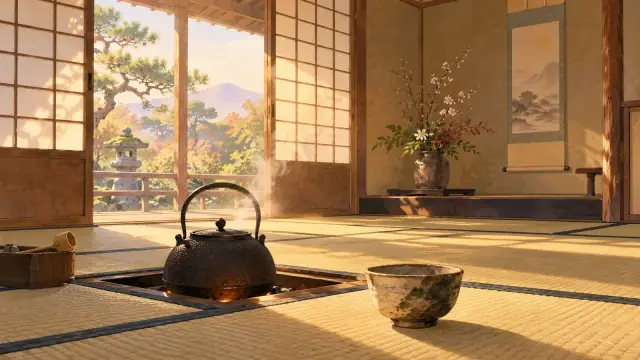
Okakura also describes the tea room itself. Before entering, a samurai guest would leave his sword on a rack outside, because the tea room is above all a house of peace. Then every guest, high or low, had to bend down and crawl in through a small door not more than about one meter high. This was meant to teach humility. Inside, the room was simple and nearly empty, so that nothing would distract the mind from the beauty of a single flower, a single scroll, or the sound of water boiling.
岡倉は、茶室そのものについても説明しています。侍の客は、茶室に入る前に、外の刀掛けに刀を置いていきました。茶室は何よりも平和の家だからです。それから客は、身分が高くても低くても、みな身をかがめ、高さ一メートルほどしかない小さな入り口から、はうようにして入らなければなりませんでした。謙虚な心を教えるためです。中の部屋は簡素で、ほとんど何もありません。一輪の花、一幅の掛け軸、湯の沸く音。その美しさから心をそらすものが、何もないようにしてあったのです。
Later in the book, Okakura tells stories about Sen no Rikyu, the greatest of the tea masters. In one story, Rikyu was watching his son Shoan sweep and water the garden path. When Shoan finished, Rikyu said, "Not clean enough," and told him to try again. After a tiring hour, Shoan turned to his father. "Father, there is nothing more to do. The steps have been washed three times, the stone lanterns and the trees are sprinkled with water, and the moss shines bright green. I have not left a single twig or leaf on the ground."
本の後半で、岡倉は、茶人の中でもっとも偉大な千利休の話をいくつか紹介しています。ある話では、利休は、息子の少庵が庭の小道を掃き清め、水を打つのを見ていました。少庵が終わると、利休は「まだきれいになっていない」と言って、やり直させました。くたくたになるような一時間が過ぎて、少庵は父に向かって言いました。「父上、もう何もすることがありません。飛び石は三度洗いました。石灯籠にも木々にも水を打ちました。苔はあざやかな緑に光っています。小枝一本、葉っぱ一枚、地面に残してはおりません」
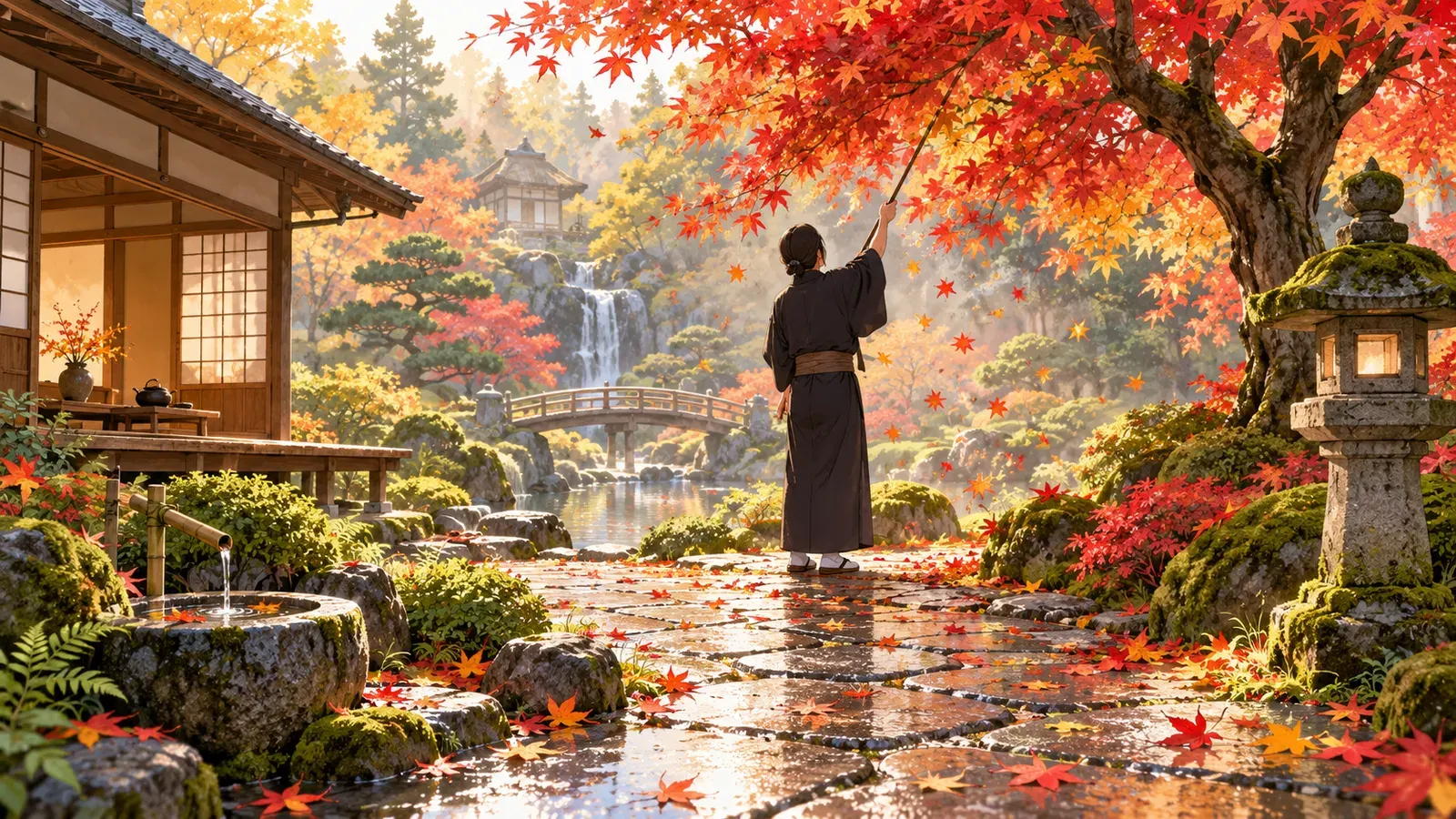
"Young fool," said the tea master, "that is not the way a garden path should be swept." Then Rikyu stepped into the garden and shook a tree, scattering gold and red autumn leaves over the path like pieces of rich silk. What Rikyu wanted, Okakura explains, was not only cleanliness, but also beauty and naturalness.
「たわけ者め。露地はそのように掃くものではない」と茶の師は言いました。そして利休は庭におりて、一本の木をゆさぶりました。すると、金色や赤の秋の葉がはらはらと散って、小道の上に、豪華な絹の切れはしのように散りしきました。利休が求めていたのは、清潔さだけではなく、美しさと、自然なたたずまいでもあったのだ、と岡倉は説明しています。
Another story is about a flower. In the sixteenth century, the morning glory was still a rare plant in Japan. Rikyu had planted a whole garden of them and cared for them lovingly. The great ruler Toyotomi Hideyoshi heard about them and said he wanted to see them, so Rikyu invited him to a morning tea. But when Hideyoshi walked through the garden, he could not find a single morning glory anywhere. The ground had been made flat and covered with fine pebbles and sand.
もう一つは、ある花の話です。十六世紀には、朝顔は日本ではまだめずらしい植物でした。利休は庭一面に朝顔を植え、心をこめて育てていました。天下人の豊臣秀吉がそのうわさを聞いて、見てみたいと言ったので、利休は秀吉を朝の茶会に招きました。ところが、秀吉が庭を歩いても、朝顔はどこにも一輪も見あたりません。地面は平らにならされ、細かい小石と砂が敷きつめてありました。
Angry, the ruler entered the tea room. And there he saw something that completely restored his good mood. In the alcove, in a precious old bronze vase from China, lay one single morning glory, the queen of the whole garden.
天下人は腹を立てて茶室に入りました。そしてそこで、すっかり機嫌が直ってしまうものを目にしたのです。床の間に置かれた、中国渡りの古い青銅の貴重な花入れに、朝顔がたった一輪、生けてありました。庭じゅうの朝顔の女王ともいうべき一輪でした。
These stories show the spirit of tea. Beauty is found not in having more, but in choosing well. One flower can say more than a thousand. A path with a few fallen leaves can be more beautiful than a perfectly clean one. The imperfect, the simple and the passing moment are treasured, not hidden.
こうした話には、茶の心が表れています。美しさは、たくさん持つことにではなく、よく選ぶことにあります。一輪の花は、千の花よりも多くを語ることがあります。落ち葉が少し散った小道は、ちり一つない小道よりも美しいことがあります。不完全なもの、簡素なもの、過ぎ去っていく一瞬。それらは隠されるのではなく、大切にされるのです。
Okakura believed that we should look at art in the same spirit. Too often, he says, people admire a painting only because it is famous or expensive, or because experts tell them to. We classify too much, he writes, and enjoy too little. To really meet a great work of art, we must come to it with an open and humble heart, like a guest entering the small door of the tea room.
岡倉は、芸術も同じ心で見るべきだと考えていました。人はあまりにもしばしば、有名だから、値段が高いから、専門家がそう言うから、というだけで絵をほめる、と岡倉は言います。「われわれは分類しすぎて、楽しむことが少なすぎる」と書いています。すぐれた芸術作品と本当に出会うには、茶室の小さな入り口をくぐる客のように、心を開き、へりくだって向き合わなければならないのです。
Okakura believed this attitude could help the whole world. East and West, he felt, misunderstood each other badly, but tea was one thing they already shared. Long before, tea had traveled from Asia to Europe, and in England it had become part of daily life. Humanity, he wrote, has so far met in the teacup. That is why he called his first chapter The Cup of Humanity.
岡倉は、この心がまえが世界全体の助けになると考えていました。東洋と西洋はたがいにひどく誤解しあっている。けれども、茶だけは、両方がすでに分かちあっているものだ、と岡倉は感じていました。ずっと昔に、茶はアジアからヨーロッパへ伝わり、イギリスでは毎日の暮らしに欠かせないものになっていました。「人類は、これまでのところ、茶碗の中で出会ってきた」と岡倉は書いています。だから岡倉は、最初の章を「人情の碗」と名づけたのです。
Try this today. Make yourself a cup of tea, or any drink you like, and drink it slowly, without your phone. Look at one small, ordinary thing near you: a leaf, a cup, the light on the wall. Try to see its beauty, even if it is imperfect. That, Okakura might say, is the beginning of the art of life.
今日、ためしてみましょう。お茶か、好きな飲み物を一杯いれて、スマートフォンを置き、ゆっくり味わってみてください。そして、すぐそばにある、小さくてありふれたものを一つ見つめてみましょう。一枚の葉、一つのカップ、壁にさす光。たとえ不完全でも、その美しさを見つけようとしてみるのです。それこそが生の術の始まりだ、と岡倉なら言うかもしれません。