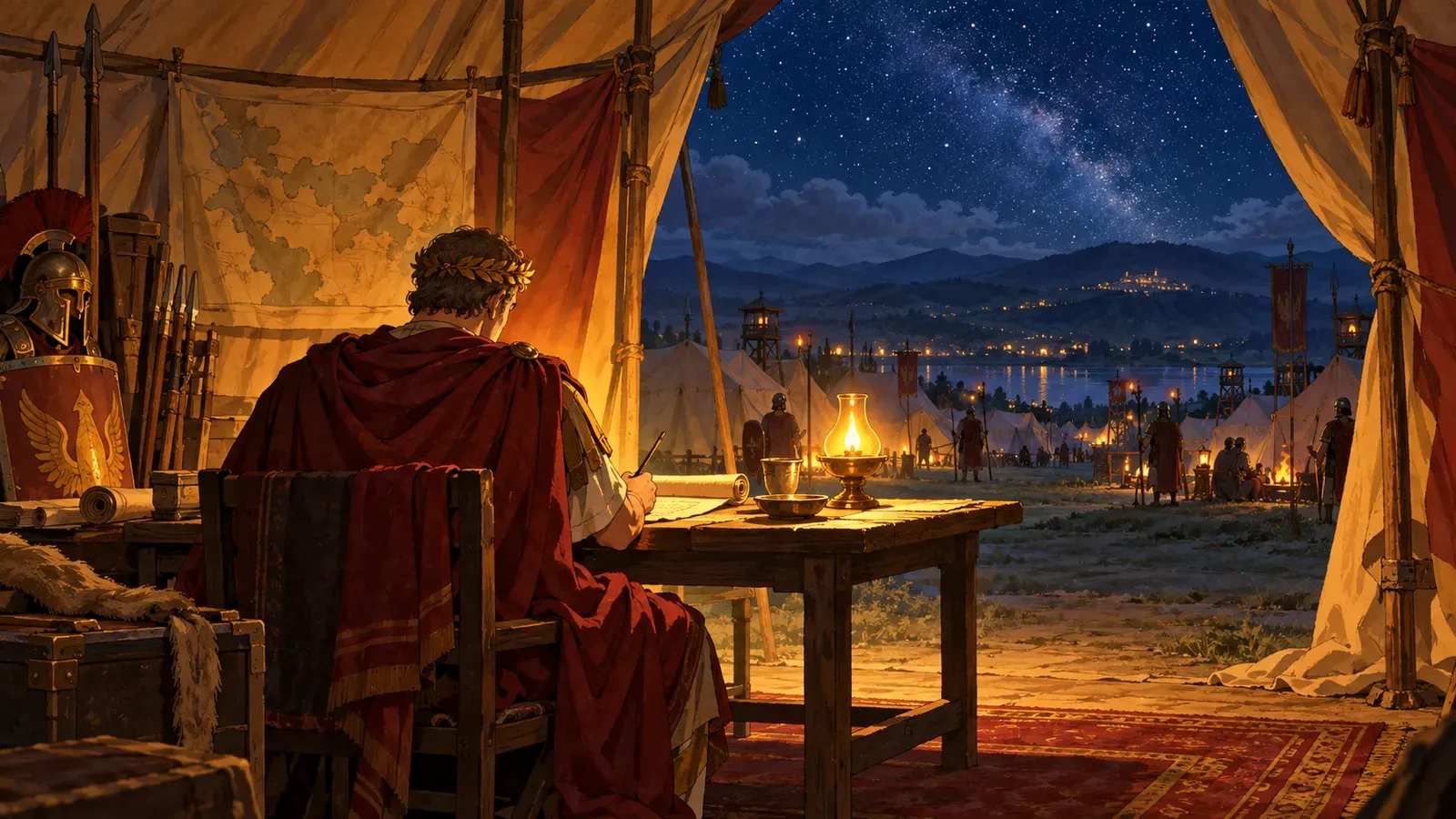
Most of us spend a surprising amount of time somewhere other than the present. We replay an embarrassing moment from last week, or we imagine everything that might go wrong next month. Meanwhile, the only moment in which we can actually act, this one, slips by almost unnoticed. Nearly two thousand years ago, the Roman emperor Marcus Aurelius struggled with the same habit. In his private notebook, the Meditations, he kept returning to one simple remedy: come back to now.
私たちの多くは、驚くほど長い時間を「今」以外の場所で過ごしています。先週の恥ずかしい場面を頭の中で何度も思い返したり、来月起こるかもしれない失敗をあれこれ想像したり。そのあいだに、実際に行動できるただ一つの瞬間、つまり今この瞬間は、ほとんど気づかれないまま過ぎていきます。二千年近く前、ローマ皇帝マルクス・アウレリウスも、同じくせに悩んでいました。自分だけの手帳『自省録』の中で、マルクスは一つの単純な処方に何度も立ちもどります。「今」に帰れ、というものです。
His reasoning begins with a striking thought experiment. Even if you were going to live three thousand years, he writes, or thirty thousand, remember that no one loses any life other than the one he is living now, and no one lives any life other than the one he is losing now. In this sense, the longest life and the shortest come to the same thing, because the present moment is the same for everyone. You cannot lose the past or the future, he points out, because you do not have them. How could anyone take from you something you do not possess? The present is the only thing that can be taken away from you, because it is the only thing you really have.
その考えは、はっとさせられる思考実験から始まります。たとえ三千年、いや三万年生きるとしても、忘れるな、とマルクスは書きます。人が失うのは、今生きているこの生だけであり、人が生きるのは、今失いつつあるこの生だけだ。その意味では、どれほど長い一生も、どれほど短い一生も、変わりはない。今という瞬間は、だれにとっても同じだからだ。過去や未来を失うことはできない、とマルクスは指摘します。もともと持っていないからです。持っていないものを、だれがどうやって奪えるだろう。奪われうるのは今だけだ。本当に持っているのは、今だけなのだから。
This may sound gloomy at first, but Marcus meant it as good news. If the present is all we have, then it is also all we need to manage. In another note he reminds himself that every person lives only in this present moment, which is like a single point, and that the rest of life is either already over or uncertain. Short is the time that each of us lives, he says, and small is the corner of the earth where we live.
暗い話に聞こえるかもしれませんが、マルクスはこれをよい知らせとして語っていました。持っているのが今だけなら、何とかしなければならないのも今だけだからです。別の覚え書きでは、こう自分に言い聞かせています。人はみな、一つの点のような、この今という瞬間だけを生きている。残りの人生は、すでに終わったか、まだどうなるかわからないものだ。人が生きる時間は短く、人が住む地上の片すみは小さい、と。
So what should we do with the present? Marcus's answer is practical rather than mysterious. It is your duty, he writes, to build your life well, one action at a time. If each action does its proper work as far as possible, be satisfied. And no one can stop you from making each action a good one.
では、今をどうすればよいのでしょうか。マルクスの答えは、神秘的なものではなく、きわめて実際的なものです。一つ一つの行いを積み重ねて、人生をうまく組み立てていくこと。それがあなたのつとめだ、とマルクスは書きます。一つ一つの行いが、できるかぎりその役目を果たしているなら、それで満足せよ。そして、一つ一つの行いをよいものにすることは、だれにもさまたげられないのだ。
He then imagines an objection, as he often does. But something outside me will get in the way, he says to himself. His reply is firm. Nothing can stop you from acting justly, sensibly and thoughtfully.
それからマルクスは、いつものように反論を想像してみます。でも、外の何かがじゃまをするではないか、と自分に問うのです。答えはきっぱりしています。正しく、分別をもって、よく考えて行動することは、何ものにもさまたげられない。
Perhaps some other plan of yours will be blocked. Very well. Accept the block calmly, turn your effort toward what is still possible, and another opportunity for action will immediately appear in place of the one that was blocked.
ほかの計画がはばまれることはあるかもしれない。それならそれでよい。はばまれたことを落ち着いて受け入れ、まだできることに力を向けなさい。そうすれば、はばまれたもののかわりに、すぐに別の行動の機会が現れるのだ、と。
This leads to one of his most famous ideas. In Book 5, he observes that people and events may get in the way of what we planned to do. But they cannot block our attitude or our intentions, because the mind can adapt. The mind, he writes, turns every hindrance to its activity into an aid, so that what was an obstacle on the road helps us along the road.
ここから、マルクスのもっとも有名な考えの一つが生まれます。第5巻でマルクスは、人や出来事が、私たちの予定していたことのじゃまをすることはある、と述べています。しかし、心構えや意図まではじゃまできない。心は、状況に合わせて形を変えられるからだ。心は、自分の働きをさまたげるものを、すべて助けに変えてしまう。こうして、行く手をふさいでいた障害物が、かえって道を進む助けになるのだ、とマルクスは書いています。
If your train is delayed, the delay becomes time to read. If a classmate refuses to help with a project, it becomes a chance to learn the part you were avoiding. The obstacle does not disappear, but it changes from a wall into a step.
電車が遅れたら、その遅れは読書の時間になる。クラスメートが課題を手伝ってくれなければ、自分が避けていた部分を学ぶチャンスになる。障害物が消えるわけではありません。けれども、それは行く手をふさぐ壁から、一歩上へのぼるための段に変わるのです。
Marcus also had advice for the moments when the whole future seems too heavy to carry. Do not upset yourself, he writes, by thinking about your whole life at once. Do not let your mind gather together all the troubles that might come. Instead, in each situation, ask yourself: What is there in this that I cannot bear? You will be embarrassed to answer, he says, because the honest answer is usually nothing. Remember that neither the future nor the past can hurt you, only the present, and the present becomes very small when you draw a clear line around it.
マルクスは、未来全体が重すぎて背負いきれないと感じるときのための助言も残しています。人生全体のことをいっぺんに考えて、心を乱してはいけない、とマルクスは書きます。起こるかもしれない苦労を、すべて心の中にかき集めてはいけない。そのかわりに、そのつど自分にたずねなさい。この中に、私に耐えられないものが何かあるだろうか。答えるのが恥ずかしくなるだろう、とマルクスは言います。正直に答えれば、たいてい「何もない」からです。未来も過去もあなたを傷つけることはできない。傷つけうるのは今だけだ。そして今は、そのまわりにはっきり線を引けば、ごく小さなものになるのだ。
Anyone who has prepared for an important exam knows the feeling he describes. When you think of all the chapters, all the vocabulary and all the weeks that are left, the task feels impossible. But when you ask, "Can I do this one page now?" the answer is almost always yes. Marcus is not telling us to stop planning. He is telling us not to carry the whole mountain in our minds while we are climbing one step. The same is true of a hard conversation, a long practice or a difficult week.
大切な試験の準備をしたことがある人なら、この感覚がわかるでしょう。すべての章、すべての単語、残された何週間ものことを考えると、とても無理だと感じます。けれども、「この1ページなら、今できるだろうか」とたずねれば、答えはほとんどいつもイエスです。マルクスは、計画を立てるなと言っているのではありません。一歩をのぼっているときに、山全体を頭の中で背負いこむな、と言っているのです。気の重い話し合いでも、長い練習でも、つらい一週間でも、同じことが言えます。
He also warned himself against waiting for perfect conditions. Do what nature requires now, he writes. Begin, if it is in your power, and do not look around to see whether anyone will notice. And do not hope for Plato's Republic, the perfect society described by the Greek philosopher. Be content if even the smallest thing goes well, and do not think that such a result is a small matter.
マルクスはまた、完ぺきな条件がそろうのを待つことも、自分にいましめていました。自然が今求めていることをせよ、とマルクスは書きます。できるのなら、始めよ。だれかが気づいてくれるかと、まわりを見回すな。プラトンの『国家』、つまりギリシャの哲学者が描いた理想の社会を望むな。ほんの小さなことでもうまくいけば、満足せよ。そして、その成果を小さなことだと思うな。
Marcus ruled a huge empire full of problems that he could not fix. He knew how tempting it is to give up because the ideal is out of reach. His answer was to value small improvements.
マルクスは、自分には解決しきれない問題をたくさんかかえた、巨大な帝国を治めていました。理想に手が届かないからといって、投げ出したくなる気持ちをよく知っていたのです。そんなマルクスが出した答えは、小さな前進を大切にすることでした。
The present moment does not always come with pleasant conditions, and he trained himself to ignore what did not matter. Let it make no difference to you, he writes, whether you are cold or warm, if you are doing your duty; whether you are sleepy or well rested; whether people speak badly of you or praise you. The task in front of you deserves your full attention, whatever the circumstances around it may be.
今という瞬間は、いつも心地よい条件をともなってやってくるとはかぎりません。マルクスは、どうでもよいことを気にしないよう、自分をきたえていました。つとめを果たしているなら、寒かろうと暑かろうと気にするな、とマルクスは書きます。眠かろうと、よく休めていようと。人に悪く言われようと、ほめられようと。まわりの状況がどうであれ、目の前の仕事には、持てる注意のすべてをそそぐ値打ちがあるのです。
In Book 3, he describes what a life lived in the present looks like. If you work at the task in front of you, following right reason seriously, with energy and calm, without letting anything else distract you, expecting nothing and fearing nothing, and if you are satisfied with doing your present work well and speaking the truth in every word, then you will live happily. And no one, he adds, is able to prevent this.
第3巻でマルクスは、今を生きる人生とはどんなものかを描いています。目の前の仕事に、正しい理性に従って、まじめに、力強く、落ち着いて取り組む。ほかのことに気を散らさず、何も期待せず、何も恐れない。今の仕事をよく果たし、口にすることばはすべて真実である。そのことに満足しているなら、あなたは幸せに生きられる。そして、それをさまたげられる者はだれもいない、とマルクスは付け加えています。
It is worth noticing what Marcus does not say. He does not say that the past is worthless; the first book of the Meditations is a long and grateful list of what he learned from other people. He does not say that planning is foolish; he managed armies and governed an empire. His point is about where our attention and effort should live. Lessons come from the past, and plans point to the future, but action can only happen now. Even his gratitude to his teachers was a way of using the past well in the present.
マルクスが言っていないことにも、目を向けておきましょう。過去に価値がない、とは言っていません。『自省録』の第1巻は、ほかの人々から学んだことを、感謝をこめて書きつらねた長いリストです。計画を立てるのは愚かだ、とも言っていません。マルクス自身、軍を指揮し、帝国を治めていたのですから。マルクスが言いたかったのは、私たちの注意と努力をどこに置くべきか、ということです。教訓は過去からやってきて、計画は未来を指しています。けれども、行動できるのは今だけです。師たちへの感謝でさえ、過去を今の中でうまく生かす一つの方法だったのです。
Modern research on attention seems to support him. In one well-known study, people were contacted at random moments during their day and asked what they were doing and what they were thinking about. Their minds were wandering away from their activity almost half of the time, and they tended to feel less happy when their minds were wandering than when they were focused on what they were doing. Marcus had no such data, but he had noticed the same thing in himself.
注意についての現代の研究も、マルクスの考えを裏づけているようです。よく知られたある研究では、一日のうちの、いつ来るかわからない時刻に人々に連絡し、今何をしているか、何を考えているかをたずねました。すると、人々の心は、ほぼ半分の時間、していることから離れてさまよっていました。しかも、心がさまよっているときは、していることに集中しているときよりも、幸せを感じにくい傾向があったのです。マルクスはそんなデータを持っていませんでしたが、自分自身の中に同じことを見てとっていました。
Try this today. Choose one ordinary task, such as washing the dishes, walking to the station or reading one page of English. Do it as if it were the only thing in the world right now. When your mind runs off to the past or the future, notice it, and gently bring it back with Marcus's question: What is there in this moment that I cannot bear? Then ask a second question: What is the one good action I can take right now? Take it, and let the next moment take care of itself.
今日、やってみましょう。皿洗い、駅までの道のり、英語を1ページ読むことなど、ふだんの作業を一つ選びます。それを、今この世界にはそれしかないかのように、やってみるのです。心が過去や未来へかけ出していったら、それに気づいて、マルクスの問いでそっと連れもどしましょう。この瞬間の中に、私に耐えられないものが何かあるだろうか。それから、二つ目の問いをたずねます。今できる、よい行いは何だろう。それを実行したら、次の瞬間のことは、次の瞬間にまかせましょう。