Have you heard the Taoist tale of the Taming of the Harp?
「琴ならし」という道教の話を聞いたことがあるだろうか。
Once in the hoary ages in the Ravine of Lungmen stood a Kiri tree, a veritable king of the forest. It reared its head to talk to the stars; its roots struck deep into the earth, mingling their bronzed coils with those of the silver dragon that slept beneath. And it came to pass that a mighty wizard made of this tree a wondrous harp, whose stubborn spirit should be tamed but by the greatest of musicians. For long the instrument was treasured by the Emperor of China, but all in vain were the efforts of those who in turn tried to draw melody from its strings. In response to their utmost strivings there came from the harp but harsh notes of disdain, ill-according with the songs they fain would sing. The harp refused to recognise a master.
遠い昔、龍門の谷に一本の桐の木が立っていた。まさに森の王であった。その頭は、星と語らうほど高くそびえていた。根は大地の奥深くまで伸び、そのあかがね色の根のとぐろは、地の底に眠る銀の竜のとぐろとからみ合っていた。あるとき、一人の偉大な魔法使いが、この木から不思議な琴を作った。この琴の頑固な魂は、もっとも偉大な楽人でなければ、ならすことができなかった。琴は長いあいだ中国の皇帝の宝として大切にされていた。何人もの楽人が、かわるがわるその弦から調べを引き出そうとした。だが、すべてむだだった。どれほど力を尽くしても、琴からは、ばかにしたような耳ざわりな音しか返ってこない。楽人たちが歌おうとする歌とは、まるで合わなかった。琴は、誰も主人と認めようとしなかったのである。
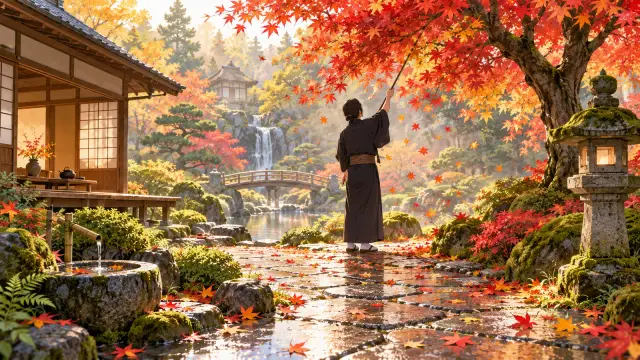
At last came Peiwoh, the prince of harpists. With tender hand he caressed the harp as one might seek to soothe an unruly horse, and softly touched the chords. He sang of nature and the seasons, of high mountains and flowing waters, and all the memories of the tree awoke! Once more the sweet breath of spring played amidst its branches. The young cataracts, as they danced down the ravine, laughed to the budding flowers. Anon were heard the dreamy voices of summer with its myriad insects, the gentle pattering of rain, the wail of the cuckoo. Hark! a tiger roars,—the valley answers again. It is autumn; in the desert night, sharp like a sword gleams the moon upon the frosted grass. Now winter reigns, and through the snow-filled air swirl flocks of swans and rattling hailstones beat upon the boughs with fierce delight.
ついに、琴の名手の中の名手、伯牙(はくが)がやって来た。伯牙は、暴れ馬をなだめるように、やさしい手で琴をなで、そっと弦に触れた。伯牙が、自然と四季を、高い山と流れる水を歌うと、木の思い出がすべて目を覚ました。ふたたび春の甘い息吹が、枝のあいだに遊んだ。生まれたばかりの滝が、谷を踊りながら下り、ほころびかけた花に笑いかけた。やがて聞こえてきたのは、夢見るような夏の声、数えきれない虫たちの声、やさしく降る雨の音、ほととぎすの悲しげな声であった。聞け、虎がほえる。谷がそれにこだまする。秋である。荒れ野の夜、霜の降りた草の上に、剣のように鋭く月が輝く。今は冬の世である。雪の舞う空を白鳥の群れがうず巻き、ばらばらと音を立てて、あられが荒々しく楽しげに枝を打つ。
Then Peiwoh changed the key and sang of love. The forest swayed like an ardent swain deep lost in thought. On high, like a haughty maiden, swept a cloud bright and fair; but passing, trailed long shadows on the ground, black like despair. Again the mode was changed; Peiwoh sang of war, of clashing steel and trampling steeds. And in the harp arose the tempest of Lungmen, the dragon rode the lightning, the thundering avalanche crashed through the hills. In ecstasy the Celestial monarch asked Peiwoh wherein lay the secret of his victory. "Sire," he replied, "others have failed because they sang but of themselves. I left the harp to choose its theme, and knew not truly whether the harp had been Peiwoh or Peiwoh were the harp."
それから伯牙は調子を変えて、恋を歌った。森は、物思いに沈んだ熱い若者のようにゆれた。空高く、つんとすました乙女のように、明るく美しい雲が流れていった。だが雲は、通り過ぎながら、絶望のように黒く長い影を地上に引いていった。また調べが変わった。伯牙は戦を歌った。打ち合う刃を、地をけたてる軍馬を。すると琴の中に龍門の嵐が巻き起こった。竜は稲妻に乗り、とどろく雪崩が山々を砕いて落ちた。皇帝はうっとりとして、伯牙に、勝ちをおさめた秘密はどこにあるのかとたずねた。伯牙は答えた。「陛下、ほかの者たちがしくじったのは、自分のことばかり歌ったからでございます。私は、何を歌うかを琴に選ばせました。そうして弾いているうちに、琴が伯牙なのか、伯牙が琴なのか、本当に分からなくなったのでございます。」
This story well illustrates the mystery of art appreciation. The masterpiece is a symphony played upon our finest feelings. True art is Peiwoh, and we the harp of Lungmen. At the magic touch of the beautiful the secret chords of our being are awakened, we vibrate and thrill in response to its call. Mind speaks to mind. We listen to the unspoken, we gaze upon the unseen. The master calls forth notes we know not of. Memories long forgotten all come back to us with a new significance. Hopes stifled by fear, yearnings that we dare not recognise, stand forth in new glory. Our mind is the canvas on which the artists lay their colour; their pigments are our emotions; their chiaroscuro the light of joy, the shadow of sadness. The masterpiece is of ourselves, as we are of the masterpiece.
この話は、芸術を味わうことの不思議さを、よく言い表している。傑作とは、私たちのもっとも繊細な感情を楽器にして奏でられる交響曲である。本当の芸術は伯牙であり、私たちは龍門の琴なのだ。美の魔法の手が触れると、私たちの中に秘められていた弦が目を覚ます。私たちは、その呼びかけに応えて、ふるえ、ときめく。心が心に語りかける。私たちは、語られない言葉に耳を傾け、目に見えないものを見つめる。巨匠は、私たちが自分でも知らなかった音を呼び起こす。長いあいだ忘れていた思い出が、新しい意味を帯びて、すべてよみがえってくる。恐れに押しつぶされていた望みや、認める勇気のなかったあこがれが、新しい輝きをまとって現れてくる。私たちの心は、芸術家が色を塗るカンヴァスである。その絵の具は私たちの感情であり、その明暗は、喜びの光と悲しみの影である。私たちが傑作の一部であるように、傑作もまた私たちの一部なのである。
The sympathetic communion of minds necessary for art appreciation must be based on mutual concession. The spectator must cultivate the proper attitude for receiving the message, as the artist must know how to impart it. The tea-master, Kobori-Enshiu, himself a daimyo, has left to us these memorable words: "Approach a great painting as thou wouldst approach a great prince." In order to understand a masterpiece, you must lay yourself low before it and await with bated breath its least utterance. An eminent Sung critic once made a charming confession. Said he: "In my young days I praised the master whose pictures I liked, but as my judgement matured I praised myself for liking what the masters had chosen to have me like." It is to be deplored that so few of us really take pains to study the moods of the masters. In our stubborn ignorance we refuse to render them this simple courtesy, and thus often miss the rich repast of beauty spread before our very eyes. A master has always something to offer, while we go hungry solely because of our own lack of appreciation.
芸術を味わうには、心と心が通い合わなければならない。そのためには、たがいに歩み寄ることが必要である。芸術家が伝え方を心得ていなければならないのと同じく、見る者も、伝えられるものを受けとるのにふさわしい心構えを身につけなければならない。茶人の小堀遠州は、自らも大名であったが、次のような忘れがたい言葉を残している。「すぐれた絵の前に出るときは、すぐれた君主の前に出るときのようにせよ。」傑作を分かろうとするなら、その前で身を低くし、息をひそめて、どんなかすかな言葉も聞きもらすまいと待たなければならない。宋のある名高い批評家が、ほほえましい告白をしている。「若いころ、私は自分の好きな絵を描いた巨匠をほめた。だが、目が肥えてくるにつれて、巨匠たちが私に好ませようとしたものを好きになった、自分自身をほめるようになった。」巨匠たちの心持ちを、本気で学ぼうとする人があまりにも少ないのは、嘆かわしいことである。私たちはかたくなで無知なために、巨匠たちにこのささやかな礼さえ尽くそうとしない。そのために、目の前に並べられた美の豊かなごちそうを、しばしば見のがしてしまう。巨匠はいつも何かを差し出してくれている。私たちが飢えているのは、ひとえに自分に味わう力が足りないからなのである。
To the sympathetic a masterpiece becomes a living reality towards which we feel drawn in bonds of comradeship. The masters are immortal, for their loves and fears live in us over and over again. It is rather the soul than the hand, the man than the technique, which appeals to us,—the more human the call the deeper is our response. It is because of this secret understanding between the master and ourselves that in poetry or romance we suffer and rejoice with the hero and heroine. Chikamatsu, our Japanese Shakespeare, has laid down as one of the first principles of dramatic composition the importance of taking the audience into the confidence of the author. Several of his pupils submitted plays for his approval, but only one of the pieces appealed to him. It was a play somewhat resembling the Comedy of Errors, in which twin brethren suffer through mistaken identity. "This," said Chikamatsu, "has the proper spirit of the drama, for it takes the audience into consideration. The public is permitted to know more than the actors. It knows where the mistake lies, and pities the poor figures on the board who innocently rush to their fate."
心を寄せる者にとって、傑作は生きた現実となる。私たちは、仲間の絆で結ばれたように、傑作に引き寄せられるのを感じる。巨匠たちは不滅である。その愛や恐れが、私たちの中で何度でもよみがえるからである。私たちの心に訴えるのは、手よりも魂であり、技術よりも人間である。呼びかけが人間らしいものであればあるほど、私たちの応える心も深くなる。詩や物語の中で、私たちが主人公とともに苦しみ、喜ぶのは、巨匠と私たちのあいだに、この秘められた理解があるからである。日本のシェイクスピアとも言うべき近松は、劇を書くうえでの第一の原則の一つとして、作者が観客に秘密を打ち明け、事情を知らせておくことの大切さを説いた。近松の弟子の何人かが、劇を書いて見てもらったことがある。そのうち近松が気に入ったのは、一作だけだった。それは『間違いの喜劇』に少し似た劇で、ふたごの兄弟が人違いのために苦しむ話であった。近松は言った。「これには劇の本当の心がある。観客のことを考えに入れているからだ。観客は、役者よりも多くを知ることができる。どこに人違いがあるかを知っていて、何も知らずに運命へと突き進んでいく舞台の上の哀れな人々に、同情するのだ。」
The great masters both of the East and the West never forgot the value of suggestion as a means for taking the spectator into their confidence. Who can contemplate a masterpiece without being awed by the immense vista of thought presented to our consideration? How familiar and sympathetic are they all; how cold in contrast the modern commonplaces! In the former we feel the warm outpouring of a man's heart; in the latter only a formal salute. Engrossed in his technique, the modern rarely rises above himself. Like the musicians who vainly invoked the Lungmen harp, he sings only of himself. His works may be nearer science, but are further from humanity. We have an old saying in Japan that a woman cannot love a man who is truly vain, for their is no crevice in his heart for love to enter and fill up. In art vanity is equally fatal to sympathetic feeling, whether on the part of the artist or the public.
東洋でも西洋でも、偉大な巨匠たちは、見る者を秘密の打ち明け相手にするために、ほのめかしの値打ちを決して忘れなかった。傑作を見つめていると、目の前に果てしなく広がる考えの眺めに、誰しも畏れを抱かずにはいられない。傑作はどれも、なんと親しみやすく、心が通い合うことか。それに比べて、今のありふれた作品はなんと冷たいことか。傑作には、一人の人間の心の温かいほとばしりが感じられる。今の作品には、形だけのあいさつしか感じられない。今の芸術家は、技術に夢中になるあまり、自分を超えることがめったにない。龍門の琴にむなしく呼びかけた楽人たちのように、自分のことしか歌わない。その作品は、科学には近いかもしれないが、人間からは遠い。日本には、こんな古いことわざがある。女は、本当にうぬぼれの強い男を愛することはできない。そういう男の心には、愛が入り込んで満たすすき間がないからだ、と。芸術でも同じで、うぬぼれは、芸術家の側にあっても見る側にあっても、心が通い合う気持ちを殺してしまう。
Nothing is more hallowing than the union of kindred spirits in art. At the moment of meeting, the art lover transcends himself. At once he is and is not. He catches a glimpse of Infinity, but words cannot voice his delight, for the eye has no tongue. Freed from the fetters of matter, his spirit moves in the rhythm of things. It is thus that art becomes akin to religion and ennobles mankind. It is this which makes a masterpiece something sacred. In the old days the veneration in which the Japanese held the work of the great artist was intense. The tea-masters guarded their treasures with religious secrecy, and it was often necessary to open a whole series of boxes, one within another, before reaching the shrine itself—the silken wrapping within whose soft folds lay the holy of holies. Rarely was the object exposed to view, and then only to the initiated.
芸術を通して、心の通じ合う魂どうしが結ばれること。これほど神聖なことはない。出会いの瞬間、芸術を愛する者は自分を超える。自分がいて、同時に自分がいない。無限をかいま見るのだが、その喜びは言葉にならない。目には舌がないからである。物の束縛から解き放たれて、その魂は万物のリズムに合わせて動く。こうして芸術は宗教に近いものとなり、人間を気高くする。傑作を何か神聖なものにしているのは、これである。昔の日本人は、偉大な芸術家の作品を、深く敬っていた。茶人たちは、宗教の秘儀のように、宝物を人目から守った。入れ子になった箱をいくつも開けて、ようやくいちばん奥の聖域、つまり絹の包みにたどりつくこともよくあった。その柔らかなひだの中に、もっとも神聖な品が納められていた。その品が人目に触れることはめったになく、見せるとしても、奥義を知る者にだけであった。
At the time when Teaism was in the ascendency the Taiko's generals would be better satisfied with the present of a rare work of art than a large grant of territory as a reward of victory. Many of our favourite dramas are based on the loss and recovery of a noted masterpiece. For instance, in one play the palace of Lord Hosokawa, in which was preserved the celebrated painting of Dharuma by Sesson, suddenly takes fire through the negligence of the samurai in charge. Resolved at all hazards to rescue the precious painting, he rushes into the burning building and seizes the kakemono, only to find all means of exit cut off by the flames. Thinking only of the picture, he slashes open his body with his sword, wraps his torn sleeve about the Sesson and plunges it into the gaping wound. The fire is at last extinguished. Among the smoking embers is found a half-consumed corpse, within which reposes the treasure uninjured by the fire. Horrible as such tales are, they illustrate the great value that we set upon a masterpiece, as well as the devotion of a trusted samurai.
茶道が盛んだった時代には、太閤の武将たちは、戦に勝ったほうびとして広い領地をもらうより、珍しい美術品を贈られるほうを喜んだものであった。わが国で人気のある芝居の多くは、名高い傑作がなくなり、また取り戻される話をもとにしている。たとえば、ある芝居ではこんな話がある。細川公の屋敷には、雪村の描いた有名な達磨の絵がしまってあった。ところが、番をしていた侍の不注意で、屋敷が急に火事になる。侍は、何としてもこの貴重な絵を救い出そうと、燃えさかる建物に飛び込み、掛け物をつかむ。だが、逃げ道はすべて炎にふさがれていた。侍は、ただ絵のことだけを思い、刀で自分の腹を切り開く。そして破った袖で雪村の絵を包み、大きく開いた傷口に押し込む。火はようやく消し止められる。くすぶる燃えがらの中から、半分焼けた亡骸が見つかった。その中には、火に少しもそこなわれずに、宝の絵が納まっていたのである。このような話は恐ろしい。だが、私たちが傑作にどれほど大きな値打ちを置いているか、そして信頼された侍がどれほど身をささげたかを物語っている。
We must remember, however, that art is of value only to the extent that it speaks to us. It might be a universal language if we ourselves were universal in our sympathies. Our finite nature, the power of tradition and conventionality, as well as our hereditary instincts, restrict the scope of our capacity for artistic enjoyment. Our very individuality establishes in one sense a limit to our understanding; and our aesthetic personality seeks its own affinities in the creations of the past. It is true that with cultivation our sense of art appreciation broadens, and we become able to enjoy many hitherto unrecognised expressions of beauty. But, after all, we see only our own image in the universe,—our particular idiosyncracies dictate the mode of our perceptions. The tea-masters collected only objects which fell strictly within the measure of their individual appreciation.
だが、芸術に値打ちがあるのは、それが私たちに語りかけてくれるかぎりにおいてである。それを忘れてはならない。もし私たちの共感がどこまでも広いものなら、芸術は世界じゅうに通じる言葉になるかもしれない。だが私たちは限りのある生き物である。伝統やしきたりの力、そして生まれつき受け継いだ本能も、芸術を楽しむ力の範囲を狭めている。私たちの個性そのものが、ある意味では、理解の限界を作っている。そして美を感じる私たちの人柄は、過去の作品の中に、自分と気の合うものを探し求める。たしかに、心を養えば芸術を味わう感覚は広がり、それまで気づかなかったさまざまな美しさを楽しめるようになる。だが結局のところ、私たちは宇宙の中に自分の姿しか見ない。一人ひとりの独特の癖が、ものの感じ方を決めているのである。茶人たちは、自分の鑑賞の物差しにぴったり合う品だけを集めた。
One is reminded in this connection of a story concerning Kobori-Enshiu. Enshiu was complimented by his disciples on the admirable taste he had displayed in the choice of his collection. Said they, "Each piece is such that no one could help admiring. It shows that you had better taste than had Rikiu, for his collection could only be appreciated by one beholder in a thousand." Sorrowfully Enshiu replied: "This only proves how commonplace I am. The great Rikiu dared to love only those objects which personally appealed to him, whereas I unconsciously cater to the taste of the majority. Verily, Rikiu was one in a thousand among tea-masters."
これについて思い出されるのは、小堀遠州の話である。遠州は、集めた品々の選び方がみごとだと、弟子たちからほめられた。弟子たちは言った。「どの品も、誰もが感心せずにはいられないものばかりです。先生が利休よりもすぐれた目をお持ちだという証拠です。利休の集めた品は、千人に一人しか味わえなかったのですから。」遠州は悲しそうに答えた。「それはただ、私がどれほど平凡な人間かを示しているにすぎない。偉大な利休は、自分の心に響く品だけを、思い切って愛した。ところが私は、知らず知らずのうちに、大勢の人の好みに合わせてしまっている。まことに、利休こそ、茶人の中の千人に一人であった。」
It is much to be regretted that so much of the apparent enthusiasm for art at the present day has no foundation in real feeling. In this democratic age of ours men clamour for what is popularly considered the best, regardless of their feelings. They want the costly, not the refined; the fashionable, not the beautiful. To the masses, contemplation of illustrated periodicals, the worthy product of their own industrialism, would give more digestible food for artistic enjoyment than the early Italians or the Ashikaga masters, whom they pretend to admire. The name of the artist is more important to them than the quality of the work. As a Chinese critic complained many centuries ago, "People criticise a picture by their ear." It is this lack of genuine appreciation that is responsible for the pseudo-classic horrors that to-day greet us wherever we turn.
今日、芸術への熱が高まっているように見えるが、その多くが本当の気持ちにもとづいていないのは、たいへん残念なことである。この民主的な時代には、人々は自分がどう感じるかにかかわりなく、世間で最高とされているものを欲しがって騒ぎたてる。求めるのは、洗練されたものではなく高価なもの、美しいものではなくはやりのものである。大衆は、初期のイタリアの画家や足利時代の巨匠たちに感心するふりをしている。だが彼らには、自分たちの産業が生んだ立派な産物である挿絵入りの雑誌を眺めるほうが、芸術の楽しみとして、ずっと消化しやすい糧になるだろう。彼らにとっては、作品の質より、芸術家の名前のほうが大事なのである。何百年も前に中国のある批評家が嘆いたように、「人々は耳で絵を評価する」のだ。今日どこを向いても目に入る、あの古典まがいのひどい作品の数々は、本当に味わう力が欠けているせいで生まれたものである。
Another common mistake is that of confusing art with archaeology. The veneration born of antiquity is one of the best traits in the human character, and fain would we have it cultivated to a greater extent. The old masters are rightly to be honoured for opening the path to future enlightenment. The mere fact that they have passed unscathed through centuries of criticism and come down to us still covered with glory commands our respect. But we should be foolish indeed if we valued their achievement simply on the score of age. Yet we allow our historical sympathy to override our aesthetic discrimination. We offer flowers of approbation when the artist is safely laid in his grave. The nineteenth century, pregnant with the theory of evolution, has moreover created in us the habit of losing sight of the individual in the species. A collector is anxious to acquire specimens to illustrate a period or a school, and forgets that a single masterpiece can teach us more than any number of the mediocre products of a given period or school. We classify too much and enjoy too little. The sacrifice of the aesthetic to the so-called scientific method of exhibition has been the bane of many museums.
もう一つのよくあるまちがいは、芸術を考古学と取りちがえることである。古いものを敬う心は、人間の性格のもっともよいところの一つであり、もっと大いに育ててほしいと思う。昔の巨匠たちは、後の世を照らす道を開いたのだから、敬われて当然である。何百年もの批評をくぐり抜けて傷一つ負わず、今も栄光に包まれて私たちのもとに伝わってきた。それだけでも、尊敬に値する。だが、ただ古いというだけで巨匠たちの仕事を評価するとしたら、まことに愚かなことだろう。ところが私たちは、歴史への愛着のせいで、美を見分ける目がくもるのを許してしまっている。芸術家が無事に墓に入ってから、ほめたたえる花をささげるのである。そのうえ、進化論に満ちた十九世紀は、種の中に一つ一つのものを見失う習慣を、私たちに植えつけた。収集家は、ある時代や流派を説明するための見本を欲しがる。そして、たった一つの傑作が、その時代や流派のありふれた作品をいくら集めたより多くのことを教えてくれることを忘れている。私たちは分類しすぎて、楽しむことが少なすぎる。いわゆる科学的な展示のために美を犠牲にしてきたことが、多くの博物館をだめにしてきた。
The claims of contemporary art cannot be ignored in any vital scheme of life. The art of to-day is that which really belongs to us: it is our own reflection. In condemning it we but condemn ourselves. We say that the present age possesses no art:—who is responsible for this? It is indeed a shame that despite all our rhapsodies about the ancients we pay so little attention to our own possibilities. Struggling artists, weary souls lingering in the shadow of cold disdain! In our self-centered century, what inspiration do we offer them? The past may well look with pity at the poverty of our civilisation; the future will laugh at the barrenness of our art. We are destroying the beautiful in life. Would that some great wizard might from the stem of society shape a mighty harp whose strings would resound to the touch of genius.
生き生きとした人生を送ろうとするなら、同じ時代の芸術を無視することはできない。今の芸術こそ、本当に私たちのものである。それは、私たち自身の姿を映したものだ。それを責めれば、自分自身を責めることになる。今の時代には芸術がない、と私たちは言う。だが、その責任は誰にあるのか。昔の人のことはあれほど熱っぽく語りながら、自分たち自身の可能性にはほとんど目を向けない。まことに恥ずかしいことである。苦しみながら創作を続ける芸術家たちよ。冷たい軽蔑の影の中にたたずむ、疲れた魂たちよ。自分のことしか考えないこの世紀に、私たちは彼らにどんな心の糧を与えているだろうか。過去の人々は、私たちの文明の貧しさを、哀れみの目で見るだろう。未来の人々は、私たちの芸術の不毛さを笑うだろう。私たちは、人生の中の美しいものをこわしつつある。どこかの偉大な魔法使いが、社会という木の幹から、一張りのすばらしい琴を作ってくれないものだろうか。天才の手が触れれば、その弦が高らかに鳴り響くような琴を。