To European architects brought up on the traditions of stone and brick construction, our Japanese method of building with wood and bamboo seems scarcely worthy to be ranked as architecture. It is but quite recently that a competent student of Western architecture has recognised and paid tribute to the remarkable perfection of our great temples. Such being the case as regards our classic architecture, we could hardly expect the outsider to appreciate the subtle beauty of the tea-room, its principles of construction and decoration being entirely different from those of the West.
ヨーロッパの建築家は、石や煉瓦で建てる伝統の中で育ってきた。そういう人々から見れば、木と竹で建てる日本のやり方は、とても建築と呼べるものではないだろう。西洋建築にくわしい有能な研究者が、わが国の大寺院のみごとな完成度を認め、称えてくれたのは、つい最近のことにすぎない。古典的な建築でさえそうなのだから、茶室の微妙な美しさを外国の人に分かってもらうのは、まず無理だろう。茶室の組み立て方や飾り方の原理は、西洋のものとはまったく違うからである。
The tea-room (the Sukiya) does not pretend to be other than a mere cottage—a straw hut, as we call it. The original ideographs for Sukiya mean the Abode of Fancy. Latterly the various tea-masters substituted various Chinese characters according to their conception of the tea-room, and the term Sukiya may signify the Abode of Vacancy or the Abode of the Unsymmetrical. It is an Abode of Fancy inasmuch as it is an ephemeral structure built to house a poetic impulse. It is an Abode of Vacancy inasmuch as it is devoid of ornamentation except for what may be placed in it to satisfy some aesthetic need of the moment. It is an Abode of the Unsymmetrical inasmuch as it is consecrated to the worship of the Imperfect, purposely leaving some thing unfinished for the play of the imagination to complete. The ideals of Teaism have since the sixteenth century influenced our architecture to such degree that the ordinary Japanese interior of the present day, on account of the extreme simplicity and chasteness of its scheme of decoration, appears to foreigners almost barren.
茶室(数寄屋)は、ただの小さな家、私たちの言う「草庵」以上のものに見せかけようとはしない。数寄屋の、もとの漢字の意味は「好き家」、つまり「好みの住まい」である。のちに茶人たちは、それぞれの茶室の考え方に合わせて、いろいろな漢字をあてた。そのため数寄屋という言葉は、「空き家」すなわち「からっぽの住まい」、あるいは「数奇家」すなわち「不ぞろいの住まい」を意味することもある。「好みの住まい」なのは、詩的な心の動きを宿すために建てられた、はかない建物だからである。「からっぽの住まい」なのは、そのときどきの美の求めを満たすために置かれるもののほかには、何の飾りもないからである。「不ぞろいの住まい」なのは、不完全なものを崇めるためにささげられた場所であり、想像力の働きで完成させるように、わざと何かを仕上げずに残しておくからである。茶道の理想は、十六世紀から、わが国の建築に大きな影響を与えてきた。そのため、今日の普通の日本の家の部屋は、飾り方がきわめて簡素で清らかなので、外国人にはほとんど殺風景に見えるほどである。
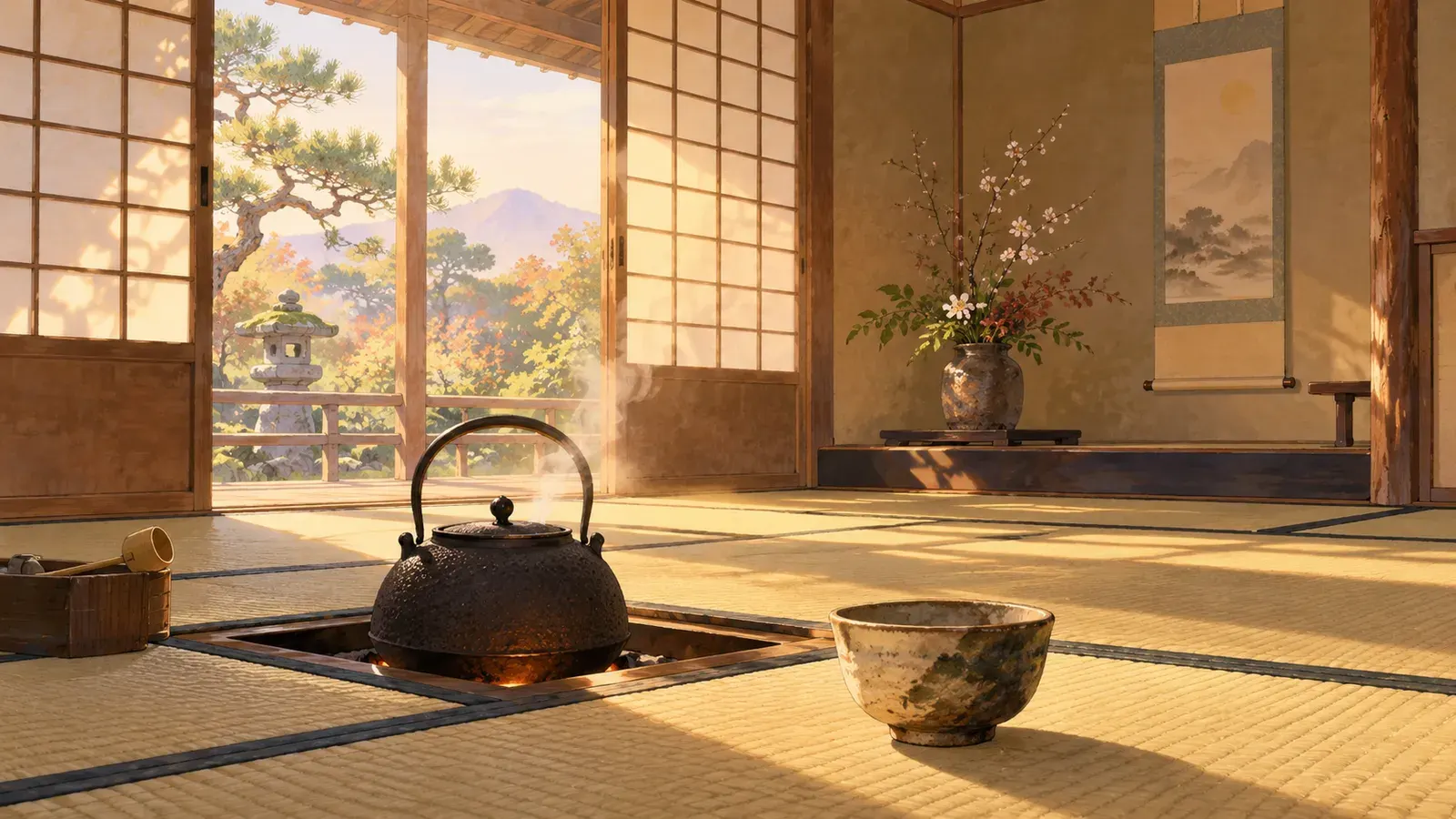
The first independent tea-room was the creation of Senno-Soyeki, commonly known by his later name of Rikiu, the greatest of all tea-masters, who, in the sixteenth century, under the patronage of Taiko-Hideyoshi, instituted and brought to a high state of perfection the formalities of the Tea-ceremony. The proportions of the tea-room had been previously determined by Jowo—a famous tea-master of the fifteenth century. The early tea-room consisted merely of a portion of the ordinary drawing-room partitioned off by screens for the purpose of the tea-gathering. The portion partitioned off was called the Kakoi (enclosure), a name still applied to those tea-rooms which are built into a house and are not independent constructions. The Sukiya consists of the tea-room proper, designed to accommodate not more than five persons, a number suggestive of the saying "more than the Graces and less than the Muses," an anteroom (midsuya) where the tea utensils are washed and arranged before being brought in, a portico (machiai) in which the guests wait until they receive the summons to enter the tea-room, and a garden path (the roji) which connects the machiai with the tea-room. The tea-room is unimpressive in appearance. It is smaller than the smallest of Japanese houses, while the materials used in its construction are intended to give the suggestion of refined poverty. Yet we must remember that all this is the result of profound artistic forethought, and that the details have been worked out with care perhaps even greater than that expended on the building of the richest palaces and temples. A good tea-room is more costly than an ordinary mansion, for the selection of its materials, as well as its workmanship, requires immense care and precision. Indeed, the carpenters employed by the tea-masters form a distinct and highly honoured class among artisans, their work being no less delicate than that of the makers of lacquer cabinets.
独立した建物としての茶室を初めて作ったのは、千宗易(せんのそうえき)、のちの名を利休という人で、一般にはこの名で知られている。利休は、すべての茶人の中でもっとも偉大な人物であった。十六世紀に太閤秀吉の後ろだてを得て、茶の湯の作法を定め、それを高い完成の域にまで高めた。茶室の広さは、それより前に、十五世紀の名高い茶人、紹鴎(じょうおう)が決めていた。初めのころの茶室は、ふつうの座敷の一部を、茶の集まりのために屏風で仕切っただけのものだった。仕切られた部分は「囲い」と呼ばれた。この名は今でも、独立した建物ではなく、家の中に作り込まれた茶室に使われている。数寄屋は、次のものからなっている。まず茶室そのもの。五人までしか入れないように作られている。この数は、「美の三女神より多く、詩の九女神より少ない」という言葉を思わせる。次に水屋(みずや)。茶道具を運び込む前に、洗ってととのえておく控えの間である。それから待合(まちあい)。客が茶室に呼ばれるまで待つ場所である。そして露地(ろじ)。待合と茶室をつなぐ庭の小道である。茶室の見た目は、ぱっとしない。日本でいちばん小さな家よりも、さらに小さい。建てるのに使う材料も、洗練された貧しさを感じさせるように選ばれている。だが忘れてはならない。これらはすべて、深い芸術的な心配りの結果なのである。細かいところまで、おそらくもっとも豪華な宮殿や寺院を建てるとき以上に、念入りに仕上げられている。よい茶室は、ふつうの屋敷よりもお金がかかる。材料選びにも、細工にも、たいへんな注意と正確さが求められるからである。実際、茶人に雇われる大工は、職人の中でも別格の、たいへん尊ばれる人々で、その仕事は漆塗りの飾り棚を作る職人に劣らず繊細である。
The tea-room is not only different from any production of Western architecture, but also contrasts strongly with the classical architecture of Japan itself. Our ancient noble edifices, whether secular or ecclesiastical, were not to be despised even as regards their mere size. The few that have been spared in the disastrous conflagrations of centuries are still capable of aweing us by the grandeur and richness of their decoration. Huge pillars of wood from two to three feet in diameter and from thirty to forty feet high, supported, by a complicated network of brackets, the enormous beams which groaned under the weight of the tile-covered roofs. The material and mode of construction, though weak against fire, proved itself strong against earthquakes, and was well suited to the climatic conditions of the country. In the Golden Hall of Horiuji and the Pagoda of Yakushiji, we have noteworthy examples of the durability of our wooden architecture. These buildings have practically stood intact for nearly twelve centuries. The interior of the old temples and palaces was profusely decorated. In the Hoodo temple at Uji, dating from the tenth century, we can still see the elaborate canopy and gilded baldachinos, many-coloured and inlaid with mirrors and mother-of-pearl, as well as remains of the paintings and sculpture which formerly covered the walls. Later, at Nikko and in the Nijo castle in Kyoto, we see structural beauty sacrificed to a wealth of ornamentation which in colour and exquisite detail equals the utmost gorgeousness of Arabian or Moorish effort.
茶室は、西洋建築のどの作品とも違っているだけでなく、日本の古典的な建築ともはっきり違っている。わが国の昔の立派な建物は、宮殿であれ寺院であれ、大きさだけ見ても決してばかにはできなかった。何百年ものあいだに大火事で焼けずに残ったわずかな建物は、今でもその壮大さと飾りの豊かさで、私たちを圧倒する。直径二、三フィート、高さ三、四十フィートもある巨大な木の柱が、複雑に組み合わさった組物(くみもの)で、とてつもない梁を支えていた。梁は、瓦屋根の重みできしんでいた。こうした材料と建て方は、火には弱いが、地震には強いことが分かっており、この国の気候にもよく合っていた。法隆寺の金堂や薬師寺の塔は、わが国の木造建築がどれほど長持ちするかを示す、注目すべき例である。これらの建物は、千二百年近く、ほとんどそのままの姿で立ち続けてきた。昔の寺院や宮殿の中は、ふんだんに飾られていた。十世紀に建てられた宇治の鳳凰堂では、今でも、手のこんだ天蓋を見ることができる。色とりどりで、鏡や螺鈿(らでん)がはめ込まれ、金色に輝いている。かつて壁一面をおおっていた絵や彫刻の名残も見られる。もっと後の日光東照宮や京都の二条城になると、建物の組み立ての美しさが、豊かな飾りの犠牲にされている。その飾りは、色の美しさと細部の精巧さで、アラビアやムーア人の作品のこのうえない豪華さにも負けない。
The simplicity and purism of the tea-room resulted from emulation of the Zen monastery. A Zen monastery differs from those of other Buddhist sects inasmuch as it is meant only to be a dwelling place for the monks. Its chapel is not a place of worship or pilgrimage, but a college room where the students congregate for discussion and the practice of meditation. The room is bare except for a central alcove in which, behind the altar, is a statue of Bodhi Dharma, the founder of the sect, or of Sakyamuni attended by Kashiapa and Ananda, the two earliest Zen patriarchs. On the altar, flowers and incense are offered up in the memory of the great contributions which these sages made to Zen. We have already said that it was the ritual instituted by the Zen monks of successively drinking tea out of a bowl before the image of Bodhi Dharma, which laid the foundations of the tea-ceremony. We might add here that the altar of the Zen chapel was the prototype of the Tokonoma,—the place of honour in a Japanese room where paintings and flowers are placed for the edification of the guests.
茶室の簡素さと清らかさは、禅の寺をお手本にしたところから生まれた。禅の寺は、ただ僧たちが住む場所として作られている点で、ほかの仏教の宗派の寺とは違う。禅寺の堂は、礼拝したり巡礼に訪れたりする場所ではない。修行僧たちが集まって議論したり、瞑想したりする学びの部屋である。部屋には、中央の奥まった一角のほかは何もない。その一角には、祭壇の後ろに、宗派を開いた菩提達磨の像か、禅の最初の二人の祖師、迦葉と阿難を従えた釈迦の像がある。祭壇には、これらの聖人が禅のために果たした大きな働きをしのんで、花と香がささげられる。茶の湯の基礎を築いたのは、禅僧たちが定めた儀式、つまり菩提達磨の像の前で、一つの碗から順に茶を飲む儀式だったことは、すでに述べた。ここで付け加えておけば、禅堂の祭壇こそ、床の間の原型であった。床の間とは、日本の部屋の中でいちばん大切な場所で、客の心を楽しませ高めるために、絵や花を置くところである。
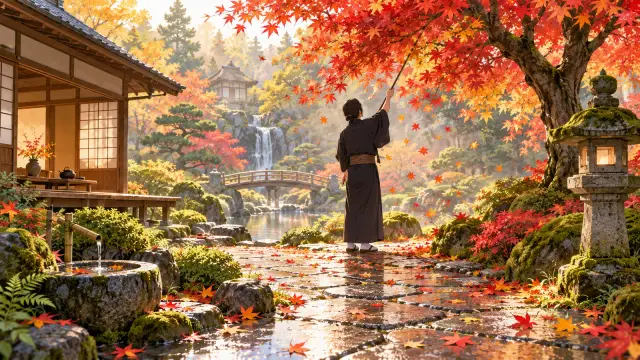
All our great tea-masters were students of Zen and attempted to introduce the spirit of Zennism into the actualities of life. Thus the room, like the other equipments of the tea-ceremony, reflects many of the Zen doctrines. The size of the orthodox tea-room, which is four mats and a half, or ten feet square, is determined by a passage in the Sutra of Vikramadytia. In that interesting work, Vikramadytia welcomes the Saint Manjushiri and eighty-four thousand disciples of Buddha in a room of this size,—an allegory based on the theory of the non-existence of space to the truly enlightened. Again the roji, the garden path which leads from the machiai to the tea-room, signified the first stage of meditation,—the passage into self-illumination. The roji was intended to break connection with the outside world, and produce a fresh sensation conducive to the full enjoyment of aestheticism in the tea-room itself. One who has trodden this garden path cannot fail to remember how his spirit, as he walked in the twilight of evergreens over the regular irregularities of the stepping stones, beneath which lay dried pine needles, and passed beside the moss-covered granite lanterns, became uplifted above ordinary thoughts. One may be in the midst of a city, and yet feel as if he were in the forest far away from the dust and din of civilisation. Great was the ingenuity displayed by the tea-masters in producing these effects of serenity and purity. The nature of the sensations to be aroused in passing through the roji differed with different tea-masters. Some, like Rikiu, aimed at utter loneliness, and claimed the secret of making a roji was contained in the ancient ditty:
わが国の偉大な茶人たちは皆、禅を学んだ人々であり、禅の精神を実際の暮らしの中に生かそうとした。そのため茶室は、茶の湯のほかの道具立てと同じく、禅の教えの多くを映し出している。正式な茶室の広さは四畳半、つまり十フィート四方である。これは『維摩経(ゆいまきょう)』の一節から決められた。このおもしろい経典の中で、維摩は文殊菩薩と八万四千人の仏の弟子たちを、この広さの部屋に迎え入れる。本当に悟った者にとって空間は存在しない、という考えにもとづいたたとえ話である。また、待合から茶室へ続く庭の小道、露地は、瞑想の最初の段階を表していた。自分の内を照らしに入っていく、その入り口である。露地は、外の世界とのつながりを断ち切るためのものだった。そして新しい気持ちを呼び起こし、茶室で美を心ゆくまで味わえるようにしたのである。この庭の小道を歩いたことのある人なら、きっと覚えているだろう。常緑樹の木陰のほの暗い中を、規則正しく不ぞろいに並んだ飛び石を踏んで歩いた。石の下には乾いた松葉が敷かれていた。苔むした御影石の灯籠のそばを通り過ぎた。そのとき、心がふだんの思いを離れて、高められていったことを。都会のまん中にいながら、文明のほこりや騒がしさから遠く離れた森の中にいるような気がするのである。茶人たちは、こうした静けさと清らかさを生み出すために、大いに工夫をこらした。露地を通るときにどんな気持ちを呼び起こすかは、茶人によって違った。利休のように、まったくの寂しさをめざした人もいた。利休は、露地を作る秘訣は、次の古い歌の中にあると言った。
"I look beyond; Flowers are not, Nor tinted leaves. On the sea beach A solitary cottage stands In the waning light Of an autumn eve."
見渡せば 花も紅葉もなかりけり 浦の苫屋の 秋の夕暮れ (見渡すと、花もなく、色づいた葉もない。浜辺に粗末な小屋がひとつ、秋の夕暮れの薄れていく光の中に立っている)
Others, like Kobori-Enshiu, sought for a different effect. Enshiu said the idea of the garden path was to be found in the following verses:
小堀遠州のように、別の趣をめざした人もいた。遠州は、露地の心は次の句の中にあると言った。
"A cluster of summer trees, A bit of the sea, A pale evening moon."
夕月夜 海すこしある 木の間かな (夏の木立の茂みのあいだに、海が少しのぞき、淡い夕月がかかっている)
It is not difficult to gather his meaning. He wished to create the attitude of a newly awakened soul still lingering amid shadowy dreams of the past, yet bathing in the sweet unconsciousness of a mellow spiritual light, and yearning for the freedom that lay in the expanse beyond.
遠州の言いたいことをくみとるのは難しくない。遠州は、目覚めたばかりの魂の心持ちを生み出したかったのである。その魂は、過去のおぼろげな夢の中にまだたゆたっている。それでいて、やわらかな精神の光を浴びて、甘く我を忘れている。そして、その向こうに広がる自由にあこがれているのである。
Thus prepared the guest will silently approach the sanctuary, and, if a samurai, will leave his sword on the rack beneath the eaves, the tea-room being preeminently the house of peace. Then he will bend low and creep into the room through a small door not more than three feet in height. This proceeding was incumbent on all guests,—high and low alike,—and was intended to inculcate humility. The order of precedence having been mutually agreed upon while resting in the machiai, the guests one by one will enter noiselessly and take their seats, first making obeisance to the picture or flower arrangement on the tokonoma. The host will not enter the room until all the guests have seated themselves and quiet reigns with nothing to break the silence save the note of the boiling water in the iron kettle. The kettle sings well, for pieces of iron are so arranged in the bottom as to produce a peculiar melody in which one may hear the echoes of a cataract muffled by clouds, of a distant sea breaking among the rocks, a rainstorm sweeping through a bamboo forest, or of the soughing of pines on some faraway hill.
こうして心の支度がととのうと、客は静かに茶室という聖域に近づいていく。侍なら、刀を軒下の刀掛けに置いていく。茶室は何よりも平和の家だからである。それから客は、身を低くかがめ、高さ三フィートもない小さな入り口から、はうようにして部屋に入る。身分の高い者も低い者も、客は皆こうしなければならなかった。へりくだる心を教えるためである。席順は、待合で休んでいるあいだに、たがいに話し合って決めておく。客は一人ずつ、音を立てずに入り、まず床の間の絵や生け花に礼をしてから、席に着く。主人は、客が皆席に着き、静けさがあたりを満たすまで、部屋に入らない。静けさを破るものは、鉄の釜で湯が沸く音のほかには何もない。釜はよい音で鳴る。底に鉄のかけらがうまく並べてあって、独特の調べを奏でるからである。その調べの中には、雲にくぐもった滝の響き、遠い海が岩に砕ける音、竹林を吹き抜ける雨嵐、遠い丘の松を渡る風の音のこだまが聞こえてくる。
Even in the daytime the light in the room is subdued, for the low eaves of the slanting roof admit but few of the sun's rays. Everything is sober in tint from the ceiling to the floor; the guests themselves have carefully chosen garments of unobtrusive colors. The mellowness of age is over all, everything suggestive of recent acquirement being tabooed save only the one note of contrast furnished by the bamboo dipper and the linen napkin, both immaculately white and new. However faded the tea-room and the tea-equipage may seem, everything is absolutely clean. Not a particle of dust will be found in the darkest corner, for if any exists the host is not a tea-master. One of the first requisites of a tea-master is the knowledge of how to sweep, clean, and wash, for there is an art in cleaning and dusting. A piece of antique metal work must not be attacked with the unscrupulous zeal of the Dutch housewife. Dripping water from a flower vase need not be wiped away, for it may be suggestive of dew and coolness.
昼間でさえ、部屋の中の光はほの暗い。傾いた屋根の低い軒が、日の光をわずかしか通さないからである。天井から床まで、すべてが落ち着いた色合いである。客たちも、目立たない色の着物を念入りに選んでいる。どこもかしこも、年を経たものの深い味わいに包まれている。新しく手に入れたと感じさせるものは、すべて嫌われる。ただ一つの例外は、竹の柄杓(ひしゃく)と麻の布巾である。どちらも汚れ一つない真っ白な新しいもので、まわりと対照をなしている。茶室や茶道具がどれほど古びて見えても、すべては完全に清潔である。どんなに暗い隅にも、ほこり一つ見当たらない。もしあれば、その主人は茶人ではない。茶人にまず求められることの一つは、掃き方、清め方、洗い方を心得ていることである。掃除やほこり払いにも、技があるのだ。古い金属細工を、オランダの主婦のように、遠慮なくごしごし磨いてはいけない。花入れからしたたる水は、ふき取らなくてもよい。露や涼しさを思わせるかもしれないからである。
In this connection there is a story of Rikiu which well illustrates the ideas of cleanliness entertained by the tea-masters. Rikiu was watching his son Shoan as he swept and watered the garden path. "Not clean enough," said Rikiu, when Shoan had finished his task, and bade him try again. After a weary hour the son turned to Rikiu: "Father, there is nothing more to be done. The steps have been washed for the third time, the stone lanterns and the trees are well sprinkled with water, moss and lichens are shining with a fresh verdure; not a twig, not a leaf have I left on the ground." "Young fool," chided the tea-master, "that is not the way a garden path should be swept." Saying this, Rikiu stepped into the garden, shook a tree and scattered over the garden gold and crimson leaves, scraps of the brocade of autumn! What Rikiu demanded was not cleanliness alone, but the beautiful and the natural also.
これに関連して、茶人たちが清潔さをどう考えていたかをよく示す、利休の話がある。利休は、息子の少庵(しょうあん)が露地を掃いて水を打つのを見ていた。少庵が仕事を終えると、利休は「まだきれいではない」と言って、もう一度やり直させた。うんざりするような一時間が過ぎたあと、少庵は利休に言った。「父上、もうこれ以上することはありません。飛び石は三度洗いました。石灯籠にも木々にも、たっぷり水を打ちました。苔も、みずみずしい緑に輝いています。地面には、小枝一本、葉一枚残していません。」「愚か者め」と茶人は叱った。「露地は、そんなふうに掃くものではない。」そう言うと、利休は庭に下り、一本の木をゆすった。すると金色や真紅の葉が、秋の錦の切れはしのように、庭一面に散り敷いたのである。利休が求めたのは、清潔さだけではなかった。美しさと、自然さも求めたのである。
The name, Abode of Fancy, implies a structure created to meet some individual artistic requirement. The tea-room is made for the tea master, not the tea-master for the tea-room. It is not intended for posterity and is therefore ephemeral. The idea that everyone should have a house of his own is based on an ancient custom of the Japanese race, Shinto superstition ordaining that every dwelling should be evacuated on the death of its chief occupant. Perhaps there may have been some unrealized sanitary reason for this practice. Another early custom was that a newly built house should be provided for each couple that married. It is on account of such customs that we find the Imperial capitals so frequently removed from one site to another in ancient days. The rebuilding, every twenty years, of Ise Temple, the supreme shrine of the Sun-Goddess, is an example of one of these ancient rites which still obtain at the present day. The observance of these customs was only possible with some form of construction as that furnished by our system of wooden architecture, easily pulled down, easily built up. A more lasting style, employing brick and stone, would have rendered migrations impracticable, as indeed they became when the more stable and massive wooden construction of China was adopted by us after the Nara period.
「好みの住まい」という名には、ある一人の人の芸術的な好みを満たすために作られた建物、という意味がある。茶室は茶人のために作られるのであって、茶人が茶室のためにいるのではない。後の世のために作られるのではないから、はかないものなのである。誰もが自分の家を持つべきだという考えは、日本民族の古い習慣から来ている。神道の迷信では、家の主が亡くなったら、その家は引き払わなければならないとされていた。もしかすると、そこには、当時は気づかれていなかった衛生上の理由があったのかもしれない。もう一つの古い習慣として、結婚した夫婦には、それぞれ新しく建てた家を用意することになっていた。昔、都がしばしばあちこちへ移されたのは、こうした習慣のためである。日の女神をまつる最高の神社、伊勢神宮を二十年ごとに建て替えるのは、今も続いているこうした古い儀式の一つである。こうした習慣を守れたのは、わが国の木造建築のように、壊すのもたやすく、建てるのもたやすい作りだったからこそである。煉瓦や石を使った、もっと長持ちする建て方だったら、移ることはとてもできなかっただろう。実際、奈良時代のあと、もっとがっしりした重々しい中国の木造建築を取り入れると、都を移すことはできなくなった。
With the predominance of Zen individualism in the fifteenth century, however, the old idea became imbued with a deeper significance as conceived in connection with the tea-room. Zennism, with the Buddhist theory of evanescence and its demands for the mastery of spirit over matter, recognized the house only as a temporary refuge for the body. The body itself was but as a hut in the wilderness, a flimsy shelter made by tying together the grasses that grew around,—when these ceased to be bound together they again became resolved into the original waste. In the tea-room fugitiveness is suggested in the thatched roof, frailty in the slender pillars, lightness in the bamboo support, apparent carelessness in the use of commonplace materials. The eternal is to be found only in the spirit which, embodied in these simple surroundings, beautifies them with the subtle light of its refinement.
だが十五世紀になって、禅の個人主義が力を持つと、この古い考えは、茶室と結びついて、もっと深い意味を帯びるようになった。仏教には、すべてははかなく移り変わるという考えがある。また禅は、心が物を治めることを求める。そこで禅は、家を、体が一時身を寄せる場所としか考えなかった。その体でさえ、荒れ野の中の小屋にすぎない。まわりに生えている草を結び合わせて作った、もろい雨よけにすぎない。草を結んだひもがほどければ、またもとの荒れ野に戻ってしまう。茶室では、わらぶきの屋根がはかなさを、細い柱がもろさを、竹の支えが軽さを、ありふれた材料の使い方がさりげない無造作さを、それぞれほのめかしている。永遠なるものは、ただ精神の中にだけある。精神はこの簡素なしつらえの中に宿り、その洗練された、かすかな光で、まわりを美しく照らすのである。
That the tea-room should be built to suit some individual taste is an enforcement of the principle of vitality in art. Art, to be fully appreciated, must be true to contemporaneous life. It is not that we should ignore the claims of posterity, but that we should seek to enjoy the present more. It is not that we should disregard the creations of the past, but that we should try to assimilate them into our consciousness. Slavish conformity to traditions and formulas fetters the expression of individuality in architecture. We can but weep over the senseless imitations of European buildings which one beholds in modern Japan. We marvel why, among the most progressive Western nations, architecture should be so devoid of originality, so replete with repetitions of obsolete styles. Perhaps we are passing through an age of democratisation in art, while awaiting the rise of some princely master who shall establish a new dynasty. Would that we loved the ancients more and copied them less! It has been said that the Greeks were great because they never drew from the antique.
茶室を、ある一人の好みに合わせて建てるべきだというのは、芸術には生きた力がなければならない、という原理を守ることである。芸術を十分に味わうには、それが今の時代の暮らしに忠実でなければならない。後の世の求めを無視せよというのではない。今をもっと楽しもうとすべきだ、というのである。過去に作られたものを軽んじよというのではない。それを自分の心の中に取り込み、自分のものにしようと努めるべきだ、というのである。伝統や決まりに奴隷のように従っていれば、建築に個性を表すことはできない。今の日本で見かける、ヨーロッパの建物の無分別なまねには、ただ涙するしかない。西洋のもっとも進んだ国々で、なぜ建築がこれほど独創性に欠け、時代遅れの様式のくり返しばかりなのか、私たちは不思議でならない。おそらく今は、芸術が誰のものにもなる時代を通り過ぎているところなのだろう。新しい王朝を開く、王者のような巨匠が現れるのを待ちながら。昔の人をもっと愛し、もっとまねしないようにしたいものだ。ギリシャ人が偉大だったのは、決して古いものを手本にしなかったからだと言われている。
The term, Abode of Vacancy, besides conveying the Taoist theory of the all-containing, involves the conception of a continued need of change in decorative motives. The tea-room is absolutely empty, except for what may be placed there temporarily to satisfy some aesthetic mood. Some special art object is brought in for the occasion, and everything else is selected and arranged to enhance the beauty of the principal theme. One cannot listen to different pieces of music at the same time, a real comprehension of the beautiful being possible only through concentration upon some central motive. Thus it will be seen that the system of decoration in our tea-rooms is opposed to that which obtains in the West, where the interior of a house is often converted into a museum. To a Japanese, accustomed to simplicity of ornamentation and frequent change of decorative method, a Western interior permanently filled with a vast array of pictures, statuary, and bric-a-brac gives the impression of mere vulgar display of riches. It calls for a mighty wealth of appreciation to enjoy the constant sight of even a masterpiece, and limitless indeed must be the capacity for artistic feeling in those who can exist day after day in the midst of such confusion of color and form as is to be often seen in the homes of Europe and America.
「からっぽの住まい」という言葉には、すべてを包み込むという道教の考えがこめられている。それだけでなく、飾りの主題を絶えず変えていく必要がある、という考えも含まれている。茶室は、その折々の美の趣向を満たすために一時置かれるもののほかは、まったくからっぽである。その場のために、何か特別な美術品が持ち込まれる。ほかのものはすべて、その主役の美しさを引き立てるように選ばれ、並べられる。違う音楽を同時に聞くことはできない。美しいものを本当に分かるには、何か一つの中心となる主題に心を集中しなければならない。こう考えると、わが国の茶室の飾り方は、西洋の飾り方とは正反対であることが分かるだろう。西洋では、家の中がしばしば博物館のようになってしまう。簡素な飾りと、たびたび飾りを変えることに慣れた日本人から見ると、西洋の部屋は、おびただしい数の絵や彫像や置物で、いつまでもいっぱいになっている。それは、ただ富を下品に見せびらかしているとしか思えない。たとえ傑作でも、いつも目の前にあるものを楽しみ続けるには、大変な鑑賞力がいる。ヨーロッパやアメリカの家では、色と形がごちゃごちゃに入り乱れているのをよく見かける。その中で毎日暮らしていける人々の芸術の感受性は、まことに底なしにちがいない。
The "Abode of the Unsymmetrical" suggests another phase of our decorative scheme. The absence of symmetry in Japanese art objects has been often commented on by Western critics. This, also, is a result of a working out through Zennism of Taoist ideals. Confucianism, with its deep-seated idea of dualism, and Northern Buddhism with its worship of a trinity, were in no way opposed to the expression of symmetry. As a matter of fact, if we study the ancient bronzes of China or the religious arts of the Tang dynasty and the Nara period, we shall recognize a constant striving after symmetry. The decoration of our classical interiors was decidedly regular in its arrangement. The Taoist and Zen conception of perfection, however, was different. The dynamic nature of their philosophy laid more stress upon the process through which perfection was sought than upon perfection itself. True beauty could be discovered only by one who mentally completed the incomplete. The virility of life and art lay in its possibilities for growth. In the tea-room it is left for each guest in imagination to complete the total effect in relation to himself. Since Zennism has become the prevailing mode of thought, the art of the extreme Orient has purposefully avoided the symmetrical as expressing not only completion, but repetition. Uniformity of design was considered fatal to the freshness of imagination. Thus, landscapes, birds, and flowers became the favorite subjects for depiction rather than the human figure, the latter being present in the person of the beholder himself. We are often too much in evidence as it is, and in spite of our vanity even self-regard is apt to become monotonous.
「不ぞろいの住まい」という言葉は、わが国の飾り方の、もう一つの面を表している。日本の美術品が左右対称でないことは、西洋の批評家たちがよく指摘してきた。これもまた、道教の理想が禅を通じて形になった結果である。儒教には、物事を二つの対で考える根強い考えがある。北方の仏教は、三尊を崇める。どちらも、左右対称に表すことに、少しも反対ではなかった。実際、中国の古い青銅器や、唐の時代や奈良時代の宗教美術を調べてみれば、いつも左右対称を求めて努力していることが分かるだろう。わが国の古典的な部屋の飾りも、はっきりと規則正しく並べられていた。だが、道教と禅の考える完全さは違っていた。動きを重んじる彼らの哲学は、完全さそのものよりも、完全さを求めていく過程のほうを大切にした。本当の美しさは、不完全なものを心の中で完成させる人だけが見いだせるものであった。人生にも芸術にも、育っていく余地があるからこそ、生きた力がある。茶室では、全体の効果を、自分とのかかわりの中で想像によって完成させることが、客の一人ひとりに任されている。禅が主な考え方となってから、極東の芸術は、わざと左右対称を避けてきた。左右対称は、完成を表すだけでなく、くり返しをも表すからである。図柄がそろいすぎていると、想像力の新鮮さが死んでしまうと考えられた。だから、人の姿よりも、山水や花鳥が好んで描かれるようになった。人の姿は、見る人自身がそこにいるからである。それでなくても、私たちはあまりに出しゃばりすぎている。いくらうぬぼれが強くても、自分の姿ばかり眺めていては飽きてしまうものだ。
In the tea-room the fear of repetition is a constant presence. The various objects for the decoration of a room should be so selected that no colour or design shall be repeated. If you have a living flower, a painting of flowers is not allowable. If you are using a round kettle, the water pitcher should be angular. A cup with a black glaze should not be associated with a tea-caddy of black lacquer. In placing a vase of an incense burner on the tokonoma, care should be taken not to put it in the exact centre, lest it divide the space into equal halves. The pillar of the tokonoma should be of a different kind of wood from the other pillars, in order to break any suggestion of monotony in the room.
茶室では、くり返しを恐れる心が、いつも働いている。部屋を飾るさまざまな品は、色や図柄が一つも重ならないように選ばなければならない。生きた花を生けるなら、花の絵を掛けてはいけない。丸い釜を使うなら、水指は角ばったものにすべきである。黒い釉薬の茶碗を、黒塗りの茶入れと組み合わせてはいけない。床の間に花入れや香炉を置くときは、ちょうど真ん中に置かないように気をつける。空間を二つに等しく分けてしまわないためである。床柱は、ほかの柱とは違う種類の木で作るべきである。部屋が単調に感じられないようにするためである。
Here again the Japanese method of interior decoration differs from that of the Occident, where we see objects arrayed symmetrically on mantelpieces and elsewhere. In Western houses we are often confronted with what appears to us useless reiteration. We find it trying to talk to a man while his full-length portrait stares at us from behind his back. We wonder which is real, he of the picture or he who talks, and feel a curious conviction that one of them must be fraud. Many a time have we sat at a festive board contemplating, with a secret shock to our digestion, the representation of abundance on the dining-room walls. Why these pictured victims of chase and sport, the elaborate carvings of fishes and fruit? Why the display of family plates, reminding us of those who have dined and are dead?
ここでもまた、日本の部屋の飾り方は西洋と違っている。西洋では、暖炉の上などに、品物が左右対称に並べられているのを見かける。西洋の家では、私たちから見ると無用なくり返しとしか思えないものに、よく出くわす。ある人と話をしていると、その人の背後から、等身大の肖像画がこちらをじっと見つめている。これはなんとも落ち着かない。絵の中の人と、話をしている人と、どちらが本物なのだろう、と考えてしまう。そして、どちらかが偽物にちがいない、という妙な確信にとらわれる。祝いの食卓に着き、食堂の壁に描かれた、山盛りのごちそうの絵を眺めながら、ひそかに食欲をなくしたことも、一度や二度ではない。なぜ、狩りで仕留められた獲物の絵や、手のこんだ魚や果物の彫刻があるのだろう。なぜ、家に伝わる皿を飾って、それで食事をして今はもう亡くなった人たちのことを思い出させるのだろう。
The simplicity of the tea-room and its freedom from vulgarity make it truly a sanctuary from the vexations of the outer world. There and there alone one can consecrate himself to undisturbed adoration of the beautiful. In the sixteenth century the tea-room afforded a welcome respite from labour to the fierce warriors and statesmen engaged in the unification and reconstruction of Japan. In the seventeenth century, after the strict formalism of the Tokugawa rule had been developed, it offered the only opportunity possible for the free communion of artistic spirits. Before a great work of art there was no distinction between daimyo, samurai, and commoner. Nowadays industrialism is making true refinement more and more difficult all the world over. Do we not need the tea-room more than ever?
茶室は簡素で、俗っぽさがない。だからこそ、外の世界のわずらわしさから逃れる、本当の聖域なのである。そこでなら、そしてそこでだけ、人は誰にも邪魔されずに、美を崇めることに身をささげることができる。十六世紀には、茶室は、日本を一つにまとめ立て直そうとしていた荒々しい武将や政治家たちに、苦労からのありがたい息抜きを与えた。十七世紀になって、徳川の支配の厳しい形式主義が出来上がると、茶室は、芸術を愛する人々が自由に心を通わせることのできる、ただ一つの場となった。偉大な芸術作品の前では、大名も侍も町人も区別はなかった。今では、産業の世の中になって、本当の洗練は、世界じゅうでますます難しくなっている。私たちには、今こそ、これまで以上に茶室が必要なのではないだろうか。