麺をすするめんをすする
men o susuru
why noodles are eaten noisily
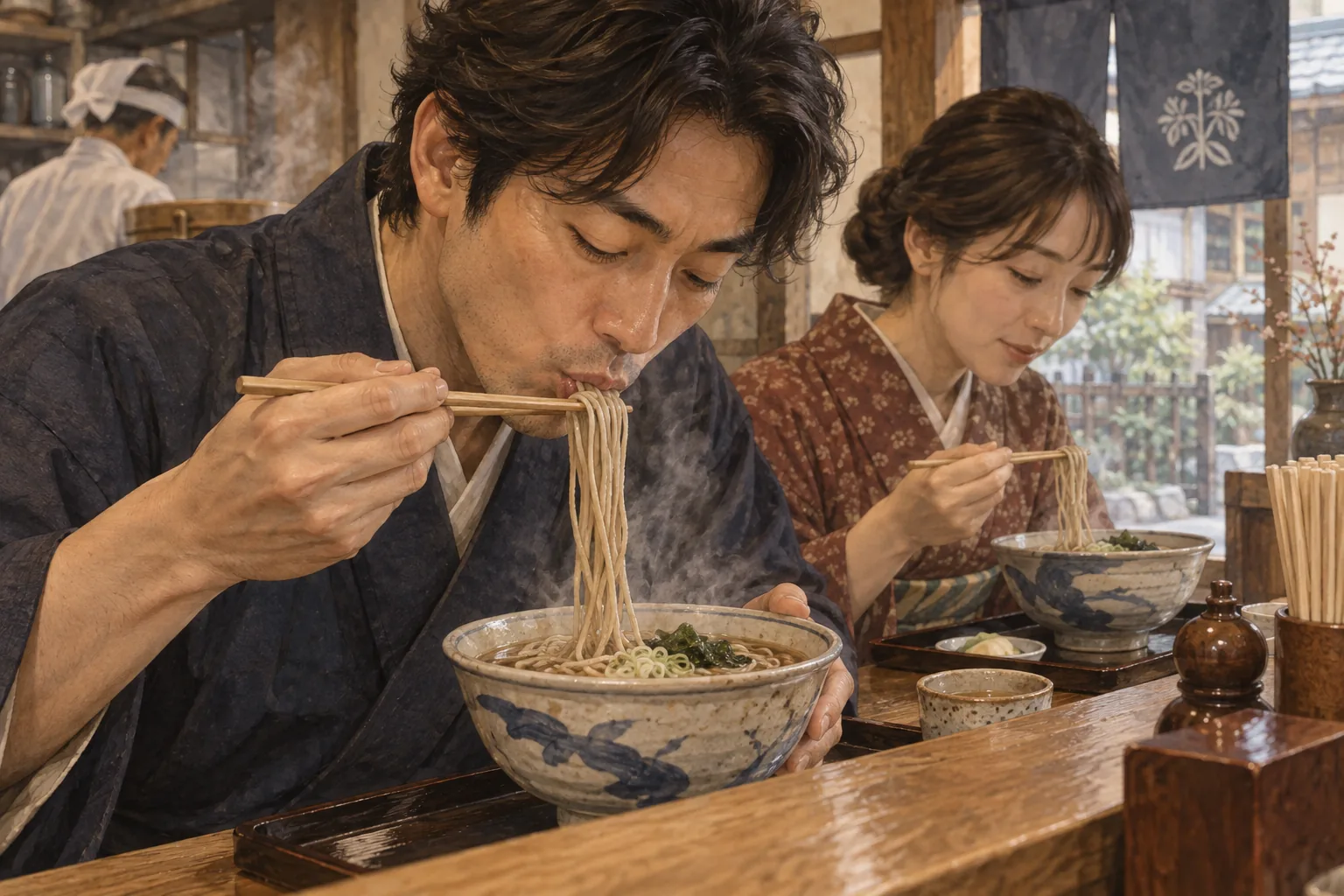
音を立ててよい数少ない場面。ただし麺に限る。
一言で言うと
これだけ覚えれば最低限伝わる一文
Slurping is accepted for noodles in Japan, though not for soup, rice or anything else.
日本で音を立ててよいのは麺のときで、汁や米などほかのものは別です。
30秒で説明する
外国人に説明するときの標準サイズ
Japanese noodles are eaten with an audible intake of air. It cools very hot noodles on the way in, pulls broth with them and, according to many people here, improves the aroma. It applies to ramen, soba and udon, not to pasta or soup, and nobody is required to do it.
日本の麺は、空気と一緒に音を立ててすすります。熱い麺を口に入れる途中で冷まし、汁を一緒に引き込み、香りが立つと感じる人も多くいます。これはラーメン、そば、うどんに当てはまるもので、パスタや汁ものは別です。誰かに強いられることでもありません。
スピーチ・英作文
通訳案内士の二次口述・大学入試の自由英作文に
Slurping noodles is the piece of Japanese table manners that foreign visitors hear about most, and it is usually explained badly. It is not a compliment to the chef, and it is not a rule. It is simply accepted in a culture that is otherwise very quiet at the table, and there are practical reasons.
Noodles are served extremely hot, and drawing air in with them cools them enough to swallow. The air also carries aroma to the back of the nose, which changes how the broth tastes. And it lets you take the noodles in one motion, which matters because ramen sitting in hot soup keeps softening.
What is not accepted is extending this to other food. Soup from a bowl is drunk quietly, rice is eaten silently, and pasta at an Italian restaurant is treated as Italian. If slurping feels impossible, nobody will mind. Eating slowly enough to let the noodles go soft is the real mistake.
麺をすすることは、外国から来た人が最もよく耳にする日本の食卓の作法で、たいてい説明のされ方がよくありません。料理人への賛辞ではありませんし、決まりでもありません。ほかの場面ではとても静かな食卓の文化の中で、そこだけが許されているというだけのことで、実際的な理由があります。
麺はとても熱く出されるので、空気と一緒に引き込めば、飲み込めるまで冷めます。空気は香りを鼻の奥に運び、汁の味わい方を変えもします。そして一続きの動きで口に入れられます。これは大事なことで、熱い汁に浸かったラーメンはやわらかくなり続けるからです。
認められていないのは、これをほかの食べものに広げることです。椀の汁は静かに飲み、ご飯は音を立てずに食べ、イタリア料理店のパスタはイタリアのものとして扱います。すすれなくても、誰も気にしません。本当の失敗は、麺がのびるほどゆっくり食べることです。
こう聞かれたら
外国人から実際にされる質問と、その答え方。
Do I have to slurp?
音を立てて食べないといけませんか。
No. Nobody will comment if you eat quietly, and plenty of Japanese people slurp only a little. The point is that the noise is permitted here, not that it is required.
その必要はありません。静かに食べても何も言われませんし、日本人でもあまり音を立てない人はたくさんいます。要点は、音が許されているということで、しなければならないということではありません。
Does it apply to soup and rice too?
汁物やご飯にも当てはまりますか。
No. Miso soup is drunk from the bowl quietly, and eating rice noisily would be noticed. The permission is specific to noodles, and to tea in a formal tea ceremony, where the last sip is audible.
違います。味噌汁は椀から静かに飲み、ご飯を音を立てて食べれば人目につきます。許されているのは麺のときと、茶道で最後のひと口をすする場面に限られます。
Is it true that slurping is disappearing?
すする習慣はなくなりつつあるというのは本当ですか。
It has softened in some settings, and some younger diners eat more quietly, especially in mixed company. In a ramen shop at lunchtime, it remains completely ordinary.
場面によっては弱まっており、とくに人と一緒のときに静かに食べる若い人もいます。昼のラーメン店では、今もまったくふつうのことです。
誤解されやすい
MYTHSlurping tells the chef you enjoyed the meal.
麺をすするのは、おいしかったと料理人に伝える合図だ、と思われがちです。
FACTIt is not a signal to anyone. It cools the noodles, carries aroma and lets you eat before they go soft. Saying it was delicious is what tells the chef.
これは誰かへの合図ではありません。麺を冷まし、香りを運び、のびる前に食べるためのものです。料理人に伝わるのは、おいしかったですと言うことのほうです。
そのまま使えるフレーズ
- It's fine to make noise with noodles.麺は音を立ててかまいません。
- Eat it while it's hot.熱いうちにどうぞ。
- The noodles go soft quickly.麺はすぐのびてしまいます。
- Soup is drunk quietly, though.汁は静かに飲みます。
- Don't worry, nobody is watching.大丈夫です、誰も見ていません。
説明に使う語句
- to slurpすする
- noodles going soft麺がのびる
- aroma香り
- table manners食事の作法
- brothスープ
動画で見る
YouTube より豆知識
麺をすする食べ方は、そばの文化と結びついて語られることが多く、落語にもそばをすする所作が出てきます。音そのものが作法として定められているわけではなく、静かに食べてはいけないという決まりもありません。近年は、音を不快に感じる人への配慮を求める声も聞かれます。一方で、熱い汁の麺を短い時間で食べるには理にかなった方法であることも確かです。パスタをすするのは日本でも行儀がよいとは見なされません。
