竹刀と防具しないとぼうぐ
shinai and bogu
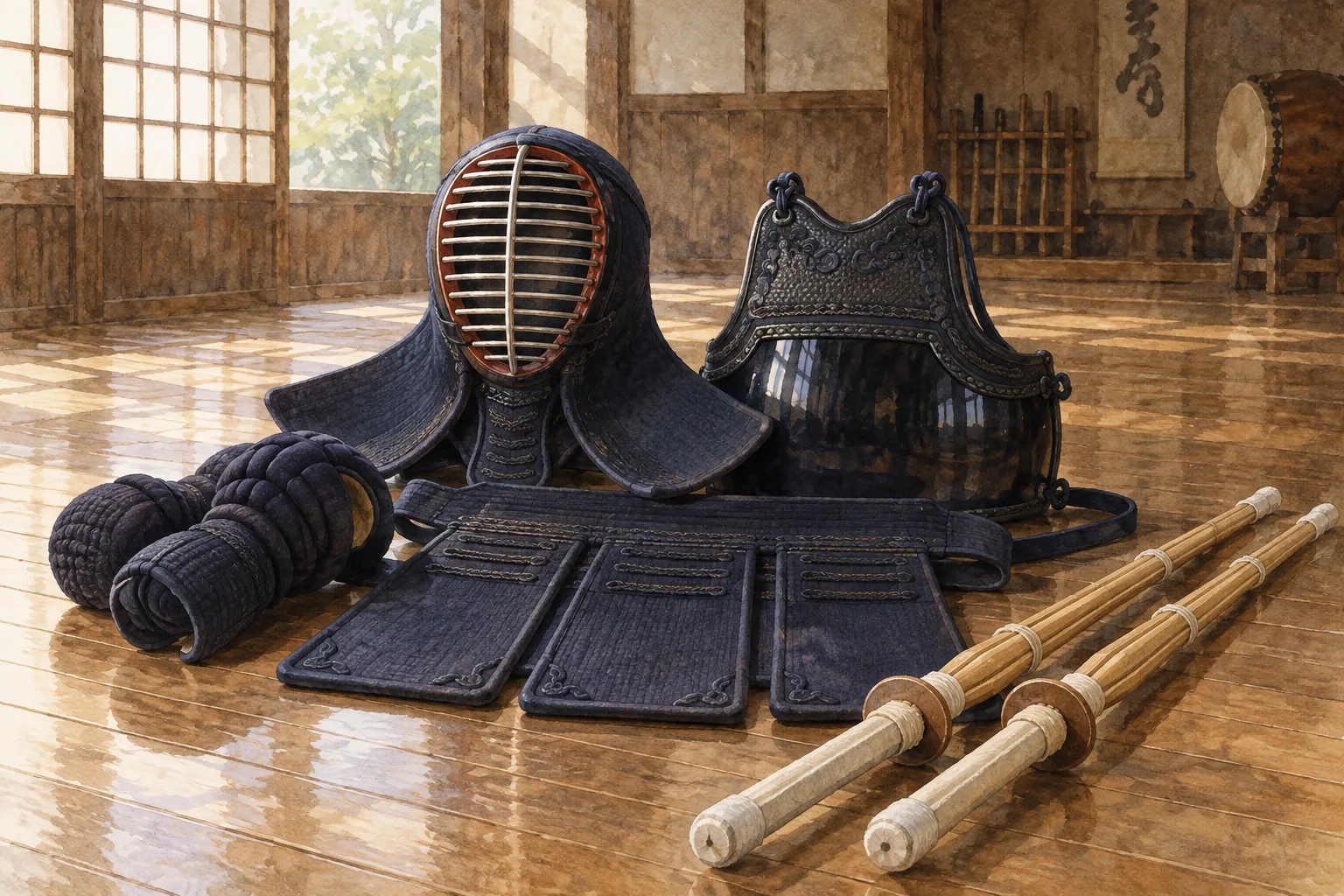
the bamboo sword and protective armor used in kendo
竹刀は竹4本を束ねたもの。防具は面・小手・胴・垂の4つ。
一言で言うと
これだけ覚えれば最低限伝わる一文
Shinai and bogu, or the bamboo sword and protective armor, are what you strike with and wear in kendo.
竹刀と防具とは、剣道で打つための竹の刀と、身を守るために着ける道具です。
30秒で説明する
外国人に説明するときの標準サイズ
A shinai is a practice sword made of four bamboo slats held together with leather and string. Bogu is the protective gear: a helmet-like mask called men, padded gloves called kote, a chest protector called do, and a waist guard called tare. With this equipment, kendo players can hit each other at full speed. The length and weight of a match shinai are set by rules that vary by age and gender.
竹刀は、4本の竹を革と弦で束ねた稽古用の刀です。防具は身を守る道具で、兜のような面、厚手の手袋のような小手、胸を守る胴、腰を守る垂からなります。この道具があるので、剣道では全力で打ち合うことができます。試合で使う竹刀の長さと重さは、年齢と性別で異なる規定で決まっています。
スピーチ・英作文
通訳案内士の二次口述・大学入試の自由英作文に
Kendo looks dramatic because players really hit each other, which is possible thanks to two pieces of equipment. The first is the shinai, a sword made from four strips of bamboo tied together with leather and string.
It flexes on impact, so it hurts far less than a wooden sword. The second is the bogu, the protective armor: the men for the head, the kote for the hands and wrists, the do for the body, and the tare around the waist.
This kind of gear is said to have taken shape in the early 1700s, when some sword schools began practicing with real contact instead of only set forms. Students are taught to treat the shinai as a real sword, so you should never step over one. To me, that respect is what makes kendo more than a fight with sticks.
剣道が迫力あるように見えるのは、選手が本当に打ち合うからで、それができるのは2つの道具のおかげです。1つ目は竹刀で、4本の竹を革と弦で束ねた刀です。当たるとしなるので、木刀よりはるかに痛みが少なくて済みます。
2つ目は防具で、頭を守る面、手と手首を守る小手、胴体を守る胴、腰まわりを守る垂からなります。このような道具は、一部の流派が決まった型だけでなく実際に打ち合う稽古を始めた1700年代の初めに形になったとされます。
稽古では竹刀を本物の刀として扱うよう教えられるので、竹刀をまたいではいけません。私は、この敬意があるからこそ、剣道は棒でたたき合うだけのものではなくなるのだと思います。
こう聞かれたら
外国人から実際にされる質問と、その答え方。
Does it hurt to get hit, even with armor?
防具を着けていても、打たれると痛いのですか。
Sometimes, especially when a strike lands just off the armor on the arm or shoulder. Bruises are common for beginners, but serious injuries are rare.
痛いことはあります。特に防具から外れて腕や肩に当たったときです。初心者にあざはよくありますが、大きなけがはまれです。
Why can't I step over a shinai?
なぜ竹刀をまたいではいけないのですか。
In kendo, the shinai stands in for a real sword, and stepping over it is seen as disrespectful. It's the same kind of respect people show a katana.
剣道では竹刀を本物の刀の代わりと考えるので、またぐのは失礼とされます。日本刀に払うのと同じ種類の敬意です。
Do shinai break?
竹刀は壊れるのですか。
Yes, the bamboo splinters with use, so players check them often and replace broken slats. A cracked shinai can be dangerous, since a splinter can slip through the mask.
はい、竹は使ううちにささくれるので、選手はよく点検し、割れた竹を取り替えます。ひびの入った竹刀は、破片が面の隙間から入ることがあり危険です。
そのまま使えるフレーズ
- Please don't step over the shinai.竹刀をまたがないでください。
- The armor has four parts.防具は4つの部分からできています。
- Check your shinai for splinters before practice.稽古の前に竹刀のささくれを確かめてください。
- The gloves go on last, after the mask.小手は面のあと、最後に着けます。
- It gets really hot inside the armor in summer.夏は防具の中がとても暑くなります。
説明に使う語句
- bamboo sword竹刀
- protective armor防具
- bamboo slat竹(竹刀の一本一本)
- splinterささくれ
- to strike打つ
- wooden sword木刀
動画で見る
YouTube より豆知識
剣道の源とされるのが、江戸時代の正徳年間(1711〜1716年)に直心影流の長沼四郎左衛門国郷が防具を工夫し、竹刀で打ち合う稽古を始めたことだといわれる。その後、宝暦年間に一刀流の中西忠蔵が同様の稽古を取り入れ、多くの流派に広まったとされる。4本の竹を合わせる今の形の竹刀は、江戸時代後期に生まれたとされる。いまの試合用の竹刀は、年齢や性別ごとに長さと重さの基準があり、大学生・一般の男子なら長さ120cm以下、重さ510g以上と定められている。
