四股しこ
shiko
the sumo leg-raising movement, done as training and as a rite
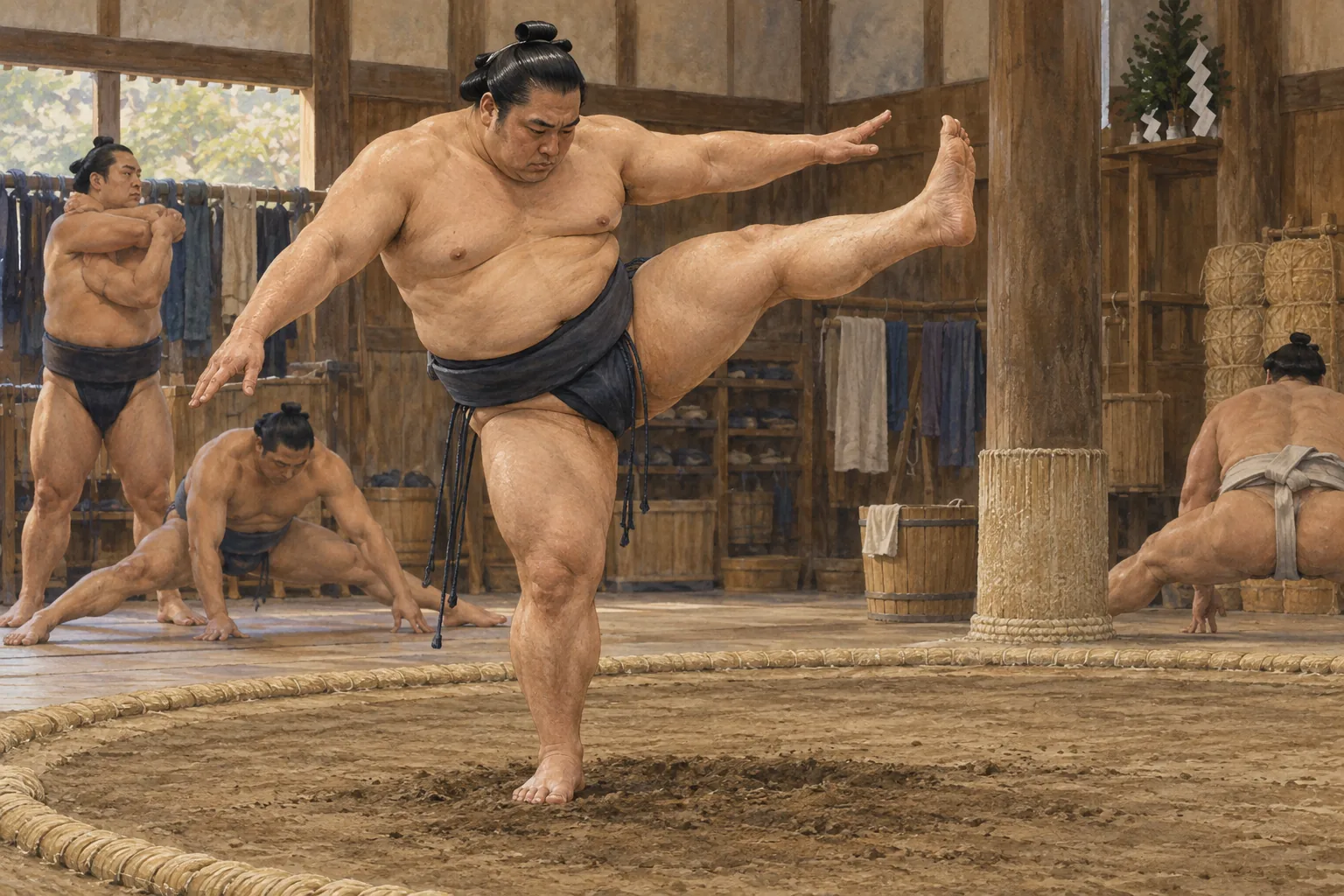
足を上げて踏み下ろす。準備運動ではなく、土を鎮める所作である。
一言で言うと
これだけ覚えれば最低限伝わる一文
Shiko is the sumo movement of raising one leg high and stamping it down.
四股とは、相撲で片足を高く上げ、地面を踏み下ろす動きのことです。
30秒で説明する
外国人に説明するときの標準サイズ
In shiko a wrestler stands wide, lifts one leg as high as the hip or higher, and brings it down with force. It is the core exercise of sumo training, done hundreds of times a day, and it is also performed formally before a bout. The traditional explanation is that the stamping drives out evil from the ground.
四股では、大きく足を開いて立ち、片足を腰の高さかそれ以上まで上げ、力をこめて踏み下ろします。相撲の稽古の中心で、一日に何百回も行います。取組の前には儀礼としても行われます。この踏みつけが地の邪気を祓う、というのが伝統的な説明です。
スピーチ・英作文
通訳案内士の二次口述・大学入試の自由英作文に
Shiko is the movement everyone recognizes from sumo: the wrestler stands with feet wide apart, raises one leg until it is level with the hip or higher, holds the balance, and stamps it down. Foreign visitors often take it for a warm-up, and it is much more than that.
It is the central exercise of sumo training, and a young wrestler may do several hundred a day; it builds the hips, the balance and the ability to hold a low position, which is what actually wins matches. It is also a rite. The stamping is traditionally said to press down evil spirits in the earth and settle the ground, which is why it is performed formally before bouts and at ceremonies.
The word appears in ordinary Japanese too: we say shiko wo fumu. And because the movement works the hip joints without any equipment, it has escaped sumo entirely and turned up in fitness books and rehabilitation for older people.
四股は、誰もが相撲で見たことのある動きです。足を大きく開いて立ち、片足を腰の高さかそれ以上まで上げ、釣り合いを保って、踏み下ろす。外国から来た人はよく準備運動だと思いますが、それどころではありません。相撲の稽古の中心で、若い力士は一日に何百回も踏みます。
腰、釣り合い、そして低い姿勢を保つ力を作る。それが実際に勝負を決めるものです。同時に儀礼でもあります。踏みつけることで地の邪気を押さえ、土を鎮めるというのが伝えられてきた説明で、だから取組の前や式典で正式に行われます。
この語はふだんの日本語にも出てきて、「四股を踏む」と言います。そして、道具なしで股関節を使う動きなので、相撲の外へ出ていきました。体操の本にも、高齢者の運動にも載っています。
こう聞かれたら
外国人から実際にされる質問と、その答え方。
Is it a warm-up or part of the ceremony?
準備運動ですか、それとも儀式の一部ですか。
Both, and the two are not separated. In training it is the main exercise; before a bout it is a rite that settles the ground. The same movement carries both meanings.
両方で、そこは分かれていません。稽古では中心の運動であり、取組の前では土を鎮める所作です。同じ動きが二つの意味を持っています。
Why do they throw salt as well?
どうして塩もまくのですか。
Salt purifies in Shinto practice, and the ring is treated as a sacred space. A top-division wrestler may use a handful each bout, and a single tournament gets through hundreds of kilograms.
神道で塩は清めるものであり、土俵は神聖な場として扱われるからです。幕内の力士は取組ごとにひとつかみ使い、一場所を通せば数百キロにもなります。
Can an ordinary person do it?
普通の人にもできますか。
A low version, yes, and it is recommended in Japan as exercise for the hips. Raising the leg to hip height while keeping the back straight is harder than it looks, which is the point.
低い形ならできますし、股関節の運動として勧められています。背筋を伸ばしたまま足を腰の高さまで上げるのは、見た目より難しい。そこが肝心です。
誤解されやすい
MYTHShiko is just a dramatic warm-up before the fight.
四股は取組の前の見せ場の準備運動だ、と思われがちです。
FACTIt is the core training exercise of sumo, done hundreds of times a day, and at the same time a rite understood to settle the ground and drive out evil.
相撲の稽古の中心となる運動で、一日に何百回も踏みます。同時に、土を鎮め邪気を祓うと理解されてきた所作でもあります。
そのまま使えるフレーズ
- That movement is called shiko.あの動きを四股といいます。
- It's the main exercise in sumo training.相撲の稽古の中心となる運動です。
- The stamping is said to drive evil from the ground.踏みつけは地の邪気を祓うと言われています。
- Wrestlers do hundreds of them a day.力士は一日に何百回も踏みます。
- It's also recommended as exercise for the hips.股関節の運動としても勧められています。
説明に使う語句
- to stamp, to stomp踏む
- hip joint股関節
- to purify清める
- sumo ring土俵
- training, practice稽古
動画で見る
YouTube より豆知識
四股は「醜(しこ)」の字を当てることもあり、力強いもの、たくましいものを表す古い語とされる。踏むことで大地の邪気を鎮めるという理解は古代の所作に連なり、地鎮の意味を持つ。力士の稽古では、四股、すり足、てっぽうが基本の三つとされる。幕内の取組では、塩まきと四股を繰り返してから立ち合いに入るが、制限時間は幕内で4分と決まっており、その間の所作である。近年は股関節の可動域を広げる運動として、相撲経験のない人向けの指導書も出ている。
