先日はどうもせんじつはどうも
senjitsu wa domo
thanking someone again next time
その場で礼を言い、次に会ったときにもう一度言う。
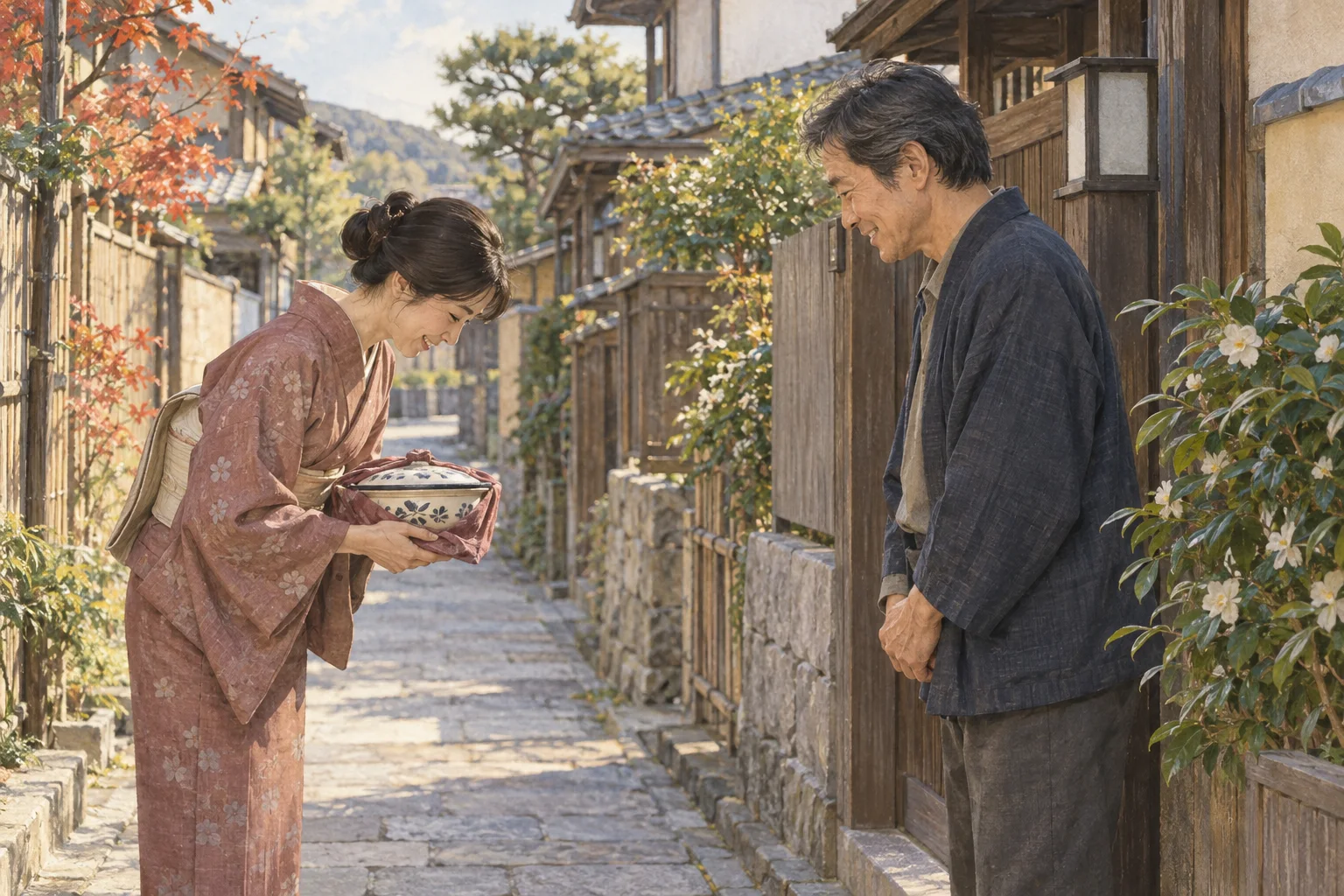
一言で言うと
これだけ覚えれば最低限伝わる一文
Senjitsu wa domo, or thanks for the other day, is the second thank-you Japanese people give when they next meet.
先日はどうもとは、その場の礼に加えて、次に会ったときにもう一度伝える、二度目の礼のことです。
30秒で説明する
外国人に説明するときの標準サイズ
Japanese politeness includes a second thank-you. When you meet someone again after they treated you, helped you or hosted you, you open with a reference to that occasion before anything else. Skipping it does not cause offense exactly, but including it marks you as someone who pays attention.
日本の礼儀には、二度目のお礼があります。ごちそうになったり、助けてもらったり、招かれたりした相手と次に会うときは、まずその折のことに触れてから話を始めます。省いても腹を立てられはしませんが、言えるかどうかで、気の回る人かどうかが分かります。
スピーチ・英作文
通訳案内士の二次口述・大学入試の自由英作文に
Here is a habit that is easy to copy and that Japanese people notice immediately. When someone has done something for you, you thank them at the time, and then you thank them again the next time you meet, even weeks later. The standard opening is senjitsu wa domo arigato gozaimashita, meaning thank you for the other day, and it comes before the business of the conversation.
In an office, someone who bought you lunch on Friday should hear about it on Monday morning. After a dinner party, the guest mentions it at the next meeting. The reason it matters is that it shows the favor was registered rather than absorbed and forgotten.
It also works in the other direction. If someone opens with thank you for the other day and you cannot recall the occasion, it is safe to answer with kochira koso, meaning the thanks are mine, which returns the gesture without committing you to a detail you have forgotten.
まねしやすく、しかも日本人がすぐ気づく習慣があります。誰かに何かをしてもらったら、その場で礼を言い、次に会ったときにもう一度礼を言う。何週間か後でもそうします。定番の切り出しは「先日はどうもありがとうございました」で、これを本題の前に置きます。
職場なら、金曜に昼をごちそうしてくれた人には、月曜の朝にその話が届くべきです。食事に招かれたなら、客は次に会ったときにそれに触れます。これが大事なのは、好意が受け取られて消えたのではなく、記録されたことを示すからです。
逆向きにも働きます。相手が先日はどうも、と切り出してきて、その折のことが思い出せないときは「こちらこそ」と返せば安全です。忘れてしまった中身に踏み込まずに、同じ気持ちを返すことができます。
こう聞かれたら
外国人から実際にされる質問と、その答え方。
How long does this stay relevant?
いつまでこの言い方を使えますか。
Roughly until you have met once. If you see the person the next day, you say it then; if months pass, mentioning it at the next meeting is still natural, especially after something substantial like a dinner or a favor at work.
だいたい一度会うまでです。翌日に会うならそのときに言います。何か月か空いても、次に会ったときに触れるのは自然で、食事に招かれたことや、仕事で世話になったことのように大きなものならなおさらです。
What do I say if I don't remember what they are thanking me for?
何のお礼を言われているかわからないときは、どう返せばよいですか。
Kochira koso, meaning the thanks are mine, is the safe reply. It matches the register, returns the courtesy and does not require you to name the occasion.
こちらこそ、が安全な返しです。同じ調子に合い、礼を返し、何の折のことかを言わずにすみます。
Is a message enough, or does it have to be in person?
メッセージでもよいのですか、直接会って言うべきですか。
A message the same evening is good practice, and the in-person mention next time is still expected. The two are not alternatives; the second one is the part that registers.
その晩のうちに一通送るのはよい習慣ですが、次に会ったときに口に出すことも求められます。二つは代わりになるものではなく、印象に残るのは二度目のほうです。
そのまま使えるフレーズ
- Thank you for the other day.先日はどうもありがとうございました。
- Thank you again for dinner last week.先週はごちそうさまでした。
- The thanks are mine.こちらこそ。
- I really enjoyed it.とても楽しかったです。
- Thank you for your help the other day.先日は助けていただきありがとうございました。
説明に使う語句
- the other day先日
- to thank again改めて礼を言う
- the thanks are mineこちらこそ
- a favor厚意
- to be in someone's debtお世話になる
動画で見る
YouTube より豆知識
礼を二度言う習慣は、贈りものへの返礼や、世話になったことへの挨拶と地続きです。手紙やメールでは「先日は」「その節は」といった書き出しが定型になっており、時間が空いた相手には「その節はお世話になりました」を使います。取引先とのやりとりでも、まず前回への言及から入るのがふつうです。どれだけ前のことまでさかのぼるかに決まりはありませんが、相手と一度会えば、その話題はいったん閉じるのが自然とされています。
