押忍おす
osu
the all-purpose word shouted in martial arts dojos
返事にも挨拶にも謝罪にも使う。ただし、どの道場でも通じるわけではない。
一言で言うと
これだけ覚えれば最低限伝わる一文
Osu is a shout used in some martial arts dojos for yes, hello, thank you and sorry.
押忍は、一部の道場で「はい」「こんにちは」「ありがとう」「すみません」のすべてに使われる掛け声です。
30秒で説明する
外国人に説明するときの標準サイズ
Osu is a short, forceful word used in karate and some other martial arts as a reply, a greeting and an acknowledgement. It is not standard Japanese and is not used outside that setting, except jokingly among men. Some arts, notably aikido and most kendo dojos, do not use it at all and may find it out of place.
押忍は、空手など一部の武道で、返事にも挨拶にも受け答えにも使われる短く力強い語です。標準的な日本語ではなく、その場の外では、男どうしのふざけた言い方を除いて使いません。合気道や多くの剣道の道場では使わず、場違いに受け取られることもあります。
スピーチ・英作文
通訳案内士の二次口述・大学入試の自由英作文に
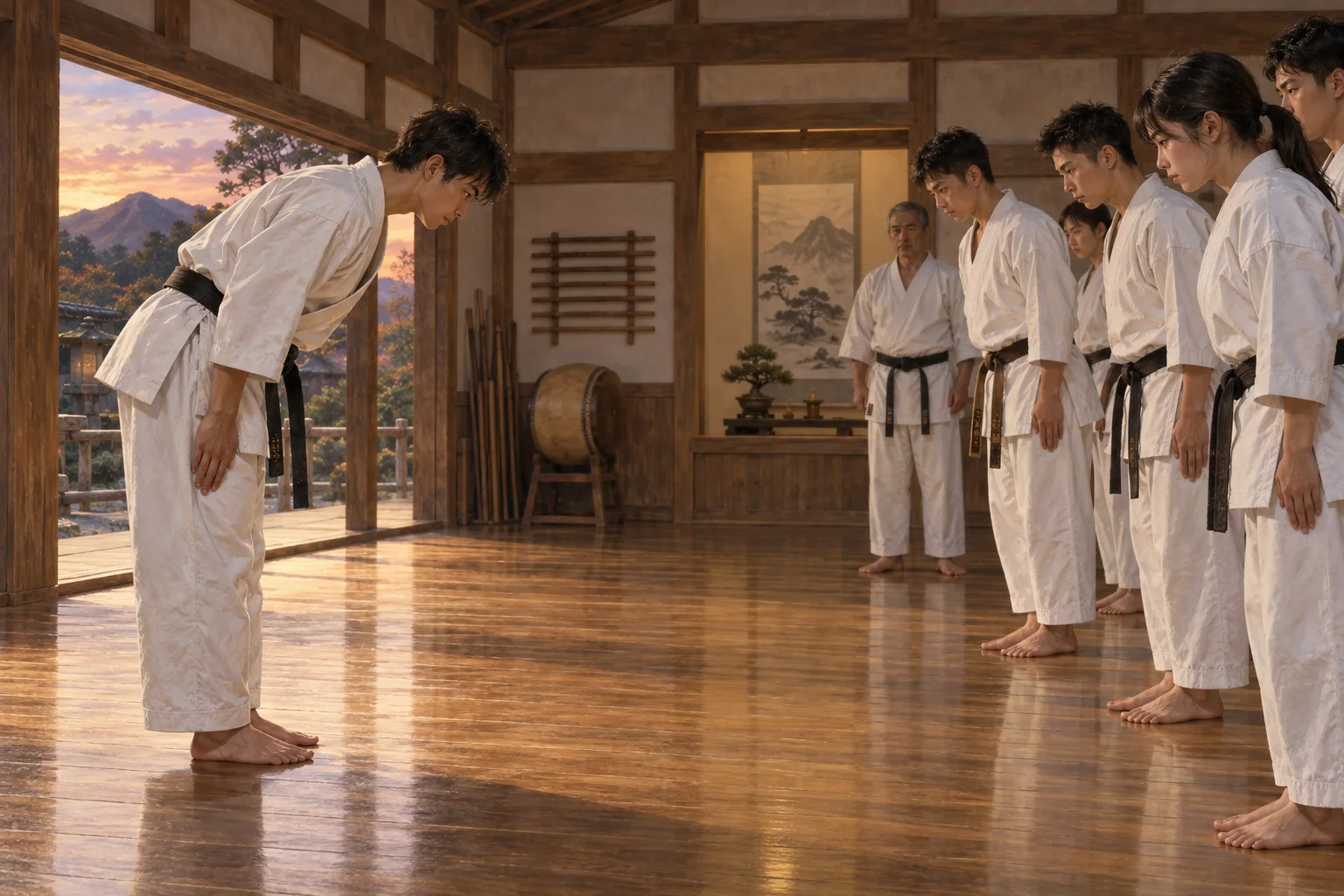
If you train in karate you will hear osu constantly. It works as yes, as hello, as understood, as thank you, and as an apology, delivered at volume with a bow. Where it comes from is not settled.
The most repeated explanation writes it with characters meaning to push and to endure, and reads it as a statement about pushing yourself and enduring, which may well be a later invention. Another traces it to a compressed form of ohayo gozaimasu in prewar naval academies. What matters practically is that it is not general Japanese.
Saying it to a shop assistant or a teacher would be strange. And it is not universal within martial arts: karate dojos use it heavily, some judo clubs do too, aikido generally does not, and in kendo it would be out of place. My advice to a visitor is to listen for a few minutes and copy what the room does, rather than arriving with it.
空手を習えば、押忍は絶えず耳にします。「はい」にも「こんにちは」にも「分かりました」にも「ありがとうございます」にも「すみません」にもなり、礼とともに大きな声で言います。由来ははっきりしません。
いちばん繰り返される説明は「押す」「忍ぶ」の字を当て、自らを押し、耐えることだと読むもので、これは後から付けられた解釈かもしれません。別の説は、戦前の海軍の学校で「おはようございます」が縮まったものだとします。実用の上で大事なのは、これが一般の日本語ではないことです。
店員や先生に言えば奇妙に響きます。そして武道の中でも共通ではありません。空手の道場では盛んに使い、柔道でも使うところがあり、合気道ではふつう使わず、剣道では場違いです。旅行者への助言は、持ち込まずに、数分聞いてその場に合わせること。
こう聞かれたら
外国人から実際にされる質問と、その答え方。
Can I use it outside the dojo?
道場の外で使ってもいいですか。
Better not. Among male friends with a sports background it passes as a joke, but to anyone else it sounds rough or odd. It is not a general greeting.
やめたほうがいいです。運動部あがりの男の友人どうしなら冗談として通りますが、ほかの人には荒っぽく、あるいは奇妙に聞こえます。一般の挨拶ではありません。
Do all martial arts use it?
どの武道でも使うのですか。
No. Karate uses it most, some judo clubs use it, aikido rarely, and in kendo it would usually sound out of place. Each dojo has its own habit, so follow the room.
違います。空手がいちばん多く、柔道でも一部で使い、合気道ではまれ、剣道ではたいてい場違いに響きます。道場ごとの習慣なので、その場に合わせてください。
Is there a polite alternative?
丁寧な言い方はありますか。
Yes: hai for yes, onegai shimasu before training with a partner, and arigato gozaimashita at the end. Those are understood everywhere and never sound wrong.
あります。返事は「はい」、相手と組む前は「お願いします」、終わりは「ありがとうございました」。どこでも通じ、間違って響くことがありません。
誤解されやすい
MYTHOsu is a traditional Japanese greeting used across the country.
押忍は日本中で使われる伝統的な挨拶だ、と思われがちです。
FACTIt belongs to certain martial arts dojos and sports clubs, is modern in origin, and would sound strange in ordinary conversation.
一部の武道の道場や運動部の言葉で、起こりも近代のものです。ふだんの会話で使えば奇妙に響きます。
そのまま使えるフレーズ
- Osu works as yes, hello and thank you in some dojos.道場によっては、押忍が返事にも挨拶にもなります。
- It isn't standard Japanese.標準的な日本語ではありません。
- Karate uses it; kendo doesn't.空手では使い、剣道では使いません。
- Listen first and copy the room.まず聞いて、その場に合わせてください。
- Onegai shimasu is safe everywhere.「お願いします」ならどこでも通じます。
説明に使う語句
- shout, call掛け声
- training hall道場
- to endure忍ぶ・耐える
- sports club (school)運動部
- to bow礼をする
動画で見る
YouTube より豆知識
押忍の由来には諸説ある。「押して忍ぶ」の意とする解釈が広く知られるが、これは字を当てたあとの説明とみられる。戦前の海軍機関学校で「おはようございます」が「おはようっす」「おす」と縮まったとする説もある。空手の一部の流派では返事と挨拶のすべてに用い、道場に入るとき出るときにも発する。一方、合気道ではほとんど使われず、剣道では「はい」「お願いします」を用いるのがふつうである。運動部の上下関係の中で広まった語でもあり、体育会系の言葉として受け取られることがある。
