薙刀なぎなた
naginata
the long-handled blade and its modern sport
武器としては男性も使った。現代の競技はほとんどが女性。
一言で言うと
これだけ覚えれば最低限伝わる一文
Naginata is a curved blade on a long shaft, and today a martial art practiced mainly by women.
薙刀とは長い柄に反った刃をつけた武器で、現代では主に女性が行う武道です。
30秒で説明する
外国人に説明するときの標準サイズ
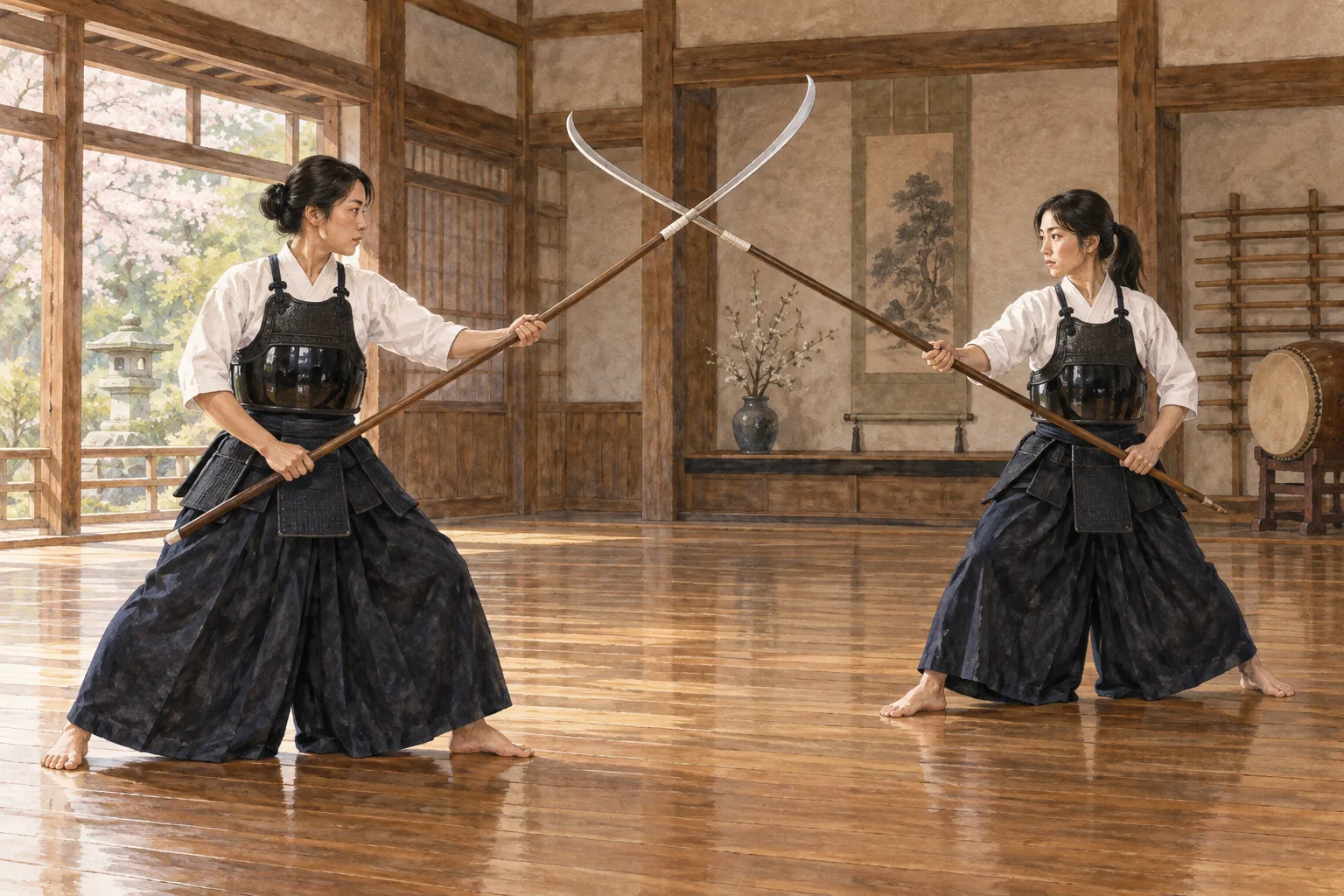
A naginata is a curved blade mounted on a shaft roughly two meters long. It was a battlefield weapon used by warriors of both sexes, then became associated with the training of women of warrior families. The modern martial art uses a wooden or bamboo version with armor, and its practitioners today are overwhelmingly female.
薙刀とは、およそ二メートルの柄に反った刃をつけた武器です。戦場では男女を問わず武士が用い、のちに武家の女性の稽古と結びつけられるようになりました。現代の武道では木製や竹製のものと防具を使い、稽古する人の大多数は女性です。
スピーチ・英作文
通訳案内士の二次口述・大学入試の自由英作文に
A naginata is a curved blade on a shaft about two meters long, and it has an unusual history. On the battlefield it was a serious weapon used by warriors generally, valued because reach beats a sword, and there are well-known accounts of women of warrior families fighting with it.
As firearms and massed formations changed warfare, it fell out of battlefield use and became associated instead with the training of daughters in warrior households, partly as discipline and partly as a weapon suited to defending a house. That association is why the modern martial art is practiced mainly by women, including as a school activity.
Competition uses a bamboo or wooden weapon with padded armor similar to kendo, and points are scored on specified targets including the shin, which kendo does not have. Matches are fast, and the reach advantage over a sword is obvious the moment you see the two compared.
薙刀は、およそ二メートルの柄に反った刃をつけたもので、変わった歴史を持っています。戦場では武士が広く用いた本格的な武器で、間合いの長さが刀に勝るために重んじられました。武家の女性がこれで戦ったという記述もよく知られています。
火器と集団戦が戦のかたちを変えると、薙刀は戦場から退き、代わりに武家の娘の稽古と結びつくようになります。心身を鍛えるためであり、また屋敷を守るのに向いた武器でもあったためです。現代の武道を主に女性が行っているのは、この結びつきによります。
学校の授業として行われることもあります。試合では竹や木の薙刀と、剣道に似た防具を使い、決められた部位を打って得点します。その中には剣道にはない脛が含まれます。試合は速く、刀と並べて見れば、間合いの利点はひと目で分かります。
こう聞かれたら
外国人から実際にされる質問と、その答え方。
Was it only ever a women's weapon?
昔から女性だけの武器だったのですか。
No. It was a general battlefield weapon for centuries, used by monks and foot soldiers as well as mounted warriors. The association with women came later, when it left the battlefield and entered household education.
違います。何世紀にもわたって戦場で広く使われた武器で、僧兵も徒歩の兵も騎馬の武士も用いました。女性との結びつきは、戦場を離れて家の教育に入ってから後のことです。
How does it compare with kendo?
剣道とはどう違いますか。
The weapon is longer, so distance management is different, and the shin is a valid target, which changes stance and footwork. The armor and scoring logic are similar enough that kendo practitioners can follow a match easily.
武器が長いので間合いの取り方が違い、脛が有効な打突部位であることが構えと足さばきを変えます。防具と採点の考え方は似ているので、剣道をする人なら試合の流れは容易に追えます。
誤解されやすい
MYTHNaginata has always been a women's art.
薙刀は昔から女性の武道だったと思われがちです。
FACTIt was a mainstream battlefield weapon used by men for centuries. Its identification with women dates from after it stopped being used in war.
実際には何世紀も男性が使った主要な戦場の武器でした。女性との結びつきは、戦に使われなくなってからのものです。
そのまま使えるフレーズ
- The reach is longer than a sword.刀より間合いが長いです。
- The shin is a valid target.脛も打突の部位です。
- It was a battlefield weapon for centuries.何世紀も戦場の武器でした。
- Most practitioners today are women.今、稽古する人の多くは女性です。
説明に使う語句
- shaft / pole柄
- reach間合い
- protective armor防具
- form / kata形
動画で見る
YouTube より豆知識
薙刀は南北朝から室町にかけて戦場で広く使われ、僧兵の武器としても知られました。長柄の槍が主流になるにつれて戦場から退き、江戸時代には武家の女子の武芸として位置づけられます。現代の競技はなぎなたとひらがなで表記されることが多く、全日本なぎなた連盟が統括しています。演技競技と試合競技があり、中学や高校の授業に取り入れている学校もあります。稽古では木製の薙刀を使い、試合では先に竹をつけた「しない薙刀」を用います。
