苔こけ
koke
moss
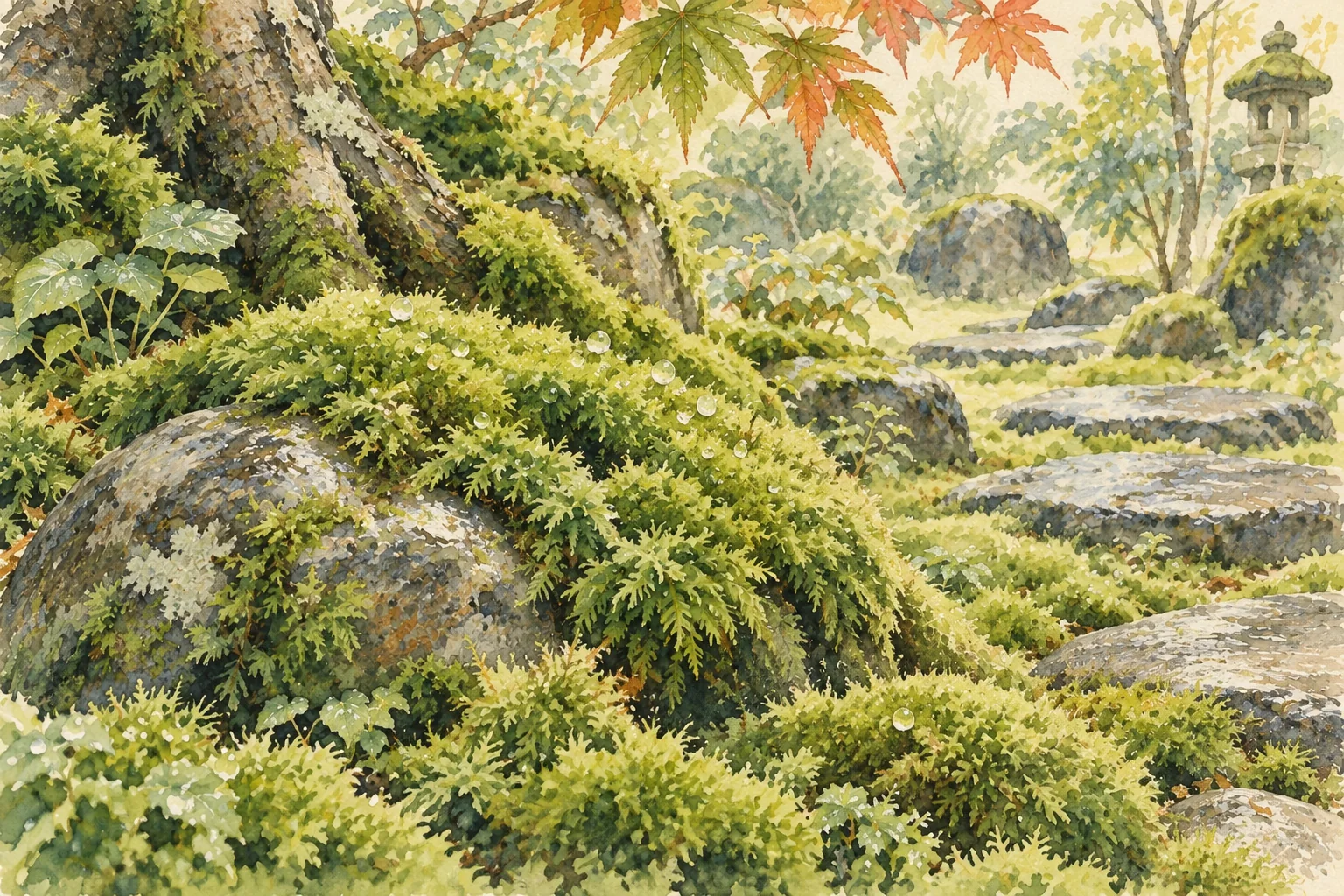
雑草ではなく、育てるもの。国歌にも「苔のむすまで」と出てくる。
一言で言うと
これだけ覚えれば最低限伝わる一文
Koke, or moss, is something cultivated rather than removed in Japan, and it stands for time passing.
苔とは、日本では取り除くのではなく育てるもので、時の積み重なりを表す植物です。
30秒で説明する
外国人に説明するときの標準サイズ
In many countries moss on a stone is neglect. In Japan it is the point. Temple gardens cultivate it deliberately, gardeners weed around it rather than through it, and the national anthem uses moss growing on rock as an image of very long time. The humid climate makes Japan unusually rich in moss species.
多くの国では石の苔は手入れの不足を意味します。日本ではそれこそが眼目です。寺の庭は苔をわざわざ育て、庭師は苔を抜かずにその周りの草を取ります。国歌は岩に苔が生すことを、きわめて長い時間の姿として使っています。湿った気候のため、日本は苔の種類が非常に豊かです。
スピーチ・英作文
通訳案内士の二次口述・大学入試の自由英作文に
Moss is one of the clearest places where Japanese and Western garden sense diverge. In much of Europe and North America, moss on a path or a wall is a sign of neglect and is scrubbed off. In Japan it is cultivated.
Temple gardens are planted with it, gardeners weed carefully around it by hand, and a garden's age is read partly from how thoroughly the stone has been colonized. The national anthem has a line about small stones growing into a boulder covered in moss, using it as an image of immense stretches of time.
The climate helps: Japan is humid and forested, and the number of moss species here is high. There is a practical warning attached. Moss gardens are extremely easy to damage, a single footstep leaves a mark that takes months to recover, and the famous moss temple in Kyoto restricts visitor numbers and requires advance application for exactly this reason.
苔は、日本と西洋の庭の感覚が最もはっきり分かれる場所のひとつです。ヨーロッパや北米の多くでは、小道や壁の苔は手入れの不足のしるしであり、こすり落とされます。日本ではそれを育てます。
寺の庭には苔が植えられ、庭師は手で丁寧にその周りの草を取り、庭の古さは石がどれだけ苔に覆われたかからも読み取られます。国歌には、小さな石が巌となって苔が生すという一節があり、途方もない時間の長さの像として使われています。気候も助けています。
日本は湿って森が多く、苔の種類の数も多くあります。実際の注意もあります。苔の庭はきわめて傷みやすく、一歩の足跡が戻るのに何か月もかかります。京都の名高い苔の寺が拝観の人数を制限し、事前の申し込みを求めているのは、まさにそのためです。
こう聞かれたら
外国人から実際にされる質問と、その答え方。
Why is moss valued rather than removed?
どうして苔を取り除かずに大事にするのですか。
Because it shows that time has passed and that the place has been left undisturbed, which is exactly what a Japanese garden wants to convey. It also gives an even, quiet green surface that changes with the weather rather than the season.
時間が経ち、その場所が乱されずにきたことを示すからで、日本の庭が伝えたいのはまさにそれです。季節ではなく天気によって表情が変わる、均質で静かな緑の面が得られることもあります。
Can I walk on it?
その上を歩いてもいいですか。
No. Stepping on moss crushes it and the scar stays for months. Gardens provide stepping stones and paths for this reason, and staff may stop you, politely, if you step off them.
だめです。踏むと苔は潰れ、その跡は何か月も残ります。庭に飛び石や園路があるのはそのためで、外れれば係員にていねいに止められることもあります。
そのまま使えるフレーズ
- The moss is planted on purpose.苔はわざと植えています。
- Please stay on the stepping stones.飛び石の上を歩いてください。
- A footprint takes months to recover.足跡が戻るのに何か月もかかります。
- It shows how long the garden has stood.庭がどれだけ長く在るかを示しています。
説明に使う語句
- moss苔
- stepping stone飛び石
- to weed草を取る
- damp / humid湿った
動画で見る
YouTube より豆知識
国歌「君が代」の「さざれ石の巌となりて苔のむすまで」は、小さな石が大きな岩になり、そこに苔が生えるまでという、長い時間の表現です。京都の西芳寺は苔の庭で知られ、参拝は事前の申し込みが必要です。苔を育てるには湿度と適度な日陰が要り、水のやり方も難しいため、庭師の腕が問われます。近年は小さな容器で苔を育てる楽しみ方も広まりました。苔は本当の意味での根を持たず(体を支える仮根はある)、体の表面から水を吸う植物です。
