写真を撮る前のひと言しゃしんをとるまえのひとこと
shashin o toru mae no hitokoto
when you need permission
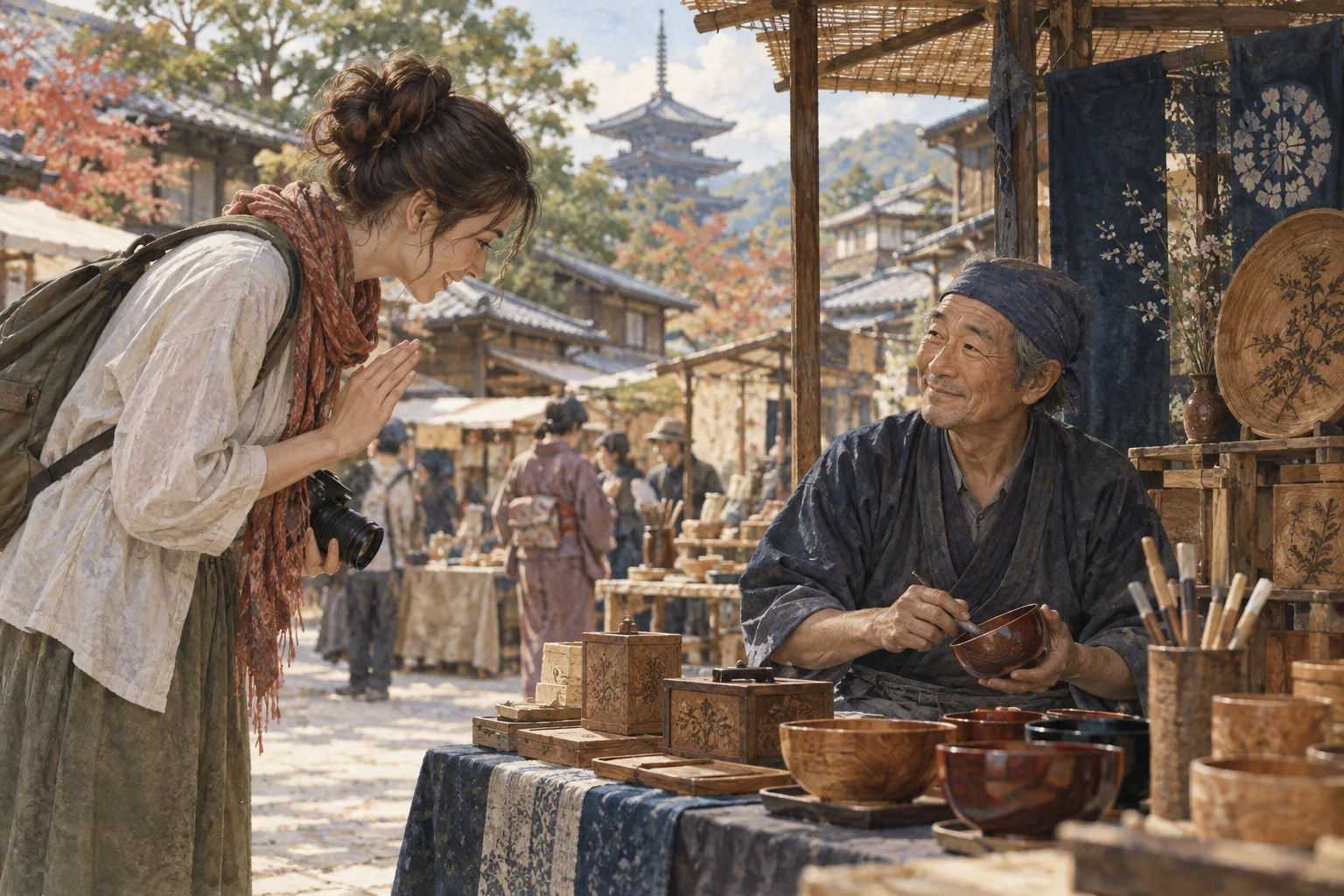
「撮影禁止」の札がなくても、断ってから撮る場面がある。
一言で言うと
これだけ覚えれば最低限伝わる一文
Shashin o toru mae no hitokoto, or asking first, is expected before photographing people, shop interiors or many sacred spaces.
写真を撮る前のひと言とは、人や店の中、寺社の多くの場所を撮る前に、ひと声かけて断ることです。
30秒で説明する
外国人に説明するときの標準サイズ
Photography is restricted more than visitors expect. Ask before photographing individuals, staff, shop interiors, food in some restaurants, and inside temple and shrine halls. Signs exist but are not always in English, and the absence of a sign does not always mean permission. One short question solves almost every case.
撮影は訪れる人が思うより制限されています。個人、店員、店の中、店によっては料理、そして寺社の堂の中を撮る前には断ってください。掲示はありますが英語とは限らず、掲示がないことが許可を意味するとも限りません。短くひと言尋ねれば、ほとんどの場面は解決します。
スピーチ・英作文
通訳案内士の二次口述・大学入試の自由英作文に
Photography rules in Japan are stricter than most visitors assume, and the enforcement is social rather than legal in many cases. Ask before you photograph a person, including staff, a chef at a counter, a shrine maiden, or a group of schoolchildren.
Ask in a shop before photographing the interior or the products, because many small shops prohibit it and will not have a sign in English. At temples and shrines, the grounds are usually fine and the interior of a hall usually is not; look for a marked line beyond which cameras are not allowed.
Some restaurants ask you not to photograph the food, particularly sushi counters where the chef is working to a rhythm. The useful sentence is short, and holding up your phone with a questioning look and saying it will be understood anywhere. If someone says no, they mean it, and pressing is the thing that damages the reputation of visitors generally.
日本の撮影の決まりは、訪れる人が思うより厳しく、しかも多くの場面で、法ではなく場の空気によって守られています。人を撮る前には断ってください。店員も、カウンターの中の料理人も、巫女も、遠足の小学生も同じです。
店では、店内や商品を撮る前に尋ねてください。小さな店には撮影を断るところが多く、英語の掲示があるとは限りません。寺社では、境内はたいてい問題なく、堂の中はたいてい許されていません。カメラが使えなくなる線が示されているので、それを探してください。
料理を撮らないでほしいという飲食店もあり、とくに料理人が調子を保って握っている鮨のカウンターがそうです。役に立つ一言は短く、携帯電話を掲げて尋ねる表情でそれを言えば、どこでも通じます。断られたら、それは本当に断りです。食い下がることこそが、訪問者全体の評判を損ねます。
こう聞かれたら
外国人から実際にされる質問と、その答え方。
What do I say?
何と言えばいいですか。
Shashin ii desu ka, meaning is a photo all right, said while holding up the camera, works everywhere. A nod means yes, and crossing the forearms in an X means no, which is the standard Japanese way of signaling that something is not permitted.
カメラを掲げながら「写真、いいですか」と言えば、どこでも通じます。うなずけば可、腕で大きく×を作れば不可で、これは日本で禁止を示す標準的な合図です。
Can I photograph inside a temple?
寺の中で写真を撮ってもいいですか。
The grounds and the exterior, usually yes. Inside a hall, usually not, especially where the principal image is enshrined. There will be a sign, often only a symbol, and staff will stop you politely if you go past it.
境内と外観はたいてい問題ありません。堂の中はたいてい不可で、とくに本尊が安置されているところはそうです。掲示があり、絵だけのことも多くあります。線から先へ入ると、係の人がていねいに止めます。
Why are shops so strict about it?
どうして店はそこに厳しいのですか。
Reasons include copying of displays and products by competitors, other customers' privacy, and simply not wanting the shop circulated online. It is not aimed at foreigners, and Japanese customers are asked the same thing.
陳列や商品が同業に真似されること、ほかの客の写り込み、そして単に店の様子がネットに出回ることを望まないことなどが理由です。外国の人に向けられたものではなく、日本人の客も同じように言われます。
そのまま使えるフレーズ
- Is it all right to take a photo?写真を撮ってもいいですか。
- May I photograph you?お写真をお願いできますか。
- No photography past this point.ここから先は撮影禁止です。
- An X made with the arms means no.腕で×を作るのは不可という意味です。
説明に使う語句
- photography prohibited撮影禁止
- permission許可
- to point a camera atカメラを向ける
- signboard掲示
動画で見る
YouTube より豆知識
撮影を断る掲示には、カメラに斜線を引いた絵記号が使われることが多く、文字がないこともあります。寺社では本堂の入口に線が引かれ、そこから先が撮影禁止とされている例がよくあります。祭りでは、担ぎ手や参加者に近づきすぎて撮る行為が問題になり、撮影の位置を定めている場所もあります。人の顔が写り込む写真を公開する場合、肖像権への配慮が求められます。飲食店では、料理の撮影を認めつつフラッシュを断る例が多くあります。
Read this page in English — “shashin o toru mae no hitokoto”
