

 フランダースの犬 全7部の 3番目
 約16分
 13:36
 原文そのまま
 全訳つき
 ウィーダ(フランダースの犬)の作品をもっと読む(1作品)→
 人の朗読
 お道具箱
 読書ラウンジ
There was only one thing which caused Patrasche any uneasiness in his life, and it was this. Antwerp, as all the world knows, is full at every turn of old piles of stones, dark and ancient and majestic, standing in crooked courts, jammed against gateways and taverns, rising by the water's edge, with bells ringing above them in the air, and ever and again out of their arched doors a swell of music pealing. There they remain, the grand old sanctuaries of the past, shut in amidst the squalor, the hurry, the crowds, the unloveliness, and the commerce of the modern world, and all day long the clouds drift and the birds circle and the winds sigh around them, and beneath the earth at their feet there sleeps—RUBENS.
パトラッシュの暮らしに、不安の種はたった一つしかありませんでした。それはこういうことでした。誰もが知っているとおり、アントワープには、どの角を曲がっても、古い石造りの大きな建物があります。暗く、古めかしく、堂々とした建物で、曲がりくねった路地裏に立っていたり、門や居酒屋の間に押し込まれていたり、水際にそびえていたりします。その上の空では鐘が鳴り響き、アーチ形の扉からは、時折、高まる音楽があふれ出します。過去から残された壮大な古い聖堂は、今の世の中の汚さ、慌ただしさ、人込み、醜さ、商売に取り囲まれたまま、そこに立ち続けています。一日中、その周りを雲が流れ、鳥が輪を描き、風がため息をつきます。そしてその足元の地面の下に眠っているのが、ルーベンスなのです。
And the greatness of the mighty Master still rests upon Antwerp, and wherever we turn in its narrow streets his glory lies therein, so that all mean things are thereby transfigured; and as we pace slowly through the winding ways, and by the edge of the stagnant water, and through the noisome courts, his spirit abides with us, and the heroic beauty of his visions is about us, and the stones that once felt his footsteps and bore his shadow seem to arise and speak of him with living voices. For the city which is the tomb of Rubens still lives to us through him, and him alone.
この大巨匠の偉大さは、今もアントワープの上にとどまっています。狭い通りのどこへ足を向けても、そこには巨匠の栄光があり、そのおかげで、つまらないものもみな姿を変えて輝きます。曲がりくねった道を、よどんだ水のほとりを、嫌な臭いのする路地裏をゆっくり歩いていくと、巨匠の魂が私たちと共にあり、巨匠が思い描いた気高い美が私たちを包みます。かつてその足に踏まれ、その影を映した石が、立ち上がって、生きた声で巨匠のことを語り出すように思えるのです。ルーベンスの墓であるこの町は、ルーベンスによって、ただルーベンス一人によって、今も私たちにとって生きているのですから。
It is so quiet there by that great white sepulchre—so quiet, save only when the organ peals and the choir cries aloud the Salve Regina or the Kyrie Eleison. Sure no artist ever had a greater gravestone than that pure marble sanctuary gives to him in the heart of his birthplace in the chancel of St. Jacques.
あの大きな白い墓のそばは、とても静かです。静けさが破られるのは、オルガンが鳴り響き、聖歌隊がサルヴェ・レジナやキリエ・エレイソンを高らかに歌うときだけです。生まれ故郷の町の真ん中、聖ヤコブ教会の内陣にある、あの汚れのない大理石の聖堂ほど立派な墓石を持った画家は、きっとほかに一人もいないでしょう。
Without Rubens, what were Antwerp? A dirty, dusky, bustling mart, which no man would ever care to look upon save the traders who do business on its wharves. With Rubens, to the whole world of men it is a sacred name, a sacred soil, a Bethlehem where a god of Art saw light, a Golgotha where a god of Art lies dead.
ルーベンスがいなかったら、アントワープは何だったでしょう。薄汚れた、薄暗い、ごたごたした市場の町で、波止場で商売をする商人のほかには、誰も見たいと思わなかったでしょう。ルーベンスがいるからこそ、アントワープは世界中の人にとって神聖な名前であり、神聖な土地なのです。芸術の神が生まれて光を見たベツレヘムであり、芸術の神が死んで横たわるゴルゴタなのです。
O nations! closely should you treasure your great men, for by them alone will the future know of you. Flanders in her generations has been wise. In his life she glorified this greatest of her sons, and in his death she magnifies his name. But her wisdom is very rare.
国々の民よ、偉大な人物を大切に守りなさい。未来の人々があなたがたのことを知るのは、ただその人たちを通してだけなのですから。フランダースは代々、賢明でした。この国が生んだ最も偉大な息子を、生きている間はたたえ、亡くなった後もその名を高めています。けれども、これほどの賢明さはめったにあるものではありません。
Now, the trouble of Patrasche was this. Into these great, sad piles of stones, that reared their melancholy majesty above the crowded roofs, the child Nello would many and many a time enter, and disappear through their dark arched portals, whilst Patrasche, left without upon the pavement, would wearily and vainly ponder on what could be the charm which thus allured from him his inseparable and beloved companion. Once or twice he did essay to see for himself, clattering up the steps with his milk-cart behind him; but thereon he had been always sent back again summarily by a tall custodian in black clothes and silver chains of office; and fearful of bringing his little master into trouble, he desisted, and remained couched patiently before the churches until such time as the boy reappeared. It was not the fact of his going into them which disturbed Patrasche: he knew that people went to church: all the village went to the small, tumbledown, gray pile opposite the red windmill.
さて、パトラッシュの悩みというのはこうでした。込み合った屋根の上に物悲しい威厳をたたえてそびえる、こうした大きな悲しげな石の建物の中へ、ネロは何度も何度も入っていき、暗いアーチ形の入り口の奥に姿を消すのでした。外の敷石の上に残されたパトラッシュは、決して離れない大好きな仲間を自分から誘い出してしまう魅力とはいったい何なのかと、うんざりしながら考えましたが、いくら考えても分かりませんでした。一度か二度、自分の目で確かめようと、牛乳の荷車を後ろに引いたまま、がたがたと階段を上ってみたこともありました。けれどもそのたびに、黒い服を着て役目を表す銀の鎖をかけた背の高い番人に、あっさり追い返されました。小さな主人に迷惑がかかるのを恐れて、パトラッシュは諦め、ネロがまた姿を見せるまで、教会の前に辛抱強くうずくまって待つことにしました。パトラッシュの心を乱したのは、ネロが教会に入ること自体ではありませんでした。人間が教会へ行くことは知っていました。村中の人が、赤い風車の向かいにある、小さな、崩れかけた灰色の建物へ通っていたからです。
What troubled him was that little Nello always looked strangely when he came out, always very flushed or very pale; and whenever he returned home after such visitations would sit silent and dreaming, not caring to play, but gazing out at the evening skies beyond the line of the canal, very subdued and almost sad.
気がかりなのは、出てきたときの小さなネロの様子が、いつもおかしいことでした。決まって顔が真っ赤になっているか、真っ青になっていたのです。そして、そんなふうに教会に寄った後で家に帰ると、黙って座ったまま夢を見ているようで、遊ぼうともせず、運河の筋の向こうの夕空をじっと見つめていました。すっかり沈み込んで、悲しそうにさえ見えました。
What was it? wondered Patrasche. He thought it could not be good or natural for the little lad to be so grave, and in his dumb fashion he tried all he could to keep Nello by him in the sunny fields or in the busy market-place. But to the churches Nello would go: most often of all would he go to the great cathedral; and Patrasche, left without on the stones by the iron fragments of Quentin Matsys's gate, would stretch himself and yawn and sigh, and even howl now and then, all in vain, until the doors closed and the child perforce came forth again, and winding his arms about the dog's neck would kiss him on his broad, tawney-colored forehead, and murmur always the same words: "If I could only see them, Patrasche!—if I could only see them!"
あれは何なのだろう、とパトラッシュは不思議に思いました。小さな男の子があんなに深刻な顔をしているのは、よいことでも自然なことでもないはずだと思い、口のきけないなりにできる限りのことをして、ネロを日の当たる野原やにぎやかな市場で自分のそばに引き止めようとしました。けれどもネロは、どうしても教会へ行くのでした。一番よく行ったのは大聖堂でした。パトラッシュは、クエンティン・マサイスの門の、残った鉄細工のそばで、外の敷石の上に残されました。伸びをしたり、あくびをしたり、ため息をついたり、時には遠ぼえまでしてみましたが、何をしても無駄でした。やがて扉が閉まる時間になると、ネロは仕方なく出てきました。そしてパトラッシュの首に両腕を回して、広い黄褐色の額にキスをし、いつも同じ言葉をつぶやくのでした。「あれが見られさえしたらなあ、パトラッシュ。あれが見られさえしたら」
What were they? pondered Patrasche, looking up with large, wistful, sympathetic eyes. One day, when the custodian was out of the way and the doors left ajar, he got in for a moment after his little friend and saw. "They" were two great covered pictures on either side of the choir.
「あれ」とは何だろう、とパトラッシュは、大きな、物言いたげな、思いやりのこもった目で見上げながら考えました。ある日、番人がその場を離れ、扉が少し開いたままになっていたとき、パトラッシュは小さな友達の後についてほんのしばらく中に入り、それを見ました。「あれ」というのは、内陣の両側にある、覆いのかかった二枚の大きな絵でした。
Nello was kneeling, rapt as in an ecstasy, before the altar-picture of the Assumption, and when he noticed Patrasche, and rose and drew the dog gently out into the air, his face was wet with tears, and he looked up at the veiled places as he passed them, and murmured to his companion, "It is so terrible not to see them, Patrasche, just because one is poor and cannot pay! He never meant that the poor should not see them when he painted them, I am sure. He would have had us see them any day, every day: that I am sure. And they keep them shrouded there—shrouded in the dark, the beautiful things!—and they never feel the light, and no eyes look on them, unless rich people come and pay. If I could only see them, I would be content to die."
ネロは、祭壇画の『聖母被昇天』の前にひざまずき、うっとりとして我を忘れていました。パトラッシュに気づくと立ち上がり、そっと外へ連れ出しましたが、その顔は涙でぬれていました。覆いのかかった場所のそばを通るとき、ネロはそこを見上げて、パトラッシュにつぶやきました。「あれが見られないなんて、本当にひどいよ、パトラッシュ。貧乏でお金が払えないというだけで。あの方は絵を描いたとき、貧しい人には見せないなんて、決して考えていなかったはずだよ。僕たちにだって、いつでも、毎日でも見せてくださったと思う。きっとそうだ。それなのに、ここの人たちは絵に覆いをかけたままにしている。あんなに美しいものを、暗がりの中に包んだままにしているんだ。お金持ちが来てお金を払わない限り、絵は光を浴びることもないし、誰の目にも見てもらえない。あれが見られさえしたら、僕は死んでもいい」
But he could not see them, and Patrasche could not help him, for to gain the silver piece that the church exacts as the price for looking on the glories of the Elevation of the Cross and the Descent of the Cross was a thing as utterly beyond the powers of either of them as it would have been to scale the heights of the cathedral spire. They had never so much as a sou to spare: if they cleared enough to get a little wood for the stove, a little broth for the pot, it was the utmost they could do. And yet the heart of the child was set in sore and endless longing upon beholding the greatness of the two veiled Rubens.
けれども、ネロには見ることができませんでしたし、パトラッシュにも助けてやれませんでした。『キリスト昇架』と『キリスト降架』の輝かしい絵を見る代金として教会が取り立てる銀貨一枚を手に入れることは、二人のどちらにとっても、大聖堂の尖塔のてっぺんによじ登るのと同じくらい、とうてい無理なことだったのです。余分なお金など、一スーさえあったことがありませんでした。ストーブにくべる少しの薪と、鍋に入れる少しのスープの材料を買えるだけ稼げれば、それが精いっぱいでした。それでもネロの心は、覆いをかけられた二枚のルーベンスの偉大な絵を一目見たいと、痛いほど、いつまでも焦がれ続けていました。
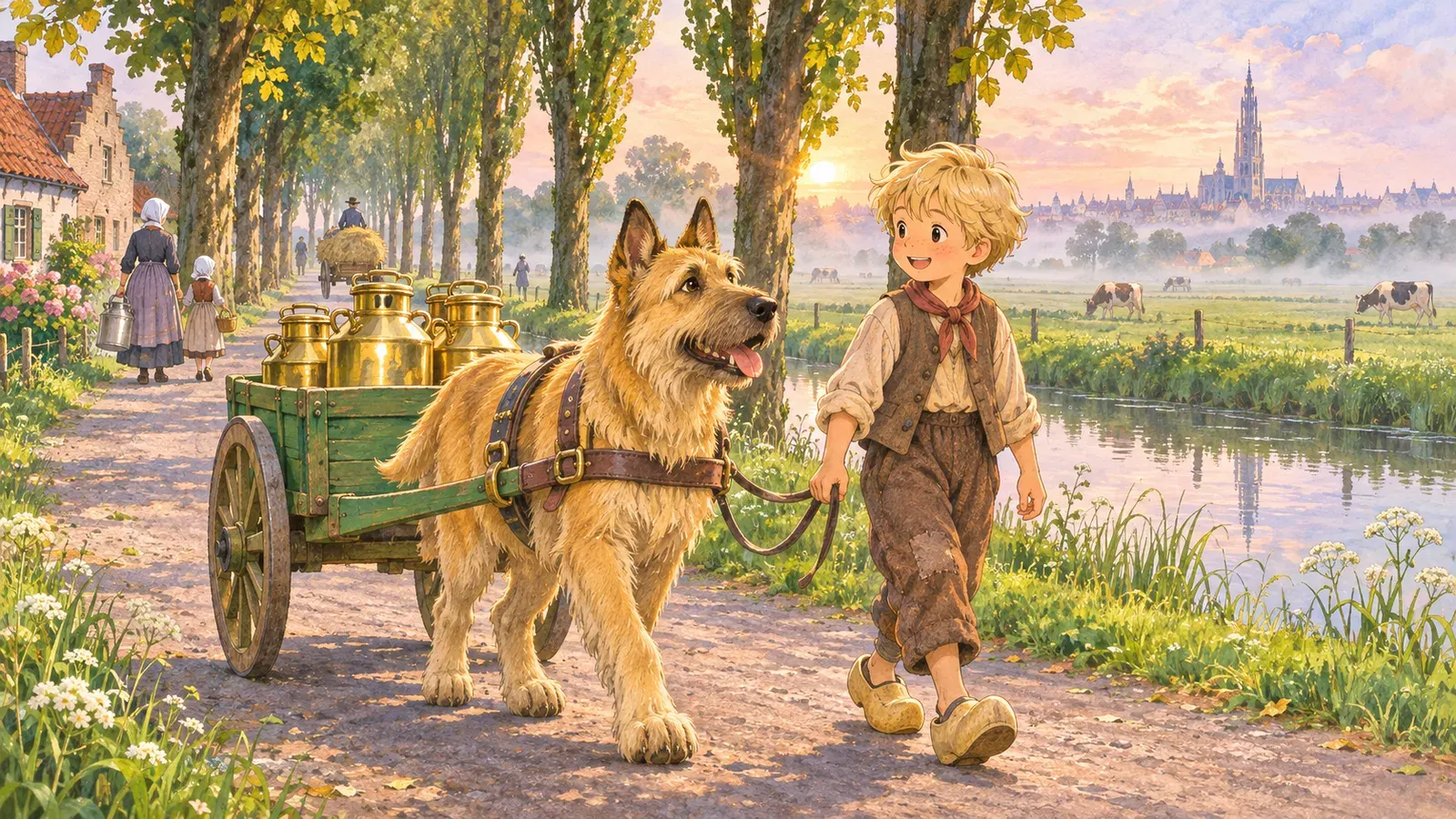
The whole soul of the little Ardennois thrilled and stirred with an absorbing passion for Art. Going on his ways through the old city in the early days before the sun or the people had risen, Nello, who looked only a little peasant-boy, with a great dog drawing milk to sell from door to door, was in a heaven of dreams whereof Rubens was the god. Nello, cold and hungry, with stockingless feet in wooden shoes, and the winter winds blowing among his curls and lifting his poor thin garments, was in a rapture of meditation, wherein all that he saw was the beautiful fair face of the Mary of the Assumption, with the waves of her golden hair lying upon her shoulders, and the light of an eternal sun shining down upon her brow. Nello, reared in poverty, and buffeted by fortune, and untaught in letters, and unheeded by men, had the compensation or the curse which is called Genius.
このアルデンヌ生まれの小さな子の魂は、芸術への激しい情熱にすっかり奪われ、震え、揺り動かされていました。まだ日も昇らず、人々も起き出さない早い時間に古い町を歩いていくネロは、大きな犬に牛乳を引かせて一軒一軒売って回る、ただの小さな農家の子にしか見えませんでした。けれども心は、ルーベンスを神とする夢の天国にいたのです。寒さと空腹に耐え、靴下も履かない足に木靴を履いて、冬の風に巻き毛を吹かれ、薄い粗末な服をあおられながら、ネロはうっとりと思いにふけっていました。その目に見えているのは、『聖母被昇天』のマリアの美しい顔だけでした。波打つ金色の髪が肩にかかり、永遠の太陽の光が額に降り注いでいる、あの顔でした。貧しさの中で育ち、運命にもてあそばれ、読み書きも教わらず、人々に気にも留められなかったネロは、天才と呼ばれるものを授かっていました。それは埋め合わせとも、呪いとも言えるものでした。
No one knew it. He as little as any. No one knew it. Only indeed Patrasche, who, being with him always, saw him draw with chalk upon the stones any and every thing that grew or breathed, heard him on his little bed of hay murmur all manner of timid, pathetic prayers to the spirit of the great Master; watched his gaze darken and his face radiate at the evening glow of sunset or the rosy rising of the dawn; and felt many and many a time the tears of a strange, nameless pain and joy, mingled together, fall hotly from the bright young eyes upon his own wrinkled yellow forehead.
そのことは誰も知りませんでした。ネロ自身も、ほかの人と同じくらい知りませんでした。誰一人知らなかったのです。知っていたのはパトラッシュだけでした。いつもそばにいたパトラッシュは、ネロが生えているもの、息をしているものを手当たり次第に、チョークで石の上に描くのを見ていました。干し草の小さな寝床の上で、ネロが偉大な巨匠の魂に向かって、おずおずとした、いじらしい祈りをあれこれつぶやくのも聞いていました。夕焼けの輝きや、ばら色の夜明けを前にして、ネロのまなざしが深い色を帯び、顔が輝くのも見守っていました。そして、名づけようのない不思議な苦しみと喜びが入り混じった涙が、ネロの明るく若い目から、しわの寄った自分の黄色い額に熱く落ちてくるのを、何度も何度も感じていたのです。
"I should go to my grave quite content if I thought, Nello, that when thou growest a man thou couldst own this hut and the little plot of ground, and labor for thyself, and be called Baas by thy neighbors," said the old man Jehan many an hour from his bed. For to own a bit of soil, and to be called Baas—master—by the hamlet round, is to have achieved the highest ideal of a Flemish peasant; and the old soldier, who had wandered over all the earth in his youth, and had brought nothing back, deemed in his old age that to live and die on one spot in contented humility was the fairest fate he could desire for his darling. But Nello said nothing.
「ネロや、お前が大人になって、この小屋とわずかな土地を自分のものにし、自分のために働いて、近所の人たちから旦那と呼ばれるようになる。そう思えたら、わしはすっかり安心して墓に入れるのだがなあ」ジェハンおじいさんは、寝床の中から何度もそう言いました。わずかな土地を持ち、周りの村人から旦那、つまり主人と呼ばれることは、フランダースの農民にとって最高の理想をかなえることなのです。若いころに世界中をさすらい、何一つ持ち帰らなかった老兵士は、年を取った今、一つの場所でつつましく満ち足りて生き、そこで死ぬことこそ、かわいい孫に望める一番すばらしい運命だと考えていました。けれどもネロは何も言いませんでした。
The same leaven was working in him that in other times begat Rubens and Jordaens and the Van Eycks, and all their wondrous tribe, and in times more recent begat in the green country of the Ardennes, where the Meuse washes the old walls of Dijon, the great artist of the Patroclus, whose genius is too near us for us aright to measure its divinity.
ネロの中では、昔、ルーベンスやヨルダーンスやファン・エイク兄弟、そしてそのすばらしい仲間たちを生み出したのと同じパン種が、働いていました。もっと近い時代に、ムーズ川がディジョンの古い城壁を洗う緑のアルデンヌ地方で、『パトロクロス』を描いた偉大な画家を生み出したのも、同じパン種です。その画家の天才は私たちにあまりに近くて、どれほど神々しいものか、まだ正しく測れないのですが。
Nello dreamed of other things in the future than of tilling the little rood of earth, and living under the wattle roof, and being called Baas by neighbors a little poorer or a little less poor than himself. The cathedral spire, where it rose beyond the fields in the ruddy evening skies or in the dim, gray, misty mornings, said other things to him than this. But these he told only to Patrasche, whispering, childlike, his fancies in the dog's ear when they went together at their work through the fogs of the daybreak, or lay together at their rest among the rustling rushes by the water's side.
ネロが将来に夢見ていたのは、わずかな土地を耕し、枝を編んだ屋根の下に住み、自分より少し貧しいか少しましなだけの近所の人たちから旦那と呼ばれることとは、別のことでした。夕焼けの赤い空に、あるいは薄暗い灰色の霧の朝に、畑の向こうにそびえる大聖堂の尖塔は、それとは違うことをネロに語りかけていました。けれどもネロは、それをパトラッシュにしか話しませんでした。夜明けの霧の中を一緒に仕事に出かけるときや、水辺でさらさら鳴るイグサの中に一緒に寝そべって休むとき、子どもらしく、犬の耳に自分の空想をささやくのでした。
For such dreams are not easily shaped into speech to awake the slow sympathies of human auditors; and they would only have sorely perplexed and troubled the poor old man bedridden in his corner, who, for his part, whenever he had trodden the streets of Antwerp, had thought the daub of blue and red that they called a Madonna, on the walls of the wine-shop where he drank his sou's worth of black beer, quite as good as any of the famous altar-pieces for which the stranger folk travelled far and wide into Flanders from every land on which the good sun shone.
こういう夢は、簡単に言葉にして、物分かりの遅い人間の聞き手の共感を呼び起こせるものではありません。それに、部屋の隅で寝たきりになっている気の毒なおじいさんを、ひどく戸惑わせ、悩ませるだけだったでしょう。何しろおじいさんは、アントワープの町を歩いていたころにはいつも、一スー分の黒ビールを飲む居酒屋の壁にかかった、聖母だという青と赤の下手な絵を、有名な祭壇画のどれにも負けないくらい立派だと思っていたのです。その祭壇画を見るために、よその国の人々が、ありがたいお日様の照らすあらゆる国からはるばるフランダースへ旅してくるというのに。
 11段落目に「the church exacts as the price for looking」(教会が見るための料金を要求する)とあります。ネロには払うお金がありませんでした。

 原田英語の究極の英単語帳(CEFR-J 6,868語)
 聞くだけモードで、文字を見ずに内容がわかるか試す。
 1文リピートで音読・シャドーイングも。
 英語の名スピーチ