

 フランダースの犬 全7部の 1番目
 約26分
 20:54
 原文そのまま
 全訳つき
 ウィーダ(フランダースの犬)の作品をもっと読む(1作品)→
 人の朗読
 お道具箱
 読書ラウンジ
Nello and Patrasche were left all alone in the world.
ネロとパトラッシュは、この世に二人きりで取り残されました。
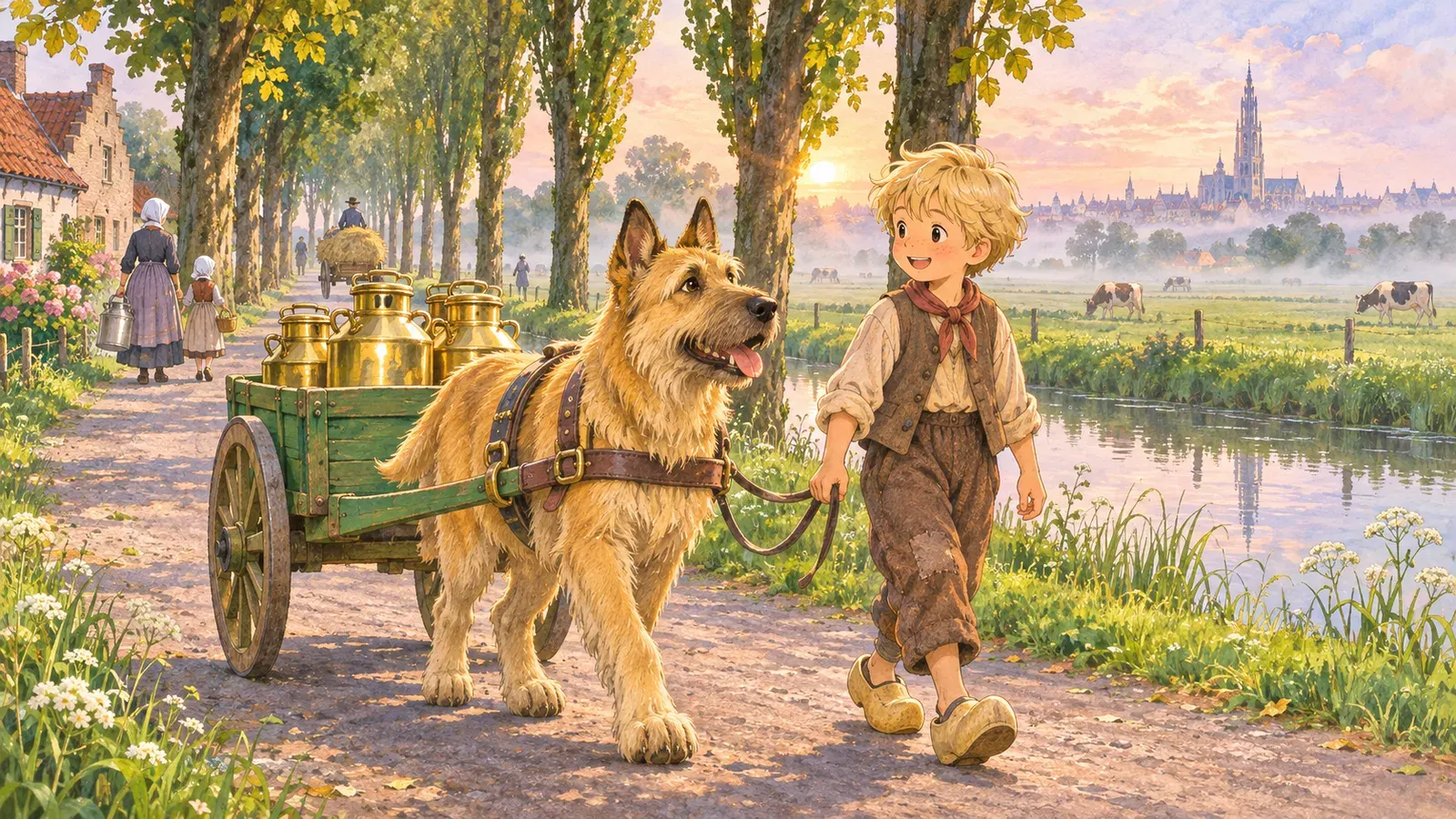
They were friends in a friendship closer than brotherhood. Nello was a little Ardennois—Patrasche was a big Fleming. They were both of the same age by length of years, yet one was still young, and the other was already old. They had dwelt together almost all their days: both were orphaned and destitute, and owed their lives to the same hand. It had been the beginning of the tie between them, their first bond of sympathy; and it had strengthened day by day, and had grown with their growth, firm and indissoluble, until they loved one another very greatly. Their home was a little hut on the edge of a little village—a Flemish village a league from Antwerp, set amidst flat breadths of pasture and corn-lands, with long lines of poplars and of alders bending in the breeze on the edge of the great canal which ran through it. It had about a score of houses and homesteads, with shutters of bright green or sky-blue, and roofs rose-red or black and white, and walls white-washed until they shone in the sun like snow.
二人は友達でした。兄弟よりも固く結ばれた友達でした。ネロは小さなアルデンヌ生まれ、パトラッシュは大きなフランダース生まれでした。生まれてからの年月は同じなのに、片方はまだ幼く、もう片方はすでに年老いていました。二人はほとんど生まれたときから一緒に暮らしてきました。どちらも親がなく、ひどく貧しく、同じ一人の人の手に命を救われて生きてきたのです。それが二人を結ぶきずなの始まりで、最初に心が通い合ったきっかけでした。そのきずなは日ごとに強くなり、二人が育つのと一緒に育って、決して切れない固いものになり、やがて二人は心から愛し合うようになりました。家は、小さな村の外れにある小さな小屋でした。アントワープから一リーグ離れたフランダースの村で、周りには平らな牧草地と麦畑が広がり、村を通り抜ける大きな運河の岸には、ポプラとハンノキの長い並木がそよ風にしなっていました。家と農家は合わせて二十軒ほどで、よろい戸は明るい緑か空色、屋根はばら色か白黒、壁は白く塗られて、日の光を浴びると雪のように輝きました。
In the centre of the village stood a windmill, placed on a little moss-grown slope: it was a landmark to all the level country round. It had once been painted scarlet, sails and all, but that had been in its infancy, half a century or more earlier, when it had ground wheat for the soldiers of Napoleon; and it was now a ruddy brown, tanned by wind and weather. It went queerly by fits and starts, as though rheumatic and stiff in the joints from age, but it served the whole neighborhood, which would have thought it almost as impious to carry grain elsewhere as to attend any other religious service than the mass that was performed at the altar of the little old gray church, with its conical steeple, which stood opposite to it, and whose single bell rang morning, noon, and night with that strange, subdued, hollow sadness which every bell that hangs in the Low Countries seems to gain as an integral part of its melody.
村の真ん中には、こけの生えた小さな坂の上に風車が立っていて、周りの平らな土地のどこからでも目印になりました。昔は羽根まですっかり真っ赤に塗られていたのですが、それは半世紀以上も前、風車がまだできたばかりで、ナポレオンの兵隊のために小麦をひいていたころの話でした。今では雨風にさらされて、赤茶色になっていました。年のせいでリウマチにかかり、節々がこわばっているかのように、回ったり止まったりとおかしな動き方をしましたが、それでも近所中の役に立っていました。村の人たちにとって、よその風車へ麦を持っていくのは、向かいの小さな古い灰色の教会の祭壇であげられるミサをやめて、ほかの礼拝に出るのと同じくらい、罰当たりなことだったのです。その教会にはとんがり屋根の塔があり、たった一つの鐘が朝、昼、晩に鳴りました。この低地の国々につるされた鐘はどれも、音色の一部であるかのように、不思議に沈んだ、うつろな悲しさを帯びるようですが、この鐘もそういう音で鳴るのでした。
Within sound of the little melancholy clock almost from their birth upward, they had dwelt together, Nello and Patrasche, in the little hut on the edge of the village, with the cathedral spire of Antwerp rising in the north-east, beyond the great green plain of seeding grass and spreading corn that stretched away from them like a tideless, changeless sea. It was the hut of a very old man, of a very poor man—of old Jehan Daas, who in his time had been a soldier, and who remembered the wars that had trampled the country as oxen tread down the furrows, and who had brought from his service nothing except a wound, which had made him a cripple.
ネロとパトラッシュは、ほとんど生まれたときから、この小さな物悲しい鐘の音が聞こえる所で、村外れの小さな小屋に一緒に暮らしてきました。小屋の前には、草が穂をつけ、麦が一面に広がる緑の大平原が、潮の満ち引きもない、いつまでも変わらない海のように遠くまで続き、その向こうの北東の空に、アントワープの大聖堂の尖塔がそびえていました。小屋の持ち主は、とても年を取った、とても貧しい人、ジェハン・ダースおじいさんでした。若いころは兵士で、牛が畑のうねを踏みつけるように国中を踏み荒らした戦争のことを覚えていました。けれども軍隊から持ち帰ったものといえば、足を不自由にした傷一つだけでした。
When old Jehan Daas had reached his full eighty, his daughter had died in the Ardennes, hard by Stavelot, and had left him in legacy her two-year-old son. The old man could ill contrive to support himself, but he took up the additional burden uncomplainingly, and it soon became welcome and precious to him. Little Nello—which was but a pet diminutive for Nicolas—throve with him, and the old man and the little child lived in the poor little hut contentedly.
ジェハン・ダースおじいさんがちょうど八十歳になったとき、娘がアルデンヌ地方のスタヴロのすぐ近くで亡くなり、形見として二歳の息子を残しました。おじいさんは自分一人が食べていくのもやっとでしたが、不平一つ言わずにこの新しい重荷を引き受けました。するとその重荷は、すぐに、うれしく大切なものに変わりました。小さなネロ(ネロというのは、ニコラスを縮めた愛称にすぎません)はおじいさんのもとですくすく育ち、老人と幼い子どもは、貧しい小さな小屋で満ち足りて暮らしました。
It was a very humble little mud-hut indeed, but it was clean and white as a sea-shell, and stood in a small plot of garden-ground that yielded beans and herbs and pumpkins. They were very poor, terribly poor—many a day they had nothing at all to eat. They never by any chance had enough: to have had enough to eat would have been to have reached paradise at once. But the old man was very gentle and good to the boy, and the boy was a beautiful, innocent, truthful, tender-hearted creature; and they were happy on a crust and a few leaves of cabbage, and asked no more of earth or heaven; save indeed that Patrasche should be always with them, since without Patrasche where would they have been?
それは本当に粗末な小さい泥の小屋でしたが、貝殻のように白く清潔で、豆や香草やカボチャの取れる小さな畑の中に立っていました。二人はとても貧しく、恐ろしいほど貧しくて、食べる物が何一つない日も度々ありました。おなかいっぱい食べられたことなど、ただの一度もありませんでした。おなかいっぱい食べられたら、それだけでもう天国に着いたようなものだったでしょう。けれども、おじいさんは男の子にとても優しく親切でしたし、男の子は美しく、無邪気で、正直で、心の優しい子でした。二人はパンの皮一切れとキャベツの葉が数枚あれば幸せで、この世にも天にも、それ以上何も求めませんでした。ただ一つ、パトラッシュがいつも一緒にいてくれることだけは別でした。パトラッシュがいなかったら、二人はいったいどうなっていたでしょう。
For Patrasche was their alpha and omega; their treasury and granary; their store of gold and wand of wealth; their bread-winner and minister; their only friend and comforter. Patrasche dead or gone from them, they must have laid themselves down and died likewise. Patrasche was body, brains, hands, head, and feet to both of them: Patrasche was their very life, their very soul. For Jehan Daas was old and a cripple, and Nello was but a child; and Patrasche was their dog.
パトラッシュは二人にとって、何もかもの初めであり終わりでした。金庫であり、穀物倉でした。黄金の蓄えであり、富を呼ぶつえでした。稼ぎ手であり、世話役でした。ただ一人の友であり、慰め手でした。パトラッシュが死ぬか、いなくなるかしたら、二人も横になって、同じように死ぬほかなかったでしょう。パトラッシュは二人の体でも頭脳でもあり、手足でもありました。二人の命そのもの、魂そのものでした。ジェハン・ダースおじいさんは年老いて体が不自由で、ネロはほんの子どもでした。そして、パトラッシュは二人の犬だったのです。
A dog of Flanders—yellow of hide, large of head and limb, with wolf-like ears that stood erect, and legs bowed and feet widened in the muscular development wrought in his breed by many generations of hard service. Patrasche came of a race which had toiled hard and cruelly from sire to son in Flanders many a century—slaves of slaves, dogs of the people, beasts of the shafts and the harness, creatures that lived straining their sinews in the gall of the cart, and died breaking their hearts on the flints of the streets.
フランダースの犬でした。毛は黄色く、頭も手足も大きく、オオカミのような耳がぴんと立っていました。足は曲がり、足先は広がっていましたが、それは何代にもわたる厳しい労働が、この種類の犬の筋肉を発達させた結果でした。パトラッシュの一族は、フランダースで何世紀もの間、親から子へと、むごい苦労を重ねて働いてきました。奴隷のそのまた奴隷、民衆の犬、かじ棒と引き具につながれた獣で、荷車の引き具に体を擦りむかれながら筋を張り詰めて生き、町の石畳の上で心臓が破れて死んでいったのです。
Patrasche had been born of parents who had labored hard all their days over the sharp-set stones of the various cities and the long, shadowless, weary roads of the two Flanders and of Brabant. He had been born to no other heritage than those of pain and of toil. He had been fed on curses and baptized with blows. Why not? It was a Christian country, and Patrasche was but a dog. Before he was fully grown he had known the bitter gall of the cart and the collar. Before he had entered his thirteenth month he had become the property of a hardware-dealer, who was accustomed to wander over the land north and south, from the blue sea to the green mountains. They sold him for a small price, because he was so young.
パトラッシュの両親も、あちこちの町のとがった敷石の上や、二つのフランダース州とブラバントの、木陰一つない長くうんざりする道の上で、一生つらい仕事を続けた犬でした。パトラッシュが生まれながらに受け継いだものは、苦しみと骨折り仕事のほかに何もありませんでした。ののしりの言葉を食べ物の代わりに与えられ、殴られることで洗礼を受けました。それのどこがおかしいでしょう。そこはキリスト教の国で、パトラッシュはただの犬にすぎなかったのですから。まだ大きくなりきらないうちに、荷車と首輪のつらい擦り傷を知りました。そして生まれて十三か月にもならないうちに、金物の行商人の持ち物になりました。北から南へ、青い海から緑の山々まで、国中を渡り歩くのが習わしの男でした。まだあまりに若かったので、パトラッシュは安い値段で売られました。
This man was a drunkard and a brute. The life of Patrasche was a life of hell. To deal the tortures of hell on the animal creation is a way which the Christians have of showing their belief in it. His purchaser was a sullen, ill-living, brutal Brabantois, who heaped his cart full with pots and pans and flagons and buckets, and other wares of crockery and brass and tin, and left Patrasche to draw the load as best he might, whilst he himself lounged idly by the side in fat and sluggish ease, smoking his black pipe and stopping at every wineshop or café on the road.
この男は大酒飲みで、人でなしでした。パトラッシュの毎日は地獄でした。動物たちに地獄の苦しみを味わわせること、それがキリスト教徒の、地獄を信じていることの示し方なのです。買い主はむっつりした、身持ちの悪い、乱暴なブラバントの男でした。荷車につぼや鍋、酒びんや手おけ、そのほか陶器や真ちゅうやブリキの品物を山のように積み上げると、あとはパトラッシュが何とか引いていくのに任せました。自分は太った体でのらくらと横をぶらぶら歩き、黒いパイプをふかしては、道沿いの酒場やカフェに一軒残らず立ち寄るのでした。
Happily for Patrasche—or unhappily—he was very strong: he came of an iron race, long born and bred to such cruel travail; so that he did not die, but managed to drag on a wretched existence under the brutal burdens, the scarifying lashes, the hunger, the thirst, the blows, the curses, and the exhaustion which are the only wages with which the Flemings repay the most patient and laborious of all their four-footed victims. One day, after two years of this long and deadly agony, Patrasche was going on as usual along one of the straight, dusty, unlovely roads that lead to the city of Rubens. It was full midsummer, and very warm. His cart was very heavy, piled high with goods in metal and in earthenware. His owner sauntered on without noticing him otherwise than by the crack of the whip as it curled round his quivering loins. The Brabantois had paused to drink beer himself at every wayside house, but he had forbidden Patrasche to stop a moment for a draught from the canal. Going along thus, in the full sun, on a scorching highway, having eaten nothing for twenty-four hours, and, which was far worse to him, not having tasted water for near twelve, being blind with dust, sore with blows, and stupefied with the merciless weight which dragged upon his loins, Patrasche staggered and foamed a little at the mouth, and fell.
幸いにも、いや、不幸にもと言うべきでしょうか、パトラッシュはとても丈夫でした。こうしたむごい労働のために長く生まれ育ってきた、鉄のような一族の出だったのです。だから死にはしませんでした。むごい重荷、皮を裂くむち、飢え、渇き、殴打、ののしり、そして疲れ果てるまでの労働に耐えて、惨めな命を何とかつないでいきました。四本足の犠牲者の中でも一番辛抱強く一番よく働くこの犬たちに、フランダースの人々が払う報酬は、それだけなのです。長く死ぬほどつらい苦しみが二年続いたある日、パトラッシュはいつものように、ルーベンスの町へ通じる、まっすぐでほこりっぽい、味気ない道の一つを進んでいました。真夏の盛りで、とても暑い日でした。荷車は金物や焼き物を高く積み上げて、ひどく重くなっていました。飼い主はぶらぶら歩くばかりで、パトラッシュを気にかけるのは、震える腰にむちを巻きつけてぴしりと鳴らすときだけでした。このブラバントの男は、道端の店があるたびに立ち止まって自分はビールを飲んだのに、パトラッシュには、運河の水を一口飲むために一瞬立ち止まることさえ許しませんでした。こうして、かんかん照りの中、焼けつく街道を進んでいきました。丸一日何も食べておらず、それよりずっとつらいことに、十二時間近く水を一滴も口にしていませんでした。ほこりで目は見えず、殴られた体は痛み、腰にのしかかる容赦ない重さで頭もぼうっとしていました。パトラッシュはよろめき、口から少し泡を吹いて、倒れました。
He fell in the middle of the white, dusty road, in the full glare of the sun; he was sick unto death, and motionless. His master gave him the only medicine in his pharmacy—kicks and oaths and blows with a cudgel of oak, which had been often the only food and drink, the only wage and reward, ever offered to him. But Patrasche was beyond the reach of any torture or of any curses. Patrasche lay, dead to all appearances, down in the white powder of the summer dust. After a while, finding it useless to assail his ribs with punishment and his ears with maledictions, the Brabantois—deeming life gone in him, or going so nearly that his carcass was forever useless, unless indeed some one should strip it of the skin for gloves—cursed him fiercely in farewell, struck off the leathern bands of the harness, kicked his body aside into the grass, and, groaning and muttering in savage wrath, pushed the cart lazily along the road up-hill, and left the dying dog for the ants to sting and for the crows to pick.
白くほこりっぽい道の真ん中、ぎらぎら照りつける日差しの中に倒れたのです。死にそうなほど具合が悪く、ぴくりとも動きませんでした。主人は、自分の薬箱にあるただ一つの薬を与えました。蹴ること、ののしること、カシのこん棒で殴ることでした。それは、これまでパトラッシュに与えられたただ一つの食べ物と飲み物、ただ一つの給料と褒美であることも、しょっちゅうでした。けれどもパトラッシュには、もうどんな責め苦もののしりも届きませんでした。どう見ても死んだ姿で、夏の白い粉のようなほこりの中に横たわっていました。しばらくして、あばら骨を痛めつけても、耳に悪口を浴びせても無駄だと分かると、ブラバントの男は、もう命はないものと考えました。そうでなくても死にかけていて、誰かが皮をはいで手袋にでもしない限り、この体は二度と役に立たないと思ったのです。男は別れの挨拶に激しくののしり、引き具の革ひもを外すと、パトラッシュの体を草の中へ蹴り飛ばしました。そして荒々しく怒って、うめいたりぶつぶつ言ったりしながら、上り坂の道をのろのろと荷車を押していきました。死にかけた犬は、アリに刺され、カラスについばまれるままに置き去りにされました。
It was the last day before Kermesse away at Louvain, and the Brabantois was in haste to reach the fair and get a good place for his truck of brass wares. He was in fierce wrath, because Patrasche had been a strong and much-enduring animal, and because he himself had now the hard task of pushing his charette all the way to Louvain. But to stay to look after Patrasche never entered his thoughts: the beast was dying and useless, and he would steal, to replace him, the first large dog that he found wandering alone out of sight of its master. Patrasche had cost him nothing, or next to nothing, and for two long, cruel years had made him toil ceaselessly in his service from sunrise to sunset, through summer and winter, in fair weather and foul.
その日は、遠くルーヴェンで開かれるケルメスの祭りの前日でした。ブラバントの男は、早く市に着いて、真ちゅうの品物を積んだ荷車によい場所を取ろうと急いでいたのです。男はひどく腹を立てていました。パトラッシュは丈夫で我慢強い動物だったのに、これからはルーヴェンまでずっと自分で荷車を押すという、つらい仕事をしなければならなくなったからです。けれども、残ってパトラッシュの世話をしようなどとは、考えもしませんでした。こいつは死にかけていて、もう役に立たない。代わりは、飼い主の目の届かない所を一匹でうろついている大きな犬を見つけ次第、盗めばいい。そう考えたのです。パトラッシュはただか、ただ同然で手に入れた犬でした。そして男は丸二年の長くむごい年月、夏も冬も、晴れの日も嵐の日も、日の出から日の入りまで、休みなくパトラッシュを自分のために働かせてきたのでした。
He had got a fair use and a good profit out of Patrasche: being human, he was wise, and left the dog to draw his last breath alone in the ditch, and have his bloodshot eyes plucked out as they might be by the birds, whilst he himself went on his way to beg and to steal, to eat and to drink, to dance and to sing, in the mirth at Louvain. A dying dog, a dog of the cart—why should he waste hours over its agonies at peril of losing a handful of copper coins, at peril of a shout of laughter?
男はパトラッシュを十分に使い、たっぷりもうけました。人間ですから賢いもので、犬には溝の中で一匹きりで息を引き取らせ、血走った目は鳥につつき出されるに任せて、自分はルーヴェンのお祭り騒ぎへと向かいました。物乞いをしたり盗んだり、食べたり飲んだり、踊ったり歌ったりするためでした。死にかけた犬、それも荷車引きの犬ではありませんか。銅貨を一握りもうけ損なうかもしれないのに、大笑いする楽しみを逃すかもしれないのに、どうしてそんな犬の苦しみに付き合って何時間も無駄にするでしょう。
Patrasche lay there, flung in the grass-green ditch. It was a busy road that day, and hundreds of people, on foot and on mules, in wagons or in carts, went by, tramping quickly and joyously on to Louvain. Some saw him, most did not even look: all passed on. A dead dog more or less—it was nothing in Brabant: it would be nothing anywhere in the world.
パトラッシュは、草の茂った緑の溝に放り込まれたまま、横たわっていました。その日は人通りの多い道で、何百人もの人が、歩いたり、ラバに乗ったり、荷馬車や荷車に乗ったりして、足早に、楽しそうにルーヴェンへ向かって通っていきました。パトラッシュを見た人もいましたが、たいていの人は目も向けず、誰もがそのまま通り過ぎました。死んだ犬が一匹増えようが減ろうが、ブラバントでは何でもないことでした。世界中どこでも、何でもないことでしょう。
After a time, among the holiday-makers, there came a little old man who was bent and lame, and very feeble. He was in no guise for feasting: he was very poorly and miserably clad, and he dragged his silent way slowly through the dust among the pleasure-seekers. He looked at Patrasche, paused, wondered, turned aside, then kneeled down in the rank grass and weeds of the ditch, and surveyed the dog with kindly eyes of pity. There was with him a little rosy, fair-haired, dark-eyed child of a few years old, who pattered in amidst the bushes, for him breast-high, and stood gazing with a pretty seriousness upon the poor, great, quiet beast.
しばらくすると、祭りへ向かう人々に交じって、小柄な老人がやって来ました。腰が曲がり、足が不自由で、とても弱々しい老人でした。お祭りに行くような身なりではありませんでした。ひどく貧しいみすぼらしい服を着て、浮かれた人々の間を、黙ってほこりの中をゆっくり足を引きずって歩いてきました。老人はパトラッシュに目を留め、立ち止まり、不思議に思って道からそれると、溝に生い茂る草や雑草の中にひざまずき、哀れみのこもった優しい目で犬をじっと見ました。老人は、ばら色の頬に金髪、黒い目をした、まだ幾つにもならない小さな子を連れていました。その子は、自分の胸の高さまである茂みの中へぱたぱたと入ってきて、かわいらしい真剣な顔で、哀れな、大きな、静かな獣をじっと見つめて立っていました。
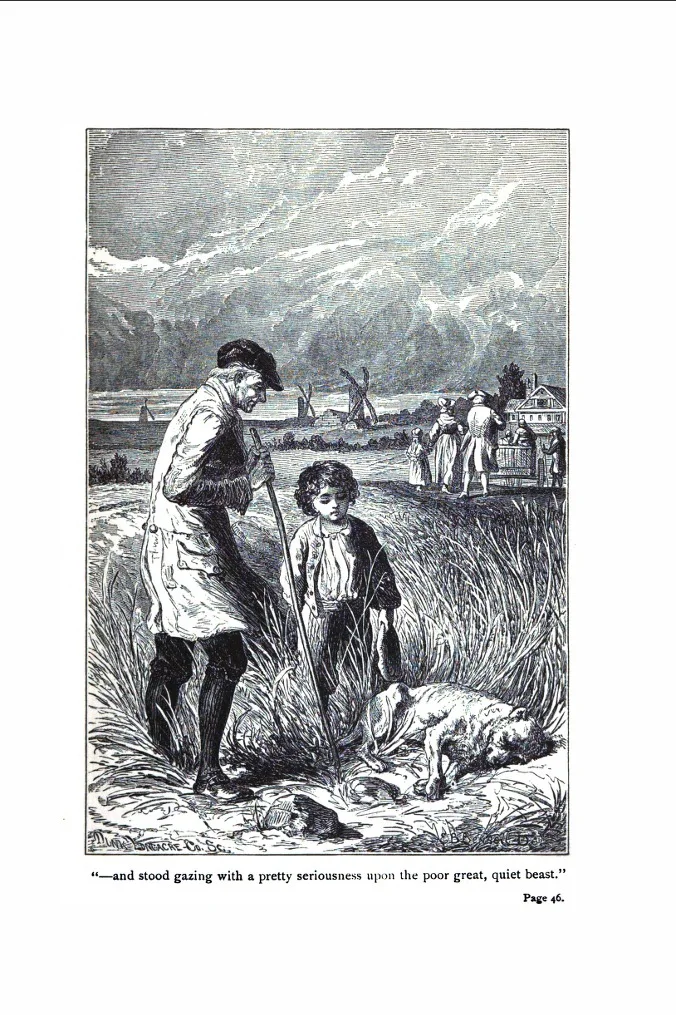
Thus it was that these two first met—the little Nello and the big Patrasche. The upshot of that day was, that old Jehan Daas, with much laborious effort, drew the sufferer homeward to his own little hut, which was a stone's throw off amidst the fields, and there tended him with so much care that the sickness, which had been a brain seizure, brought on by heat and thirst and exhaustion, with time and shade and rest passed away, and health and strength returned, and Patrasche staggered up again upon his four stout, tawny legs.
小さなネロと大きなパトラッシュは、こうして初めて出会ったのでした。その日の結末はこうでした。ジェハン・ダースおじいさんは、さんざん苦労して、苦しんでいる犬を自分の小さな小屋へ引いて帰りました。小屋は、畑の中の、石を投げれば届くほどの所にありました。そこでおじいさんは、心を込めて犬を看病しました。病気は、暑さと渇きと疲れから起きた脳の発作でしたが、時間がたち、日陰で休むうちに治っていきました。元気と力が戻り、パトラッシュは四本の太い黄褐色の足で、よろよろとまた立ち上がりました。
Now for many weeks he had been useless, powerless, sore, near to death; but all this time he had heard no rough word, had felt no harsh touch, but only the pitying murmurs of the child's voice and the soothing caress of the old man's hand.
それまで何週間もの間、パトラッシュは何の役にも立たず、力もなく、体中が痛み、死にかけていました。けれどもその間ずっと、荒い言葉は一つも聞かず、乱暴に触られることも一度もありませんでした。聞こえたのは子どもの哀れむようなつぶやき声だけ、感じたのは老人の手がなだめるようになでてくれる感触だけでした。
In his sickness they too had grown to care for him, this lonely man and the little happy child. He had a corner of the hut, with a heap of dry grass for his bed; and they had learned to listen eagerly for his breathing in the dark night, to tell them that he lived; and when he first was well enough to essay a loud, hollow, broken bay, they laughed aloud, and almost wept together for joy at such a sign of his sure restoration; and little Nello, in delighted glee, hung round his rugged neck with chains of marguerites, and kissed him with fresh and ruddy lips.
パトラッシュが病気の間に、この孤独な老人と小さな幸せな子どものほうも、パトラッシュを大事に思うようになっていました。小屋の片隅がパトラッシュの場所になり、干し草の山が寝床になりました。二人は暗い夜、パトラッシュが生きていると知らせる息の音に、熱心に耳を澄ますようになりました。そして、パトラッシュが初めて、大きな、うつろな、かすれた声でほえてみせるほど元気になったとき、二人は声をあげて笑いました。確かによくなっている印だと、うれしくて一緒に泣き出しそうになりました。小さなネロは大喜びではしゃいで、パトラッシュのごつごつした首にマーガレットの花輪をいくつもかけ、みずみずしい赤い唇でキスをしました。
So then, when Patrasche arose, himself again, strong, big, gaunt, powerful, his great wistful eyes had a gentle astonishment in them that there were no curses to rouse him and no blows to drive him; and his heart awakened to a mighty love, which never wavered once in its fidelity whilst life abode with him.
こうしてパトラッシュが、強く、大きく、痩せて骨ばった、たくましい元の姿で立ち上がったとき、その大きな物思わしげな目には、穏やかな驚きが浮かんでいました。自分をたたき起こすののしり声も、追い立てる殴打もないことに驚いていたのです。パトラッシュの心には、大きな愛が目覚めました。その愛は、命のある限り、ただの一度も揺らぐことなく忠実であり続けました。
But Patrasche, being a dog, was grateful. Patrasche lay pondering long with grave, tender, musing brown eyes, watching the movements of his friends. Now, the old soldier, Jehan Daas, could do nothing for his living but limp about a little with a small cart, with which he carried daily the milk-cans of those happier neighbors who owned cattle away into the town of Antwerp. The villagers gave him the employment a little out of charity—more because it suited them well to send their milk into the town by so honest a carrier, and bide at home themselves to look after their gardens, their cows, their poultry, or their little fields. But it was becoming hard work for the old man. He was eighty-three, and Antwerp was a good league off, or more.
何しろパトラッシュは犬でしたから、恩を忘れなかったのです。パトラッシュは長い間横になって、真剣で優しい、考え深そうな茶色の目で、友達の動きを見守りながらじっと考えていました。さて、元兵士のジェハン・ダースおじいさんが暮らしのためにできる仕事といえば、小さな荷車を引いて、足を引きずりながら少し歩き回ることしかありませんでした。牛を飼っている恵まれた近所の人たちの牛乳缶を、その荷車で毎日アントワープの町まで運ぶのでした。村人たちがこの仕事を任せたのは、少しは情けからでしたが、それよりも自分たちに都合がよかったからでした。これほど正直な運び手に牛乳を町まで届けてもらえば、自分たちは家にいて、庭や牛や鶏や小さな畑の世話ができたのです。けれども、この仕事はおじいさんにはつらくなってきていました。もう八十三歳でしたし、アントワープまではたっぷり一リーグか、それ以上あったのです。
Patrasche watched the milk-cans come and go that one day when he had got well and was lying in the sun with the wreath of marguerites round his tawny neck. The next morning, Patrasche, before the old man had touched the cart, arose and walked to it and placed himself betwixt its handles, and testified as plainly as dumb show could do his desire and his ability to work in return for the bread of charity that he had eaten. Jehan Daas resisted long, for the old man was one of those who thought it a foul shame to bind dogs to labor for which Nature never formed them. But Patrasche would not be gainsaid: finding they did not harness him, he tried to draw the cart onward with his teeth.
すっかり元気になったある日、パトラッシュは黄褐色の首にマーガレットの花輪をかけて日なたに寝そべりながら、牛乳缶が出ていき、戻ってくるのを見ていました。次の朝、パトラッシュは、おじいさんが荷車に手をかける前に起き上がって荷車の所へ歩いていき、二本のかじ棒の間に立ちました。そして、情けで食べさせてもらったパンのお返しに働きたいし、働く力もあるのだということを、口のきけない者にできる限りはっきりと、身ぶりで示しました。ジェハン・ダースおじいさんは長い間承知しませんでした。自然がそのように造ったわけでもない労働に犬を縛りつけるのは、ひどく恥ずべきことだと考える人だったからです。けれどもパトラッシュは引き下がりませんでした。引き具をつけてもらえないと分かると、歯でくわえて荷車を引いていこうとしました。
At length Jehan Daas gave way, vanquished by the persistence and the gratitude of this creature whom he had succored. He fashioned his cart so that Patrasche could run in it, and this he did every morning of his life thenceforward.
とうとうジェハン・ダースおじいさんは折れました。自分が助けたこの生き物の粘り強さと感謝の気持ちに、負けたのです。おじいさんは、パトラッシュが引いて走れるように荷車を作り直しました。そしてパトラッシュは、それからというもの、生きている限り毎朝この荷車を引きました。
When the winter came, Jehan Daas thanked the blessed fortune that had brought him to the dying dog in the ditch that fair-day of Louvain; for he was very old, and he grew feebler with each year, and he would ill have known how to pull his load of milk-cans over the snows and through the deep ruts in the mud if it had not been for the strength and the industry of the animal he had befriended. As for Patrasche, it seemed heaven to him. After the frightful burdens that his old master had compelled him to strain under, at the call of the whip at every step, it seemed nothing to him but amusement to step out with this little light green cart, with its bright brass cans, by the side of the gentle old man who always paid him with a tender caress and with a kindly word. Besides, his work was over by three or four in the day, and after that time he was free to do as he would—to stretch himself, to sleep in the sun, to wander in the fields, to romp with the young child, or to play with his fellow-dogs. Patrasche was very happy. Fortunately for his peace, his former owner was killed in a drunken brawl at the Kermesse of Mechlin, and so sought not after him nor disturbed him in his new and well-loved home.
冬が来ると、ジェハン・ダースおじいさんは、あのルーヴェンの祭りの日に、溝で死にかけていた犬のもとへ自分を導いてくれた幸運に感謝しました。おじいさんはとても年を取っていて、年ごとに弱っていました。助けて友達になったこの動物の力と働きがなかったら、雪の上や、ぬかるみの深いわだちの中を、牛乳缶の荷を引いていくことなど、とてもできなかったでしょう。パトラッシュのほうは、まるで天国にいるようでした。前の主人のもとでは、一歩ごとにむちで追い立てられながら、恐ろしい重荷を必死に引かされていました。それを思えば、ぴかぴかの真ちゅうの缶を積んだこの小さくて軽い緑の荷車を引いて、優しいおじいさんの横を歩いていくのは、遊びとしか思えませんでした。おじいさんは、いつも優しくなでて、温かい言葉をかけてねぎらってくれるのでした。それに、仕事は午後の三時か四時には終わり、その後は好きなように過ごせました。伸びをしてもいいし、日なたで眠っても、野原を歩き回っても、小さな子と跳ね回っても、仲間の犬たちと遊んでもよかったのです。パトラッシュはとても幸せでした。パトラッシュの平和にとって幸いなことに、前の飼い主はメヘレンのケルメスの祭りで、酔っ払いのけんかの最中に殺されました。だから、パトラッシュを探しに来ることも、愛着のある新しい家での暮らしを乱すこともありませんでした。
 16段落目に「the rank grass and weeds of the ditch」(みぞの深い草と雑草)で犬を見たとあります。

 原田英語の究極の英単語帳(CEFR-J 6,868語)
 聞くだけモードで、文字を見ずに内容がわかるか試す。
 1文リピートで音読・シャドーイングも。
 英語の名スピーチ