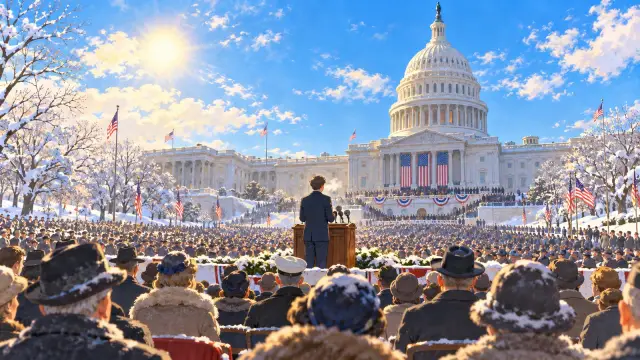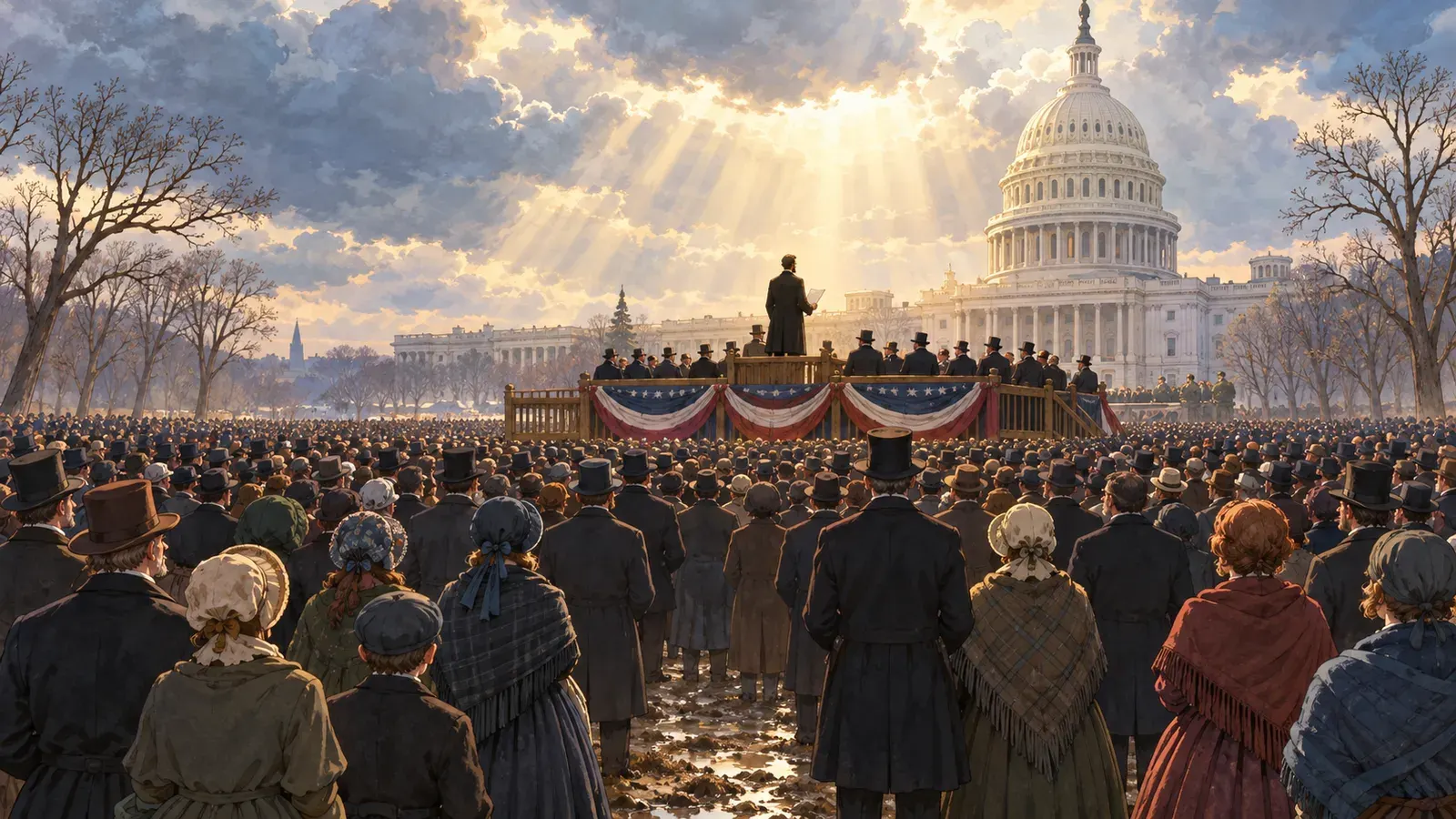
Fellow-Countrymen:
同胞のみなさん。
At this second appearing to take the oath of the Presidential office there is less occasion for an extended address than there was at the first. Then a statement somewhat in detail of a course to be pursued seemed fitting and proper. Now, at the expiration of four years, during which public declarations have been constantly called forth on every point and phase of the great contest which still absorbs the attention and engrosses the energies of the nation, little that is new could be presented. The progress of our arms, upon which all else chiefly depends, is as well known to the public as to myself, and it is, I trust, reasonably satisfactory and encouraging to all. With high hope for the future, no prediction in regard to it is ventured.
二度目の大統領就任の宣誓にあたり、一度目のときほど長い演説は必要ないでしょう。あのときは、これから進むべき道を、ある程度くわしく述べるのがふさわしいと思われました。あれから4年がたちました。この大きな戦いは、いまも国じゅうの関心を集め、国の力をのみこんでいます。この4年間、戦いのあらゆる点、あらゆる局面について、公の声明が絶えず求められてきました。ですから、いま新しく申し上げられることは、ほとんどありません。ほかのすべてを大きく左右するわが軍の戦況は、私と同じくらい、国民のみなさんもよくご存じです。そしてそれは、どなたにとっても、まずまず満足のいく、心強いものだと思います。将来には大きな希望をいだいていますが、あえて予言はいたしません。
On the occasion corresponding to this four years ago all thoughts were anxiously directed to an impending civil war. All dreaded it, all sought to avert it. While the inaugural address was being delivered from this place, devoted altogether to saving the Union without war, insurgent agents were in the city seeking to destroy it without war—seeking to dissolve the Union and divide effects by negotiation. Both parties deprecated war, but one of them would make war rather than let the nation survive, and the other would accept war rather than let it perish, and the war came.
4年前の同じ折、すべての人の心は、迫りくる内戦への不安でいっぱいでした。誰もが内戦を恐れ、誰もが避けようとしました。この場所で読み上げられた就任演説は、戦争をせずに連邦を救うことだけを目指していました。ところがその同じとき、反乱を起こした者たちの手先がこの町にいて、戦争をせずに連邦を壊そうとしていたのです。交渉によって連邦を解体し、財産を分け合おうとしていました。どちらの側も戦争を嫌っていました。しかし一方は、国が生き残るのを許すくらいなら戦争を起こそうとし、もう一方は、国が滅びるのを許すくらいなら戦争を受けて立とうとしました。そして、戦争が始まったのです。
One-eighth of the whole population were colored slaves, not distributed generally over the Union, but localized in the southern part of it. These slaves constituted a peculiar and powerful interest. All knew that this interest was somehow the cause of the war. To strengthen, perpetuate, and extend this interest was the object for which the insurgents would rend the Union even by war, while the Government claimed no right to do more than to restrict the territorial enlargement of it. Neither party expected for the war the magnitude or the duration which it has already attained. Neither anticipated that the cause of the conflict might cease with or even before the conflict itself should cease. Each looked for an easier triumph, and a result less fundamental and astounding. Both read the same Bible and pray to the same God, and each invokes His aid against the other. It may seem strange that any men should dare to ask a just God's assistance in wringing their bread from the sweat of other men's faces, but let us judge not, that we be not judged. The prayers of both could not be answered. That of neither has been answered fully. The Almighty has His own purposes. "Woe unto the world because of offenses; for it must needs be that offenses come, but woe to that man by whom the offense cometh." If we shall suppose that American slavery is one of those offenses which, in the providence of God, must needs come, but which, having continued through His appointed time, He now wills to remove, and that He gives to both North and South this terrible war as the woe due to those by whom the offense came, shall we discern therein any departure from those divine attributes which the believers in a living God always ascribe to Him? Fondly do we hope, fervently do we pray, that this mighty scourge of war may speedily pass away. Yet, if God wills that it continue until all the wealth piled by the bondsman's two hundred and fifty years of unrequited toil shall be sunk, and until every drop of blood drawn with the lash shall be paid by another drawn with the sword, as was said three thousand years ago, so still it must be said "the judgments of the Lord are true and righteous altogether."
全人口の8分の1は黒人の奴隷でした。奴隷は連邦全体に散らばっていたのではなく、南部に集まっていました。この奴隷たちは、特別な、強大な利権をなしていました。この利権が、何らかの形で戦争の原因であることは、誰もが知っていました。反乱者たちは、この利権を強め、永久のものにし、さらに広げようとしました。そのためなら、戦争をしてでも連邦を引き裂くつもりだったのです。一方、政府が求めたのは、奴隷制が新しい土地へ広がるのを制限することだけでした。どちらの側も、戦争がこれほど大きく、これほど長くなるとは思っていませんでした。戦いが終わるのと同時に、いや終わる前に、戦いの原因のほうが消えてしまうかもしれないとも、思っていませんでした。どちらも、もっとたやすく勝てると考え、これほど根本からくつがえるような、驚くべき結果になるとは思っていなかったのです。両者は同じ聖書を読み、同じ神に祈り、それぞれが相手を倒すために神の助けを求めています。他人の額に汗を流させて、自分のパンをしぼり取る。そんなことのために、正しい神の助けをあえて求める人間がいるとは、奇妙に思えるかもしれません。しかし、人をさばくのはやめましょう。自分がさばかれないためにです。両方の祈りがかなえられることは、ありえませんでした。どちらの祈りも、すっかりかなえられたわけではありません。全能の神には、神ご自身の目的があるのです。「この世はつまずきがあるから、わざわいである。つまずきは必ず来る。しかし、つまずきをもたらす者は、わざわいである。」アメリカの奴隷制も、神の摂理によって必ず来なければならなかったつまずきの一つだった、と考えてみましょう。それは神の定めた時のあいだ続いてきましたが、いま神はそれを取り除こうとしておられる。そして、つまずきをもたらした者たちに当然くだるわざわいとして、北にも南にも、この恐ろしい戦争を与えておられる。そう考えたとして、それは、生ける神を信じる者たちが、いつも神に備わっていると考えてきた性質に、何か反することでしょうか。この戦争という恐ろしい災いが、一日も早く過ぎ去ることを、私たちは心から願い、熱く祈っています。けれども、もし神がこう望まれるのなら、どうでしょう。奴隷たちが250年のあいだ、何の報いもなく働いて積み上げてきた富が、すべて消えてなくなるまで。むちで流された血の一滴一滴が、剣で流される血の一滴によってつぐなわれるまで。それまで戦争が続くことを、神が望まれるのなら。3000年前に言われたとおり、いまもこう言わなければなりません。「主のさばきは真実であり、ことごとく正しい」と。
With malice toward none, with charity for all, with firmness in the right as God gives us to see the right, let us strive on to finish the work we are in, to bind up the nation's wounds, to care for him who shall have borne the battle and for his widow and his orphan, to do all which may achieve and cherish a just and lasting peace among ourselves and with all nations.
誰に対しても悪意をいだかず、すべての人に慈愛をもって。神が正しいと示してくださるかぎり、正しいことを固く守って。いま取り組んでいる仕事をやりとげるよう、力を尽くそうではありませんか。国の傷を手当てし、戦いを担った人と、その未亡人と孤児をいたわり、私たちのあいだに、そしてすべての国とのあいだに、正しく永続する平和を実現し、大切に守っていくために、できることはすべてしようではありませんか。
 ▶