幽玄ゆうげん
yugen
depth that is felt rather than shown
はっきり見せないことで深くなる。能と中世の歌論が育てた、説明しにくい美の言葉。
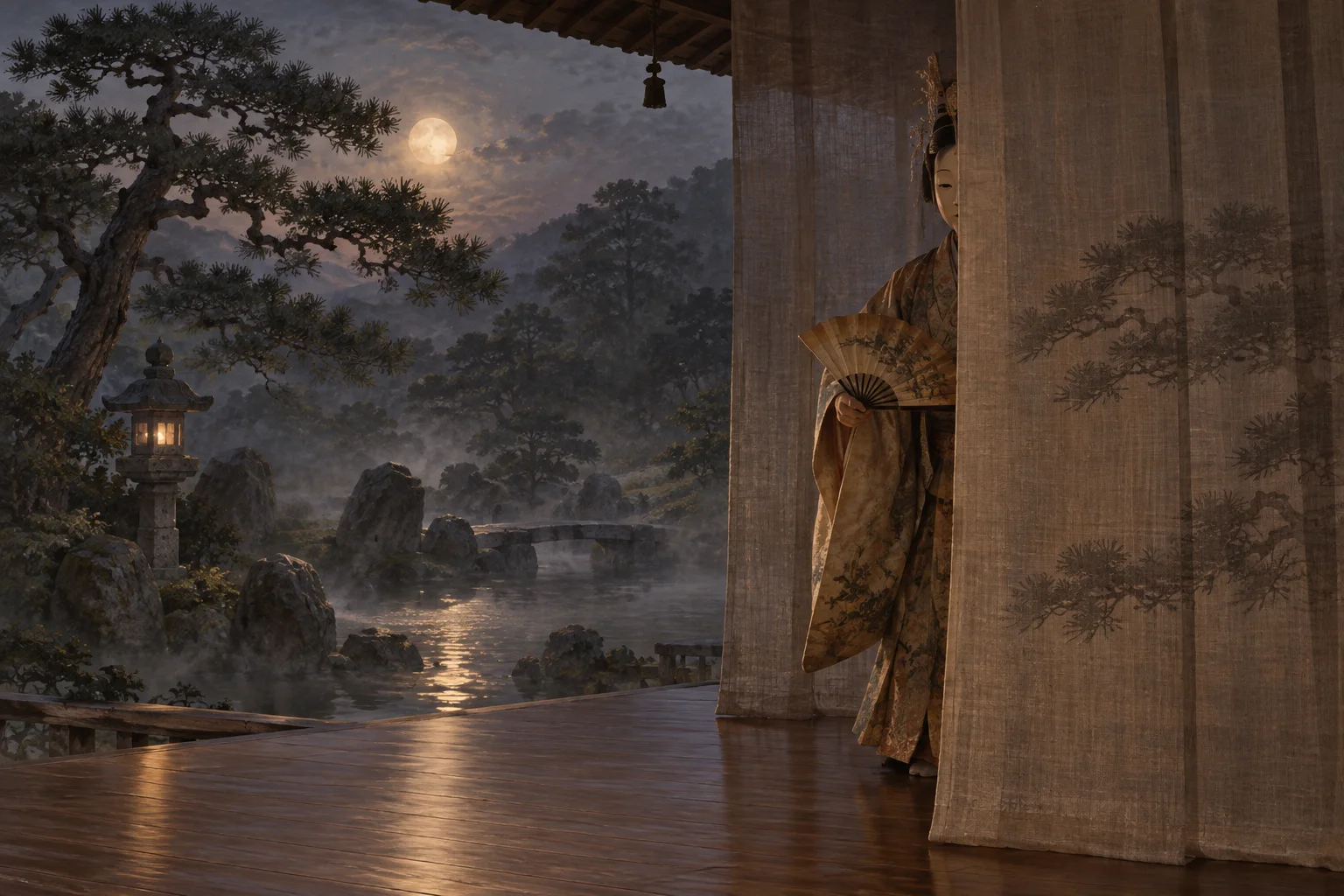
一言で言うと
これだけ覚えれば最低限伝わる一文
Yugen is a sense of deep, quiet beauty that is suggested rather than stated outright.
幽玄とは、はっきり言い切らずに暗示することで生まれる、深く静かな美の感覚です。
30秒で説明する
外国人に説明するときの標準サイズ
Yugen names a kind of beauty that works by suggestion: mist over a mountain rather than the mountain, a pause rather than a note, an actor who barely moves. The word came from Chinese Buddhist and philosophical texts, was taken up by medieval poets as an ideal for verse, and was developed further in noh theater. It resists translation, and lists of English equivalents such as mystery or profundity all fall a little short.
幽玄とは、暗示によって働く美を指す言葉です。山そのものより山にかかる霧、音そのものより間、ほとんど動かない役者。この語は中国の仏教や思想の文献から来て、中世の歌人が和歌の理想として取り上げ、能でさらに深められました。訳しにくく、英語の mystery や profundity といった対訳はどれも少し足りません。
スピーチ・英作文
通訳案内士の二次口述・大学入試の自由英作文に
Yugen is one of those Japanese aesthetic words that people reach for when something is beautiful in a way that cannot be pointed at. The root idea is depth that is felt rather than displayed. A landscape half hidden in mist is more yugen than a clear view, because the hidden part does the work.
A poem that stops before its conclusion leaves the reader holding the weight. The word came into Japanese from Chinese writings, where it described things profound and hard to grasp, and medieval poets adopted it as a standard for verse: not decorative, not obvious, carrying an emotion the words never name.
Zeami, who shaped noh theater in the fourteenth and fifteenth centuries, made it central to his writings on performance, where an actor achieves most by doing least, and a masked face suggests grief without any expression at all. Translations wander between mystery, subtlety and profound grace. I would say that if you have watched fog move across a valley and felt something you could not name, you have the idea.
幽玄は、どこがとは指させない形で何かが美しいときに、人が持ち出す日本の美の言葉の一つです。核にあるのは、見せつけるのではなく感じ取られる深さです。半ば霧に隠れた風景は、見晴らしのきく眺めより幽玄です。隠れている部分が仕事をしているからです。結びの前で止まる歌は、その重さを読む人に預けます。
この語は中国の文献から日本語に入り、そこでは奥深く捉えがたいものを指していました。中世の歌人はこれを和歌の基準として取り入れました。飾らず、あからさまでなく、言葉が名指さない感情を抱えている、という基準です。十四世紀から十五世紀に能を形づくった世阿弥は、これを芸の論の中心に据えました。
役者は最も少なくすることで最も多くを成し、面の顔は表情なしに悲しみを伝えます。訳語は mystery、subtlety、profound grace のあいだを揺れます。谷を渡っていく霧を見て名づけられない何かを感じたことがあるなら、それが分かっているということだと私は言いたいです。
こう聞かれたら
外国人から実際にされる質問と、その答え方。
How is yugen different from wabi-sabi?
幽玄は侘び寂びとどう違うのですか。
Wabi-sabi finds beauty in plainness, imperfection and the marks of time, so it points at an object. Yugen points at what is not shown: depth behind a surface, an emotion held back. A cracked tea bowl is wabi-sabi; a noh actor standing still for a long moment is yugen.
侘び寂びは質素さ、不完全さ、時の痕跡に美を見るので、物を指しています。幽玄は見せられていないもの、つまり表の奥の深さや抑えられた感情を指します。ひびの入った茶碗は侘び寂び、長い一瞬を動かずに立つ能役者は幽玄です。
Can I use the word in English?
英語の中でこの言葉を使ってもいいですか。
It appears in writing on Japanese art and has been borrowed by some Western writers, but it is not common English. In conversation it is better to explain the idea and then give the word, rather than assume it will be understood on its own.
日本美術についての文章には出てきますし、西洋の書き手に借用されてもいますが、ふつうの英語ではありません。会話では、単語だけで通じると思わずに、考えを説明してから言葉を出すほうがよいです。
Where can I see it?
どこで見られますか。
A noh performance is the standard answer, though it demands patience. A dry landscape garden, a hanging scroll in ink where most of the paper is empty, or a misty mountain in autumn all work. The common feature is that something essential is withheld.
能の舞台が定番の答えですが、辛抱が要ります。枯山水の庭、紙の大半が余白の水墨の掛け軸、秋の霧の山でも構いません。共通するのは、肝心なものが差し出されずに保たれていることです。
そのまま使えるフレーズ
- What's hidden does more work than what's shown.隠れているもののほうが、見えているものより働きます。
- The beauty is in what isn't said.美しさは、言われていないところにあります。
- The actor barely moves, and that's the point.役者はほとんど動きません。そこが肝心なのです。
- It's closer to suggestion than to mystery.神秘というより暗示に近い言葉です。
- Mist over the mountain, not the mountain itself.山そのものではなく、山にかかる霧です。
説明に使う語句
- suggest / imply暗示する
- restraint抑制・控えめさ
- profound奥深い
- withhold差し控える・見せずにおく
- aesthetic美意識・美的な
動画で見る
YouTube より豆知識
幽玄はもともと中国の文献で、奥深く容易には知りがたいものを表す語として用いられ、日本では平安末から鎌倉にかけて歌論の用語として重んじられました。藤原俊成や鴨長明、藤原定家らの歌論に現れ、余情を重んじる美意識と結びついています。能を大成した世阿弥は「風姿花伝」などの伝書で幽玄を芸の理想として論じ、動きを抑えることで深さを表す考えを示しました。時代や論者によって意味に幅があり、艶やかさを含める見方から、静寂と余白を強調する見方まで一定しません。英語では mystery、subtle profundity などと訳されますが、定訳はありません。枯山水や水墨画の余白も、同じ美意識の文脈で説明されることがあります。
