順番を譲るじゅんばんをゆずる
junban o yuzuru
offering to let someone else go first, especially someone in a hurry or in need
急いでいそうな人や品数の少ない人に、黙って先を譲る。
一言で言うと
これだけ覚えれば最低限伝わる一文
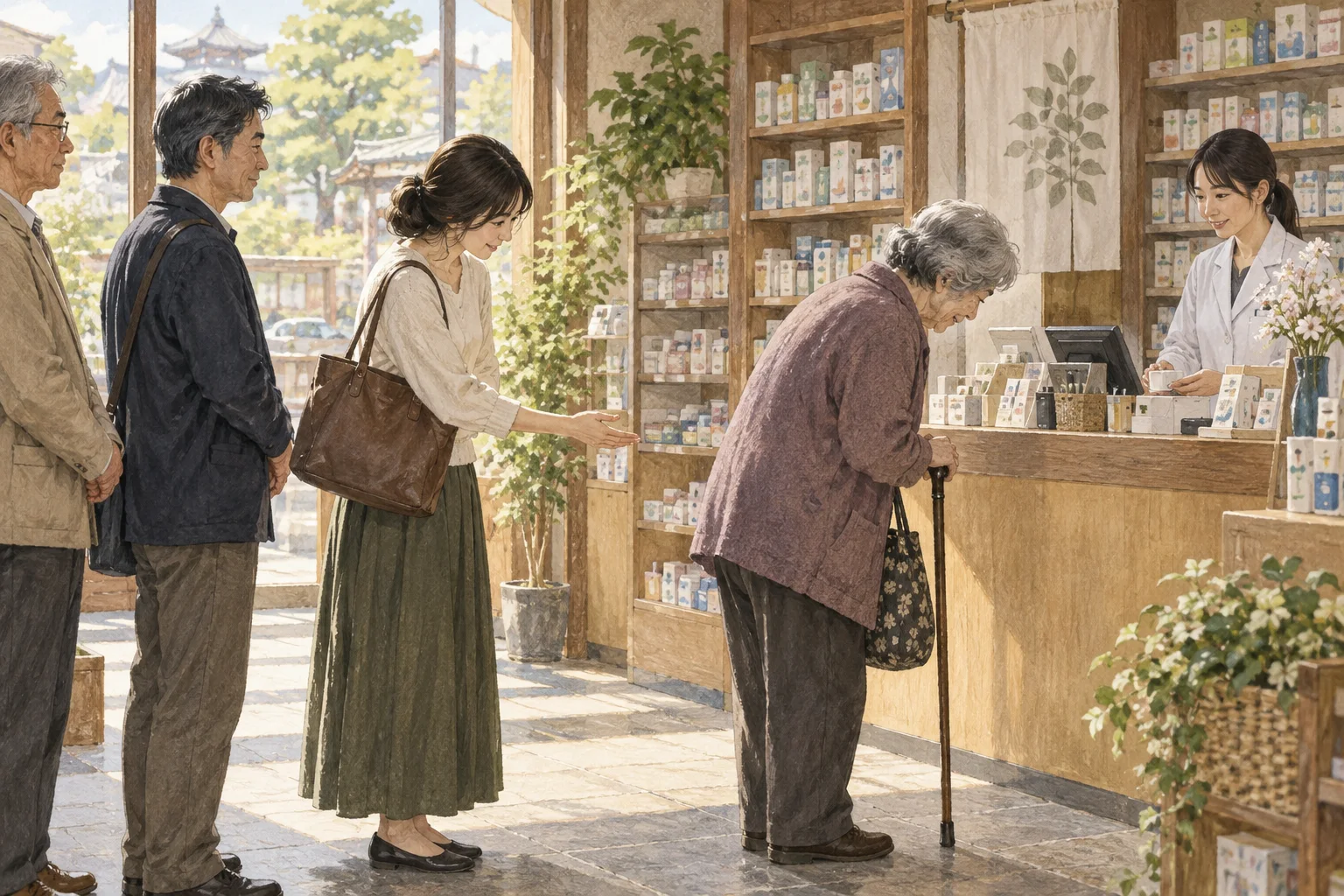
In checkout lines, people sometimes quietly offer their turn to someone who seems rushed or has fewer items.
レジや行列では、急いでいそうな人や品数の少ない人に、黙って自分の順番を譲ることがあります。
30秒で説明する
外国人に説明するときの標準サイズ
In checkout lines, at ticket machines, or waiting for an elevator, it is not unusual in Japan to quietly gesture someone ahead of you, especially if they seem to be in a hurry, are carrying only one or two items compared with your full basket, or are elderly, pregnant, or traveling with a small child. The offer is usually made with a small gesture and a short phrase rather than a long explanation, and a brief bow of thanks is the expected reply. Refusing the offer once, out of politeness, before accepting is common here too.
レジや券売機、エレベーター待ちなどで、急いでいそうな人や、自分がかごいっぱいなのに品数が少ない人、高齢者や妊娠中の人、小さな子ども連れの人に、黙って先を譲る身振りをすることは珍しくありません。長い説明ではなく、小さな身振りと短い一言で申し出るのがふつうで、譲られた側は軽くお辞儀をして礼を言うのが期待される応じ方です。ここでも、一度は遠慮してから受け取るというやりとりがよく見られます。
スピーチ・英作文
通訳案内士の二次口述・大学入試の自由英作文に
Quietly yielding your place in line is a small courtesy you will see in Japan at supermarket registers, ticket machines, elevators and bus stops. If someone behind you in a checkout line is only holding a bottle of water while your basket is full, or someone looks like they are about to miss a train, or an elderly person or someone with a small child is waiting, it is normal to catch their eye, gesture toward the front, and say a short phrase like please, go ahead.
The exchange is deliberately brief; a long explanation would draw more attention than the situation calls for. The person offered the spot will often hesitate for a second, a small piece of the same enryo reflex used with gifts, before accepting with a short bow and a word of thanks.
What makes this work smoothly, I think, is that nobody treats it as a big deal in either direction. It is offered without being asked, accepted without much fuss, and forgotten within a minute, part of what makes lines in Japan feel calm even when they are genuinely long.
順番を黙って譲ることは、日本ではスーパーのレジや券売機、エレベーター、バス停で見かける、小さな思いやりです。レジに並んでいて、後ろの人が水のボトル一本だけなのに自分のかごがいっぱいだったり、電車に乗り遅れそうな人がいたり、高齢者や小さな子ども連れの人が待っていたりすると、目を合わせて前を指し示し、「お先にどうぞ」といった短い一言を添えるのがふつうです。
このやりとりはあえて短く済まされます。長々と説明すると、その場に必要以上の注目を集めてしまうからです。譲られた側は、贈り物のときと同じ「遠慮」の反射のように一瞬ためらってから、軽くお辞儀をして礼を言って受け入れることが多くあります。
これがうまく機能しているのは、どちらの側もこれを大げさに扱わないからだと思います。頼まれなくても申し出て、大した騒ぎもなく受け入れられ、1分もすれば忘れられる。長い行列でも日本の列がどこか落ち着いて感じられる理由の一つです。
こう聞かれたら
外国人から実際にされる質問と、その答え方。
How do I offer without seeming to make a scene?
大げさにならずに順番を譲るにはどうすればいいですか。
A small gesture toward the front and a short phrase like douzo, meaning please or go ahead, is enough. There is no need for a long explanation, and keeping it brief is actually part of doing it correctly.
前を指し示す小さな身振りと、「どうぞ」という短い一言で十分です。長い説明は必要なく、簡潔にすること自体がこの作法の一部です。
Is it okay to decline if someone offers me their spot?
順番を譲られたとき、断ってもいいのですか。
It is fine to politely hesitate once, but accepting with a quick bow and a word of thanks is the more common and expected response, especially if the situation genuinely calls for it, like being visibly rushed.
一度は丁寧にためらっても構いませんが、明らかに急いでいるなど、その場の状況が本当にそうであるなら、軽くお辞儀をして礼を言い、受け入れるほうがより一般的で期待される反応です。
Does this happen in every kind of line?
どんな行列でも起こることなのですか。
It is more common with short, informal waits, like a register or a machine, than with something like a long line for a popular restaurant or a ticketed event, where the order is treated more strictly and yielding a spot is rare.
レジや機械の待ち列のような短くて形式ばらない行列では起こりやすい一方、人気の飲食店やチケット制のイベントの長い行列では、順番がより厳格に扱われ、譲ることはまれです。
そのまま使えるフレーズ
- Please, go ahead of me.お先にどうぞ。
- You only have a few items, go first.少しだけですから、先にどうぞ。
- Thank you, that's very kind.ありがとうございます、恐れ入ります。
- Are you in a hurry? Please go ahead.お急ぎですか。どうぞお先に。
- No need to explain, just go ahead.説明は要りませんから、どうぞお先に。
説明に使う語句
- to yield (a turn)順番を譲る
- checkout lineレジの列
- please go aheadお先にどうぞ
- small bow会釈
- to hurry急ぐ
動画で見る
YouTube より豆知識
スーパーのレジで「お先にどうぞ」と譲る行為は、マナー本や外国人向けの生活ガイドでもたびたび紹介される、ちょっとした親切の代表例とされる。高齢者や妊婦、子ども連れを優先する意識は、優先レジや優先エレベーターといった仕組みにも表れているが、そうした専用の列がない場面での自発的な譲り合いも広く見られる。譲られた側が過度に恐縮して長々とやりとりを続けると、かえって列の流れを止めてしまうため、短く済ませることが好まれる。
