世間体せけんてい
sekentei
how you look to the people around you
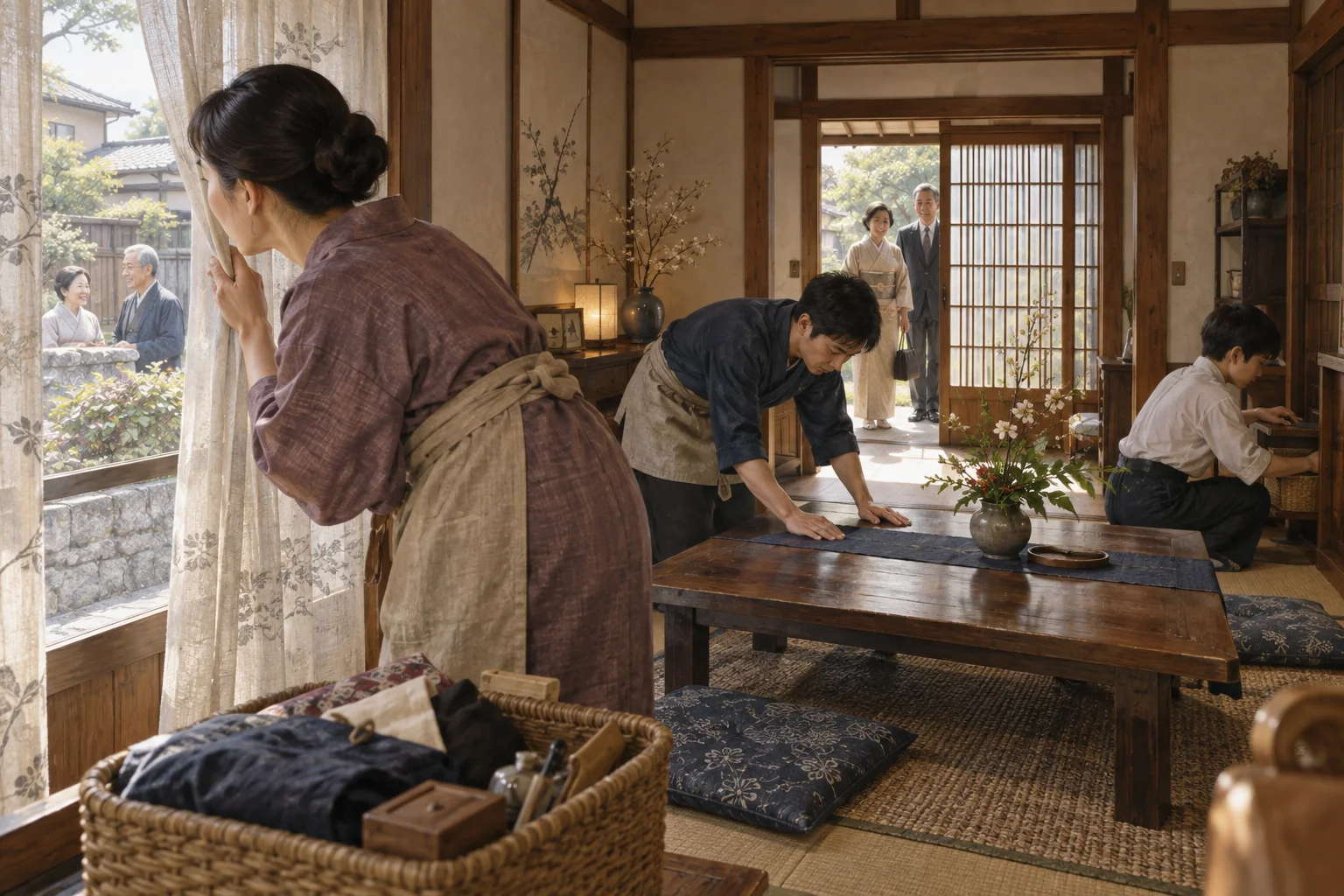
「世間様に顔向けできない」。特定の誰かではない“世間”の目を気にする感覚。
一言で言うと
これだけ覚えれば最低限伝わる一文
Sekentei is your standing in the eyes of the people around you, and protecting it drives many decisions.
世間体とは周りの人の目に映る自分の立場のことで、それを守ることが多くの決断を左右します。
30秒で説明する
外国人に説明するときの標準サイズ
Seken is the vague circle of people whose opinion counts: neighbors, relatives, coworkers, the parents at school. Sekentei is how you appear to them. Many Japanese people weigh a choice, such as a job, a wedding or a divorce, partly by how it will look to seken, not only by whether it is right for them. The pressure is real even though seken has no face and never says anything directly.
世間とは、その意見が重みを持つ人々のぼんやりした輪のことで、近所、親戚、同僚、学校の保護者などです。世間体はその人たちに自分がどう映るかです。仕事や結婚や離婚といった選択を、自分にとって正しいかだけでなく「世間にどう見えるか」でも量る日本人は少なくありません。世間には顔がなく、直接何も言わないのに、その圧力は本物です。
スピーチ・英作文
通訳案内士の二次口述・大学入試の自由英作文に
To understand why Japanese people sometimes make choices that look self-defeating, it helps to know the word sekentei. Seken is the circle of people who could be watching: neighbors, relatives, colleagues, other parents at school. It is not the law and not your close friends, but the vague middle ground of society.
Sekentei is your appearance in their eyes, and keeping it respectable is a constant quiet concern. It is why a family may hold a full funeral they cannot really afford, why someone stays in a stable but miserable job, and why an adult child living at home may be a source of embarrassment for the parents.
The phrase for the worst case is being unable to show your face to seken. In my experience the pressure has weakened, especially in big cities, but it still shapes life in small towns and in older generations, and the word is used every day.
日本人がときに自分の首を絞めるような選択をする理由を理解するには、「世間体」という言葉を知ると役立ちます。世間とは、見ているかもしれない人々の輪のことで、近所、親戚、同僚、学校の他の保護者などです。法律でも親しい友人でもなく、社会のぼんやりした中間地帯です。
世間体はその人たちの目に映る自分の姿で、それを体裁よく保つことは絶えず静かな気がかりです。だから家族は本当は払えない立派な葬式を出し、安定しているが惨めな仕事に人はとどまり、実家に住む大人の子どもが親の恥になったりします。
最悪の場合の言い回しが「世間様に顔向けできない」です。私の経験では、特に大都市ではこの圧力は弱まりましたが、小さな町や上の世代では今も暮らしを形づくっていて、この言葉は毎日使われています。
こう聞かれたら
外国人から実際にされる質問と、その答え方。
Who exactly is seken? Is it the same as society?
世間とは具体的に誰のことですか。社会と同じですか。
Smaller and closer than society. It is the people who know your name and might talk about you: the block you live on, your extended family, your company. A stranger in another city is not seken, which is why people feel freer when they move away.
社会より小さく近いものです。あなたの名前を知り、噂するかもしれない人たち、つまり住んでいる一角、親戚一同、勤め先です。よその町の他人は世間ではないので、人は引っ越すと解放感を覚えるのです。
Is sekentei the same as saving face?
世間体は、面子を保つことと同じですか。
They overlap, but face is about your own dignity in a specific encounter, while sekentei is about the ongoing reputation of you and your household in front of an unseen audience. Sekentei also covers your family, so a child's behavior affects the parents' sekentei.
重なりますが、面子はある場面での自分自身の威厳のことで、世間体は見えない観客の前での自分と家の継続的な評判です。世間体は家族にも及ぶので、子どもの振る舞いが親の世間体に響きます。
誤解されやすい
MYTHJapanese people are simply shy about what others think.
日本人は人目をただ気にしているだけだ、と思われがちです。
FACTIt is less shyness than a shared assumption that reputation is a family asset held in front of a watching community, so protecting it is treated as responsible, not timid.
内気というより、評判は見守る共同体の前で家族が共有する財産だという前提があります。それを守ることは、臆病ではなく責任ある態度と見なされます。
そのまま使えるフレーズ
- They did it mostly for appearances.世間体のためにやったようなものです。
- What would the neighbors think?近所の人にどう思われるか。
- He couldn't face his relatives after that.その後、彼は親戚に顔向けできませんでした。
- In a small town, everyone knows everyone's business.小さな町では、みんながお互いの事情を知っています。
- Her parents worried about how it would look.彼女の両親は世間体を気にしました。
説明に使う語句
- appearances世間体・体裁
- reputation評判
- keep up appearances体裁を保つ
- the neighbors / the community世間・近所
- peer pressure周囲の圧力
動画で見る
YouTube より豆知識
「世間」はもともと仏教語で、俗世を指す言葉でしたが、日本では「自分を知る人々の範囲」という独特の意味を持つようになりました。「世間様」と敬称をつけて呼ぶ言い方や、「渡る世間に鬼はなし」「世間は狭い」といった慣用句が今も生きています。世間体が強く働く場面は、結婚・葬式・進学・就職など人生の節目に集中し、地域や世代で差が大きいものです。都市部の若い世代では「世間体を気にしない」と言い切る人も増えていますが、親世代との間でそのずれが衝突を生むことがあります。日本の「世間」を西洋の「社会」と対比して論じた研究は歴史学や社会学の分野に複数あります。
