思いやりおもいやり
omoiyari
imagining how the other person feels
言われる前に気づくこと。日本の道徳教育の中心にある言葉。
一言で言うと
これだけ覚えれば最低限伝わる一文
Omoiyari is anticipating what another person needs before they have to say it.
思いやりとは、相手が口に出す前に、その人が必要としていることに気づくことです。
30秒で説明する
外国人に説明するときの標準サイズ
Omoiyari is usually translated as consideration, but it is more specific: imagining the other person's position and acting on it without being asked. It is taught from kindergarten, and much of what visitors admire in Japanese service and public behavior is this idea in practice.
思いやりはふつう consideration と訳されますが、もっと限定された意味を持ちます。相手の立場を想像し、頼まれる前に動くことです。幼稚園から教えられ、訪日客が感心する接客や公共の場のふるまいの多くは、この考えが形になったものです。
スピーチ・英作文
通訳案内士の二次口述・大学入試の自由英作文に
Omoiyari is a word Japanese schools teach explicitly and English has to circle around. It is often rendered as consideration or empathy, but neither is quite right. Empathy is feeling what another feels; omoiyari is working out what someone needs and quietly doing it before they ask, ideally without them noticing who did it.
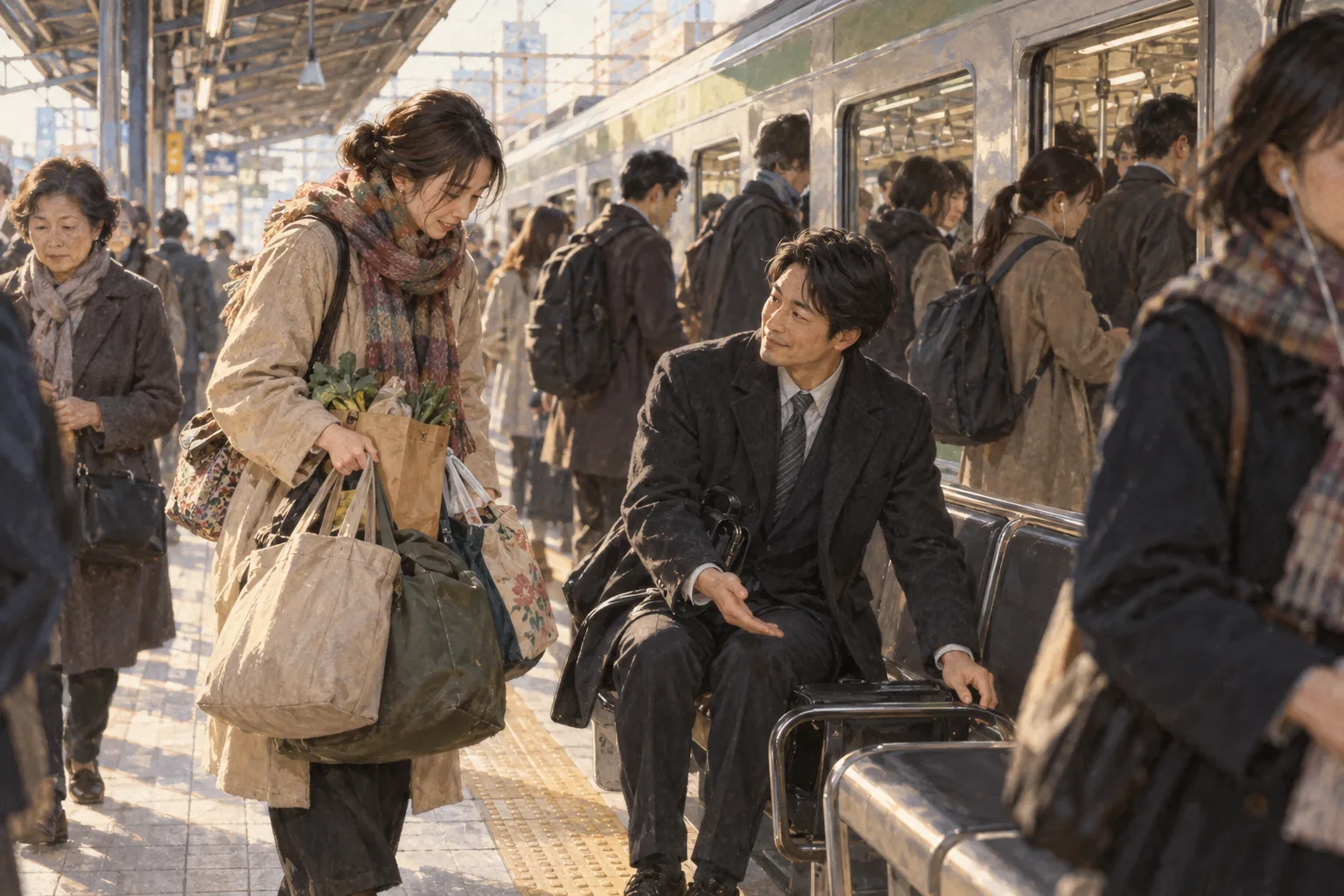
A cup of tea appearing at the right moment, an umbrella left by the door, a colleague reorganizing a schedule because they guessed you were struggling. It appears in school curricula as a moral aim, and it underlies the service culture people admire here. The honest counterweight is that it has costs.
A system built on anticipating needs discourages stating them, so people who want something unusual, or who are not good at reading others, are poorly served. And a guest who does not notice what has been done for them is not being rude; they simply were not meant to.
思いやりは、日本の学校がはっきりと教える語で、英語は周りを回って説明するしかありません。consideration や empathy と訳されますが、どちらも少しずれます。empathy は相手が感じていることを感じることですが、思いやりは、相手が何を必要としているかを考え、頼まれる前に静かにそれを行うことです。
できれば、誰がしたのか気づかれないほうがよい。ちょうどよいときに出てくるお茶、扉のそばに置かれた傘、こちらが手一杯だと察して予定を組み直す同僚。学校の道徳の目標として掲げられ、人が感心する接客の文化の土台にもなっています。正直に釣り合いを取るなら、代償もあります。
必要を察することで成り立つ仕組みは、必要を口に出すことを妨げます。ふつうと違うものを望む人や、人の気持ちを読むのが得意でない人には、行き届きにくいのです。そして、してもらったことに気づかない客は、無礼なのではありません。もともと気づかせないつもりだったのです。
こう聞かれたら
外国人から実際にされる質問と、その答え方。
How is it different from kindness?
親切とはどう違うのですか。
Kindness can be done openly and for its own sake. Omoiyari specifically involves guessing the other person's situation and acting without being asked, often without drawing attention to the act.
「kindness」は表立って、それ自体のために行うことができます。思いやりは、相手の状況を推し量り、頼まれずに動くことであり、多くの場合、その行いに注意を引かせません。
Can it go wrong?
裏目に出ることはありますか。
Yes. Guessing wrongly produces unwanted help, and a culture of anticipation makes it harder to simply ask. People with different needs from the assumed norm can fall through exactly this gap.
うまくいかないこともあります。推し量りを誤れば、望まれない手助けになります。察し合う文化は、ただ頼むことを難しくもします。想定された標準と違う必要を持つ人は、まさにその隙間からこぼれ落ちます。
How do I show omoiyari as a visitor?
旅行者として思いやりを示すにはどうすればよいですか。
Notice the small structures around you and use them: keep your voice down, keep the tactile paving clear, take your trash with you, hold a door. Doing those without being told is exactly the idea.
周りにある小さな仕組みに気づいて使うことです。声を落とし、点字ブロックの上を空け、ごみを持ち帰り、扉を押さえる。言われる前にそうすることが、まさにこの考えです。
そのまま使えるフレーズ
- She noticed before anyone said anything.誰も言う前に気づいてくれました。
- That was thoughtful of you.お心遣いありがとうございます。
- Put yourself in their position.相手の立場に立って考えてみてください。
- You don't have to make a show of it.わざわざ知らせなくてかまいません。
- Please just tell me what you need.必要なことは言ってくださいね。
説明に使う語句
- consideration for others思いやり
- to anticipate察する
- thoughtfulness心遣い
- the other person's position相手の立場
- unasked, of one's own accord言われる前に
動画で見る
YouTube より豆知識
思いやりは、小学校の道徳の教材で繰り返し扱われる徳目の一つです。相手の立場に立って考えるという言い方とともに教えられ、学級の目標に掲げられることもあります。語源は、思いを遠くへやる、心を向けるという意味の思い遣るにさかのぼります。接客の場面では、頼まれる前に用意する配慮として現れますが、必要を言い出しにくくする面もあり、近年は、はっきり伝え合うことの大切さも並べて語られるようになりました。
