けじめけじめ
kejime
drawing a clear line between one thing and another
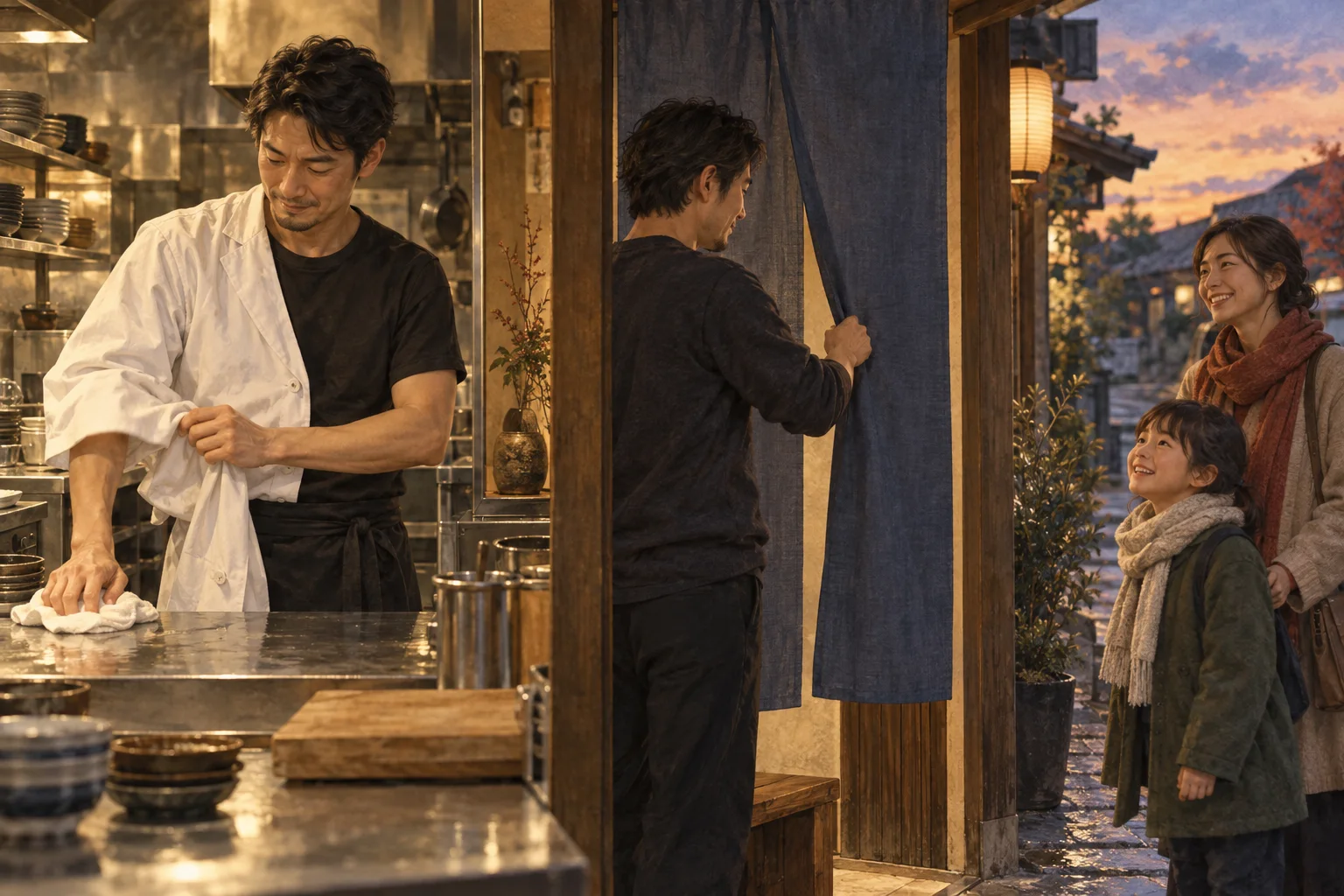
公と私、仕事と遊び、上と下。区切りを付けることを一語で言う。
一言で言うと
これだけ覚えれば最低限伝わる一文
Kejime is the act of drawing a clear line between situations, roles or stages, and behaving accordingly.
けじめとは、場面や立場や段階のあいだに区切りをつけ、それに沿って振る舞うことです。
30秒で説明する
外国人に説明するときの標準サイズ
Kejime means making a distinction and observing it: between work and private life, between the formal part of an evening and the relaxed part, between a junior and a senior role, between one stage of life and the next. It also means taking responsibility to close something off properly, including resigning over a failure.
けじめとは、区別をつけ、それを守ることです。仕事と私生活、場のあらたまった時間とくだけた時間、後輩の立場と先輩の立場、人生のある段階と次の段階。そして、失敗の責任を取って身を引くように、物事をきちんと終わらせることも指します。
スピーチ・英作文
通訳案内士の二次口述・大学入試の自由英作文に
Kejime is hard to translate because English splits it across several ideas: making a distinction, keeping boundaries, and settling accounts. In daily use it is about behaving differently in different frames and knowing where the line is. At a work drinking party, the first half is formal and the second half is not, and someone who behaves in the first half as though it were the second lacks kejime.
Speaking casually with a senior colleague in the office and freely with the same person at a bar is not inconsistency; it is the line being observed. The word also has a heavier sense. Taking kejime can mean closing something properly by accepting consequences, and when a Japanese executive resigns after a failure, commentary will often use this word rather than a word for guilt.
That is worth noticing: the resignation is framed as drawing a line under the matter so that the organization can move on, which is a different logic from personal blame, and it explains why the pattern looks strange from outside.
けじめは訳しにくい語です。英語では、区別すること、境目を保つこと、始末をつけることに分かれてしまうからです。日常では、場面ごとに振る舞いを変え、線がどこにあるかを分かっていることを指します。職場の飲み会では、前半はあらたまった時間、後半はくだけた時間で、前半を後半のように過ごす人は、けじめが無いと言われます。
会社では先輩に丁寧に話し、同じ人と店では気楽に話す。これは一貫していないのではなく、線が守られているということです。この語にはもっと重い意味もあります。けじめをつけるとは、結果を引き受けて物事をきちんと閉じることでもあります。
失敗のあとに日本の経営者が辞任すると、論評は罪という語ではなく、この語を使うことがよくあります。ここは見ておく値打ちがあります。その辞任は、組織が先へ進めるように、この件に線を引く行為として語られています。個人の責任を問うのとは別の理屈で、外から見ると奇妙に映る理由も、ここにあります。
こう聞かれたら
外国人から実際にされる質問と、その答え方。
Is it the same as self-discipline?
自制と同じことですか。
Related but not the same. Self-discipline is about controlling yourself; kejime is about recognizing that this situation is not that situation and adjusting. A person can be disciplined and still fail to read the boundary.
近いですが同じではありません。自制は自分を抑えることです。けじめは、この場は別の場とは違うと見分けて、合わせることです。自制のできる人が、境目を読み違えることはあります。
Why do executives resign when they did not personally do it?
自分がやったわけでもないのに、どうして役員が辞めるのですか。
The resignation is often presented as kejime, closing the matter so the organization can move forward, rather than as an admission of personal fault. Whether that is a good system is debated inside Japan too.
その辞任は、個人の落ち度を認めるというより、組織が前へ進めるよう件に区切りをつける、けじめとして示されることが多いです。それが良い仕組みかどうかは、日本の中でも議論があります。
How would I show kejime at work?
職場でけじめを示すには、どうすればいいですか。
Switch registers when the setting changes, finish what you started before moving on, and mark transitions clearly: a proper greeting at the start, a proper thanks at the end, and not carrying last night's informality into the morning.
場が変われば話し方を切り替える、始めたことを片づけてから次へ進む、区切りをはっきりさせる。始めにきちんと挨拶し、終わりにきちんと礼を言い、前の晩のくだけた調子を翌朝に持ち込まないことです。
そのまま使えるフレーズ
- There is a time and a place for that.それには時と場所があります。
- Let's finish this properly before we move on.けじめをつけてから次に移りましょう。
- Work is work and after hours is after hours.仕事は仕事、あとはあとです。
- He knows where the line is.あの人はけじめを心得ています。
- He resigned to draw a line under it.けじめをつけて辞任しました。
説明に使う語句
- a boundary境目・区切り
- to distinguish区別する
- a transition移り目
- to take responsibility責任を取る
- formal and informalあらたまった場とくだけた場
動画で見る
YouTube より豆知識
けじめをつける、けじめが無い、公私のけじめ、といった形でよく使われます。人生の段階を区切る行事、たとえば成人式や卒業式も、けじめの場として語られます。仕事の場では、始業の挨拶、会議の始めと終わりの礼、送別の会などが区切りの働きをします。責任を取って辞める場面でこの語が使われるとき、それは罪を認めるというより、件を閉じて先へ進めるという意味合いで用いられています。区切りを重んじる感覚は、年度や暦の切り替えを大事にする習慣とも通じています。
