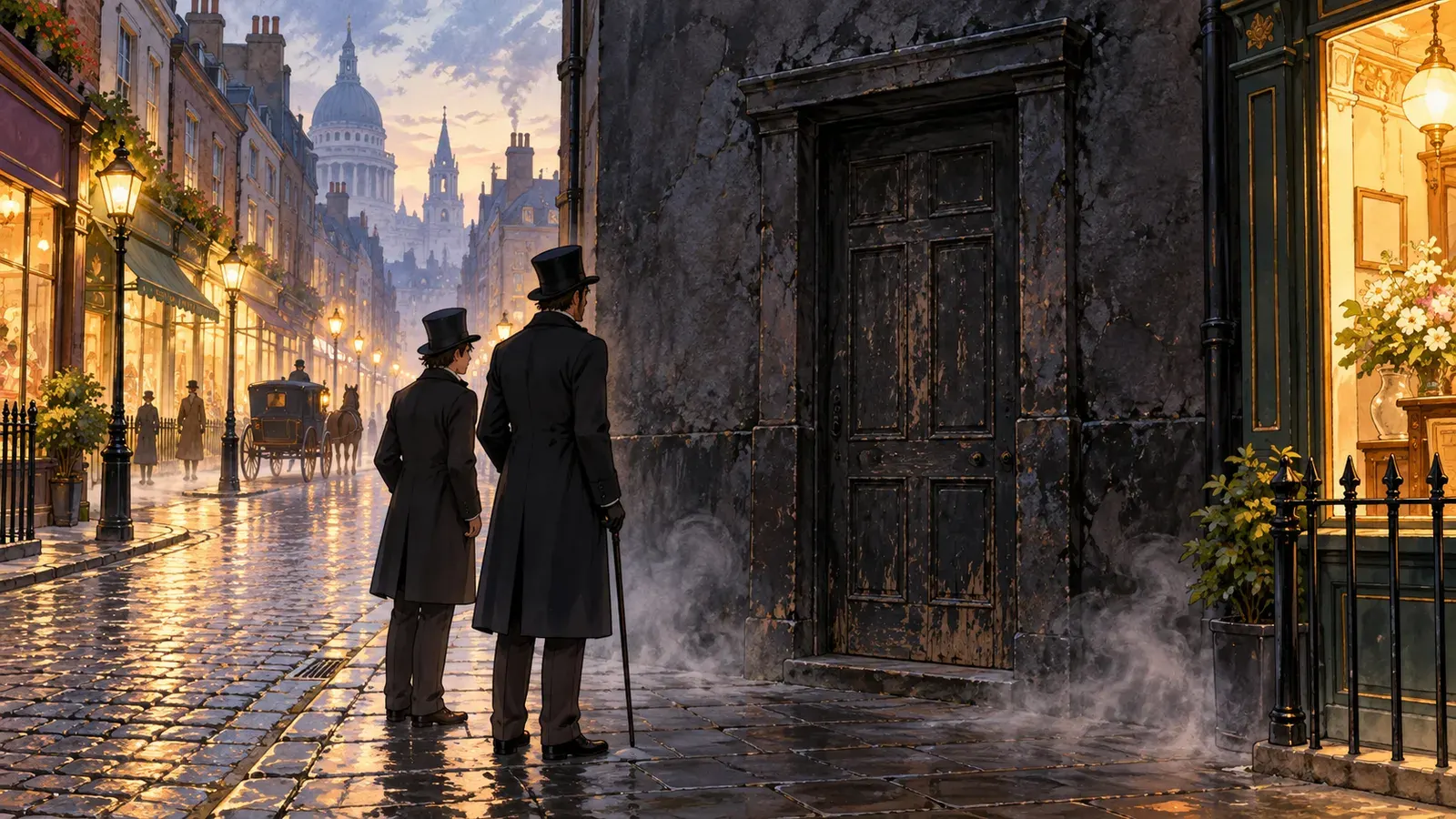
Mr. Utterson the lawyer was a man of a rugged countenance that was never lighted by a smile; cold, scanty and embarrassed in discourse; backward in sentiment; lean, long, dusty, dreary and yet somehow lovable. At friendly meetings, and when the wine was to his taste, something eminently human beaconed from his eye; something indeed which never found its way into his talk, but which spoke not only in these silent symbols of the after-dinner face, but more often and loudly in the acts of his life. He was austere with himself; drank gin when he was alone, to mortify a taste for vintages; and though he enjoyed the theatre, had not crossed the doors of one for twenty years. But he had an approved tolerance for others; sometimes wondering, almost with envy, at the high pressure of spirits involved in their misdeeds; and in any extremity inclined to help rather than to reprove. "I incline to Cain's heresy," he used to say quaintly: "I let my brother go to the devil in his own way." In this character, it was frequently his fortune to be the last reputable acquaintance and the last good influence in the lives of downgoing men. And to such as these, so long as they came about his chambers, he never marked a shade of change in his demeanour.
弁護士のアタスン氏は、ごつごつした顔の男で、その顔がほほえみで明るむことは一度もなかった。話しぶりは冷ややかで口数も少なく、どこかぎこちなかった。気持ちを表に出すのも苦手だった。やせて背が高く、どこかくすんで陰気だった。それなのに、なぜか人に好かれた。親しい仲間の集まりで、ワインが口に合ったときなどは、いかにも人間らしい温かみが、その目に灯のようにともった。それが話しぶりに表れることは決してなかった。だが、食後の顔にふと浮かぶその無言のしるしに表れていたし、それ以上に、ふだんの行いにはっきりと表れていた。アタスン氏は自分には厳しかった。上等なワインが好きなのに、それを抑えるために、一人のときはジンを飲んだ。芝居が好きなのに、もう二十年も劇場に足を踏み入れていなかった。ところが他人には、誰もが認めるほど寛大だった。人が悪いことをするときの、あの激しい情熱の高ぶりに、ほとんどうらやましいような気持ちで首をかしげることさえあった。そして、人がどんなにひどい窮地に陥っても、責めるより助けるほうを選んだ。「わたしはカインの異端に近いのですよ」と、アタスン氏はよく風変わりな言い方をした。「兄弟が自分の好きなやり方で地獄へ落ちていくのを、止めはしないのです」こういう人柄だったので、落ちぶれていく男たちにとって、最後まで残るまともな知り合い、最後まで残るよい感化の相手になることがよくあった。そういう男たちが事務所に顔を出すかぎり、アタスン氏はほんの少しも態度を変えなかった。
No doubt the feat was easy to Mr. Utterson; for he was undemonstrative at the best, and even his friendship seemed to be founded in a similar catholicity of good-nature. It is the mark of a modest man to accept his friendly circle ready-made from the hands of opportunity; and that was the lawyer's way. His friends were those of his own blood or those whom he had known the longest; his affections, like ivy, were the growth of time, they implied no aptness in the object. Hence, no doubt the bond that united him to Mr. Richard Enfield, his distant kinsman, the well-known man about town. It was a nut to crack for many, what these two could see in each other, or what subject they could find in common. It was reported by those who encountered them in their Sunday walks, that they said nothing, looked singularly dull and would hail with obvious relief the appearance of a friend. For all that, the two men put the greatest store by these excursions, counted them the chief jewel of each week, and not only set aside occasions of pleasure, but even resisted the calls of business, that they might enjoy them uninterrupted.
アタスン氏にとって、それはたやすいことだったにちがいない。もともと感情をめったに表に出さない人だったし、友情でさえ、同じように誰でも分けへだてなく受け入れる人のよさから生まれているようだったからだ。つつましい人間は、友人を自分で選ばない。めぐり合わせが運んでくるままに受け入れる。この弁護士もそうだった。友人といえば、親類か、いちばん古くからの知り合いだった。アタスン氏の好意はツタのようなもので、時間をかけて育ったものだった。相手が好意に値するかどうかとは関係がなかった。遠い親類のリチャード・エンフィールド氏との仲も、きっとそうして結ばれたのだろう。エンフィールド氏は、ロンドンの社交界ではよく知られた遊び人だった。この二人が互いのどこを気に入っているのか、どんな話題で話が合うのか、多くの人には見当もつかなかった。日曜日に散歩している二人に出会った人々の話では、二人は何もしゃべらず、ひどく退屈そうな顔をしていて、知り合いが現れると、いかにもほっとしたように声をかけるという。それなのに二人は、この散歩をこのうえなく大事にしていた。一週間のいちばんの楽しみと思っていて、じゃまされずに楽しむために、遊びの誘いを断るばかりか、仕事の用事まで後回しにしたのだった。
It chanced on one of these rambles that their way led them down a by-street in a busy quarter of London. The street was small and what is called quiet, but it drove a thriving trade on the weekdays. The inhabitants were all doing well, it seemed, and all emulously hoping to do better still, and laying out the surplus of their gains in coquetry; so that the shop fronts stood along that thoroughfare with an air of invitation, like rows of smiling saleswomen. Even on Sunday, when it veiled its more florid charms and lay comparatively empty of passage, the street shone out in contrast to its dingy neighbourhood, like a fire in a forest; and with its freshly painted shutters, well-polished brasses, and general cleanliness and gaiety of note, instantly caught and pleased the eye of the passenger.
そんな散歩のある日、二人はロンドンのにぎやかな地区の裏通りを歩いていた。小さな通りで、いわゆる閑静な通りだったが、平日には商売が繁盛していた。住人たちはみな景気がよいらしく、誰もがもっと景気をよくしようと張り合っていた。そして、もうけの余りで店を飾りたてていた。だから通りに並ぶ店先は、にこにこ笑う売り子の列のように、客を誘っていた。日曜日には、派手な飾りもいくらか隠れ、人通りもわりあい少なかった。それでもこの通りは、薄汚いまわりの町並みのなかで、森のなかのたき火のように明るく目立っていた。塗りたての雨戸、よく磨かれた真鍮の金具、すみずみまで清潔で華やいだ感じが、通りかかる人の目をたちまち引きつけ、楽しませた。
Two doors from one corner, on the left hand going east the line was broken by the entry of a court; and just at that point a certain sinister block of building thrust forward its gable on the street. It was two storeys high; showed no window, nothing but a door on the lower storey and a blind forehead of discoloured wall on the upper; and bore in every feature, the marks of prolonged and sordid negligence. The door, which was equipped with neither bell nor knocker, was blistered and distained. Tramps slouched into the recess and struck matches on the panels; children kept shop upon the steps; the schoolboy had tried his knife on the mouldings; and for close on a generation, no one had appeared to drive away these random visitors or to repair their ravages.
東へ向かって左側、角から二軒目のところで、家並みがとぎれ、中庭への入り口になっていた。ちょうどそこに、不気味な建物がひとつ、切妻の壁を通りへ突き出していた。二階建てで、窓がひとつもなかった。一階にはドアがひとつあるだけ、二階は変色した壁が、目のない額のようにのっぺりと広がっているだけだった。どこを見ても、長いあいだ、ほったらかしにされて荒れはてたあとがあった。ドアには呼び鈴もノッカーもなく、ペンキはふくれてはがれ、しみだらけだった。浮浪者がだらしなく戸口のくぼみに入りこんで、ドアの板でマッチをすった。子どもたちは石段でお店ごっこをした。学校帰りの少年は、ドアの飾りの縁でナイフの切れ味を試した。そしてひと世代近くものあいだ、こうした気ままな客を追い払う者も、荒らされたあとを直す者も、一人も現れなかった。
Mr. Enfield and the lawyer were on the other side of the by-street; but when they came abreast of the entry, the former lifted up his cane and pointed.
エンフィールド氏と弁護士は、裏通りの反対側を歩いていた。だが入り口の真向かいまで来ると、エンフィールド氏はステッキを持ち上げて、そのドアを指した。
"Did you ever remark that door?" he asked; and when his companion had replied in the affirmative, "It is connected in my mind," added he, "with a very odd story."
「あのドアに気づいたことがありますか?」とエンフィールド氏はたずねた。連れがあると答えると、こうつけ加えた。「あのドアを見ると、とても奇妙な話を思い出すんです」
"Indeed?" said Mr. Utterson, with a slight change of voice, "and what was that?"
「ほう」とアタスン氏は、わずかに声の調子を変えて言った。「どんな話だね?」
"Well, it was this way," returned Mr. Enfield: "I was coming home from some place at the end of the world, about three o'clock of a black winter morning, and my way lay through a part of town where there was literally nothing to be seen but lamps. Street after street and all the folks asleep—street after street, all lighted up as if for a procession and all as empty as a church—till at last I got into that state of mind when a man listens and listens and begins to long for the sight of a policeman. All at once, I saw two figures: one a little man who was stumping along eastward at a good walk, and the other a girl of maybe eight or ten who was running as hard as she was able down a cross street. Well, sir, the two ran into one another naturally enough at the corner; and then came the horrible part of the thing; for the man trampled calmly over the child's body and left her screaming on the ground. It sounds nothing to hear, but it was hellish to see. It wasn't like a man; it was like some damned Juggernaut. I gave a few halloa, took to my heels, collared my gentleman, and brought him back to where there was already quite a group about the screaming child. He was perfectly cool and made no resistance, but gave me one look, so ugly that it brought out the sweat on me like running. The people who had turned out were the girl's own family; and pretty soon, the doctor, for whom she had been sent, put in his appearance. Well, the child was not much the worse, more frightened, according to the Sawbones; and there you might have supposed would be an end to it. But there was one curious circumstance. I had taken a loathing to my gentleman at first sight. So had the child's family, which was only natural. But the doctor's case was what struck me. He was the usual cut and dry apothecary, of no particular age and colour, with a strong Edinburgh accent and about as emotional as a bagpipe. Well, sir, he was like the rest of us; every time he looked at my prisoner, I saw that Sawbones turn sick and white with the desire to kill him. I knew what was in his mind, just as he knew what was in mine; and killing being out of the question, we did the next best. We told the man we could and would make such a scandal out of this as should make his name stink from one end of London to the other. If he had any friends or any credit, we undertook that he should lose them. And all the time, as we were pitching it in red hot, we were keeping the women off him as best we could for they were as wild as harpies. I never saw a circle of such hateful faces; and there was the man in the middle, with a kind of black sneering coolness—frightened too, I could see that—but carrying it off, sir, really like Satan. 'If you choose to make capital out of this accident,' said he, 'I am naturally helpless. No gentleman but wishes to avoid a scene,' says he. 'Name your figure.' Well, we screwed him up to a hundred pounds for the child's family; he would have clearly liked to stick out; but there was something about the lot of us that meant mischief, and at last he struck. The next thing was to get the money; and where do you think he carried us but to that place with the door?—whipped out a key, went in, and presently came back with the matter of ten pounds in gold and a cheque for the balance on Coutts's, drawn payable to bearer and signed with a name that I can't mention, though it's one of the points of my story, but it was a name at least very well known and often printed. The figure was stiff; but the signature was good for more than that if it was only genuine. I took the liberty of pointing out to my gentleman that the whole business looked apocryphal, and that a man does not, in real life, walk into a cellar door at four in the morning and come out with another man's cheque for close upon a hundred pounds. But he was quite easy and sneering. 'Set your mind at rest,' says he, 'I will stay with you till the banks open and cash the cheque myself.' So we all set off, the doctor, and the child's father, and our friend and myself, and passed the rest of the night in my chambers; and next day, when we had breakfasted, went in a body to the bank. I gave in the cheque myself, and said I had every reason to believe it was a forgery. Not a bit of it. The cheque was genuine."
「こういうことなんです」とエンフィールド氏は答えた。「わたしは、世界の果てかと思うような遠くから家へ帰るところでした。真っ暗な冬の夜中の三時ごろです。帰り道は、文字どおり街灯しか見えないような町なかを通っていました。どこまで行っても通りが続き、人はみな眠っている。どの通りも行列でも来るかのように明かりがともっているのに、どこも教会のようにがらんとしている。とうとう、耳を澄ましに澄まして、警官の姿でもいいから見たいと思うような気分になってきました。そのとき急に、二つの人影が見えたんです。一人は小柄な男で、東のほうへ、どすどすと足早に歩いていました。もう一人は八つか十くらいの女の子で、横の通りを力いっぱい走ってきました。それで、二人は角でまともにぶつかってしまった。恐ろしいのはそこからです。男は平気な顔で、その子の体を踏みつけていったんです。そして、地面で泣き叫んでいる子をそのままにして行ってしまおうとした。話に聞くだけなら何でもないように思えるでしょうが、目の前で見ると地獄のようでした。人間のすることではなかった。何もかもひきつぶして進む、呪われた巨大な山車のようでした。わたしは何度か大声をあげて駆けだし、そいつの襟首をつかまえて、連れ戻しました。泣き叫ぶ子のまわりには、もうかなりの人だかりができていました。男はまったく落ち着きはらっていて、逆らいもしませんでした。ただ、わたしをひと目見た。そのひと目があまりにいやらしくて、走ったあとのように汗が噴き出しました。集まってきたのは、女の子の家族でした。まもなく医者もやって来ました。女の子は、医者を呼びに行かされた帰りだったんです。さいわい、その子はたいしたけがではありませんでした。その医者の先生に言わせれば、けがより怖がっているほうがひどかったそうです。それで一件落着と思われるかもしれません。ところが、ひとつ妙なことがあったんです。わたしは、ひと目見たときから、その男がむかむかするほど嫌いになっていました。子どもの家族もそうでした。まあ、それは当然でしょう。わたしが驚いたのは、医者の様子でした。どこにでもいるような、型どおりの薬屋あがりの医者で、年も顔色もこれといって特徴がない。エディンバラなまりが強く、バグパイプほどにも気持ちを顔に出さない男です。ところが、その医者もわたしたちと同じだったんです。わたしの捕まえた男を見るたびに、医者は殺してやりたい気持ちで気分が悪くなり、真っ青になる。わたしには医者の心のなかがわかったし、医者にもわたしの心のなかがわかっていました。殺すわけにはいきませんから、わたしたちはその次にいい手を打ちました。男にこう言ってやったんです。この件で大騒ぎを起こして、おまえの名前をロンドンのこっちの端から向こうの端まで汚してやれるし、本当にそうしてやるぞ。友人や信用があるなら、すっかりなくさせてやる、とね。そうやってかんかんになってまくしたてているあいだも、わたしたちは女たちを男から引き離しておくのに必死でした。女たちは、伝説の怪鳥ハーピーのように猛り狂っていましたからね。あれほど憎しみのこもった顔がずらりと並んでいるのは、見たことがありません。そのまんなかに男がいて、人を小ばかにしたような、黒々とした冷たい落ち着きを見せていた。怖がってもいました。それはわかりました。でも、それをうまく隠しとおしていたんです。本当に、悪魔のようにね。『この事故を種にもうけようというなら』と男は言いました。『もちろん、こちらには打つ手がない。騒ぎを起こしたい紳士などいませんからね。いくらほしいのか言ってください』そこでわたしたちは、子どもの家族のために百ポンド出させることにしました。男はどう見てもごねたそうでしたが、わたしたちの様子に、ただではすまない気配を感じたんでしょう。とうとう折れました。次は金を受け取ることです。さて、男がわたしたちをどこへ連れていったと思います?あのドアのある建物ですよ。さっと鍵を出してなかに入り、まもなく、十ポンドほどの金貨と、残りの分のクーツ銀行の小切手を持って戻ってきました。小切手は持参人払いで、署名がしてありました。その名前は言えません。わたしの話の大事なところのひとつではあるんですがね。とにかく、少なくとも世間によく知られていて、新聞などにもよく出る名前でした。金額は大きかった。ですが、その署名が本物なら、もっと大きな額でも通用したでしょう。わたしは男に、遠慮なく言ってやりました。どうもこの話は、何もかもうさんくさい。朝の四時に地下室の戸口に入っていって、百ポンド近い他人の小切手を持って出てくるなんて、現実にはありえないことだ、とね。ところが男はまったく平気な顔で、あざ笑っていました。『ご心配なく』と言うんです。『銀行が開くまでご一緒しましょう。わたしが自分で小切手を現金に換えますよ』そこでわたしたちはみんなで、つまり医者と、子どもの父親と、例の男と、わたしとで出かけていき、残りの夜をわたしの部屋で過ごしました。翌日、朝食をすませると、そろって銀行へ行きました。わたしが自分で小切手を差し出し、これは偽物にちがいないと思うと言いました。ところが、とんでもない。小切手は本物だったんです」
"Tut-tut!" said Mr. Utterson.
「ほう、ほう!」とアタスン氏は言った。
"I see you feel as I do," said Mr. Enfield. "Yes, it's a bad story. For my man was a fellow that nobody could have to do with, a really damnable man; and the person that drew the cheque is the very pink of the proprieties, celebrated too, and (what makes it worse) one of your fellows who do what they call good. Blackmail, I suppose; an honest man paying through the nose for some of the capers of his youth. Black Mail House is what I call the place with the door, in consequence. Though even that, you know, is far from explaining all," he added, and with the words fell into a vein of musing.
「あなたもわたしと同じお気持ちのようですね」とエンフィールド氏は言った。「ええ、いやな話です。わたしの捕まえた男は、誰もかかわりたくないような、本当に呪わしいやつでした。ところが小切手を書いたほうの人物は、礼儀正しさの見本のような人で、名士でもある。しかも(これがいっそういけないんですが)、いわゆる善行を積んでいる、あなたがたのお仲間の一人なんです。ゆすりでしょうね。りっぱな人が、若いころのばかな行いのせいで、法外な金をしぼり取られているんでしょう。それで、わたしはあのドアのある建物を『ゆすりの館』と呼んでいるんです。もっとも、それでもまだ、すべての説明にはほど遠いんですがね」そうつけ加えると、エンフィールド氏はもの思いにふけってしまった。
From this he was recalled by Mr. Utterson asking rather suddenly: "And you don't know if the drawer of the cheque lives there?"
その思いを破ったのは、アタスン氏のいくぶん唐突な問いだった。「それで、小切手を書いた人があそこに住んでいるかどうかは、知らないのかね?」
"A likely place, isn't it?" returned Mr. Enfield. "But I happen to have noticed his address; he lives in some square or other."
「住んでいそうな場所に見えますか?」とエンフィールド氏は答えた。「でも、たまたまその人の住所を見たことがあるんです。どこかの広場に面した家に住んでいますよ」
"And you never asked about the—place with the door?" said Mr. Utterson.
「それで、あの……ドアのある建物のことを、たずねてみたことはないのかね?」とアタスン氏は言った。
"No, sir; I had a delicacy," was the reply. "I feel very strongly about putting questions; it partakes too much of the style of the day of judgment. You start a question, and it's like starting a stone. You sit quietly on the top of a hill; and away the stone goes, starting others; and presently some bland old bird (the last you would have thought of) is knocked on the head in his own back garden and the family have to change their name. No sir, I make it a rule of mine: the more it looks like Queer Street, the less I ask."
「ありません。遠慮しましたから」という答えだった。「人にものをたずねることについては、わたしにはかなりはっきりした考えがあるんです。質問というのは、どうも最後の審判のようなところがありすぎる。質問をひとつ口にするのは、石をひとつ転がすようなものです。こちらは丘のてっぺんに、のんびり座っている。ところが石は転がっていって、ほかの石まで転がしはじめる。そのうち、どこかの人のいいおじいさんが(いちばん思いもよらない人がですよ)、自分の家の裏庭で頭をがつんとやられ、一家は名前を変えなければならなくなる。いいえ、わたしは決めているんです。いかがわしく見えれば見えるほど、たずねないことにする、とね」
"A very good rule, too," said the lawyer.
「それはじつに、いい決まりだ」と弁護士は言った。
"But I have studied the place for myself," continued Mr. Enfield. "It seems scarcely a house. There is no other door, and nobody goes in or out of that one but, once in a great while, the gentleman of my adventure. There are three windows looking on the court on the first floor; none below; the windows are always shut but they're clean. And then there is a chimney which is generally smoking; so somebody must live there. And yet it's not so sure; for the buildings are so packed together about the court, that it's hard to say where one ends and another begins."
「でも、あの建物は自分でよく見てみたことがあるんです」とエンフィールド氏は続けた。「家とはいえないような建物です。ほかにドアはないし、あのドアから出入りする人もいない。ごくたまに、わたしの話に出てきたあの男が出入りするだけです。上の階には、中庭に面した窓が三つあります。下の階にはひとつもない。窓はいつも閉まっていますが、きれいにしてあります。それに煙突があって、たいてい煙が出ている。ですから、誰かが住んでいるにはちがいない。ところが、それも確かではないんです。中庭のまわりには建物がぎっしり建てこんでいて、どこまでがひとつの建物で、どこから別の建物なのか、見分けがつかないんですよ」
The pair walked on again for a while in silence; and then "Enfield," said Mr. Utterson, "that's a good rule of yours."
二人はまたしばらく黙って歩いた。それからアタスン氏が言った。「エンフィールド、君のその決まりは、いい決まりだね」
"Yes, I think it is," returned Enfield.
「ええ、そう思います」とエンフィールドは答えた。
"But for all that," continued the lawyer, "there's one point I want to ask. I want to ask the name of that man who walked over the child."
「だが、それはそれとして」と弁護士は続けた。「ひとつだけききたいことがある。子どもを踏みつけていった男の名前を教えてほしいのだ」
"Well," said Mr. Enfield, "I can't see what harm it would do. It was a man of the name of Hyde."
「そうですね」とエンフィールド氏は言った。「それくらいなら、言っても差しつかえないでしょう。ハイドという名の男でした」
"Hm," said Mr. Utterson. "What sort of a man is he to see?"
「ふむ」とアタスン氏は言った。「見たところ、どんな男なのかね?」
"He is not easy to describe. There is something wrong with his appearance; something displeasing, something down-right detestable. I never saw a man I so disliked, and yet I scarce know why. He must be deformed somewhere; he gives a strong feeling of deformity, although I couldn't specify the point. He's an extraordinary looking man, and yet I really can name nothing out of the way. No, sir; I can make no hand of it; I can't describe him. And it's not want of memory; for I declare I can see him this moment."
「言葉で言うのはむずかしいんです。見かけに、どこかおかしなところがある。何かいやな、心底ぞっとするようなものがあるんです。あれほど嫌いだと思った人間には会ったことがありません。それなのに、なぜなのか自分でもよくわからない。きっと体のどこかがゆがんでいるんでしょう。ゆがんでいるという感じを強く受けるんです。でも、どこがと言われると、はっきりとは言えない。どう見ても並はずれた見かけの男なのに、これといって変わったところをひとつも挙げられないんです。いや、どうにもなりません。あの男のことは言葉にできない。覚えていないからではありませんよ。いまこの瞬間にも、あの男の姿がはっきり目に浮かぶんですから」
Mr. Utterson again walked some way in silence and obviously under a weight of consideration. "You are sure he used a key?" he inquired at last.
アタスン氏はまたしばらく黙って歩いた。何かを重く考えこんでいるのは明らかだった。「その男が鍵を使ったのは確かなのだね?」と、ようやくたずねた。
"My dear sir..." began Enfield, surprised out of himself.
「何をおっしゃるんです……」とエンフィールドは、思わずあっけにとられて言いかけた。
"Yes, I know," said Utterson; "I know it must seem strange. The fact is, if I do not ask you the name of the other party, it is because I know it already. You see, Richard, your tale has gone home. If you have been inexact in any point you had better correct it."
「ああ、わかっている」とアタスンは言った。「妙な質問に思えるだろう。じつは、もう一方の人物の名前をきかないのは、もう知っているからなのだ。いいかね、リチャード、君の話は、まさに急所をついているのだよ。どこか不正確なところがあったのなら、いまのうちに直しておいたほうがいい」
"I think you might have warned me," returned the other with a touch of sullenness. "But I have been pedantically exact, as you call it. The fellow had a key; and what's more, he has it still. I saw him use it not a week ago."
「それなら、先に言ってくださればよかったのに」と相手はいくらかすねたように答えた。「でも、わたしはあなたの言う杓子定規なほど、正確に話しましたよ。あの男は鍵を持っていました。それどころか、いまも持っています。つい一週間足らず前にも、あの男がそれを使うのを見ましたから」
Mr. Utterson sighed deeply but said never a word; and the young man presently resumed. "Here is another lesson to say nothing," said he. "I am ashamed of my long tongue. Let us make a bargain never to refer to this again."
アタスン氏は深くため息をついたが、ひと言も口をきかなかった。やがて若いほうがまた話しはじめた。「これもまた、よけいなことは言うなという教訓ですね」とエンフィールドは言った。「しゃべりすぎた自分が恥ずかしい。このことには二度と触れない、と約束しましょう」
"With all my heart," said the lawyer. "I shake hands on that, Richard."
「喜んでそうしよう」と弁護士は言った。「その約束に握手だ、リチャード」