指さしと手招きゆびさしとてまねき
yubisashi to temaneki
gestures that mean something different in Japan
手のひらを下に向けて呼ぶと、欧米では「さようなら」。自分を指すのは胸ではなく鼻。
一言で言うと
これだけ覚えれば最低限伝わる一文
Several everyday Japanese gestures read as something else entirely to a Western visitor.
日本の日常的な身ぶりのいくつかは、欧米の人にはまったく別の意味に見えます。
30秒で説明する
外国人に説明するときの標準サイズ
Beckoning in Japan is done palm down with the fingers waving toward you, which looks like waving goodbye to Westerners. Pointing at yourself means pointing at your nose, not your chest. Crossing your forearms into an X means no. And pointing at a person with one finger is avoided; an open hand is used instead.
日本の手招きは、手のひらを下に向けて指を自分のほうへ動かします。欧米の人には別れの手振りに見えます。自分を指すときは胸ではなく鼻を指します。腕を交差させて×を作れば「だめ」です。そして人を一本の指で指すことは避け、手のひらを開いて示します。
スピーチ・英作文
通訳案内士の二次口述・大学入試の自由英作文に
A few Japanese gestures cause genuine confusion, and they are worth knowing. First, beckoning. In Japan you call someone over with your palm facing down, fingers waving toward yourself. To a Western visitor that looks exactly like waving goodbye, and the Western version, palm up with a curling finger, can seem rude here, like calling a pet.
Second, pointing at yourself. Japanese people point to their nose with one finger to mean me, where English speakers point at their own chest. Third, refusal. Crossing your forearms in front of you to make an X means no, not allowed, and you will see staff do it.
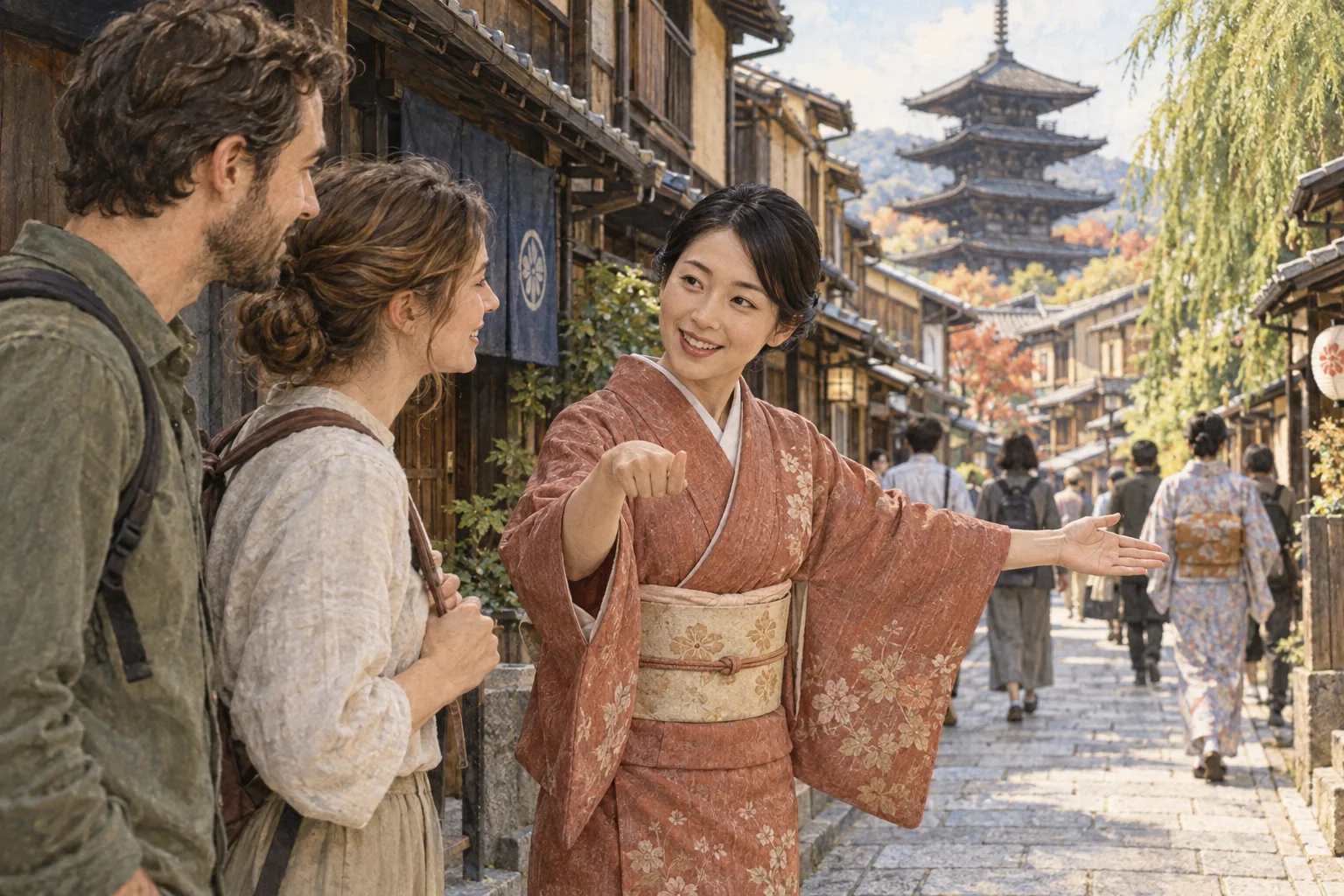
A hand held vertically and waved in front of the face also means no or I don't know. And a general rule: pointing at a person with one finger is avoided. An open palm, fingers together, is used to indicate a person or a direction, which is why staff gesture that way.
日本の身ぶりのいくつかは本当に誤解を招くので、知っておく価値があります。まず手招き。日本では手のひらを下に向け、指を自分のほうへ動かして人を呼びます。欧米の方にはそれが別れの手振りにしか見えません。そして欧米式の、手のひらを上にして指を曲げる呼び方は、日本では動物を呼ぶようで無作法に見えることがあります。
次に自分を指すこと。日本人は人差し指で鼻を指して「私」を表します。英語圏では自分の胸を指します。三つめは拒否。腕を胸の前で交差させて×を作ると「だめ」「できません」の意味で、店員がこれをするのを見かけます。
手を立てて顔の前で振るのも「いいえ」や「分かりません」です。そして全般的な決まりとして、人を一本の指で指すことは避けます。人や方向を示すときは、指をそろえて手のひらを開いて示します。だから案内係はあの形をするのです。
こう聞かれたら
外国人から実際にされる質問と、その答え方。
Why does beckoning look like goodbye?
どうして「おいで」の手招きが「さようなら」に見えるのですか。
Because the palm faces down. The motion is toward the body, but from a distance and at speed it reads as the Western farewell wave. It is probably the most confusing gesture for visitors.
手のひらが下を向いているからです。動き自体は自分のほうへ向かうのですが、遠くから速く見ると、欧米の別れの手振りに見えます。訪日の方がおそらく最も混乱する身ぶりです。
Is pointing really rude?
人を指さすのは本当に失礼ですか。
Pointing at a person with one finger is avoided. Pointing at objects, signs and menus is completely normal and useful. The open-palm gesture is what staff use for people and directions.
人を一本の指で指すのは避けます。物や表示、メニューを指すのはまったく普通で、むしろ役に立ちます。人や方向には、手のひらを開いた形を使います。
What does the X with the arms mean?
腕で作るバツ印はどういう意味ですか。
No, or not permitted. Staff use it at a distance when speech would not carry. The opposite, arms raised into a circle over the head, means yes or correct.
「だめ」「できません」です。声が届かない距離で係員が使います。逆に、頭の上で腕を丸くすると「はい」「正解」の意味になります。
誤解されやすい
MYTHA Japanese person waving at you with the palm down is saying goodbye.
手のひらを下に向けて手を振っている日本人はさようならと言っていると思われがちです。
FACTThat is the Japanese beckoning gesture, meaning come here. The Western palm-up version can seem impolite in Japan, as if calling an animal.
それは「おいでおいで」の手招きです。欧米式の手のひらを上に向ける呼び方は、日本では動物を呼ぶようで無作法に見えることがあります。
そのまま使えるフレーズ
- That means come here, not goodbye.それは「おいで」で、さようならではありません。
- We point at our nose to mean me.「私」は鼻を指します。
- Crossed arms means no.腕で×を作ると「だめ」です。
- Use an open hand, not one finger.一本指ではなく、手のひらで示します。
- Pointing at a menu is completely fine.メニューを指すのは問題ありません。
説明に使う語句
- gesture身ぶり、しぐさ
- beckon手招きする
- point at指さす
- palm手のひら
- misread誤解する、読み違える
動画で見る
YouTube より豆知識
手のひらを下に向けて招く形は、東アジアに広く見られる。欧米式の手のひらを上に向けて指を曲げる招き方は、地域によっては強い侮辱と受け取られることがあり、国際的な場では避けられることが多い。自分を指すときに鼻に触れる仕草は、日本や一部の東アジアに見られる特徴とされる。腕で×を作る「バツ」と、頭上で腕を丸める「マル」は、日本のテレビ番組や試験の採点記号としても定着している。なお欧米で「OK」を表す親指と人差し指の輪は、日本ではお金を意味することがあり、国によっては侮辱的な意味を持つため、国際的な場では使い方に注意が要る。
