Next I went into the White Tower, the oldest part of the castle. Upstairs, in the hall of weapons, the old armor was polished and shining. As I was looking at a huge suit of armor, I heard footsteps, and a Beefeater stopped behind me. The name sounds as if he ate nothing but beef, but in fact he is one of the guards of the Tower. He was not very tall, rather fat, with a white beard. "Aren't you Japanese?" he asked with a smile. I did not feel I was talking to an Englishman of today. I felt as if he had looked out from three or four hundred years ago, or as if I had suddenly looked back into that time. I nodded silently. "Come this way," he said, and pointed to an old suit of Japanese armor. He told me it had been given to King Charles the Second as a gift from Mongolia. I nodded for the third time.
次に、塔の中でいちばん古い白塔に入った。上の階の武器陳列場では、古いよろいかぶとがぴかぴかに磨かれていた。大きなよろいに見とれていると、こつこつと足音がして、ビーフ・イーターがひとり、私の後ろで立ちどまった。ビーフ・イーターというと、いつも牛肉ばかり食べている人のようだが、実は塔の番人である。あまり背が高くなく、少し太っていて、白いひげを生やした番人だった。「あなたは日本人ではありませんか」と、ほほえみながらたずねた。私は、今のイギリス人と話をしている気がしなかった。彼が三、四百年の昔からひょいと顔を出したか、それとも私が急に三、四百年の昔をのぞきこんだかのような気がした。私は黙って軽くうなずいた。「こちらへおいでなさい」と言うのでついていくと、彼は古い日本のよろいを指さした。そして、これはモンゴルからチャールズ二世に献上されたものだと説明してくれた。私は三たびうなずいた。
On my way to the Beauchamp Tower, I passed a small area closed off with an iron fence. A sign said that this was the place of execution. Prisoners who had been kept for years in dark rooms underground were suddenly brought up into the light one day, only to be placed here, in a place more terrible than the dark. They saw the blue sky again for the first time in years, and before they could even feel glad, the white blade of the axe flashed through the air. A raven had come down there. It folded its wings, pointed its black beak, and looked at me. It felt as if a hundred years of bitterness had hardened into the shape of a strange bird that would guard this unlucky ground forever.
ボーシャン塔へ向かう途中、鉄の柵で小さく囲われた場所の前を通った。札には、処刑場の跡と書いてあった。何年ものあいだ日のささない地下の暗い部屋に押しこめられていた者が、ある日とつぜん地上に引き出された。それは、地下よりもなお恐ろしいこの場所に、ただ据えられるためだった。久しぶりに青空を見て、うれしいと思うまもなく、白い斧の刃がひらりと宙を切ったのである。一羽のカラスが降りてきていた。翼をすくめ、黒いくちばしをとがらせて、こちらを見ていた。百年の恨みが固まって、怪しい鳥の姿となり、この不吉な土地をいつまでも守っているような心地がした。
Beside me stood a young woman with a boy of about seven, watching the ravens. Her Greek nose, her eyes like melted jewels, and the curve of her white neck moved my heart more than a little. "Ravens, ravens!" the boy said, looking up at her. "The ravens look cold. I want to give them some bread." "Those ravens do not want to eat anything," the woman said quietly. "Why?" the boy asked. Looking at the ravens with eyes that seemed to float deep behind her long eyelashes, she said only, "There are five ravens," and did not answer his question. I wondered if there was some strange bond between this woman and the ravens. She spoke of their feelings as if they were her own, and she said there were five, though I could see only three. I left the strange woman and went into the Beauchamp Tower alone.
かたわらに、七つばかりの男の子を連れた若い女が立って、カラスを眺めていた。ギリシャ風の鼻と、宝石を溶かしたように美しい目と、真っ白な首すじの曲線とに、私は少なからず心を動かされた。男の子は女を見上げて、「カラスだ、カラスだ」と珍しそうに言った。それから、「カラスが寒そうだから、パンをやりたい」とねだった。女は静かに、「あのカラスは、何も食べたがってはいません」と言った。「なぜ」と男の子が聞いた。女は、長いまつげの奥にただよっているような目でカラスを見つめながら、「あのカラスは五羽います」と言ったきり、子どもの問いには答えなかった。この女とカラスのあいだには、何か不思議な因縁でもあるのではないか、と私は疑った。カラスの気持ちを自分のことのように言い、三羽しか見えないカラスを五羽いると言いきるのである。私はこの怪しい女をあとに残して、ひとりボーシャン塔へ入った。
The walls of the first room were covered with words carved by prisoners. Some were carved slowly and carefully, and some were scratched quickly in anger or despair. One said, "My hope is in Christ." Another said, "Honor all men. Love the people. Fear God. Respect the King." I tried to imagine what was in the hearts of the people who wrote such things. There is no pain in the world like having nothing to do, like a mind in which nothing ever changes. To live is to act. To be alive but kept from acting is the same as having the meaning of life taken away, and to know it has been taken away is worse than death.
一階の部屋の壁は、囚人たちが彫りつけた文字でいっぱいだった。暇にまかせて、ていねいに彫ったものもある。気がせくのか、くやしまぎれか、がりがりと壁をひっかいて、なぐり書きのように彫ったものもある。「わが望みはキリストにあり」というのもあれば、「すべての人を敬え。民をいつくしめ。神を恐れよ。王を敬え」というのもある。こんなものを書いた人の心の中は、どんなだっただろうと想像してみた。およそこの世に、することのない苦しみほどつらいものはない。心の中に何の変化もない苦しみほどつらいものはない。生きるとは、動き、はたらくことである。生きながら、はたらくことを押さえつけられるのは、生きる意味を奪われるのと同じである。そして、奪われたと自分でわかっていることは、死ぬよりもつらい。
Once we are born, we must live. It is not that we fear death; we simply must live. These prisoners, too, had to live, though death was waiting right in front of them. Of a thousand who entered this room, only one came out alive. Still, the great truth whispered to them, "Live. Live to the end." So they sharpened their nails and carved "1" on the hard wall. Then the truth whispered again, "Live." When their torn nails had healed, they carved "2." Knowing that tomorrow the axe might fall, they wanted to go on living, even as a single line on a cold wall. The scratches on these walls are the souls of people who held on to life.
生まれてきた以上は、生きなければならない。死を恐れるからではない。ただ、生きなければならないのである。この牢につながれた人々も、生きなければならなかった。それでいて、死は目の前に待っていた。ひとたびこの部屋に入った者は、千人に一人しか生きて出られなかったのだ。それでも、大きな真理は彼らにささやく。「生きよ。どこまでも生きよ」と。そこで彼らは爪をとがらせ、かたい壁の上に「一」と書いた。すると真理は、また「生きよ」とささやく。はがれた爪が治るのを待って、彼らはふたたび「二」と書いた。明日にも斧が振り下ろされるかもしれないと知りながら、冷たい壁の上の一本の線になってでも、生きのびたいと願ったのである。壁に残るこの傷あとは、生にしがみついた人々の魂なのだ。
When my thoughts had come this far, the cold air of the room seemed to blow into my back, and I shivered. The walls seemed damp. I touched them with my fingertip, and it slipped on something wet. I looked at my finger. It was red. Drops were falling from the corner of the wall, one by one, and making bright red spots on the floor. The blood of the sixteenth century was seeping out, I thought.
ここまで想像の糸をたぐってきたとき、部屋の冷たい空気が背中から体の中へいっぺんに吹きこんできたような気がして、私は思わずぞっとした。そう思って見ると、なんだか壁がしめっぽかった。指先でなでてみると、ぬらりとすべった。指先を見ると、真っ赤だった。壁のすみから、ぽたりぽたりとしずくが垂れて、床の上にあざやかな赤い点を並べていった。十六世紀の血がにじみ出してきたのだ、と私は思った。
From deep inside the wall came a low groan, and as it came closer, it turned into a wild song. I was in a dark cellar under the ground, and in it were two men. A small lamp flickered in the wind. One man, short, with sunken eyes and a face the color of soot, was sharpening a great axe on a turning grindstone and singing. Sparks flew. The other, a man with a beard, stood with his arms folded, watching. "With boats bringing prisoners every day, business is good," said the bearded man. "That's right. Just sharpening the axe is hard work," the singer answered. "Who is next tomorrow?" "Tomorrow it's the old woman's turn. And after her, that one." "Poor thing. So soon?" "Poor thing, but it can't be helped," said the singer, looking up at the black ceiling.
壁の奥のほうから、うなり声が聞こえてきた。それがだんだん近づいてくると、すさまじい歌の声に変わった。そこは地面の下の暗い穴ぐらで、中に二人の男がいた。小さなランプが風にあおられて揺れていた。ひとりは、背の低い、目のくぼんだ、すすけた顔の男で、回る砥石に大きな斧を当てて研ぎながら、歌をうたっていた。火花が飛んだ。もうひとりのひげの男は、腕組みをして立ったまま、それを眺めていた。「こう毎日のように舟で送られてきちゃ、商売繁盛だのう」と、ひげの男が言った。「そうさ、斧を研ぐだけでもひと苦労よ」と、歌っていた男が答えた。「あすはだれの番かな」「あすは例のばあさまの番さ。それから、例のがやられる」「気の毒に。もうやるのか」「気の毒だが、しかたがないわ」と、歌の主は真っ黒な天井を見上げて言った。
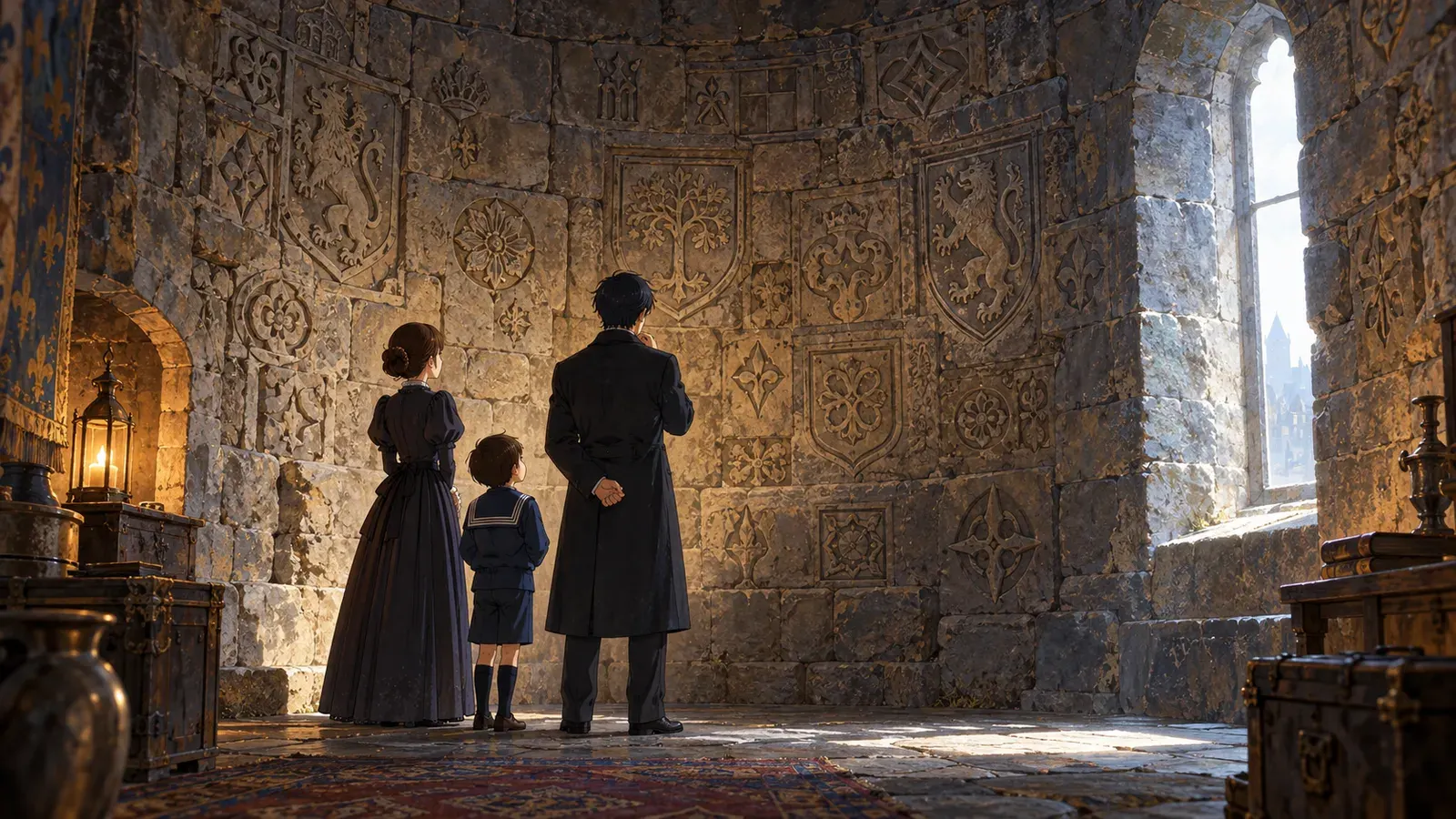
Suddenly the cellar, the men, and the lamp all disappeared, and I was standing alone in the middle of the Beauchamp Tower. Beside me stood the boy who had wanted to give bread to the ravens, and with him the strange woman. "There's a dog carved there!" the boy cried, pointing at the wall. "That is not a dog," said the woman firmly, as if she were the past itself. "The one on the left is a bear, and the one on the right is a lion. This is the family crest of the Dudleys. The man who carved it was John Dudley. John had four brothers, and you can tell who they were from the flowers and leaves carved around it. These are acorns, for Ambrose. This is a rose, for Robert. Down here is honeysuckle, for Henry. And up here on the left is a geranium, which is for G..." She stopped. Her coral-red lips were trembling. Then she recited the old lines carved under the crest as if she had said them every day of her life. I could not have read a single word of them. I felt more and more uneasy about this woman.
たちまち、穴ぐらも、男たちも、ランプも、いっぺんに消えて、私はボーシャン塔の真ん中にぼんやりと立っていた。ふと気がつくと、そばに、さっきカラスにパンをやりたいと言った男の子が立っていた。あの怪しい女も、もとのとおりついていた。男の子が壁を見て、「あそこに犬が彫ってある」と驚いたように言った。女は、まるで過去そのもののようなきっぱりとした口調で答えた。「犬ではありません。左が熊、右が獅子で、これはダドリー家の紋章です。この紋章を彫ったのはジョン・ダドリーです。ジョンには四人の兄弟がいて、まわりに彫ってある草花で、それがだれだかわかります。ここにあるのはどんぐりで、これはアンブローズのこと。こちらにあるのはバラで、ロバートを表します。下のほうにスイカズラが彫ってあるでしょう。これはヘンリーです。左上に固まっているのがゼラニウムで、これはG……」。そう言ったきり、女は黙ってしまった。見ると、さんごのようなくちびるが、ぶるぶるとふるえていた。しばらくすると、女は紋章の下に刻まれた古い詩句を、生まれてから毎日暗唱してきたかのように、すらすらと読みあげた。私などには、一字も読めそうにない文字である。私はますます、この女が気味悪くなった。
I hurried on. Around a corner, among a mass of carvings, I saw a name in small, careful letters: "Jane." Without thinking, I stopped. Anyone who has read English history knows the name of Lady Jane Grey, and feels sorry for her sad end. Because of the ambitions of her father-in-law and her husband, she was put to death at only sixteen or seventeen, though she had done nothing wrong. She could read Greek and Plato, and she amazed the greatest scholar of her day. I stood in front of her name and could not move. The curtain of my imagination was already open.
私は急いで先へ抜けた。角を曲がると、めちゃくちゃに彫りつけられた模様や文字のあいだに、正しい筆づかいで、小さく「ジェーン」と書いてある。私は思わず、その前に立ちどまった。イギリスの歴史を読んだ者で、ジェーン・グレーの名を知らない者はあるまい。そして、そのはかない、むごい最期に同情しない者もあるまい。ジェーンは、しゅうとと夫の野心のために、何の罪もないまま、十六、七歳の若さで処刑された。ギリシャ語を読み、プラトンを読んで、当代一の大学者を驚かせたという人である。私はジェーンの名の前に立ちどまったきり、動かなかった。いや、動けなかった。空想の幕は、もう開いていた。
At first my eyes grew dim. Then a light appeared in the darkness. It grew bigger and brighter and came closer and closer. In the middle knelt a young woman, and at the right stood a man. It was the short man with the sunken eyes, an axe in his hand. I froze. The woman wore a white cloth over her eyes and was feeling with both hands for the wooden block. She was dressed as white as snow, and her golden hair moved over her shoulders like a cloud. Against the wall, two or three women, perhaps her maids, were crying. Then I saw her face and was shocked. Her eyes were covered, but her eyebrows, her thin face, and her slender neck were exactly those of the woman I had just seen.
はじめは、両方の目がかすんで物が見えなくなった。やがて暗い中に、ぱっと明かりがともった。その明かりがだんだん大きく、明るくなり、遠くから近づいてきた。真ん中に若い女がひざまずいていて、右のはしに男が立っていた。あの、目のくぼんだ、背の低い男だ。手に斧を持っていた。私は思わずぎょっとした。女は白い布で目隠しをされ、両手で首をのせる台を探っていた。雪のように白い服を着て、肩にあまる金色の髪を、ときどき雲のように揺らしていた。後ろの壁にもたれて、二、三人の女が泣きくずれていた。侍女だろうか。ふと女の顔を見て、私は驚いた。目こそ隠れているが、眉の形も、細い顔も、ほっそりとした首のあたりまで、さっき見た女とそっくりそのままなのである。
"Has my husband, Guildford Dudley, already gone to the kingdom of God?" she asked. "I do not know," answered the priest beside her. "Will you still not turn to the true faith?" "The true faith is the faith that my husband and I believe in," she said firmly. "Your way is the way of error." The priest said nothing. Then, more calmly, she said, "If my husband has gone before me, I will catch up with him. If he comes after, I will lead the way. We will go to the true kingdom of God by the true road." With that, she laid her head down on the block. The man lifted the heavy axe. And at the moment I thought a few drops would fly onto the knees of my trousers, the whole scene vanished.
「わが夫ギルフォード・ダドリーは、もう神の国へ行ったのでしょうか」と、女がたずねた。「存じません」と、そばの司祭が答えた。「まだ、まことの信仰に入るお気持ちはありませんか」。女はきっとして答えた。「まことの信仰とは、わたしと夫の信じる道のことです。あなたがたの道は、迷いの道、誤りの道です」。司祭は何も言わなかった。女は、いくらか落ちついた調子で言った。「夫が先に行ったのなら、追いつきましょう。あとから来るのなら、わたしが先に立って導きましょう。正しい神の国へ、正しい道を踏んで行きましょう」。そう言い終えると、女は台の上に首を投げかけた。男が、重い斧を振り上げた。そして、私のズボンのひざに、二、三滴の血が飛んだかと思った瞬間、すべての光景がかき消えた。
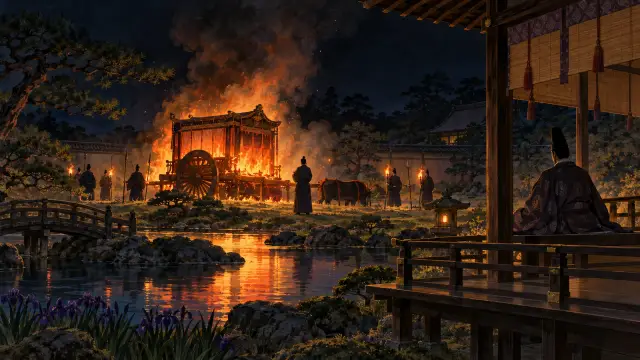
I looked around. The woman and the boy were nowhere to be seen. I left the Tower in a daze, like someone who has been tricked by a fox. I thought I must be going a little mad. When I crossed Tower Bridge and looked back, it had begun to rain, as it so often does in the north. Through the fine rain, which mixed with the dust and smoke of the whole city, the Tower rose up like a shadow of hell.
あたりを見回すと、男の子を連れた女は、どこへ行ったのか影さえ見えない。私は、キツネに化かされたような顔で、ぼんやりと塔を出た。自分でも、少々気がおかしいのではないかと思った。タワー・ブリッジを渡って振り返ると、北国の習いで、この日もいつの間にか雨になっていた。町じゅうのほこりと煙を溶かしこんだ細かい雨の中に、地獄の影のようにぬっとそびえていたのは、ロンドン塔であった。
I got back to my lodging as if in a dream and told the landlord that I had visited the Tower. "There were five ravens, weren't there?" he said. I was astonished. Was he related to that woman? But he laughed and explained, "Those ravens are kept there on purpose. If even one goes missing, they get another one at once, so there are always five." And so half of my fantasy was destroyed on the very day I saw the Tower.
夢見心地のまま下宿に帰って、主人に、今日は塔を見物してきたと話すと、主人は「カラスが五羽いたでしょう」と言った。おや、この主人もあの女の親類か、と内心ひどく驚いていると、主人は笑いながらこう説明した。「あのカラスは、わざとあそこで飼っているんです。一羽でも足りなくなると、すぐにあとを補うんで、あのカラスはいつでも五羽と決まっているんですよ」。こうして、私の空想の半分は、塔を見たその日のうちに打ちこわされてしまった。
Then I told him about the writing on the walls. "Oh, that graffiti?" he said carelessly. "What a silly thing to do. They've spoiled a beautiful place. And you can't trust that prisoners really wrote it. Plenty of it is fake." Finally, I told him, still full of wonder, about the beautiful woman who knew things none of us knew and read words that no one could read. "That's nothing strange," he said with great scorn. "Everyone reads a guidebook before they go there. There's nothing surprising about knowing that much. A real beauty, you say? Oh, London has plenty of beauties. You'd better be careful, or you'll get into trouble." And so the other half of my fantasy was destroyed. The landlord was a Londoner of the twentieth century.
それから壁の文字のことを話すと、主人は無造作に言った。「ええ、あの落書きですか。つまらないことをしたもんです。せっかくのきれいな場所を台なしにしてしまいましたねえ。なに、囚人の落書きだなんて、当てになるもんじゃありません。にせものもだいぶありますよ」。最後に私が、美しい女に会ったこと、その女が私たちの知らないことを知っていて、とても読めない文字をすらすら読んだことを、不思議そうに話しだすと、主人はひどく軽蔑した口調で言った。「そりゃ当たり前でさあ。みんな、あそこへ行くときは案内書を読んで出かけるんですから。それくらいのことを知っていたって、何も驚くにはあたらないでしょう。なに、すごい美人だって? ロンドンには美人がたくさんいますよ。少し気をつけないと、危ないですぜ」。これで、私の空想の残りの半分も打ちこわされた。主人は、二十世紀のロンドン人であった。
After that, I decided never to talk about the Tower with anyone again. And I decided never to go there again.
それからは、人とロンドン塔の話をしないことに決めた。そして、二度と見物に行かないことに決めた。