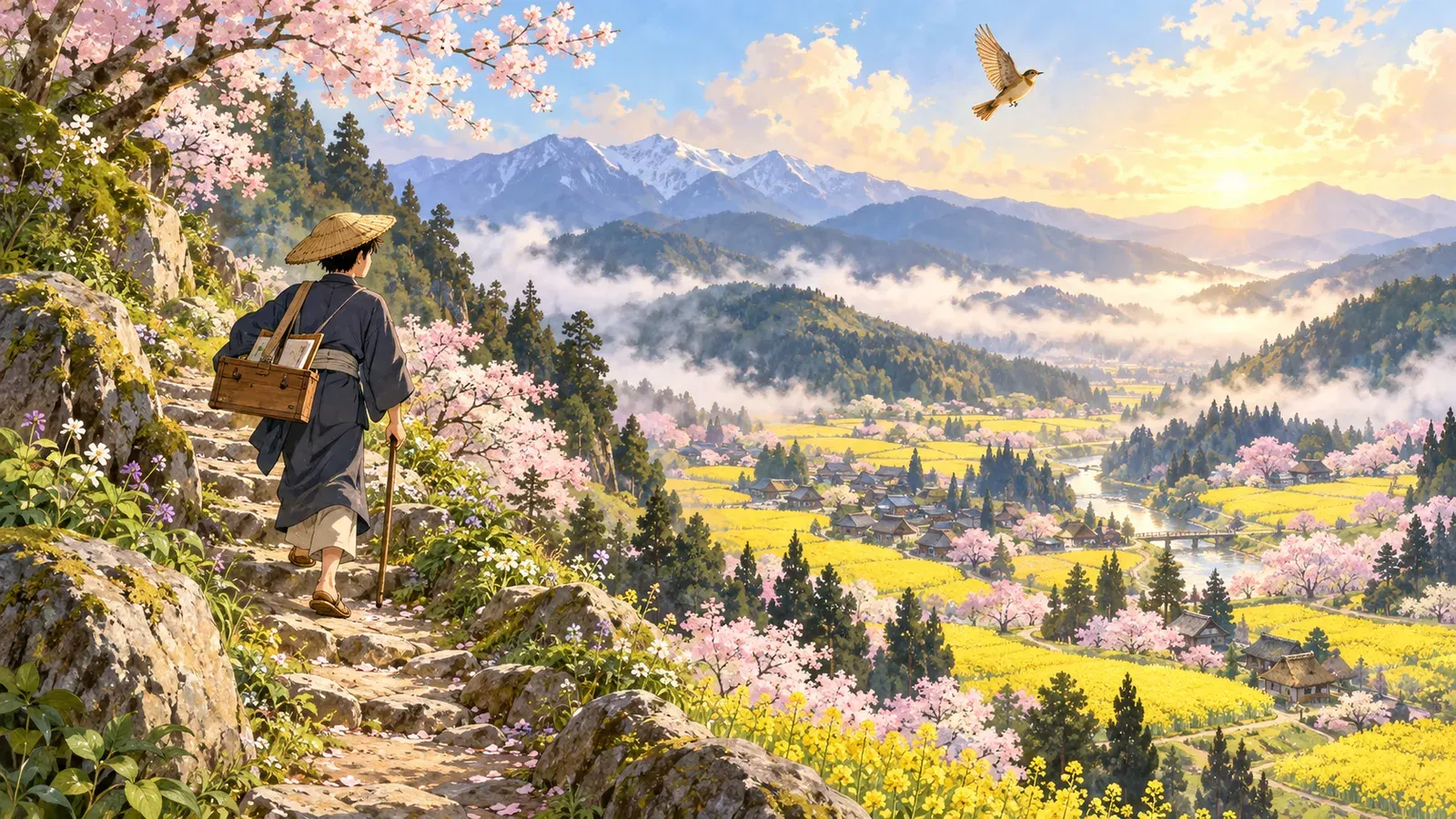
As I climbed the mountain path, I thought: If you use your head, you make enemies. If you follow your heart, you are swept away. If you insist on your own way, life becomes narrow and tight. Either way, the human world is a hard place to live in.
山道を登りながら、こう考えた。智に働けば角が立つ。情に棹させば流される。意地を通せば窮屈だ。とかくに人の世は住みにくい。
When it becomes too hard to live in, you want to move somewhere easier. But when you understand that it will be hard wherever you go, poetry is born, and pictures are made.
住みにくさが高じると、住みやすいところへ引っ越したくなる。どこへ越しても住みにくいと悟ったとき、詩が生まれて、絵ができる。
The human world was not made by gods or by demons. It was made by ordinary people, the neighbors who live across the street and next door. If the world made by ordinary people is hard to live in, there is no other country to move to, except a country without people, and that would be harder still. So we must make our short lives a little easier in this hard world, even if only for a moment. That is why there are poets and painters. Every artist is precious, because artists make the human world calmer and the human heart richer.
人の世をつくったのは、神でもなければ鬼でもない。向こう三軒両隣にいる、ただの人である。ただの人がつくった人の世が住みにくいからといって、越していける国はあるまい。あるとすれば、人のいない国――人でなしの国へ行くばかりだ。人でなしの国は、人の世よりもなお住みにくかろう。だから、この住みにくい世の中で、つかの間の命を、つかの間でも住みよくしなければならない。そこに詩人という仕事が生まれ、画家という使命が与えられる。あらゆる芸術家が尊いのは、人の世をのどかにし、人の心を豊かにするからである。
I was a painter, thirty years old. I had come to the mountains in spring to escape for a while from the troubles of the city. On this journey, I had decided to look at everything as if it were part of a picture or a poem, and people, too. I would not let their feelings pull me in. I would watch them as I watched flowers and mountains, from a little distance, with a calm heart. I called this traveling "beyond human feeling."
私は画家で、三十歳だった。都会のわずらわしさからしばらく逃れようと、春の山へやって来たのだ。この旅では、何もかもを一枚の絵か一編の詩のように眺めようと決めていた。人間も同じだった。人の感情に引きこまれはしない。花や山を眺めるように、少し離れたところから、落ちついた心で人を眺めるのだ。私はこれを、「非人情」の旅と名づけていた。
While I was thinking these things, my right foot slipped on a loose stone, and I sat down hard on a rock. Luckily, nothing was hurt. Somewhere below me, a skylark was singing. I could not see it, but I could hear its voice clearly, busy and endless, as if it had to sing away the whole spring day. It flew up and up, and I thought it would surely die in the clouds and leave only its voice behind in the sky. Far below, a field of yellow rape flowers spread out like gold. Spring makes us sleepy. Cats forget to catch mice, and people forget their debts. But when I saw the yellow flowers and heard the skylark, I woke up. How pleasant, I thought. To think this, and to feel this pleasure, is poetry.
そんなことを考えていると、右足がぐらつく石を踏みそこねて、私はどしんと岩の上に腰を落とした。さいわい、どこもけがはなかった。足の下のどこかで、ヒバリが鳴いていた。姿は見えないが、声だけははっきりと聞こえた。せかせかと、休みなく鳴いていた。のどかな春の日を、鳴きつくさなければ気がすまないかのようだ。どこまでも、どこまでも登っていく。ヒバリはきっと雲の中で死ぬにちがいない、そして声だけが空に残るのだろう、と私は思った。はるか下には、菜の花畑が金色に広がっていた。春は眠くなる。猫はネズミをとることを忘れ、人間は借金のあることを忘れる。けれども、菜の花を見て、ヒバリの声を聞いたとき、私は目が覚めた。ああ、愉快だ、と思った。こう思って、こう愉快になるのが、詩である。
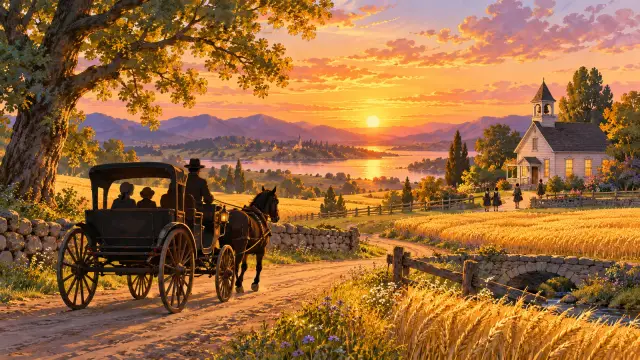
Soon it began to rain, and I stopped at a small teahouse on the mountain pass. An old woman lived there alone. While I warmed myself by her fire, she told me about the hot spring inn in Nakoi, the village I was going to. Years ago, she said, she had seen the inn owner's daughter ride over this pass on a horse on her wedding day, in a long-sleeved kimono with a beautiful pattern, under the cherry blossoms. "And now?" I asked. "Now she has come back home," said the old woman. After the war began, her husband's bank had failed, and she had left him and returned to her father's house. People in the village said she was strange.
やがて雨が降りだしたので、峠の小さな茶店で休んだ。おばあさんがひとりで住んでいた。いろりの火で体を温めていると、おばあさんは、私がこれから行く那古井の村の温泉宿の話をしてくれた。何年も前、宿の主人の娘が、嫁入りの日に、美しい模様の振袖を着て、馬に乗ってこの峠を越えていくのを、桜の花の下で見たのだという。「それで、今は」と私は聞いた。「今は里へ帰っておいでです」と、おばあさんは言った。戦争が始まると、夫の勤める銀行がつぶれ、娘は夫と別れて父親の家へ戻ってきたのだそうだ。村の人たちは、あの娘は変わり者だとうわさしているという。
Then the old woman told me an old story. "Long ago, in this village, there lived a beautiful daughter of a rich family, called the Maiden of Nagara. Two men fell in love with her at the same time. She could not choose between them, and in the end she made a poem and threw herself into the river. Our young lady at the inn is like the Maiden of Nagara," she said. "Not in her face, but in what has happened to her."
それから、おばあさんは昔話をしてくれた。「昔、この村に、長良の乙女という美しい長者の娘がおりましたそうな。その娘に、二人の男が同時に恋をしたのです。娘はどちらとも決めかねて、とうとう歌を詠んで、川へ身を投げてしまいました。宿のお嬢さまは、この長良の乙女によう似ておいでです」とおばあさんは言った。「お顔がではございません。身の成り行きが、でございます」
That evening I arrived at the inn in Nakoi. It was quiet and almost empty. In the night, half asleep, I heard someone singing softly somewhere. It was the old poem of the Maiden of Nagara: "When autumn comes, like the dew upon the silver grass, I feel that I, too, might fade away." I opened the window. In the moonlight, under a flowering tree in the garden, a woman was standing. Before I could see her face, she was gone.
その晩、那古井の宿に着いた。宿はひっそりとして、ほとんど客もいなかった。夜中、うとうとしていると、どこかでだれかが小声で歌っているのが聞こえた。あの長良の乙女の歌だった。「秋が来て、すすきの上に置く露のように、わたしも消えてしまいそうに思われる」。窓を開けると、月の光の中、庭の花の咲く木の下に、女がひとり立っていた。顔を見る間もなく、女は消えた。
This was Nami, the daughter of the inn. Over the next days, she surprised me again and again. Sometimes she appeared suddenly at my room and talked to me boldly, laughing at me. Once, in the evening, I saw her walking slowly back and forth along the long corridor across the garden, in a gorgeous long-sleeved kimono, again and again, without a sound, until she disappeared into the dark. Another time, while I was soaking in the hot spring, a figure appeared at the door, half hidden in the steam, and then ran away with a high laugh that rang through the hall. I never knew what she was thinking. Her face always wore a smile that seemed to make fun of people, and her eyebrows were always drawn together, as if she were determined to win.
これが、宿の娘の那美さんだった。それからの数日、私はたびたび那美さんに驚かされた。ふいに私の部屋にあらわれて、大胆に話しかけ、私をからかって笑うこともあった。ある夕方には、庭の向こうの長い廊下を、はなやかな振袖を着て、音もなく、ゆっくりと何度も行ったり来たりし、やがて闇の中へ消えていく姿を見た。またあるときは、私がひとり湯につかっていると、戸口に湯気になかば隠れた人影があらわれ、湯殿じゅうに響く高い笑い声を残して逃げていった。何を考えているのか、私にはまるでわからなかった。その顔にはいつも、人をばかにしたような微笑が浮かび、眉はいつも、何がなんでも勝とうとするように寄せられていた。
One day she told me about a pond deep in the hills, called Kagami-ga-ike, the Mirror Pond. Then she said with a smile, "If I threw myself in and floated there, not suffering, but floating peacefully, as if I had simply gone to sleep, would you paint a beautiful picture of me?" I laughed, but her words stayed in my mind.
ある日、那美さんは、山奥にある鏡が池という池の話をしてくれた。そして、ほほえみながら言った。「もし私が身を投げて、あそこに浮いていたら――苦しんでいるのではなく、ただ眠ってしまったように、安らかに浮いていたら――きれいな絵にかいてくださいますか」。私は笑ったが、その言葉は心に残った。
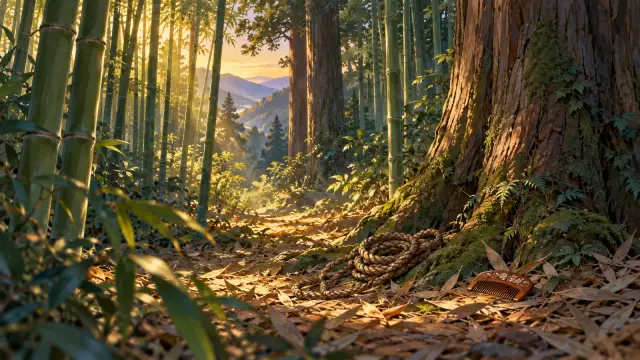
The pond was called the Mirror Pond, the villagers said, because long ago a young lady of Nami's family had thrown herself into it holding a mirror. One afternoon I went there to sketch. It was a small, quiet pond surrounded by bamboo grass and dark trees. On the far bank, red camellias were blooming. They were not a cheerful red. Under their bright color was something dark and heavy, something that frightened me. Now and then, a flower fell from its branch into the dark water with a soft sound, and floated there.
村の人の話では、鏡が池という名は、昔、那美さんの家の娘が、鏡を抱いてこの池に身を投げたことから来ているという。ある日の午後、私は写生をしにそこへ出かけた。熊笹と暗い木々に囲まれた、小さな静かな池だった。向こう岸に、赤いツバキが咲いていた。陽気な赤ではない。あざやかな色の奥に、何か暗く、重いものがひそんでいて、私は怖くなった。ときどき、花がひとつ枝を離れて、かすかな音とともに暗い水の上に落ち、そのまま浮いていた。
I thought: what if I painted a beautiful woman floating here, with camellias falling on her forever? I remembered Millais's famous painting of Ophelia, floating down a river among flowers. But what face should the woman have? Not a face full of pain, for that would spoil everything. Not a face that was too calm, either, for then there would be no human feeling in it. I thought of Nami's face. It suited the picture best. Yet something was missing. Jealousy? Too uneasy. Hatred? Too strong. Anger? That would break the harmony. At last I understood. Among all the feelings, I had forgotten one: pity, the gentle, sorrowful feeling of sharing another person's pain. It is a feeling that God does not know, and yet it is the human feeling that is closest to God. And in Nami's face, there was not a trace of it.
私は考えた。この池に美しい女が浮いていて、その上にツバキがいつまでも落ちつづけている絵をかいたら、どうだろう。花に囲まれて川を流れていく、ミレーの有名なオフィーリアの絵が思い浮かんだ。けれども、女にどんな顔をさせればいいのか。苦しみに満ちた顔ではいけない。それではすべてが台なしになる。かといって、あまり平気な顔でもいけない。それでは人間の気持ちが写らない。那美さんの顔を思い浮かべた。いちばん似合うのは、やはりあの顔だ。けれども、何かが足りない。嫉妬はどうだろう。それでは不安が強すぎる。憎しみは。激しすぎる。怒りは。それでは調和がこわれる。そして、とうとう気がついた。たくさんある感情の中で、ひとつだけ忘れていたのだ。「憐れ」――人の痛みをわがことのように感じる、やさしく悲しい心である。憐れは、神の知らない感情でありながら、人間の感情の中で神にいちばん近いものだ。そして那美さんの顔には、それがかけらもなかった。
Just then I looked up and was startled. On the top of a rock high above the pond, with the evening sun behind her, stood Nami. She looked down at me for a moment. Then she turned lightly and disappeared among the trees. My heart was pounding.
そのとき、ふと目を上げて、私はどきりとした。池の上の高い岩のてっぺんに、夕日を背にして、那美さんが立っていたのである。那美さんはしばらく私を見下ろしていたが、やがてひらりと身をひるがえして、木々のあいだに消えた。私の胸は、早鐘のように打っていた。
During my stay, I came to know more about her family. Her young cousin Kyuichi had been called to be a soldier, and soon he would leave for the war in Manchuria. One day, while walking in the hills, I saw Nami talking with a rough-looking man with a beard, in an old, worn hat. She handed him a wallet, and he took it and went away. Later she told me calmly that he was her former husband. He had lost all his money, and now he was going to Manchuria to start again.
宿にいるあいだに、私は那美さんの家族のことを少しずつ知るようになった。若いいとこの久一さんは兵隊にとられ、まもなく満州の戦地へ出征することになっていた。ある日、山を歩いていると、那美さんが、古ぼけた帽子をかぶったひげ面の、野武士のような男と話しているのを見かけた。那美さんが財布を渡すと、男はそれを受け取って去っていった。あとで那美さんは、あれは別れた夫だと、平気な顔で教えてくれた。財産をすっかりなくして、これから満州へ行って一からやり直すのだという。
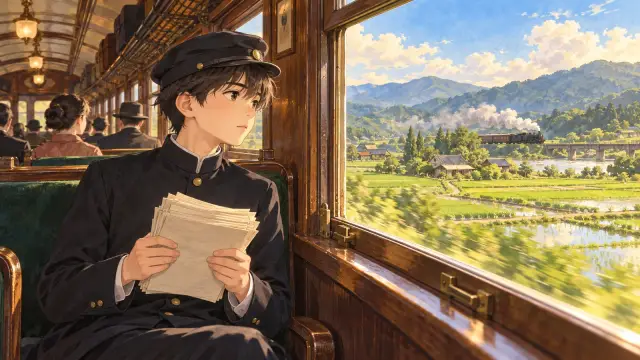
On the last day, I went with Nami, her father, her brother, and Kyuichi down the river by boat to the station in town, to see Kyuichi off. As the boat went down the river, the world of the mountains was left behind, and we were pulled out into the real world. There is nothing that stands for the civilization of the twentieth century better than the train. It packs hundreds of people into the same box and rushes off with a roar, without mercy. People say they ride a train. I say they are loaded onto it. Nothing pays less attention to a person's individuality than a train.
最後の日、私は那美さんと、その父親と兄さんと一緒に、久一さんを見送るため、舟で川を下って町の停車場へ向かった。舟が川を下るにつれて、山の世界はうしろに遠ざかり、私たちは現実の世界へと引きずり出された。汽車ほど二十世紀の文明を代表するものはあるまい。何百という人間を同じ箱に詰めこんで、情け容赦なく轟音とともに走り去る。人は汽車に乗るという。私は、積みこまれるという。汽車ほど人の個性を軽んじるものはない。
The bell rang. The train came in, a long snake of civilization, breathing black smoke. "Goodbye, then," said Kyuichi, bowing. "Go and die," said Nami, in her strange way, as she had said once before. Kyuichi got on, and the rest of us stood outside. Once the wheels turned, Kyuichi would no longer belong to our world. He would go to a far, far world, where men work in the smell of gunpowder, slip on red things and fall, and great guns roar in the sky.
ベルが鳴った。黒い煙を吐きながら、文明の長い蛇がやって来た。「それでは、ごきげんよう」と、久一さんが頭を下げた。「死んでおいで」と、那美さんが、いつかと同じように、あの不思議な調子で言った。久一さんは乗りこみ、残りの者は外に立った。車輪がひとつ回れば、久一さんはもう私たちの世界の人ではない。遠い、遠い世界へ行ってしまう。そこでは、火薬のにおいの中で人がはたらき、赤いものにすべって転び、空では大砲がどどんと鳴っている。
The conductor ran along, shutting the doors one after another. With each door, the distance between those who were going and those who stayed grew greater. The train began to move. The windows passed us one by one. Kyuichi's face grew smaller and smaller. Then, as the last third-class car went by, another face appeared at a window. It was the bearded man in the old hat, Nami's former husband. He put his head out, as if he could not bear to leave. At that moment, Nami and the man looked at each other. The train rolled on, and his face was gone.
車掌が、戸を次々にぴしゃりと閉めながら走ってきた。戸がひとつ閉まるたびに、行く人と残る人とのあいだは遠くなっていった。汽車が動きだした。窓がひとつ、またひとつと、私たちの前を通りすぎた。久一さんの顔が、だんだん小さくなった。そして、最後の三等車が通りすぎるとき、窓からもうひとつ顔が出た。あの古い帽子のひげの男――那美さんの別れた夫である。名残を惜しむように、窓から首を出していた。そのとき、那美さんと男は、思わず顔を見合わせた。汽車はごとりごとりと走りつづけ、男の顔はすぐに消えた。
Nami stood still, watching the train go. And on her face, in that empty stare, was something I had never seen there before. It was pity, deep and gentle, spreading over her whole face.
那美さんは立ちつくして、去っていく汽車を見送っていた。そして、そのぼうぜんとした顔には、今まで一度も見たことのないものが浮かんでいた。深く、やさしい「憐れ」が、顔いっぱいに広がっていたのである。
"That's it! That's it! If you can show that, it will make a picture," I said quietly, tapping her on the shoulder. In that instant, the picture in my heart was complete.
「それだ! それだ! それが出れば、絵になりますよ」と、私は那美さんの肩をたたきながら、小声で言った。その一瞬に、私の胸の中の絵はできあがったのである。