In October I moved to Waseda. One day I was sitting alone in my study, which was as large and empty as a temple hall, with my chin resting in my hand. Then Miekichi came and said, "You should keep a bird." "All right," I said. Just to be sure, I asked, "What kind of bird?" "A Java sparrow," he answered.
十月、早稲田に引っ越した。ある日、お寺の本堂のようにがらんと広い書斎にひとりきりで、ほおづえをついていると、三重吉がやって来て、「鳥をお飼いなさい」と言った。「飼ってもいいよ」と答えた。念のために「何を飼うのかね」と聞くと、「文鳥です」という返事だった。
Java sparrows appear in Miekichi's stories, so I thought it must be a beautiful bird. "Then buy one for me," I said. But Miekichi only kept saying, "You really should keep one." "Yes, yes, I will," I mumbled, my chin still in my hand. Then he fell silent. Perhaps, I realized, he had given up on me and my chin.
文鳥は三重吉の小説にも出てくるくらいだから、きれいな鳥にちがいなかろうと思って、「じゃあ、買ってくれたまえ」と頼んだ。ところが三重吉は、「ぜひお飼いなさい」と同じことばかりくり返している。「うむ、買うよ、買うよ」と、やはりほおづえをついたままむにゃむにゃ言っているうちに、三重吉は黙ってしまった。たぶん、私のほおづえに愛想をつかしたのだろうと、このとき初めて気がついた。
About three minutes later, he said, "And you should buy a cage." I agreed to that, too. Then, instead of telling me again that I really should, he began a lecture on bird cages. It was a rather complicated lecture, but I am sorry to say that I have forgotten all of it. I only remember that when he said a good one costs twenty yen, I quickly told him that it did not need to be so expensive. Miekichi just grinned.
すると三分ほどして、今度は「かごをお買いなさい」と言いだした。これも「よろしい」と答えると、「ぜひお買いなさい」と念を押すかわりに、鳥かごの講釈を始めた。その講釈はなかなか込み入ったものだったが、気の毒なことに、すっかり忘れてしまった。ただ、いいのは二十円もするという段になって、急に「そんな高いのでなくてもよかろう」と言っておいたことだけは覚えている。三重吉はにやにやしていた。
Since he had suggested it, it was natural that he should take responsibility. So I left everything to him. He immediately asked for the money, and I gave him five yen. Miekichi had a habit of putting all money into one wallet, whether it was his own or someone else's. I saw him push my five-yen note to the bottom of it.
なにしろ言いだした者に責任を負わせるのは当然のことだから、さっそく万事を三重吉に任せることにした。すると、すぐに金を出せと言った。私は五円渡した。三重吉には、人の金でも自分の金でも、みんな一つの紙入れに入れてしまうくせがあった。私の五円札がその紙入れの底へ押しこまれるのを、私はたしかに見た。
So the money was certainly in Miekichi's hands. But the bird and the cage did not come. Autumn turned into the mild days of early winter. Miekichi came often and talked about women and other things, but he said nothing at all about the bird. Through the glass doors, the sun shone warmly on the veranda. I sometimes thought that if I was going to keep a bird anyway, this sunny place would be just right for its cage, and the bird would surely sing well there.
こうして金は、たしかに三重吉の手に渡った。ところが、鳥とかごはなかなかやって来なかった。そのうち秋が過ぎて、小春日和になった。三重吉はたびたび来た。女の話などをして帰っていった。文鳥の話はまるで出なかった。ガラス戸ごしに、縁側には日がよく当たった。どうせ文鳥を飼うのなら、こんな暖かい場所に鳥かごを置いてやるのがちょうどいい、そうすればさぞよく鳴くだろう、と思うくらいだった。
Then the frost began. I spent my days in my cold study, sometimes resting my chin in my hand and sometimes not. The doors were shut tight, and I kept adding charcoal to the brazier. I forgot about the bird completely.
そのうち霜が降りはじめた。私は毎日、寒い書斎で、ときにはほおづえをつき、ときにはやめて暮らしていた。戸は二重に閉めきった。火ばちに炭ばかりついでいた。文鳥のことは、すっかり忘れてしまった。
Then one early evening, Miekichi came in through the gate in high spirits. He had brought his friend Toyotaka with him. Each of them carried a cage, and Miekichi was also holding a large box in his arms. It was on this early winter night that my five-yen note finally turned into a bird, two cages, and a box.
そこへ、ある宵の口、三重吉が門から威勢よく入ってきた。友人の豊隆を連れていた。二人とも鳥かごを一つずつ持っていた。そのうえ三重吉は、大きな箱を抱えていた。五円札が、文鳥とかご二つと箱に変わったのは、この初冬の晩のことだった。
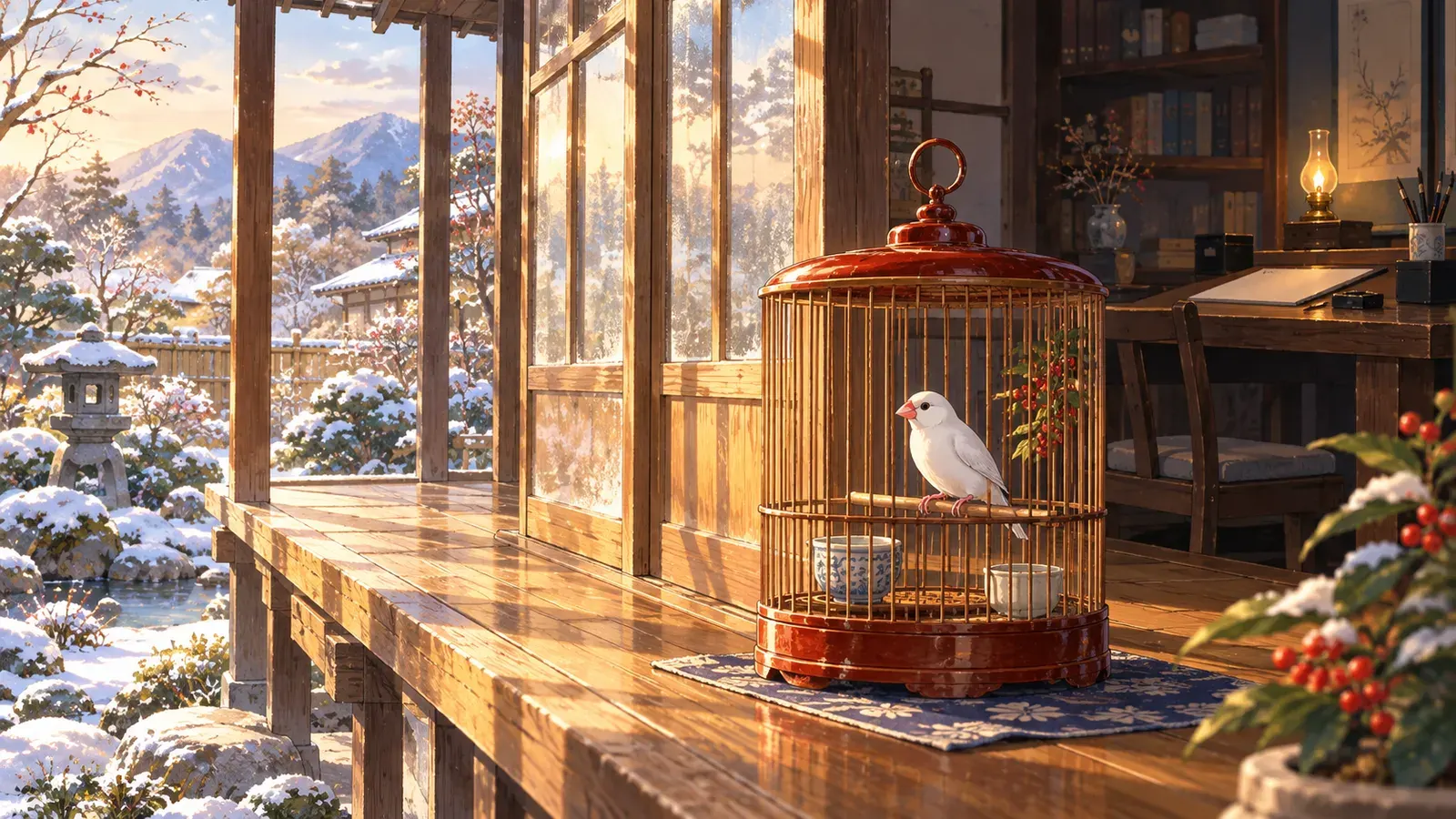
Miekichi was very proud. The stand of the cage was painted with lacquer, and the bamboo bars were cut thin and dyed. "It cost only three yen," he said. "Put it in the sun, and the dark color of the lacquer will slowly fade, and a lovely red will come out. Now look at the bird. Isn't it beautiful?"
三重吉は大得意だった。かごの台には漆が塗ってあり、竹は細く削ったうえに色が染めてあった。「これで三円ですよ」と言った。「この漆はね、先生、日なたに出しておくうちに黒みが取れて、だんだん朱の色が出てきますから。さあ、鳥をごらんなさい。きれいでしょう」
It was certainly beautiful. In the dim next room it sat perfectly still, and it looked pure white. It was so white that if it had not been in a cage, I would hardly have known it was a bird. It looked a little cold. Miekichi explained everything. The box was to keep the bird warm at night. The second, plainer cage was for its bath. I would have to clean the cage, too. Then he took out a bag of millet. "Feed it every morning, and change its water every morning, too. You get up late, sensei, so this will be good for you." I promised to do everything. I was not at all sure I could, but I decided to try.
なるほど、きれいだった。薄暗い次の間で、少しも動かずにいた。真っ白に見えた。かごの中にうずくまっていなければ、鳥とは思えないほど白かった。なんだか寒そうだった。三重吉は何もかも説明してくれた。箱は、夜に鳥を暖かくしておくためのもの。もう一つの粗末なほうのかごは、水浴びをさせるためのもの。かごの掃除もしてやらなければならない。それから三重吉は、粟を一袋取り出した。「これを毎朝やってください。水も毎朝替えてやってください。先生は寝坊だから、ちょうどいいでしょう」。私は万事引き受けた。できる自信はまるでなかったが、とにかくやってみようと決めた。
The next morning I woke to see the sun shining on the glass doors. I knew I had to feed the bird, but getting up was too much trouble. "I'll do it soon, I'll do it soon," I kept thinking, and before I knew it, it was past eight. At last I walked barefoot across the cold veranda, took the lid off the box, and brought the cage out into the light. The bird was blinking. I felt sorry for it. It must have wanted to get up much earlier.
翌朝目が覚めると、ガラス戸に日がさしていた。文鳥に餌をやらなければ、と思った。けれども起きるのがおっくうだった。「今にやろう、今にやろう」と考えているうちに、とうとう八時過ぎになった。しかたがないので、冷たい縁側をはだしで踏んで、箱のふたを取り、鳥かごを明るいところへ出した。文鳥は目をぱちぱちさせていた。もっと早く起きたかっただろうと思うと、気の毒になった。
The bird's eyes were jet black. Around each eye there was a thin line of pale pink, as if someone had sewn a silk thread there. Each time it blinked, the thread came together into one line, and then it was round again. The bird tilted its white head a little, moved its black eyes, and looked at my face for the first time. Then it said, "Chi-chi."
文鳥の目は真っ黒だった。まぶたのまわりに、淡い桃色の細い絹糸を縫いつけたような筋が入っていた。まばたきをするたびに、その絹糸がきゅっと寄って一本になり、と思うと、また丸くなった。文鳥は白い首をちょっとかしげて、黒い目を動かし、初めて私の顔を見た。そして、「チチ」と鳴いた。
Its feet were very delicate. At the ends of its long, pale pink toes were claws like tiny carved pearls, and they held the perch perfectly. In a flash, the bird jumped to the other perch, turned around, tilted its head, and looked at me from the other side of the cage.
文鳥の足は、いかにもきゃしゃにできていた。細長い薄紅色の指の先に、真珠を削ったような爪がついていて、止まり木をうまく抱えこんでいた。ひらりと目の前が動いたかと思うと、文鳥はもう向こうの止まり木に移って向きを変え、首をかしげて、かごの向こう側から私の顔をのぞきこんでいた。
When I slowly put my big hand into the cage to set down the food and water, the bird suddenly began to beat its wings. Soft white down flew out between the thin bamboo bars. All at once, I hated my big hand. I set down the two little dishes and pulled my hand out quickly. The cage door dropped shut by itself. The bird went back to its perch and looked up at me outside the cage.
餌と水を置こうとして、大きな手をそろそろとかごの中へ入れると、文鳥は急に羽ばたきを始めた。細く削った竹のすきまから、白い綿毛が飛ぶほどだった。私は急に、自分の大きな手がいやになった。小さな餌入れと水入れを置くが早いか、すぐに手を引っこめた。かごの戸は、ぱたりとひとりでに落ちた。文鳥は止まり木に戻って、かごの外にいる私を見上げた。
At that time I was writing a novel every day. Between meals I sat at my desk with a pen in my hand. Nobody came into my big study. When it was quiet, I could hear my pen running across the paper, and on some mornings, afternoons, and evenings, the sound seemed lonely to me. Sometimes my pen stopped. Then I rested my chin in my hand and looked out through the glass at the windy garden. Just then, out on the veranda, the bird sang, "Chiyo, chiyo."
そのころ私は、毎日の仕事として小説を書いていた。食事と食事のあいだは、たいてい机に向かってペンを握っていた。広い書斎には、誰も入ってこなかった。静かなときは、紙の上を走るペンの音が自分で聞こえた。その音にさびしさを感じる朝も、昼も、晩もあった。ときどきペンが止まった。そんなときは、ほおづえをついて、ガラス越しに風の吹き荒れる庭を眺めた。すると縁側で、文鳥が「千代、千代」と鳴いた。
I put down my pen and went out quietly. The bird was facing me. It pushed its white breast forward, so far that it almost fell off the perch, and sang a high, clear "Chiyo." Miekichi would have been delighted to hear such a lovely voice.
ペンを置いて、そっと出てみると、文鳥はこちらを向いたまま、止まり木からのめりそうなほど白い胸を突き出して、高く「千代」と鳴いた。三重吉が聞いたら、さぞ喜ぶだろうと思うほど美しい声だった。
I watched it eat. It dropped its beak into the middle of the millet and shook it from side to side, and seeds scattered over the bottom of the cage. Each time it pecked, there was a tiny sound in its throat. The sound was round and fine and very quick. It was as if a little person no bigger than a violet were tapping agate stones with a golden hammer. The bird was so light that the food dish did not move at all. It seemed to me like the spirit of light spring snow.
私は文鳥が餌を食べるところを眺めた。くちばしを粟の真ん中に落として、二、三度左右に振った。すると粟が、かごの底にぱらぱらとこぼれた。粟をついばむたびに、のどのところでかすかな音がした。その音は、丸くて細やかで、しかもとても速かった。スミレの花ほどの小さな人が、金の小づちで瑪瑙の碁石を続けざまにたたいているような気がした。文鳥はとても軽くて、餌入れは少しも動かなかった。なんだか、春の淡雪の精のように思えた。
The next morning, too, I got up late. When I brought the cage out of the box, the bird blinked, drew its neck in a little, and looked at me. At that moment I suddenly remembered a beautiful woman I had once known. Once, when she was sitting at her desk deep in thought, I came quietly from behind and stroked the back of her slender neck with the end of a purple silk cord. She turned around slowly. Her eyebrows were drawn together a little, but a smile was beginning at the corners of her eyes and mouth, and she drew her pretty neck down into her shoulders. When the bird looked at me, I thought of her. She is married now. I had played that trick on her two or three days after her marriage was decided.
次の朝も、やはり遅く起きた。箱からかごを出してやると、文鳥は目をしばたたき、少し首をすくめて、私の顔を見た。そのとき私は、ふと、昔知っていた美しい女のことを思い出した。その女が机にもたれて何か考えているところへ、後ろからそっと近づいて、紫の絹の帯揚げの先で、ほっそりした首すじをなでたことがある。女はものうげに振り返った。眉は少し八の字に寄っていたが、目じりと口もとには笑みが浮かびかけていて、形のよい首を肩までちぢめていた。文鳥が私を見たとき、私はこの女のことを思い出したのだ。この女は、今はもう嫁いでいる。私が紫の帯揚げでいたずらをしたのは、縁談が決まって二、三日あとのことだった。
As the days went by, my novel kept me busier and busier, and I still got up late. One day I found that someone in the family had already put out the cage and given the bird new food and water. After that, I felt that my duty had become lighter. When the family forgot, I fed the bird. When I did not, I sometimes called someone to do it. In the end, it seemed that my only job was listening to its voice.
日がたつにつれて、小説はしだいに忙しくなり、朝は相変わらず寝坊をした。ある日、家の者が、もうかごを出して、餌も水も新しくしてくれていた。それからは、なんだか自分の責任が軽くなったような気がした。家の者が忘れたときは、私が餌をやった。私がやらないときは、家の者を呼んでやらせることもあった。しまいには、文鳥の声を聞くことだけが、自分の役目のようになった。
Miekichi had said that once the bird got used to me, it would sing whenever it saw my face, and even eat from my finger. But it never did. Once or twice I put some bread crumbs on the tip of my finger and pushed it between the bars, but the bird was only frightened by my thick finger and flew wildly around the cage. I felt sorry for it and gave up for good. I doubted that anyone in the world could do such a thing. Perhaps the saints of long ago could. Miekichi must have been lying.
三重吉は、慣れてくれば、文鳥は人の顔を見て鳴くようになり、指の先から餌を食べるようにもなると言っていた。けれども、そんなことは一度もなかった。一、二度、パンくずを人さし指の先につけて竹のあいだから差し入れてみたが、文鳥は指の太さに驚いて、白い羽を乱してかごの中を騒ぎまわるばかりだった。気の毒になって、この芸は永久にあきらめた。今の世に、こんなことのできる者がいるかどうか、はなはだ疑わしい。おそらく、大昔の聖者のしわざだろう。三重吉はうそをついたにちがいない。
One day, while I was writing, I heard a strange sound from the veranda: a soft rustling, like a woman moving the long hem of her kimono. I went out with my pen still in my hand. The bird was taking a bath. It was standing in the middle of its tiny water dish, only a few centimeters across, with the water up to its breast. It spread its white wings and shook all its feathers at once. Its tail, its head, and of course its back did not fit in the dish at all, but it bathed with great joy. So I moved it into the bath cage, filled a watering can, and poured the water gently over the cage. When the can was empty, drops of water rolled off its white feathers like beads. The bird kept blinking.
ある日、書斎で書きものをしていると、縁側から妙な音が聞こえてきた。さらさら、さらさらと、女が着物の長いすそをさばいているような音だった。私はペンを持ったまま、縁側へ出てみた。すると、文鳥が水浴びをしていた。直径がほんの数センチしかない水入れの真ん中に立って、胸の毛まで水につかり、白い羽を左右に広げて、全身の毛をいっぺんに振るっていた。尾もはみ出し、頭もはみ出し、背中はもちろんはみ出していた。それでも文鳥は、いかにもうれしそうに水を浴びていた。そこで私は、水浴び用のかごに文鳥を移し、じょうろに水をくんで、かごの上からそっとかけてやった。じょうろの水がなくなるころには、白い羽から落ちる水が、玉になって転がった。文鳥はしきりに目をぱちぱちさせていた。
As the days passed, the bird sang more and more. But it was often forgotten. Once its food dish held nothing but empty husks. Once the bottom of the cage was covered with droppings. One night I came home late from a party and found the cage still out on the cold veranda in the winter moonlight. The bird's pale body sat on the perch so still that it hardly seemed to be there. I hurried to put the cage into its box.
日がたつにつれて、文鳥はよくさえずるようになった。けれども、よく忘れられた。あるときは、餌入れが粟の殻ばかりになっていた。あるときは、かごの底がふんでいっぱいになっていた。ある晩、宴会で遅く帰ると、冬の月の光の中、寒い縁側に鳥かごが出しっぱなしになっていた。止まり木の上の文鳥の白い体は、あるかないかわからないほど、ひっそりとしていた。私は急いでかごを箱の中へしまってやった。
Late one night, while I was busy writing, I heard something fall over with a crash on the veranda. But I did not get up. I did not want to go all the way out there and find it was nothing, so I pretended not to hear. When I went to bed after midnight, I looked out just to be sure. The cage had fallen off the box and lay on its side. The water and the food were turned over, and millet was scattered all over the veranda. The bird was clinging quietly to the bars. I made up my mind that, from the next day, I would never let a cat onto that veranda again.
ある夜更け、書斎で一心に小説を書いていると、縁側で何かががたりとひっくり返る音がした。けれども私は立たなかった。わざわざ行ってみて何でもなかったら腹が立つので、聞こえないふりをしていた。十二時過ぎに寝るとき、念のために縁側へ回ってみると――鳥かごが箱の上から落ちて、横に倒れていた。水入れも餌入れもひっくり返り、粟が縁側一面に散らばっていた。文鳥は、かごの竹に、ひっそりとしがみついていた。私は、明日から誓ってこの縁側に猫を入れまいと決心した。
The next day the bird did not sing. I gave it a mountain of millet and filled its water to the brim. For a long time it stood on one leg on its perch without moving. The following day, it still did not sing. It came down from the perch and pressed its body against the bottom of the cage. That same morning, a letter came from Miekichi asking me to come and help with a certain matter. I left the bird as it was and went out. The matter took a long time. I had lunch with Miekichi and dinner with him, and promised to meet again the next day. When I got home at nine, I had forgotten all about the bird. I was tired, so I went straight to bed.
翌日、文鳥は鳴かなかった。粟を山盛りに入れてやった。水も、あふれるほど入れてやった。文鳥は一本足のまま、長いあいだ止まり木の上から動かなかった。その翌日も、文鳥は鳴かなかった。止まり木から降りて、かごの底に腹を押しつけていた。その朝、私は三重吉から、例の件である所まで来てくれという手紙を受け取った。私は文鳥をそのままにして出かけた。例の件は長引いて、三重吉と一緒に昼飯を食べ、一緒に晩飯を食べ、そのうえ明日も会う約束をして家に帰った。帰ったのは夜の九時ごろだった。文鳥のことはすっかり忘れていた。疲れていたので、すぐに寝床に入って寝てしまった。
The matter was about the marriage of a young girl. The next morning, as I brushed my teeth, I thought: "She says she agrees, but it will not end well. She is still a child, so she is ready to go anywhere she is told. Once she goes, she cannot easily come back. There are many people in this world who walk into unhappiness feeling satisfied." Then I went out again to deal with the matter.
例の件というのは、ある若い娘の縁談だった。翌朝、歯をみがきながら、私はこう考えた。「いくら本人が承知だといっても、そんなところへ嫁にやるのは先が思いやられる。まだ子どもだから、行けと言われたところへどこへでも行く気になるのだろう。いったん行けば、そう簡単に出られるものではない。世の中には、満足しながら不幸に落ちていく者がたくさんいる」。そして、また例の件を片づけに出かけていった。
I came home at about three in the afternoon. When I went out to the veranda, the cage had been put out on the box. But the bird was lying on its back at the bottom of the cage. Its two legs were held stiffly together, stretched out straight in line with its body. I stood by the cage and looked at it for a long time. Its black eyes were closed. The color of its eyelids had turned pale blue.
帰ったのは午後三時ごろだった。縁側へ出てみると、鳥かごが箱の上に出してあった。けれども文鳥は、かごの底にあおむけに倒れていた。二本の足をかたくそろえて、胴とまっすぐに伸ばしていた。私はかごのそばに立って、じっと文鳥を見つめた。黒い目は閉じていた。まぶたの色は、薄青く変わっていた。
There were only husks in the food dish. There was not a single seed left to eat. The water dish was so dry that its bottom shone. The afternoon sun came in low through the glass and fell across the cage. Just as Miekichi had said, the dark color of the lacquer had faded, and the red had come out.
餌入れには、粟の殻ばかりがたまっていた。ついばめる粒は一つもなかった。水入れは、底が光るほどからからに乾いていた。西に傾いた日がガラス戸からもれて、斜めにかごへ落ちかかっていた。台に塗った漆は、三重吉の言ったとおり、いつの間にか黒みが抜けて、朱の色が出ていた。
I looked at the red stand, colored by the winter sun. I looked at the empty food dish. I looked at the two perches that crossed the cage for no one. And I looked at the stiff bird lying under them.
私は、冬の日に色づいた朱の台を眺めた。空になった餌入れを眺めた。だれも止まらない二本の止まり木を眺めた。そして、その下に横たわる、かたくなった文鳥を眺めた。
I bent down, lifted the cage in both hands, and carried it into my study. I set it down in the middle of the room, knelt in front of it, opened the door, put my big hand in, and took hold of the bird. Its soft feathers were cold. I drew my fist out of the cage and opened my hand. The bird lay quietly on my palm. For a while I looked at the dead bird. Then I laid it gently on a cushion and clapped my hands loudly.
私はかがんで、両手で鳥かごを抱え上げ、書斎へ持って入った。部屋の真ん中にかごを置き、その前にかしこまって、かごの戸を開け、大きな手を入れて文鳥を握ってみた。柔らかい羽は、すっかり冷えきっていた。こぶしをかごから引き出して、握った手を開くと、文鳥は静かに手のひらの上にあった。私は手を開いたまま、しばらく死んだ鳥を見つめていた。それから、そっと座布団の上に置いた。そして、激しく手をたたいた。
The sixteen-year-old maid came and knelt at the door. I suddenly seized the bird from the cushion and threw it down in front of her. She looked down at the mat and said nothing. "You didn't feed it, so it finally died," I said, glaring at her. She still said nothing.
十六になる女中が、「はい」と言って敷居ぎわに手をついた。私はいきなり座布団の上の文鳥をつかんで、女中の前へ放り出した。女中はうつむいて畳を見つめたまま、黙っている。「餌をやらないから、とうとう死んでしまったじゃないか」と言いながら、私は女中の顔をにらみつけた。女中はそれでも黙っていた。
I turned back to my desk and wrote a postcard to Miekichi: "Because the family did not feed it, the bird has finally died. To put a creature that no one asked for into a cage, and then not even do the duty of feeding it, is the height of cruelty." I told the maid to post it, and to take the bird away. "Where should I take it?" she asked. "Anywhere you like!" I shouted, and she hurried off to the kitchen with it in surprise.
私は机のほうへ向き直り、三重吉にはがきを書いた。「家の者が餌をやらないものだから、文鳥はとうとう死んでしまった。頼みもしないものをかごに入れて、しかも餌をやる義務さえ果たさないのは、残酷のきわみだ」という文句だった。私は女中に、これを出してこい、それからその鳥をそっちへ持っていけ、と言った。女中が「どこへ持ってまいりましょうか」と聞き返すので、「どこへでも勝手に持っていけ」と怒鳴りつけると、驚いて台所のほうへ持っていった。
After a while I heard the children in the back garden shouting, "Let's bury the bird! Let's bury it!" The gardener, who had come to clean the garden, said, "Here would be a good place, miss." I did not feel like it, but I kept my pen moving in my study.
しばらくすると、裏庭で、子どもたちが「文鳥を埋めるんだ、埋めるんだ」と騒いでいた。庭の掃除に来ていた植木屋が、「お嬢さん、このへんがいいでしょう」と言っていた。私は気が進まないながら、書斎でペンを動かしていた。
The next day my head felt heavy, and I did not get up until ten. While I was washing my face, I looked out at the back garden. Near the place where I had heard the gardener's voice, there was a small wooden sign standing beside a green plant. I put on my garden clogs, crunched across the frost in the shade, and went closer to look. On the sign was written: "Do not climb this bank." It was in my daughter Fudeko's handwriting.
翌日はなんだか頭が重いので、十時ごろになってやっと起きた。顔を洗いながら裏庭を見ると、きのう植木屋の声がしたあたりに、小さな立て札が、青い草のそばに立っていた。庭げたをはいて、日かげの霜を踏み砕きながら近づいてみると、立て札には「この土手登るべからず」と書いてあった。娘の筆子の字だった。
In the afternoon, a reply came from Miekichi. It said only, "I am sorry about the poor bird." It said nothing about the family being to blame, or about anything being cruel.
午後、三重吉から返事が来た。「文鳥は、かわいそうなことでした」とあるばかりで、家の者が悪いとも、残酷だとも、まるで書いてなかった。