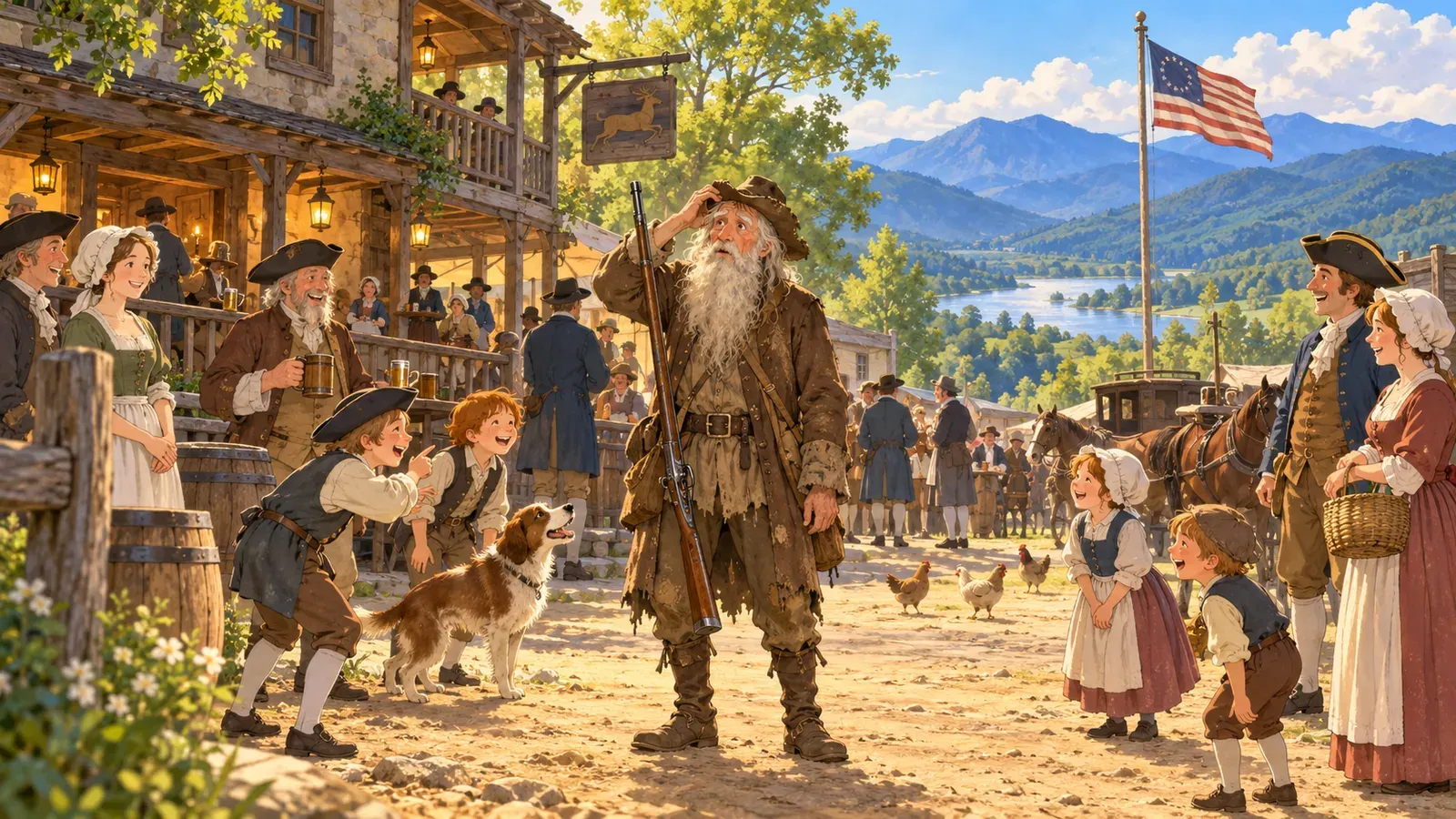
On waking, he found himself on the green knoll whence he had first seen the old man of the glen. He rubbed his eyes—it was a bright sunny morning. The birds were hopping and twittering among the bushes, and the eagle was wheeling aloft, and breasting the pure mountain breeze. "Surely," thought Rip, "I have not slept here all night." He recalled the occurrences before he fell asleep. The strange man with the keg of liquor—the mountain ravine—the wild retreat among the rocks—the woe-begone party at ninepins—the flagon—"Oh! that flagon! that wicked flagon!" thought Rip—"what excuse shall I make to Dame Van Winkle?"
目がさめると、リップは、谷から来たあの老人をはじめて見かけた、緑の小山の上に寝ていました。目をこすってみると、明るく晴れた朝でした。鳥たちが茂みのあいだを跳ね回ってさえずり、ワシが空高く輪を描いて、澄んだ山の風を胸に受けていました。「まさか」とリップは思いました。「ここでひと晩じゅう眠っていたわけじゃあるまいな」リップは、眠りこむ前の出来事を思い出しました。酒の樽をかついだ奇妙な老人。山の谷間。岩に囲まれた、人里離れたくぼ地。九柱戯をしていた、陰気な顔の一団。酒つぼ。「ああ、あの酒つぼ! あのいまいましい酒つぼめ!」とリップは思いました。「女房に、何と言いわけしたらいいんだ?」
He looked round for his gun, but in place of the clean well-oiled fowling-piece, he found an old firelock lying by him, the barrel encrusted with rust, the lock falling off, and the stock worm-eaten. He now suspected that the grave roysterers of the mountains had put a trick upon him, and, having dosed him with liquor, had robbed him of his gun. Wolf, too, had disappeared, but he might have strayed away after a squirrel or partridge. He whistled after him and shouted his name, but all in vain; the echoes repeated his whistle and shout, but no dog was to be seen.
リップはあたりを見回して、銃を探しました。ところが、きれいに手入れして油をさしておいた鳥撃ち銃のかわりに、古い火打ち石銃がそばに転がっていました。銃身はさびだらけで、撃鉄ははずれかけ、銃床は虫に食われています。さては、山のあのまじめくさった飲み助どもに、いっぱい食わされたのだ、とリップは思いました。酒を飲ませて眠らせておいて、銃を盗んでいったのだろう。ウルフもいなくなっていました。けれども、リスかヤマウズラを追いかけて、どこかへ行ってしまったのかもしれません。リップは口笛を吹いてウルフを呼び、名前を叫びました。でも、まったくむだでした。口笛も叫び声も、こだまになって返ってくるばかりで、犬の姿はどこにも見えませんでした。
He determined to revisit the scene of the last evening's gambol, and if he met with any of the party, to demand his dog and gun. As he rose to walk, he found himself stiff in the joints, and wanting in his usual activity. "These mountain beds do not agree with me," thought Rip, "and if this frolic should lay me up with a fit of the rheumatism, I shall have a blessed time with Dame Van Winkle." With some difficulty he got down into the glen: he found the gully up which he and his companion had ascended the preceding evening; but to his astonishment a mountain stream was now foaming down it, leaping from rock to rock, and filling the glen with babbling murmurs. He, however, made shift to scramble up its sides, working his toilsome way through thickets of birch, sassafras, and witch-hazel; and sometimes tripped up or entangled by the wild grape vines that twisted their coils and tendrils from tree to tree, and spread a kind of network in his path.
リップは、ゆうべ遊んでいたあの場所へもう一度行ってみることにしました。あの連中の誰かに会ったら、犬と銃を返せと言ってやろう。歩こうとして立ち上がると、関節がこわばっていて、いつものように体が動きませんでした。「山の寝床は、どうもおれの体に合わんらしい」とリップは思いました。「この浮かれ騒ぎのせいで、リウマチが出て寝こむことにでもなったら、女房にさぞかしありがたい目にあわされるだろうよ」リップは、やっとのことで谷へおりていきました。ゆうべ連れと一緒に登っていった溝は見つかりました。ところが驚いたことに、今はそこを山の急流が泡を立てて流れくだり、岩から岩へと跳びはねて、谷じゅうにさらさらと音を響かせていました。それでもリップは、どうにか流れのわきをよじ登っていきました。カバノキやサッサフラスやマンサクの茂みを、苦労してかき分けて進みました。野ブドウのつるが、木から木へとからみついて、行く手に網を張ったようになっていて、ときどきそれにつまずいたり、からまったりしました。
At length he reached to where the ravine had opened through the cliffs to the amphitheatre; but no traces of such opening remained. The rocks presented a high impenetrable wall, over which the torrent came tumbling in a sheet of feathery foam, and fell into a broad deep basin, black from the shadows of the surrounding forest. Here, then, poor Rip was brought to a stand. He again called and whistled after his dog; he was only answered by the cawing of a flock of idle crows, sporting high in the air about a dry tree that overhung a sunny precipice; and who, secure in their elevation, seemed to look down and scoff at the poor man's perplexities. What was to be done? The morning was passing away, and Rip felt famished for want of his breakfast. He grieved to give up his dog and gun; he dreaded to meet his wife; but it would not do to starve among the mountains. He shook his head, shouldered the rusty firelock, and, with a heart full of trouble and anxiety, turned his steps homeward.
ようやくリップは、崖のあいだに裂け目があって、くぼ地へ通じていたはずのところまでたどりつきました。ところが、裂け目の跡など、どこにもありません。岩は高く切り立った壁になっていて、とても通り抜けられませんでした。その上から、急流が羽毛のような白い泡の幕になってなだれ落ち、広く深い滝つぼに落ちていました。滝つぼは、まわりの森の影で黒々としていました。かわいそうに、リップはそこで立ち往生してしまいました。もう一度、犬を呼んで口笛を吹きました。答えたのは、暇そうなカラスの群れの鳴き声だけでした。カラスたちは、日の当たる崖の上に張り出した枯れ木のまわりで、空高く遊んでいました。高いところで安全なものだから、途方に暮れている哀れな男を見下ろして、ばかにしているようでした。どうしたらいいだろう? 朝はどんどん過ぎていき、朝ごはんを食べていないリップは、腹ぺこでした。犬と銃をあきらめるのはつらいことでした。女房に会うのは恐ろしいことでした。けれども、山の中で飢え死にするわけにもいきません。リップは首を振り、さびた火打ち石銃をかつぐと、悩みと不安で胸をいっぱいにして、家へ向かいました。
As he approached the village, he met a number of people, but none whom he knew, which somewhat surprised him, for he had thought himself acquainted with every one in the country round. Their dress, too, was of a different fashion from that to which he was accustomed. They all stared at him with equal marks of surprise, and whenever they cast eyes upon him, invariably stroked their chins. The constant recurrence of this gesture induced Rip, involuntarily, to do the same, when, to his astonishment, he found his beard had grown a foot long!
村に近づくと、大勢の人に出会いました。ところが、知っている顔はひとつもありませんでした。リップは少し驚きました。このあたりの人なら、誰でも知っているつもりだったからです。着ているものも、見慣れた服とは型が違っていました。誰もが同じように驚いた顔でリップをじろじろ見ました。そしてリップに目を向けるたびに、きまって自分のあごをなでました。何度も何度もそうされるので、リップも思わず自分のあごをなでてみました。すると、なんと、あごひげが一フィートものびていたのです!
He had now entered the skirts of the village. A troop of strange children ran at his heels, hooting after him, and pointing at his gray beard. The dogs, too, not one of which he recognized for an old acquaintance, barked at him as he passed. The very village was altered: it was larger and more populous. There were rows of houses which he had never seen before, and those which had been his familiar haunts had disappeared. Strange names were over the doors—strange faces at the windows—everything was strange. His mind now misgave him; he began to doubt whether both he and the world around him were not bewitched. Surely this was his native village, which he had left but a day before. There stood the Kaatskill mountains—there ran the silver Hudson at a distance—there was every hill and dale precisely as it had always been—Rip was sorely perplexed—"That flagon last night," thought he, "has addled my poor head sadly!"
リップは村のはずれに入りました。見知らぬ子どもたちが、ぞろぞろとあとをついてきて、はやしたて、リップの白いあごひげを指さしました。犬たちも、知っている犬は一匹もいなくて、リップが通ると吠えたてました。村そのものが変わっていました。前より大きく、人も多くなっていました。見たこともない家が何軒も立ち並び、なじみの場所はなくなっていました。戸口の上には知らない名前が書いてあり、窓には知らない顔がのぞいていました。何もかもが見知らぬものでした。リップは心配になってきました。自分も、まわりの世界も、魔法にかけられているのではないかと思いはじめました。ここはたしかに、自分の生まれた村だ。ついきのう出かけたばかりの村だ。あそこにはキャッツキルの山々がそびえている。遠くには銀色のハドソン川が流れている。丘も谷も、どれもこれも、いつもとそっくり同じだ。リップはすっかり途方に暮れました。「ゆうべのあの酒つぼのせいで」とリップは思いました。「かわいそうに、おれの頭はすっかりいかれちまったらしい!」
It was with some difficulty that he found the way to his own house, which he approached with silent awe, expecting every moment to hear the shrill voice of Dame Van Winkle. He found the house gone to decay—the roof had fallen in, the windows shattered, and the doors off the hinges. A half-starved dog, that looked like Wolf, was skulking about it. Rip called him by name, but the cur snarled, showed his teeth, and passed on. This was an unkind cut indeed—"My very dog," sighed poor Rip, "has forgotten me!"
やっとのことで、リップは自分の家への道を見つけました。今にも女房の甲高い声が聞こえてくるだろうと、黙って、びくびくしながら家に近づきました。家は荒れはてていました。屋根は落ち、窓は割れ、戸はちょうつがいからはずれていました。ウルフに似た、やせこけた犬が一匹、家のまわりをこそこそうろついていました。リップは名前を呼びましたが、その野良犬はうなって歯をむき出し、行ってしまいました。これは、まったくつれない仕打ちでした。「おれの犬までが」とかわいそうなリップはため息をつきました。「おれを忘れちまった!」
He entered the house, which, to tell the truth, Dame Van Winkle had always kept in neat order. It was empty, forlorn, and apparently abandoned. This desolateness overcame all his connubial fears—he called loudly for his wife and children—the lonely chambers rang for a moment with his voice, and then all again was silence.
リップは家の中に入りました。本当のことを言えば、ヴァン・ウィンクルのおかみさんは、いつも家の中をきちんと片づけていたのです。ところが今は、がらんとして、わびしく、誰も住んでいないようでした。あまりのさびれように、リップは女房がこわいことなど、すっかり忘れてしまいました。リップは大声で女房と子どもたちを呼びました。人けのない部屋に、リップの声がしばらく響いて、それからまた、何もかもしんと静まりかえりました。
He now hurried forth, and hastened to his old resort, the village inn—but it too was gone. A large rickety wooden building stood in its place, with great gaping windows, some of them broken, and mended with old hats and petticoats, and over the door was painted, "The Union Hotel, by Jonathan Doolittle." Instead of the great tree that used to shelter the quiet little Dutch inn of yore, there now was reared a tall naked pole, with something on the top that looked like a red nightcap, and from it was fluttering a flag, on which was a singular assemblage of stars and stripes—all this was strange and incomprehensible. He recognized on the sign, however, the ruby face of King George, under which he had smoked so many a peaceful pipe, but even this was singularly metamorphosed. The red coat was changed for one of blue and buff, a sword was held in the hand instead of a sceptre, the head was decorated with a cocked hat, and underneath was painted in large characters, "GENERAL WASHINGTON."
リップは急いで外に飛び出し、昔よく通った村の宿屋へ急ぎました。ところが、宿屋もなくなっていました。かわりに、がたがたの大きな木造の建物が建っていました。大きく口を開けた窓がいくつも並び、そのいくつかは割れていて、古い帽子やペチコートでふさいであります。戸口の上には、「ユニオン・ホテル 経営者ジョナサン・ドゥーリトル」とペンキで書いてありました。昔、静かな小さいオランダふうの宿屋に木かげを落としていた大きな木は、なくなっていました。そのかわりに、背の高い、むき出しの柱が一本立っていました。柱のてっぺんには、赤いナイトキャップのようなものがのっていて、そこから旗がはためいていました。旗には、星と縞が妙な具合に組み合わせてありました。何もかもが奇妙で、わけがわかりませんでした。それでも、看板の絵には見覚えがありました。ジョージ国王の赤ら顔です。その下で、リップは何度ものんびりとパイプをふかしたものでした。ところが、その国王まで、妙な具合に姿を変えていました。赤い上着は、青と黄褐色の上着に変わっていました。手には王笏のかわりに剣を持ち、頭には三角帽をかぶっていました。そして、その下に大きな字で「ワシントン将軍」と書いてありました。
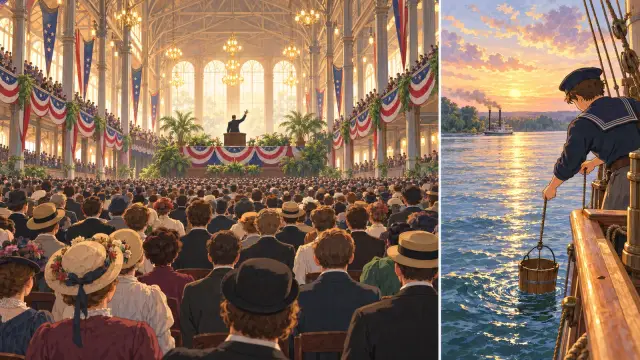
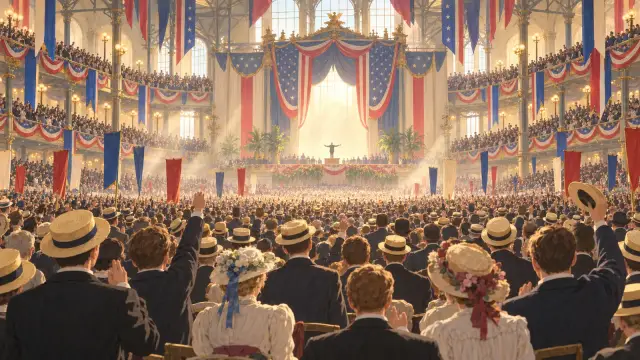
There was, as usual, a crowd of folk about the door, but none that Rip recollected. The very character of the people seemed changed. There was a busy, bustling, disputatious tone about it, instead of the accustomed phlegm and drowsy tranquillity. He looked in vain for the sage Nicholas Vedder, with his broad face, double chin, and fair long pipe, uttering clouds of tobacco-smoke, instead of idle speeches; or Van Bummel, the schoolmaster, doling forth the contents of an ancient newspaper. In place of these, a lean, bilious-looking fellow, with his pockets full of handbills, was haranguing, vehemently about rights of citizens—elections—members of Congress—liberty—Bunker's hill—heroes of seventy-six—and other words, which were a perfect Babylonish jargon to the bewildered Van Winkle.
いつものように、戸口のまわりには人だかりがしていました。けれども、リップの覚えている顔は、ひとりもいませんでした。人々の気風そのものが変わってしまったようでした。昔のようなのんびりした落ち着きや、眠たげな静けさはなくなり、せかせかと騒がしく、言い争うような調子がありました。リップは、賢人ニコラス・ヴェダーを探しました。幅の広い顔に二重あごで、長い白いパイプをくわえ、つまらないおしゃべりのかわりに、たばこの煙をもくもくと吐き出していた、あのヴェダーです。古新聞の中身を少しずつ読んで聞かせていた、学校の先生のヴァン・バメルも探しました。でも、どちらも見つかりませんでした。そのかわりに、ポケットにビラをいっぱいつめこんだ、やせて気むずかしそうな男が、激しい調子で演説をしていました。市民の権利だの、選挙だの、議員だの、自由だの、バンカーヒルだの、七六年の英雄だの、そのほか、とまどうヴァン・ウィンクルには、まるでちんぷんかんぷんな言葉ばかりでした。
The appearance of Rip, with his long, grizzled beard, his rusty fowling-piece, his uncouth dress, and the army of women and children at his heels, soon attracted the attention of the tavern politicians. They crowded round him, eying him from head to foot, with great curiosity. The orator bustled up to him, and, drawing him partly aside, inquired, "on which side he voted?" Rip stared in vacant stupidity. Another short but busy little fellow pulled him by the arm, and rising on tiptoe, inquired in his ear, "whether he was Federal or Democrat." Rip was equally at a loss to comprehend the question; when a knowing, self-important old gentleman, in a sharp cocked hat, made his way through the crowd, putting them to the right and left with his elbows as he passed, and planting himself before Van Winkle, with one arm akimbo, the other resting on his cane, his keen eyes and sharp hat penetrating, as it were, into his very soul, demanded in an austere tone, "What brought him to the election with a gun on his shoulder, and a mob at his heels; and whether he meant to breed a riot in the village?"
長い白髪まじりのあごひげ、さびた鳥撃ち銃、妙な身なり、そしてあとからぞろぞろついてくる女や子どもの群れ。そんなリップの姿は、すぐに居酒屋の政治談議の連中の目をひきました。連中はリップのまわりに群がり、珍しそうに頭のてっぺんから足の先までじろじろ見ました。演説をしていた男がせかせかと近づいてきて、リップを少しわきへ引っぱっていき、「あなたはどちらに投票しましたか」とたずねました。リップはぽかんとして、男の顔を見つめました。背は低いが、せわしない小男が、リップの腕を引っぱり、つま先立ちになって、耳もとで「あなたは連邦派ですか、民主派ですか」とたずねました。この質問も、リップにはさっぱりわかりませんでした。そこへ、とがった三角帽をかぶった、物知り顔の、もったいぶった老紳士が、ひじで人々を左右に押しのけながら、人ごみをかき分けてやってきました。そして片手を腰にあて、もう片方の手をステッキにのせて、ヴァン・ウィンクルの前に立ちはだかりました。鋭い目と、とがった帽子で、まるでリップの心の奥まで見すかそうとするかのようでした。老紳士は、きびしい口調で問いただしました。「肩に銃をかついで、群衆を引き連れて、選挙に何をしに来たのか。村で暴動でも起こすつもりか?」
"Alas! gentlemen," cried Rip, somewhat dismayed, "I am a poor, quiet man, a native of the place, and a loyal subject of the King, God bless him!"
「とんでもない、みなさん!」とリップは、少々うろたえて叫びました。「わたしは貧しい、おとなしい男で、この土地の生まれです。国王陛下の忠実な家来でございます。陛下に神のお恵みがありますように!」
Here a general shout burst from the bystanders—"a tory! a tory! a spy! a refugee! hustle him! away with him!" It was with great difficulty that the self-important man in the cocked hat restored order; and having assumed a tenfold austerity of brow, demanded again of the unknown culprit, what he came there for, and whom he was seeking. The poor man humbly assured him that he meant no harm, but merely came there in search of some of his neighbors, who used to keep about the tavern.
そのとたん、まわりの見物人から、いっせいに叫び声があがりました。「王党派だ! 王党派だ! スパイだ! 逃げ出した裏切り者だ! つまみ出せ! 追い出せ!」三角帽のもったいぶった男は、やっとのことで騒ぎをしずめました。そして、眉間のしわを十倍も深くして、この見知らぬ罪人に、ここへ何をしに来たのか、誰を探しているのか、ともう一度問いただしました。かわいそうな男は、悪いことをするつもりなどまったくない、ただ、よくこの居酒屋のあたりにいた近所の人たちを探しに来ただけだと、へりくだって答えました。
"Well—who are they?—name them."
「では、それは誰だ。名前を言ってみろ」
Rip bethought himself a moment, and inquired, Where's Nicholas Vedder?
リップはちょっと考えてから、たずねました。ニコラス・ヴェダーはどこにいますか?
There was a silence for a little while, when an old man replied, in a thin, piping voice, "Nicholas Vedder? why, he is dead and gone these eighteen years! There was a wooden tombstone in the churchyard that used to tell all about him, but that's rotten and gone too."
しばらく沈黙が続きました。それから一人の老人が、細い甲高い声で答えました。「ニコラス・ヴェダー? なに、あの人は死んで、もう十八年になるよ! 教会の墓地に、あの人のことをすっかり書いた木の墓標があったが、それも腐ってなくなってしまった」
"Where's Brom Dutcher?"
「ブロム・ダッチャーはどこにいますか?」
"Oh, he went off to the army in the beginning of the war; some say he was killed at the storming of Stony-Point—others say he was drowned in a squall at the foot of Antony's Nose. I don't know—he never came back again."
「ああ、あの人は、戦争が始まったときに軍隊に入っていったよ。ストーニー・ポイントの襲撃で戦死したと言う者もいれば、アントニーズ・ノーズのふもとで突風にあっておぼれ死んだと言う者もいる。わしにはわからん。とうとう帰ってこなかったよ」
"Where's Van Bummel, the schoolmaster?"
「学校の先生のヴァン・バメルはどこにいますか?」
"He went off to the wars, too; was a great militia general, and is now in Congress."
「あの人も戦争に行ってね。民兵の偉い将軍になって、今は議会の議員さ」
Rip's heart died away, at hearing of these sad changes in his home and friends, and finding himself thus alone in the world. Every answer puzzled him too, by treating of such enormous lapses of time, and of matters which he could not understand: war—Congress—Stony-Point;—he had no courage to ask after any more friends, but cried out in despair, "Does nobody here know Rip Van Winkle?"
故郷も友人たちも、こんなに悲しく変わってしまった。そして自分は、この世にひとりぼっちになってしまった。それを知って、リップは気が遠くなりそうでした。それに、どの答えも、とてつもなく長い年月がたったことを語っていましたし、戦争だの、議会だの、ストーニー・ポイントだの、リップにはわけのわからないことばかりだったので、ますます頭が混乱しました。もう、ほかの友だちのことをたずねる勇気もありませんでした。リップは絶望して叫びました。「ここには、リップ・ヴァン・ウィンクルを知っている人は、誰もいないのですか?」
"Oh, Rip Van Winkle!" exclaimed two or three. "Oh, to be sure! that's Rip Van Winkle yonder, leaning against the tree."
「ああ、リップ・ヴァン・ウィンクルか!」と二、三人が声をあげました。「ああ、もちろんさ! あそこの木に寄りかかっているのが、リップ・ヴァン・ウィンクルだよ」
Rip looked, and beheld a precise counterpart of himself as he went up the mountain; apparently as lazy, and certainly as ragged. The poor fellow was now completely confounded. He doubted his own identity, and whether he was himself or another man. In the midst of his bewilderment, the man in the cocked hat demanded who he was, and what was his name?
リップが見ると、そこには、山に登っていったときの自分と、そっくり同じ男がいました。見たところ、同じくらい怠け者らしく、たしかに同じくらいぼろを着ていました。かわいそうに、リップはもう何が何だかわからなくなりました。自分が本当に自分なのか、それとも別の人間なのか、わからなくなってしまったのです。すっかりとまどっているところへ、三角帽の男が、おまえは誰だ、名前は何というのだ、と問いただしました。
"God knows!" exclaimed he at his wit's end; "I'm not myself—I'm somebody else—that's me yonder—no—that's somebody else, got into my shoes—I was myself last night, but I fell asleep on the mountain, and they've changed my gun, and everything's changed, and I'm changed, and I can't tell what's my name, or who I am!"
「神さまにしかわかりません!」とリップは、途方に暮れて叫びました。「わたしはわたしじゃない。誰か別の人間なんです。あそこにいるのがわたしだ。いや、ちがう、あれは誰か別の人間が、わたしになりすましているんだ。ゆうべまでは、わたしはわたしでした。でも山で眠りこんでしまって、そうしたら銃を取りかえられて、何もかも変わってしまって、わたしも変わってしまって、自分の名前も、自分が誰なのかも、わからないんです!」
The by-standers began now to look at each other, nod, wink significantly, and tap their fingers against their foreheads. There was a whisper, also, about securing the gun, and keeping the old fellow from doing mischief; at the very suggestion of which, the self-important man with the cocked hat retired with some precipitation. At this critical moment a fresh, comely woman pressed through the throng to get a peep at the gray-bearded man. She had a chubby child in her arms, which, frightened at his looks, began to cry. "Hush, Rip," cried she, "hush, you little fool; the old man won't hurt you." The name of the child, the air of the mother, the tone of her voice, all awakened a train of recollections in his mind.
見物人たちは、互いに顔を見合わせて、うなずき、意味ありげに目くばせして、指で自分の額をつつきました。銃を取り上げて、このじいさんが何か悪さをしないようにしたほうがいい、というささやきも聞こえました。それを聞いたとたん、三角帽のもったいぶった男は、あわてて引き下がりました。ちょうどそのとき、若々しい、器量のよい女の人が、白いあごひげの男をひと目見ようと、人ごみをかき分けて出てきました。女の人は、丸々と太った子どもを抱いていました。子どもはリップの顔を見てこわがり、泣きだしました。「静かにして、リップ」と女の人は言いました。「静かにしなさい、おばかさん。このおじいさんは何もしないわよ」子どもの名前、母親のようす、その声の調子。それがみな、リップの胸に、次々と思い出を呼びさましました。
"What is your name, my good woman?" asked he.
「あなたのお名前は?」とリップはたずねました。
"Judith Cardenier."
「ジュディス・カーデニアーです」
"And your father's name?"
「それで、お父さんの名前は?」
"Ah, poor man, Rip Van Winkle was his name, but it's twenty years since he went away from home with his gun, and never has been heard of since,—his dog came home without him; but whether he shot himself, or was carried away by the Indians, nobody can tell. I was then but a little girl."
「ああ、かわいそうな人、リップ・ヴァン・ウィンクルという名前でした。でも、銃を持って家を出ていってから、もう二十年になります。それきり、何の便りもないんです。犬だけが、父をおいて帰ってきました。父が自分で自分を撃ってしまったのか、インディアンにさらわれたのか、誰にもわかりません。わたしはそのころ、まだほんの小さな子どもでした」
Rip had but one more question to ask; but he put it with a faltering voice:
リップには、たずねたいことが、もうひとつだけありました。けれども、それをたずねる声はふるえていました。
"Where's your mother?"
「お母さんはどこに?」
Oh, she too had died but a short time since; she broke a blood-vessel in a fit of passion at a New-England pedler.
ああ、母もついこのあいだ亡くなりました。ニューイングランドから来た行商人に腹を立てて、かんかんに怒ったはずみに、血管が切れてしまったのです。
There was a drop of comfort, at least, in this intelligence. The honest man could contain himself no longer. He caught his daughter and her child in his arms. "I am your father!" cried he—"Young Rip Van Winkle once—old Rip Van Winkle now—Does nobody know poor Rip Van Winkle!"
この知らせには、少なくとも、ひとしずくの慰めがありました。正直者のリップは、もうこらえきれませんでした。リップは娘と孫を、両腕に抱きしめました。「わたしがおまえの父さんだ!」とリップは叫びました。「昔は若いリップ・ヴァン・ウィンクル、今は年寄りのリップ・ヴァン・ウィンクルだ。かわいそうなリップ・ヴァン・ウィンクルを、誰も知らないのですか!」
All stood amazed, until an old woman, tottering out from among the crowd, put her hand to her brow, and peering under it in his face for a moment exclaimed, "sure enough! it is Rip Van Winkle—it is himself. Welcome home again, old neighbor. Why, where have you been these twenty long years?"
みんな、あっけにとられて立ちつくしていました。やがて、ひとりの老婆が、人ごみの中からよろよろと出てきました。そして額に手をかざして、その下からしばらくリップの顔をのぞきこんでいましたが、やがて叫びました。「間違いない! リップ・ヴァン・ウィンクルだよ。本人だよ。よく帰ってきたね、お隣さん。いったい、この長い二十年のあいだ、どこへ行っていたんだい?」
Rip's story was soon told, for the whole twenty years had been to him but as one night. The neighbors stared when they heard it; some were seen to wink at each other, and put their tongues in their cheeks; and the self-important man in the cocked hat, who, when the alarm was over, had returned to the field, screwed down the corners of his mouth, and shook his head—upon which there was a general shaking of the head throughout the assemblage.
リップの話は、すぐに終わってしまいました。二十年がまるごと、リップにとっては、たったひと晩のことだったからです。近所の人たちは、話を聞いて目を丸くしました。互いに目くばせして、舌で頬をふくらませ、からかうような顔をする者もいました。三角帽のもったいぶった男も、騒ぎがおさまると、またしゃしゃり出てきていました。男は口の両端をぎゅっと下げて、首を振りました。すると、集まった人々が、みないっせいに首を振りました。
It was determined, however, to take the opinion of old Peter Vanderdonk, who was seen slowly advancing up the road. He was a descendant of the historian of that name, who wrote one of the earliest accounts of the province. Peter was the most ancient inhabitant of the village, and well versed in all the wonderful events and traditions of the neighborhood. He recollected Rip at once, and corroborated his story in the most satisfactory manner. He assured the company that it was a fact, handed down from his ancestor, the historian, that the Kaatskill mountains had always been haunted by strange beings. That it was affirmed that the great Hendrick Hudson, the first discoverer of the river and country, kept a kind of vigil there every twenty years, with his crew of the Half-moon; being permitted in this way to revisit the scenes of his enterprise, and keep a guardian eye upon the river and the great city called by his name. That his father had once seen them in their old Dutch dresses playing at ninepins in the hollow of the mountain; and that he himself had heard, one summer afternoon, the sound of their balls, like distant peals of thunder.
けれども、ちょうどそのとき、道をゆっくりと歩いてくるピーター・ヴァンダードンクじいさんの意見を聞いてみよう、ということになりました。ピーターは、この植民地について最も古い記録のひとつを書いた、同じ名前の歴史家の子孫でした。村でいちばんの年寄りで、このあたりの不思議な出来事や言い伝えに、何でもよく通じていました。ピーターはすぐにリップを思い出し、リップの話が間違いないことを、誰もが納得するように裏づけてくれました。ピーターは、みんなにこう請け合いました。先祖の歴史家から代々伝えられてきた事実だが、キャッツキルの山々には、昔から不思議なものたちが出るのだ。言い伝えによれば、この川とこの土地を最初に見つけた偉大なヘンドリック・ハドソンが、ハーフムーン号の乗組員たちと一緒に、二十年ごとにあの山で寝ずの番のようなことをしているという。そうして、自分がかつて冒険した場所をもう一度訪ね、川と、自分の名前のついた大きな町を見守ることを、許されているのだそうだ。自分の父親も、一度、昔のオランダふうの服を着たその一団が、山のくぼ地で九柱戯をしているのを見たことがある。自分自身も、ある夏の午後、遠い雷のような、その球の音を聞いたことがある、と。
To make a long story short, the company broke up, and returned to the more important concerns of the election. Rip's daughter took him home to live with her; she had a snug, well-furnished house, and a stout cheery farmer for a husband, whom Rip recollected for one of the urchins that used to climb upon his back. As to Rip's son and heir, who was the ditto of himself, seen leaning against the tree, he was employed to work on the farm; but evinced an hereditary disposition to attend to any thing else but his business.
かいつまんで言えば、人々は散っていき、選挙というもっと大事な用事に戻っていきました。リップの娘は、リップを自分の家に連れて帰って、一緒に暮らすことにしました。娘の家は、こぢんまりとして家具もよくそろっていました。夫は、がっしりした陽気な農夫でした。リップは、その夫が、昔よく自分の背中によじ登ってきた腕白小僧のひとりだったことを思い出しました。リップの息子で跡取りの、あの木に寄りかかっていた父親そっくりの男はというと、畑仕事に雇われていました。けれども、自分の仕事以外なら何にでも精を出すという、親ゆずりの性分を見せていました。
Rip now resumed his old walks and habits; he soon found many of his former cronies, though all rather the worse for the wear and tear of time; and preferred making friends among the rising generation, with whom he soon grew into great favor.
リップは、昔どおりにぶらぶら歩き回り、昔どおりの暮らしに戻りました。まもなく昔の遊び仲間もたくさん見つかりましたが、みな、年月にすっかりすり減らされて、だいぶくたびれていました。それでリップは、若い人たちの中に友だちを作るほうを好みました。リップは、すぐに若い人たちのあいだで大人気になりました。
Having nothing to do at home, and being arrived at that happy age when a man can be idle with impunity, he took his place once more on the bench, at the inn door, and was reverenced as one of the patriarchs of the village, and a chronicle of the old times "before the war." It was some time before he could get into the regular track of gossip, or could be made to comprehend the strange events that had taken place during his torpor. How that there had been a revolutionary war—that the country had thrown off the yoke of old England—and that, instead of being a subject to his Majesty George the Third, he was now a free citizen of the United States. Rip, in fact, was no politician; the changes of states and empires made but little impression on him; but there was one species of despotism under which he had long groaned, and that was—petticoat government. Happily, that was at an end; he had got his neck out of the yoke of matrimony, and could go in and out whenever he pleased, without dreading the tyranny of Dame Van Winkle. Whenever her name was mentioned, however, he shook his head, shrugged his shoulders, and cast up his eyes; which might pass either for an expression of resignation to his fate, or joy at his deliverance.
家ではすることもなく、それに、怠けていても誰にもとがめられない、あの幸せな年ごろになっていたので、リップはまた宿屋の戸口のベンチに座るようになりました。そして、村の長老のひとりとして、「戦争の前」の昔を知る生き字引として、敬われるようになりました。いつものうわさ話についていけるようになるまでには、しばらくかかりました。自分が眠りこけていたあいだに起きた、不思議な出来事をのみこむまでにも、時間がかかりました。独立戦争があったこと。この国が、古いイギリスのくびきを振り捨てたこと。そして自分は、もう国王ジョージ三世陛下の家来ではなく、アメリカ合衆国の自由な市民になったのだということ。じつのところ、リップは政治のことなどわかりませんでした。国や帝国がどう移り変わろうと、リップにはたいして気になりませんでした。けれども、リップが長いあいだ、その下でうめいてきた独裁政治がひとつありました。それは、ペチコート政府、つまり、かかあ天下です。さいわい、それはもう終わっていました。リップは結婚のくびきから首を抜き、ヴァン・ウィンクルのおかみさんの暴政におびえることもなく、好きなときに出入りできるようになったのです。それでも、おかみさんの名前が出るたびに、リップは首を振り、肩をすくめ、天をあおぎました。それは、自分の運命をあきらめて受け入れているようにも、解き放たれたことを喜んでいるようにも、どちらにも見えるしぐさでした。
He used to tell his story to every stranger that arrived at Mr. Doolittle's hotel. He was observed, at first, to vary on some points every time he told it, which was, doubtless, owing to his having so recently awaked. It at last settled down precisely to the tale I have related, and not a man, woman, or child in the neighborhood, but knew it by heart. Some always pretended to doubt the reality of it, and insisted that Rip had been out of his head, and that this was one point on which he always remained flighty. The old Dutch inhabitants, however, almost universally gave it full credit. Even to this day, they never hear a thunder-storm of a summer afternoon about the Kaatskill, but they say Hendrick Hudson and his crew are at their game of ninepins; and it is a common wish of all henpecked husbands in the neighborhood, when life hangs heavy on their hands, that they might have a quieting draught out of Rip Van Winkle's flagon.
リップは、ドゥーリトル氏のホテルにやってくる旅の客をつかまえては、誰にでも自分の話をして聞かせました。はじめのうちは、話すたびにどこかしら違っていました。それはきっと、目がさめたばかりだったせいでしょう。けれども、やがて話は、わたしがここに書いてきたとおりの話に落ち着きました。近所では、男も女も子どもも、その話をそらで言えない者はいませんでした。いつまでも本当かどうか疑うふりをして、リップは頭がおかしくなっていたのだ、この話のことだけは、いつまでたっても正気に戻らないのだ、と言い張る者もいました。けれども、昔からのオランダ系の村人たちは、ほとんどみな、この話をすっかり信じていました。今でも、夏の午後にキャッツキルのあたりで雷が鳴ると、村人たちはきまって、ヘンドリック・ハドソンと乗組員たちが九柱戯をしているのだと言います。そして、このあたりの、女房の尻に敷かれた亭主たちは、人生がつらくてやりきれなくなると、みな同じことを願うのです。リップ・ヴァン・ウィンクルの酒つぼから、心をしずめる一杯を飲ませてもらえたらいいのに、と。
Note.
注
The foregoing tale, one would suspect, had been suggested to Mr. Knickerbocker by a little German superstition about the Emperor Frederick der Rothbart and the Kypphauser mountain; the subjoined note, however, which he had appended to the tale, shows that it is an absolute fact, narrated with his usual fidelity.
この物語は、フリードリッヒ赤ひげ帝とキフホイザー山にまつわる、ドイツのちょっとした言い伝えから、ニッカーボッカー氏が思いついたものではないか。そう疑う人もいるでしょう。けれども、物語に添えられていた次の注を読めば、これがまったくの事実であり、氏のいつもの忠実さで語られたものであることがわかります。
"The story of Rip Van Winkle may seem incredible to many, but nevertheless I give it my full belief, for I know the vicinity of our old Dutch settlements to have been very subject to marvellous events and appearances. Indeed, I have heard many stranger stories than this, in the villages along the Hudson; all of which were too well authenticated to admit of a doubt. I have even talked with Rip Van Winkle myself, who, when last I saw him, was a very venerable old man, and so perfectly rational and consistent on every other point, that I think no conscientious person could refuse to take this into the bargain; nay, I have seen a certificate on the subject taken before a country justice, and signed with cross, in the justice's own handwriting. The story, therefore, is beyond the possibility of doubt.
「リップ・ヴァン・ウィンクルの話は、多くの人には信じられないものに思えるかもしれない。それでも、わたしはこの話を、すっかり信じている。わたしたちの古いオランダ人の入植地のあたりでは、不思議な出来事や、不思議なものの出現が、たいそう多かったことを知っているからである。じっさい、わたしはハドソン川ぞいの村々で、これよりもっと奇妙な話を、たくさん聞いてきた。それらはどれも、疑う余地のないほど、しっかりした裏づけのあるものだった。わたしは、リップ・ヴァン・ウィンクル本人と話したことさえある。わたしが最後に会ったとき、リップはたいそう年をとった、立派な老人だった。ほかのことでは、どの点でもまったく理屈が通っていて、話も食いちがわなかった。だから、良心のある人なら誰でも、この話もあわせて信じないわけにはいかないと思う。それどころか、わたしは、この件について村の治安判事の前で作られた証明書を見たことさえある。判事が自分の手で書き、リップが十字のしるしで署名したものである。それゆえ、この話は、疑う余地のないものである。
"D. K."
「D・K」