Plastic is cheap, light, and strong. It is used for bottles, bags, food packages, toys, and many other things. Since the 1950s, humans have produced billions of tons of plastic. But much of it is used only once and then thrown away. Some of this waste ends up in the ocean.
プラスチックは安くて、軽くて、丈夫です。ボトル、袋、食品の容器、おもちゃなど、たくさんのものに使われています。1950年代から、人間は何十億トンものプラスチックを作ってきました。しかし、その多くは一度使っただけで捨てられます。そしてこのごみの一部が、最後には海に流れつくのです。
Scientists believe that millions of tons of plastic enter the sea every year. It is carried by rivers, blown by the wind, or left on beaches by people. Once plastic is in the ocean, it can travel very far. Plastic waste has been found on islands where nobody lives, and even at the bottom of the deepest ocean trenches.
毎年、何百万トンものプラスチックが海に入っている、と科学者たちは考えています。プラスチックは、川に運ばれたり、風に飛ばされたり、海岸に捨てられたりして、海に入ります。いったん海に入ると、とても遠くまで流れていくことがあります。プラスチックごみは、だれも住んでいない島や、いちばん深い海溝の底でさえ見つかっています。
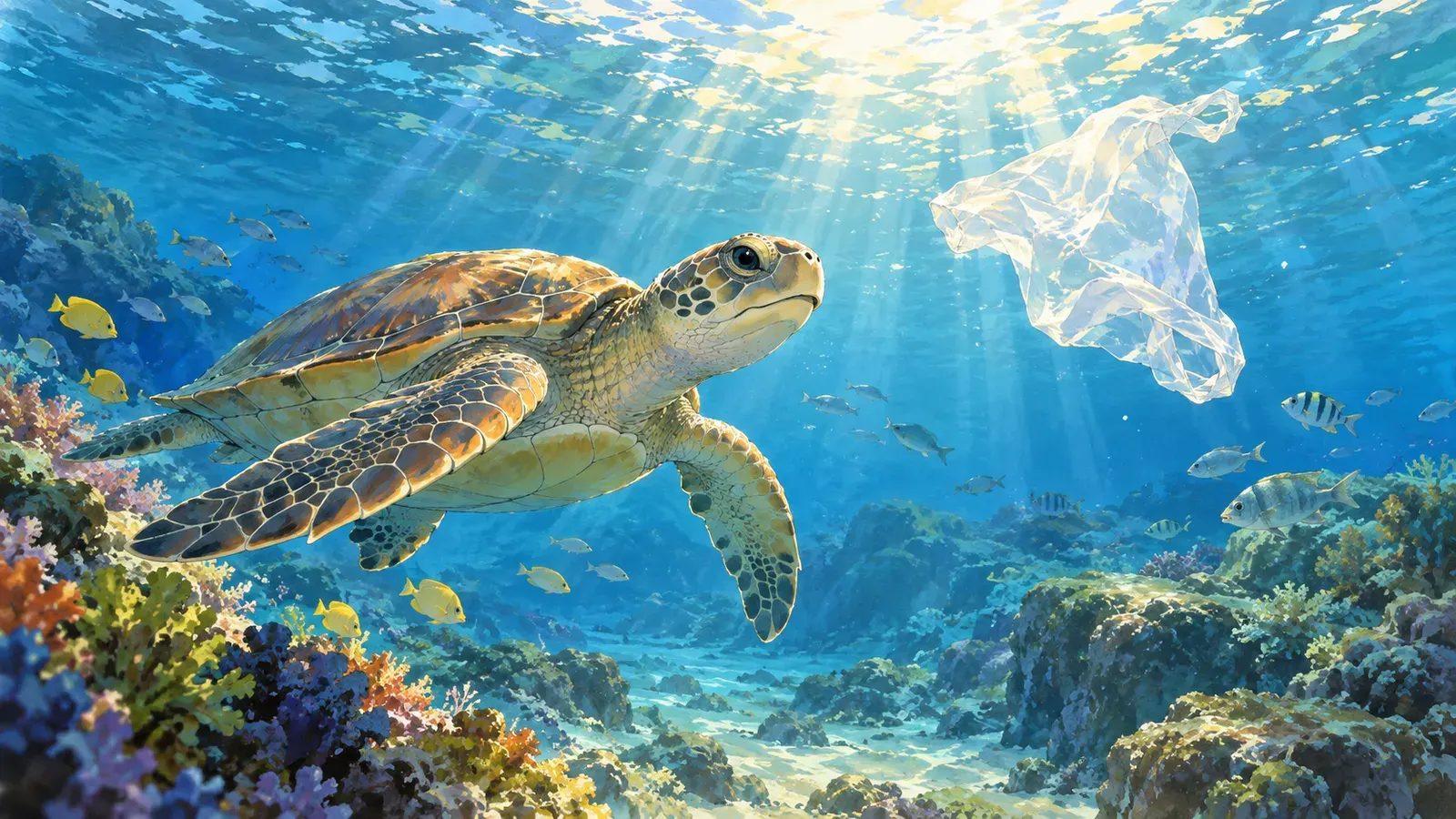
This plastic causes serious problems for sea animals. Turtles sometimes eat plastic bags, because the bags look like jellyfish floating in the water. Seabirds and whales have been found with stomachs full of plastic. Fishing nets that are lost at sea can trap and kill animals for many years.
このプラスチックは、海の生き物に深刻な問題を引き起こします。ウミガメはときどきビニール袋を食べてしまいます。水にただよう袋がクラゲのように見えるからです。胃がプラスチックでいっぱいになった海鳥やクジラも見つかっています。海で失われた漁網は、何年にもわたって生き物をからめ取り、命を奪うことがあります。
Over time, sunlight and waves break plastic into smaller and smaller pieces. Pieces smaller than five millimeters are called microplastics. They are eaten by fish and shellfish, and some of them may come to our dinner tables. Microplastics have also been found in drinking water and even inside the human body. Researchers are still studying how harmful they are to our health.
日光と波にさらされて、プラスチックは時間とともに、どんどん小さなかけらになっていきます。5ミリメートルより小さいかけらは、マイクロプラスチックと呼ばれます。マイクロプラスチックは魚や貝に食べられ、その一部はわたしたちの食卓にのぼるかもしれません。飲み水や、人間の体の中からさえ見つかっています。健康にどれほど害があるのか、研究者たちはまだ調べているところです。
Many countries have taken action. In Japan, shops have been required to charge for plastic shopping bags since July 2020. Many cafes have changed from plastic straws to paper ones. Companies are developing new materials that break down naturally in the sea. Members of the United Nations have also been discussing a global treaty to reduce plastic pollution, although it has been difficult for so many countries to agree.
多くの国が対策をとってきました。日本では2020年7月から、店はレジ袋を有料にすることが義務づけられています。多くのカフェが、プラスチックのストローから紙のストローに切りかえました。企業は、海の中で自然に分解される新しい素材を開発しています。国連の加盟国も、プラスチック汚染を減らすための世界的な条約について話し合ってきました。ただ、これほど多くの国が合意するのは、なかなか難しいことです。
Japan is an island country, so this problem is close to home. Plastic bottles and fishing tools from many countries wash up on Japanese beaches, especially along the Sea of Japan. At the same time, Japan is one of the countries that throw away the most plastic packaging per person. In Japanese shops, many products are wrapped one by one, and some are even wrapped twice.
日本は島国なので、この問題は身近なものです。さまざまな国から来たペットボトルや漁具が日本の海岸に流れ着きます。とくに日本海側に多く見られます。その一方で、日本は一人あたりのプラスチック包装ごみが最も多い国の一つでもあります。日本の店では、多くの商品が一つずつ包装され、中には二重に包まれているものさえあります。
However, some people say that these steps are too small. Shopping bags are only a tiny part of the plastic in the ocean, and paper products also use energy and resources. Others point out that plastic has important uses. For example, it keeps food fresh for a longer time, and it keeps medical tools safe and clean. Replacing it completely would not be easy.
しかし、こうした取り組みは小さすぎる、と言う人もいます。レジ袋は海のプラスチックのごく一部にすぎませんし、紙製品を作るのにもエネルギーや資源を使います。プラスチックには大切な使い道がある、と指摘する人もいます。たとえば、食べ物を長く新鮮に保ったり、医療器具を安全で清潔に保ったりできます。プラスチックを完全にほかのものに置きかえるのは、簡単ではないでしょう。
Most experts agree that the key is to reduce, reuse, and recycle, in that order. We can carry our own bottles and bags, choose products with less packaging, and sort our trash carefully. Joining a beach clean-up is another way to help, and it shows us clearly how much plastic is around us.
専門家の多くは、大切なのは「減らす(リデュース)」「くり返し使う(リユース)」「再生して使う(リサイクル)」を、この順番で行うことだと考えています。わたしたちにも、自分のボトルや袋を持ち歩く、包装の少ない商品を選ぶ、ごみをきちんと分別する、といったことができます。海岸のごみ拾いに参加するのもよい方法です。身の回りにどれほど多くのプラスチックがあるかが、よくわかります。
What do you think? Some people say that plastic products like bags and straws should be banned, because the ocean is being seriously damaged. Others say that banning them is not the answer, because plastic is useful, and better recycling and new materials can solve the problem.
あなたはどう思いますか。袋やストローのようなプラスチック製品は禁止するべきだ、と言う人もいます。海がひどく傷つけられているからです。一方、禁止することが答えではない、と言う人もいます。プラスチックは便利ですし、リサイクルの方法を改善したり、新しい素材を使ったりすれば、問題は解決できるからです。
 ▶
 ▶