Japan is one of the most disaster-prone countries in the world. It sits where several tectonic plates meet, so earthquakes happen often, and tsunamis can follow them. Typhoons bring strong winds and heavy rain every summer and autumn, and the country has more than a hundred active volcanoes. Because disasters cannot be stopped, people in Japan have long focused on how to reduce the damage they cause.
日本は、世界でも特に災害の多い国の一つです。いくつものプレートが出合う場所にあるため、地震がよく起こり、そのあと津波が襲ってくることもあります。毎年夏から秋には、台風が強い風と大雨をもたらします。国内には100を超える活火山もあります。災害そのものは止められません。そこで日本の人々は昔から、災害の被害をどう減らすかに力を注いできました。
September 1 is Disaster Prevention Day in Japan. It marks the day in 1923 when the Great Kanto Earthquake struck the Tokyo area and more than 100,000 people died, many of them in fires. Since then, Japan has learned painful lessons from many disasters, including the Great Hanshin-Awaji Earthquake in 1995, the Great East Japan Earthquake and tsunami in 2011, and the Noto Peninsula Earthquake on New Year's Day in 2024.
9月1日は日本の「防災の日」です。1923年のこの日、関東大震災が東京一帯を襲い、10万人以上が亡くなりました。その多くは火災によるものでした。それ以来、日本は多くの災害からつらい教訓を学んできました。1995年の阪神・淡路大震災、2011年の東日本大震災と津波、そして2024年の元日に起きた能登半島地震などです。
Experts warn that more large disasters will come. A huge earthquake could happen along the Nankai Trough, an area under the sea off the Pacific coast from Shizuoka to Kyushu, and another could strike directly under Tokyo. In August 2024, after a strong earthquake off the coast of Miyazaki, the Japan Meteorological Agency issued its first Nankai Trough megaquake advisory, and many people rushed to buy water and emergency food.
専門家たちは、これからも大きな災害が来ると警告しています。静岡から九州にかけての太平洋沖の海底にある南海トラフで、巨大地震が起こるかもしれません。東京の真下で大地震が起こるおそれもあります。2024年8月には、宮崎県沖で強い地震が起きたあと、気象庁が初めて「南海トラフ地震臨時情報(巨大地震注意)」を発表し、多くの人が水や非常食を買いに走りました。
Disaster prevention is often described in three parts: self-help, mutual help, and public help. Self-help means protecting yourself and your family. Mutual help means neighbors and local communities helping each other. Public help means support from the government, fire departments, and the Self-Defense Forces. In a large disaster, public help cannot reach everyone right away, so the first two are especially important.
防災は、よく「自助」「共助」「公助」の三つに分けて説明されます。自助とは、自分と家族を自分で守ることです。共助とは、近所の人や地域の人どうしが助け合うことです。公助とは、国や自治体、消防、自衛隊による支援のことです。大きな災害では、公助はすぐにはすべての人に届かないので、はじめの二つが特に大切になります。
Self-help begins at home. Heavy furniture such as bookshelves and refrigerators should be fixed to the walls so that it does not fall over. In past earthquakes, many people were injured or killed by falling furniture. It is also a good idea to keep shoes and a flashlight near your bed, because broken glass may cover the floor after an earthquake at night.
自助は家から始まります。本棚や冷蔵庫のような重い家具は、倒れないように壁に固定しておきましょう。過去の地震では、倒れてきた家具で多くの人がけがをしたり、亡くなったりしました。夜中に地震が起きると、床に割れたガラスが散らばっているかもしれません。ですから、ベッドの近くに靴と懐中電灯を置いておくのもよい考えです。
Every home should store water and food. The government recommends keeping enough for at least three days, and if possible for a week, because it can take that long for help to arrive after a huge disaster. A common guideline is about three liters of drinking water per person per day. One easy method is called rolling stock. You keep a little more food than usual, eat the oldest items first, and buy new ones to replace them. In this way, your emergency supplies never go out of date.
どの家でも水と食料を備えておくべきです。政府は、少なくとも3日分、できれば1週間分を蓄えておくようすすめています。巨大災害のあとでは、助けが届くまでにそれくらいかかることがあるからです。飲み水は1人1日およそ3リットルが一般的な目安です。簡単な方法の一つに「ローリングストック」があります。普段より少し多めに食料を買っておき、古いものから食べて、食べた分を新しく買い足すのです。こうすれば、非常用の備えが期限切れになることはありません。
Other useful items include a portable radio, batteries, a phone charger, medicine, and portable toilets. Toilets are a bigger problem than many people expect. When water pipes and sewage systems are damaged, flush toilets cannot be used, and in past disasters, many evacuees suffered because toilets were dirty and crowded.
そのほかに役立つものとして、携帯ラジオ、電池、スマホの充電器、薬、携帯トイレがあります。トイレは、多くの人が思っているより大きな問題です。水道管や下水道が壊れると、水洗トイレは使えなくなります。過去の災害では、トイレが不衛生で混み合っていたため、多くの避難者が苦しみました。
It is also important to know the risks where you live. Local governments publish hazard maps, which show areas that may be flooded, hit by tsunamis, or affected by landslides. By checking these maps in advance, you can decide where to go and which route to take. Families should also agree on how to contact each other and where to meet, since phone lines are often busy after a disaster.
自分が住んでいる場所の危険を知っておくことも大切です。自治体が公開しているハザードマップには、洪水や津波、土砂崩れのおそれがある地域が示されています。前もってこの地図を確かめておけば、どこへ、どの道を通って逃げるかを決めておけます。災害のあとは電話がつながりにくくなることが多いので、家族でどうやって連絡を取り合い、どこで落ち合うかも決めておきましょう。
When a tsunami warning is issued, the rule is to move to high ground immediately, without waiting to see the waves. In the Tohoku region, there is a traditional saying, "tsunami tendenko." It means that each person should run to safety on their own, without stopping to look for family members. This may sound cold, but it is based on the idea that if everyone trusts each other to escape, more lives can be saved. In 2011, many students in Kamaishi City, Iwate, who had practiced evacuation again and again, escaped safely to higher ground.
津波警報が出たら、波が来るのを確かめるまで待たずに、すぐに高い所へ逃げるのが鉄則です。東北地方には「津波てんでんこ」という昔からの言い伝えがあります。家族を探しに立ち止まらず、てんでんばらばらに、一人ひとりが安全な場所へ逃げなさい、という意味です。冷たく聞こえるかもしれません。でもこれは、みんなが「ほかの人もきっと自分で逃げている」と信じ合えば、より多くの命が救われる、という考えにもとづいているのです。2011年には、何度も繰り返し避難訓練をしていた岩手県釜石市の多くの子どもたちが、高台へ無事に逃げのびました。
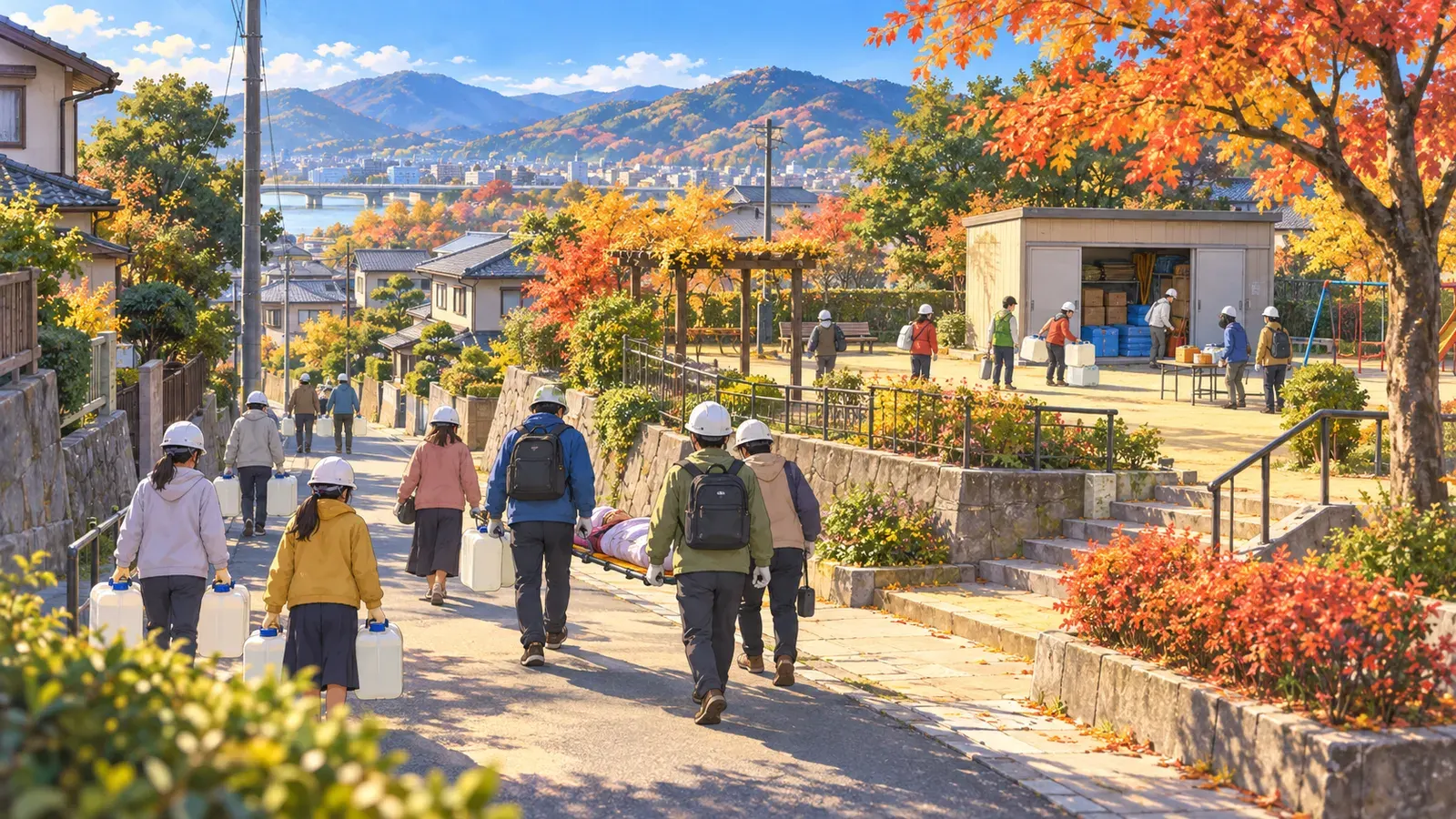
Mutual help is also essential. After the 1995 earthquake in Kobe, most of the people who were rescued from collapsed buildings were saved by neighbors and family members, not by professional rescue teams. Taking part in local disaster drills, and knowing who in your neighborhood may need help, such as elderly people living alone, can save lives.
共助も欠かせません。1995年の神戸の地震のあと、崩れた建物から助け出された人のほとんどは、専門の救助隊ではなく、近所の人や家族によって救われました。地域の防災訓練に参加し、近所に一人暮らしのお年寄りなど助けが必要な人がいるかを知っておくことが、命を救うことにつながります。
Technology is helping, too. Japan's Earthquake Early Warning system sends alerts to phones and televisions a few seconds before strong shaking arrives. A few seconds may not seem like much, but it is enough time to get under a desk, move away from windows, or slow down a train. Buildings are now built to stronger standards, and many use special systems that absorb the shaking.
技術も役立っています。日本の緊急地震速報は、強い揺れが来る数秒前に、スマホやテレビに知らせを送ります。数秒は短く思えるかもしれません。でも、机の下にもぐったり、窓から離れたり、電車の速度を落としたりするには十分な時間です。今では建物は、より厳しい基準で建てられるようになり、揺れを吸収する特別な仕組みを取り入れた建物も多くあります。
Life at evacuation shelters is another challenge. Shelters are often set up in school gymnasiums, where people may have to sleep on the floor with little privacy for weeks. After recent disasters, the need for better shelters has been widely discussed, including beds, partitions, warm meals, and safe spaces for women and families with small children. Some experts say that Japan should learn from countries such as Italy, where tents, beds, and kitchens are quickly provided after disasters.
避難所での生活も課題です。避難所は学校の体育館に設けられることが多く、人々は何週間も、プライバシーがほとんどないまま、床の上で寝なければならないこともあります。最近の災害のあとには、よりよい避難所が必要だということが広く話し合われています。ベッドや間仕切り、あたたかい食事、そして女性や小さな子どものいる家族のための安全な場所などです。日本はイタリアのような国から学ぶべきだ、と言う専門家もいます。イタリアでは、災害のあとにテントやベッド、台所が素早く用意されるのです。
However, preparation is not easy for everyone. Storing supplies takes money and space, which can be difficult for people living in small apartments. Some people feel that a disaster will not happen to them, so they keep putting off their preparations. Others become tired of warnings, especially when a disaster that was warned about does not happen. This is sometimes called warning fatigue.
しかし、だれもが簡単に備えられるわけではありません。物を蓄えるにはお金と場所が必要で、狭いアパートに住む人には難しいこともあります。自分は災害にあわないだろうと考えて、備えを先延ばしにしてしまう人もいます。また、警報にうんざりしてしまう人もいます。警報が出たのに災害が起こらなかったときは、特にそうです。これは「警報疲れ」と呼ばれることがあります。
There is also debate about how much the government should do. In 2026, Japan passed a law to create a new national agency for disaster management. Some people believe that the government should also spend much more on sea walls and stronger buildings. Others point out that huge sea walls are expensive, block views of the sea, and can harm the local environment. They argue that teaching people to evacuate quickly is more effective.
国がどこまで対策をするべきかについても、議論があります。2026年には、防災を担当する新しい国の役所「防災庁」をつくる法律が成立しました。国は防潮堤や、より強い建物にも、もっとずっと多くのお金を使うべきだ、と考える人もいます。一方、巨大な防潮堤は費用がかかるうえ、海の景色をさえぎり、地元の環境を傷つけることもある、と指摘する人もいます。それより、素早く避難するよう人々に教えるほうが効果的だ、というのです。
What do you think? Some people say that the government should take the main responsibility for disaster prevention, because only it has enough money and power to protect everyone. Others say that individuals and local communities should prepare first, because in a huge disaster, help from the government cannot arrive right away.
あなたはどう思いますか。防災の主な責任は国が負うべきだ、と言う人もいます。すべての人を守れるだけのお金と力を持っているのは、国だけだからです。一方、まず個人と地域が備えるべきだ、と言う人もいます。巨大災害では、国の助けはすぐには届かないからです。
 ▶
 ▶