




 約10分
 6:13
 全訳つき
 お道具箱
 読書ラウンジ
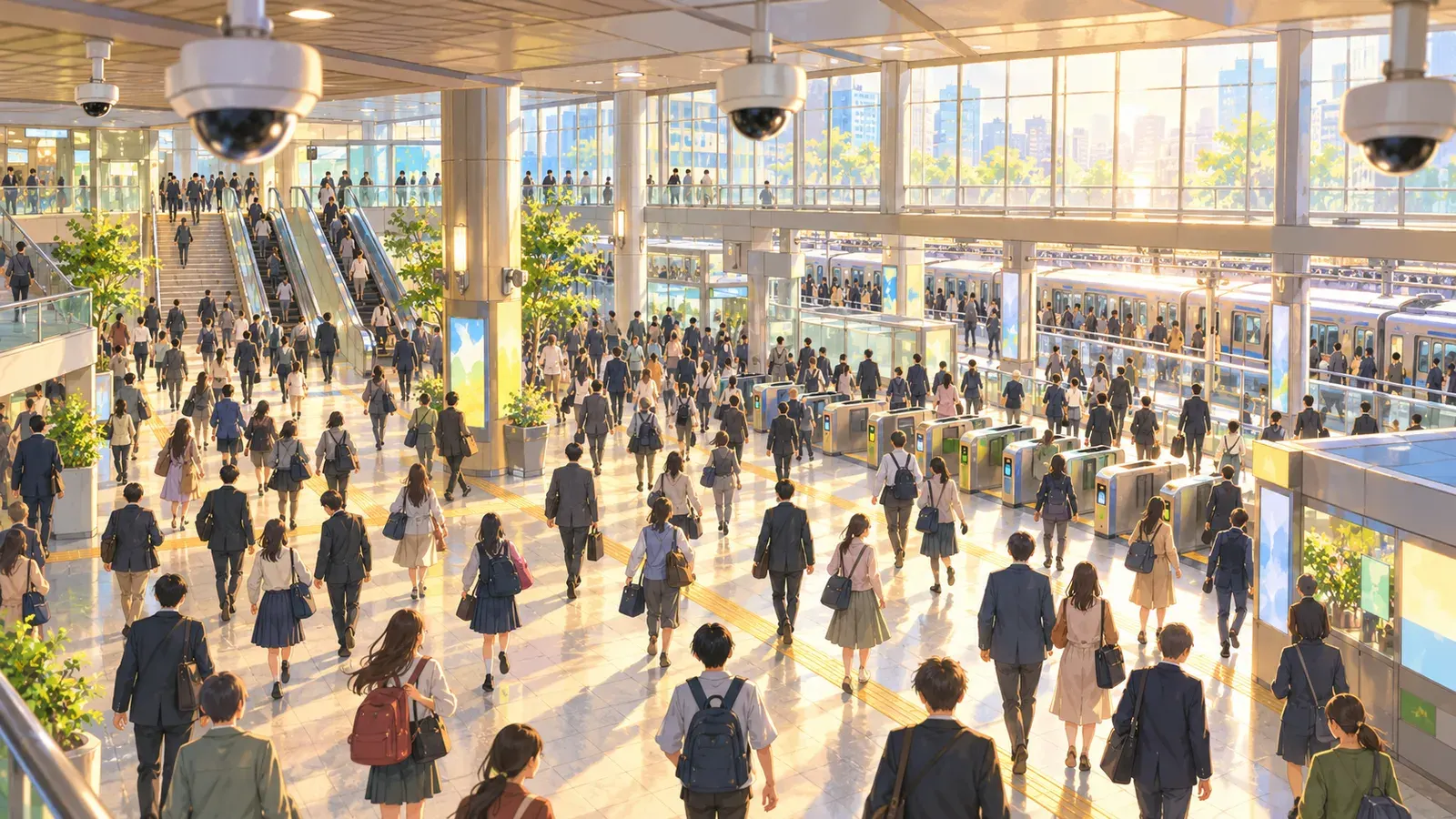
Think about the last time you walked from your home to school or to a station. How many cameras saw you? There may have been one at the entrance of your apartment building, several in a convenience store, many at the station, and others on streets and in shopping areas. Today, security cameras are so common that most of us no longer notice them. At the same time, a powerful technology called face recognition is making these cameras far more capable than before.
家から学校や駅まで歩いたときのことを、思い出してみてください。何台のカメラがあなたを見ていたでしょうか。マンションの入り口に1台、コンビニの中に数台、駅にはたくさん、そして道路や商店街にもあったかもしれません。今では防犯カメラはあまりにありふれていて、ほとんどの人は気にもとめません。そして同時に、顔認識という強力な技術が、こうしたカメラを以前よりはるかに高性能なものにしつつあります。
Security cameras were once found mainly in banks and large stores. As cameras became cheaper and video began to be stored digitally, they spread to streets, schools, trains, and homes. Many drivers now have small cameras in their cars, known as dashcams, and some families have cameras on their front doors. Shop owners use cameras to prevent shoplifting. Local communities put them up in shopping streets and near schools to protect children.
防犯カメラは、かつては主に銀行や大きな店にあるものでした。カメラが安くなり、映像がデジタルで保存されるようになると、道路や学校、電車、家庭にまで広がりました。今では、多くの運転者が車にドライブレコーダーと呼ばれる小型カメラをつけていますし、玄関にカメラをつけている家庭もあります。店の人は、万引きを防ぐためにカメラを使います。地域の人たちは、子どもを守るために、商店街や学校の近くにカメラを設置しています。
Cameras are clearly useful in solving crimes. In Japan, police often collect video from many cameras along a route to follow the movements of a suspect, one camera after another. In a number of well-known cases, video from security cameras and dashcams has played an important part in finding the people responsible. Video can also protect innocent people, because it can show that someone was not at the place where a crime happened.
カメラが犯罪の解決に役立つのは、まちがいありません。日本の警察はよく、道すじに沿ってたくさんのカメラの映像を集め、カメラからカメラへと容疑者の足取りを追います。よく知られた事件のいくつかでも、防犯カメラやドライブレコーダーの映像が、犯人を見つけるうえで大きな役割を果たしました。映像は、無実の人を守ることもできます。ある人が、事件の起きた場所にいなかったことを示せるからです。
Many people also say that cameras make them feel safer. Researchers who have studied the effects of cameras in several countries have found that they can reduce some kinds of crime, especially thefts of and from cars in parking lots. However, their effect on other crimes, such as violence, appears to be much smaller. A person who acts in anger, for example, may not think about cameras at all.
カメラがあると安心できる、と言う人もたくさんいます。いくつかの国でカメラの効果を調べた研究者たちは、カメラによってある種の犯罪がへることがある、と分かりました。とくに、駐車場での車の盗難や、車上ねらいです。しかし、暴力のような別の犯罪に対する効果は、ずっと小さいようです。たとえば、かっとなって行動する人は、カメラのことなど考えもしないかもしれません。
Face recognition takes cameras a step further. An ordinary camera only records images, so a person must watch the video to find out who appears in it. A face recognition system, on the other hand, uses AI to measure features of a face, such as the distance between the eyes and the shape of the nose. It then compares these features with a database of faces. In this way, it can pick out one particular person from a large crowd in seconds.
顔認識は、カメラをさらに一歩進めます。ふつうのカメラは映像を記録するだけなので、だれが映っているかを知るには、人が映像を見なければなりません。一方、顔認識のシステムは、AIを使って、目と目の間の距離や鼻の形など、顔の特徴を測ります。そして、その特徴を顔のデータベースと照らし合わせます。こうして、大勢の人ごみの中から、特定の一人を数秒で見つけ出せるのです。
This technology has many convenient uses. Many smartphones unlock when they recognize their owner's face. Since 2021, travelers on international flights at Narita and Haneda airports have been able to use a system called Face Express. After registering their faces at check-in, they can pass through security and the boarding gate without showing their passport and boarding pass again. At Expo 2025 in Osaka, visitors with season passes registered their faces in advance and used face recognition to enter the site. Some concert halls also use it to stop people from using tickets that are not theirs.
この技術には、便利な使い道がたくさんあります。持ち主の顔を見分けて、ロックが解除されるスマホはたくさんあります。2021年からは、成田空港と羽田空港の国際線で、「フェイス・エクスプレス」というしくみが使えるようになりました。チェックインのときに顔を登録すれば、保安検査や搭乗口を、パスポートや搭乗券をもう一度見せずに通れるのです。2025年に大阪で開かれた万博では、通期パスを持つ来場者が事前に顔を登録し、顔認証で入場しました。コンサート会場の中にも、他人のチケットを使って入るのを防ぐために、顔認証を使っているところがあります。
However, face recognition also raises serious concerns. The biggest one is privacy. Your face is not like a password. You cannot change it, and you show it every time you go outside. If cameras across a city were connected to face recognition, it would become possible to record where a person went, whom they met, and how long they stayed, all without their knowledge. Critics warn that such systems could be used to watch people who join protests, belong to a certain religion, or simply disagree with those in power.
しかし顔認識は、深刻な心配もひき起こします。いちばん大きいのは、プライバシーの問題です。顔はパスワードとはちがいます。変えることはできませんし、外に出るたびに人に見せています。もし町じゅうのカメラが顔認識につながったら、ある人がどこへ行き、だれに会い、どれくらいそこにいたかを、本人の知らないうちに記録できるようになってしまいます。そうしたしくみは、デモに参加する人や、特定の宗教を信じる人、あるいは単に権力を持つ人と意見がちがうだけの人を見張るのに使われかねない、と批判する人たちは警告しています。
Accuracy is another problem. Face recognition has improved greatly, but it is not perfect, especially when images are dark, blurry, or taken from the side. In 2019, a US government research agency tested many face recognition programs. It found that many of them made more mistakes with some groups of people than with others, depending on factors such as age, sex, and ethnic background. When police rely on such systems, a wrong match could lead to an innocent person being questioned. In the United States, there have been several cases of people who were wrongly arrested after face recognition gave a false match.
正確さも問題です。顔認識はずいぶん進歩しましたが、完ぺきではありません。映像が暗かったり、ぼやけていたり、横から撮られていたりすると、とくにそうです。2019年、アメリカの政府の研究機関が、たくさんの顔認識プログラムを試験しました。その結果、多くのプログラムで、ある集団の人たちに対しては、ほかの集団よりまちがいが多いことが分かりました。年齢、性別、民族的な背景などによって、差があったのです。警察がこうしたシステムに頼ると、まちがった照合のせいで、無実の人が取り調べを受けることにもなりかねません。アメリカでは、顔認識がまちがって一致と判定したために、人が誤って逮捕された例がいくつもあります。
Japan has had its own debate. In 2021, around the time of the Tokyo Olympics and Paralympics, a railway company began using face recognition cameras at some of its stations in the Tokyo area. The cameras were used to look for wanted people and people acting suspiciously. The company had also planned to include some people who had been released from prison. When this became known, there was strong criticism, and the company dropped that part of the plan.
日本でも議論が起きました。2021年、東京オリンピック・パラリンピックが開かれたころ、ある鉄道会社が、首都圏のいくつかの駅で顔認識カメラを使いはじめました。カメラは、指名手配されている人や、不審な行動をとる人を見つけるために使われました。この会社は、刑務所から出所した一部の人たちも対象にする計画を立てていました。そのことが知られると強い批判が起こり、会社は計画のその部分を取りやめました。
Experts pointed out that Japan had no law that directly controlled the use of face recognition cameras. In 2025, it was reported that the company had stopped using the system.
専門家たちは、日本には顔認識カメラの使い方を直接定めた法律がない、と指摘しました。2025年には、この会社がそのシステムの使用をやめたと報じられました。
Around the world, societies have made different choices. In 2019, San Francisco became the first major city in the United States to ban its police and other city offices from using face recognition. The European Union's AI Act, adopted in 2024, does not allow police to use real-time face recognition in public places. There are only a small number of exceptions for serious cases, such as searching for a missing child or preventing a terrorist attack. Some other countries, by contrast, use cameras and face recognition widely in public spaces, arguing that this keeps their cities safe and orderly.
世界を見わたすと、社会によって選んだ道はさまざまです。2019年、サンフランシスコは、アメリカの大都市として初めて、警察などの市の機関が顔認識を使うことを禁止しました。2024年に成立した欧州連合(EU)のAI法は、警察が公共の場所でリアルタイムの顔認識を使うことを認めていません。例外はごくわずかで、行方不明の子どもを探すときや、テロを防ぐときなど、重大な場合に限られます。その一方で、公共の場所でカメラや顔認識を広く使っている国もあります。そうした国は、それによって町の安全と秩序が保たれている、と主張しています。
Supporters of cameras often say that people who have done nothing wrong have nothing to hide. Opponents answer that privacy is not about hiding wrongdoing, but about being free to live without being watched all the time. Many experts suggest a middle way. Under this view, cameras and face recognition could be used, but only with clear rules. People should be told where cameras are, and video should be kept only for a limited time. Only a small number of people should be allowed to see it, and independent groups should check how police and companies use it.
カメラに賛成する人は、よく「何も悪いことをしていない人は、かくすことなど何もないはずだ」と言います。反対する人は、プライバシーとは悪いことをかくすためのものではなく、いつも見張られることなく自由に暮らすためのものだ、と答えます。中間のやり方を提案する専門家も、たくさんいます。この考え方では、カメラや顔認識を使ってもよいのですが、それははっきりしたルールがある場合に限られます。カメラがどこにあるかを人々に知らせ、映像は決まった期間だけ保存します。映像を見られる人をごく少数に限り、警察や企業がどう使っているかを、独立した団体がチェックするのです。
The question is not simply whether cameras are good or bad. It is about how much watching a society will accept in exchange for safety, and who should decide. As technology makes watching easier and cheaper, this question will become even more important for your generation.
問題は、単にカメラがよいか悪いかではありません。社会が安全と引きかえに、どれだけ見張られることを受け入れるのか。そして、それをだれが決めるのか、ということです。技術によって見張ることがより簡単に、より安くなるにつれて、この問いは、あなたたちの世代にとってますます大切になるでしょう。
What do you think? Some people say that more cameras and face recognition should be used in public places, because they help prevent crime and catch criminals quickly. Others say that their use should be strictly limited, because they invade our privacy and can make serious mistakes.
あなたはどう思いますか。公共の場所では、カメラや顔認識をもっと使うべきだ、と言う人もいます。犯罪を防ぎ、犯人をすばやくつかまえるのに役立つからです。一方、その使い方は厳しく制限するべきだ、と言う人もいます。プライバシーを侵害し、深刻なまちがいをすることもあるからです。
 4段落目に「especially thefts of and from cars in parking lots」(特に駐車場での車や車内からの盗難)とあります。

 原田英語の究極の英単語帳(CEFR-J 6,868語)

 聞くだけモードで、文字を見ずに内容がわかるか試す。
 1文リピートで音読・シャドーイングも。


 世界の民話


 神話と伝説