In the middle of August, something interesting happens in Japan. Big cities like Tokyo become quiet, while highways and trains are full. Millions of people are going back to their hometowns. It is Obon, one of the most important family times of the year.
8月のなかばになると、日本ではおもしろいことが起こります。東京のような大都市は静かになり、その一方で高速道路や電車は満員になります。何百万人もの人が、ふるさとへ帰っているのです。お盆です。家族が集まる、一年でいちばん大切な時期の一つです。
Obon is a Buddhist custom, mixed with old Japanese beliefs. People believe that during Obon, the spirits of their ancestors, the family members who died before them, come back home for a short visit. Families welcome them, spend time with them, and then send them back. In most areas, Obon is held from about August 13 to 16. In some places, including parts of Tokyo, it is held in July.
お盆は、仏教の習わしに日本古来の信仰がまじりあったものです。お盆の間は、ご先祖さま、つまり自分より先に亡くなった家族の霊が、しばらく家に帰ってくると信じられています。家族はご先祖さまを迎え、一緒に過ごし、そして送り返します。ほとんどの地域では、お盆はおよそ8月13日から16日です。東京の一部など、7月に行う地域もあります。
Before Obon, families clean the graves of their ancestors. They wash the stone with water, pull the weeds, and offer flowers, incense, and sometimes the dead person's favorite food or drink. This visit is called ohakamairi. For many children, it is a time to hear stories about grandparents and great-grandparents they never met.
お盆の前に、家族はご先祖さまのお墓をそうじします。墓石を水で洗い、雑草を抜き、花やお線香をそなえます。亡くなった人が好きだった食べ物や飲み物をそなえることもあります。このお参りをお墓参りといいます。子どもたちにとっては、会ったことのない祖父母やひいおじいさん、ひいおばあさんの話を聞く機会にもなります。
At home, families prepare a special altar with fruit, flowers, and sweets. You may also see two strange "animals" there: a cucumber and an eggplant with four small sticks for legs. The cucumber is a horse, and the eggplant is a cow. People say the spirits ride the fast horse to come home quickly, and ride the slow cow to go back slowly, because the family wants them to stay longer.
家では、果物や花、お菓子をそなえた特別な祭壇を用意します。そこには、二匹の変わった「動物」もいるかもしれません。小さな棒を4本さして脚にした、キュウリとナスです。キュウリは馬、ナスは牛です。ご先祖さまは、足の速い馬に乗って早く帰ってきて、足のおそい牛に乗ってゆっくり帰っていくのだそうです。少しでも長くいてほしい、という家族の願いがこめられています。
On the first evening, many families light a small fire in front of the house. This is called mukaebi, or "welcoming fire." It helps the spirits find their way home. On the last evening, they light okuribi, a "sending-off fire," to guide the spirits back. In Kyoto, the sending-off fire is huge. On August 16, giant fires in the shape of Chinese characters and other designs are lit on the mountains around the city.
最初の日の夕方、多くの家では、家の前で小さな火をたきます。これを迎え火といいます。霊が迷わず家に帰ってこられるように、という目印です。最後の日の夕方には、霊を送り返す道案内として送り火をたきます。京都の送り火はとても大きなものです。8月16日、町を囲む山々に、漢字などの形をした巨大な火がともされます。
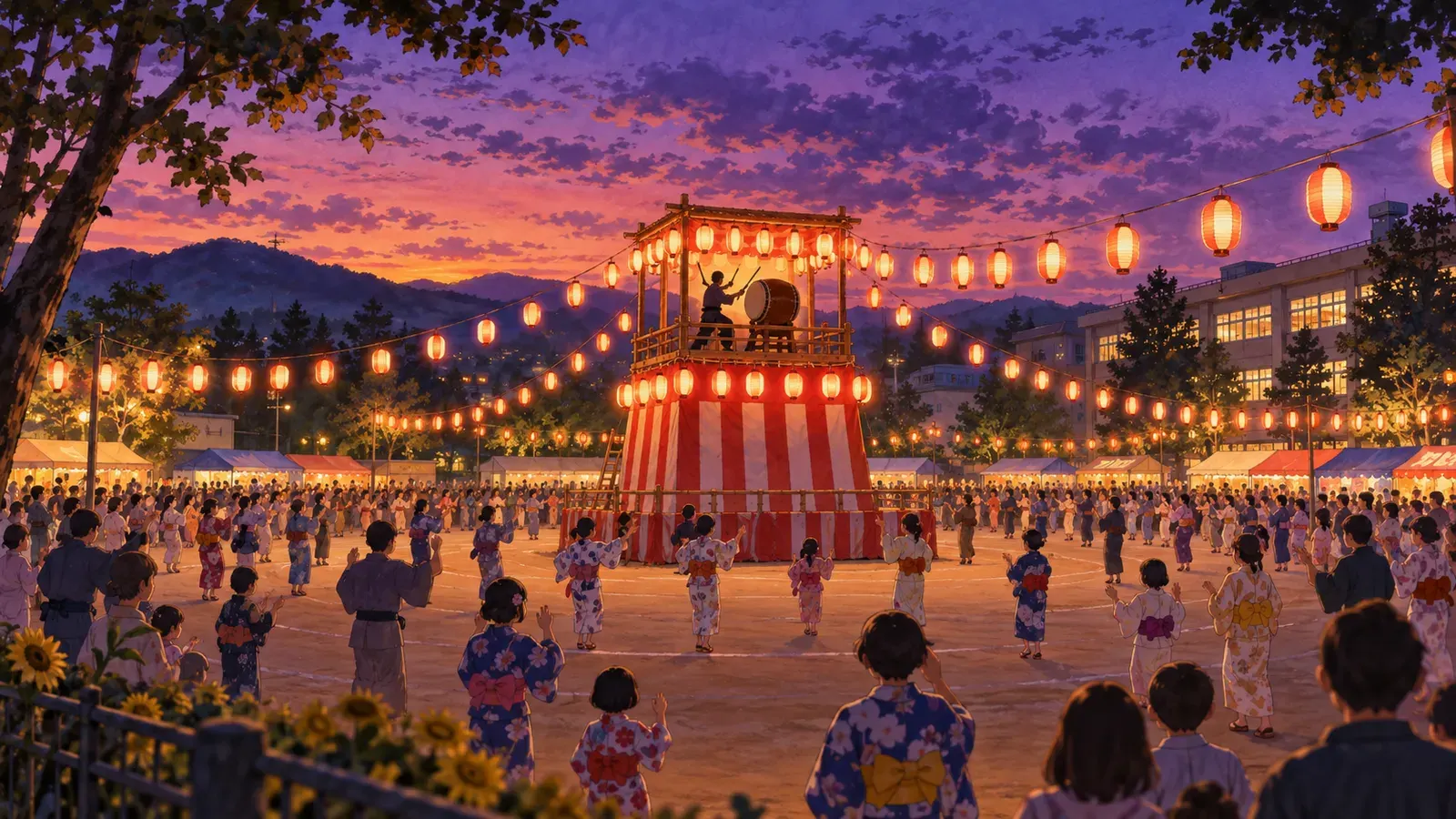
Obon is not only a sad or quiet time. It is also a time for dancing! Bon odori, or Bon dancing, is held in parks, schoolyards, and temple grounds. In the center, there is a tall wooden stage called a yagura, with a drummer playing a big taiko drum. People dance in a large circle around it. The moves are simple and repeat again and again, so anyone can join, even visitors. Just watch the person in front of you and copy.
お盆は、悲しく静かなだけの時期ではありません。踊る時期でもあるのです! 盆踊りは、公園や校庭、お寺の境内で行われます。真ん中には「やぐら」という高い木の台があり、その上で大きな太鼓を打つ人がいます。人々はその周りで、大きな輪になって踊ります。動きは簡単で、同じことの繰り返しなので、旅行者でも、誰でも加われます。前の人をよく見て、まねをすればいいのです。
Some areas have very famous dances. In Tokushima, the Awa Odori brings more than a million visitors every year, with groups dancing through the streets to fast music. In Gujo, a small town in Gifu, people dance all night long on some nights during Obon.
とても有名な踊りのある地域もあります。徳島の阿波おどりには毎年100万人以上の人が訪れ、いくつものグループが速い音楽に合わせて通りを踊り歩きます。岐阜の小さな町、郡上では、お盆の何日かの夜に、人々が一晩中踊り続けます。
In some places, people end Obon by floating paper lanterns on a river or the sea. This is called toro nagashi. The lanterns are said to carry the spirits back, and the lights moving slowly on the dark water are very beautiful.
地域によっては、紙の灯ろうを川や海に流してお盆をしめくくります。これを灯ろう流しといいます。灯ろうは霊を運んで帰っていくと言われ、暗い水の上をゆっくり動いていく明かりは、とても美しいものです。
For visitors, Obon is a great time to see local dances and festivals. But remember that travel is very busy, and some small shops and restaurants close for a few days. It is a good idea to book trains and hotels early.
旅行者にとって、お盆は地元のおどりや祭りを見るのに最高の時期です。ただし、交通機関はとても混みますし、小さな店やレストランが何日か休むこともあるので、気をつけましょう。電車やホテルは早めに予約しておくとよいでしょう。
How to explain it in English: "Obon is a Buddhist event in mid-August when we welcome back the spirits of our ancestors. Many people go back to their hometowns and visit family graves. In the evening, people enjoy Bon dancing in a big circle."
英語で説明してみよう:「お盆は8月なかばの仏教の行事で、ご先祖さまの霊をむかえます。多くの人がふるさとへ帰り、家族のお墓参りをします。夕方には、大きな輪になって盆踊りを楽しみます。」
 ▶